Admit rate has ranged 41%–47% over the last 5 years. Source: IPEDS via Urban Institute.
Acceptance & SAT from Common Data Set / IPEDS; net price, earnings & graduation from the U.S. Dept. of Education College Scorecard. Figures lag ~1–2 years — verify with the school.
Union College is a distinctive, small liberal arts college with an engineering school grafted onto its core—a rare hybrid that produces graduates who can both think critically and build things. Its identity is defined by a fiercely residential campus where 92% of students live all four years, creating a tight-knit, almost insular community in Schenectady, New York. The school combines the close mentorship of a liberal arts college with the practical, high-earning outcomes more typical of a technical institute, making it a quietly powerful choice for students who refuse to choose between the humanities and STEM.
Admission requirements
Test-optional — scores considered if submitted
Required
High school transcript
Grade point average
Letters of recommendation
TOEFL (non-native English)
Considered (not required)
Class rank
Test scores (SAT/ACT)
College-prep program
Source: IPEDS Admissions survey (2022) via Urban Institute. Covers formal factors only — it does not reflect essays, extracurriculars, or other holistic criteria.
More details
Undergrad enrollment
2,046
In-state tuition
$69,039
Out-of-state tuition
$69,039
Graduation Rate
80%
Meets Full Need
Yes
ED Share of Class
~30%
First-Year Retention
Reported (see dashboard)
Demonstrated Interest
Considered
Median Earnings (10yr)
$88,604
On-Campus Residents (all 4 years)
92%
Outcomes & value
Outcomes & value
Median earnings (10 yr)
$88,604
Value (earnings ÷ net price)
2.6×
Median debt at graduation
$25,337
Graduation rate
80%
First-year retention
90%
Reducing loan balance (3 yr)
86%
Pell (lower-income) share
14%
First-gen share (among federal-aid recipients)
13%
Financial health
2.5 / 3.0Meets the federal financial-responsibility standard
U.S. Dept. of Education Financial Responsibility Composite Score (FY2022-23). Scale −1.0 to 3.0; ≥1.5 meets the standard. Reported for private nonprofit & for-profit institutions only — public universities are state-backed and not scored, so this is a stability signal, not a ranking.
Top-earning majors
Median earnings by field of study (highest credential), ~2 years after completion.
Computer and Information Sciences, General$76,460
Mechanical Engineering$67,812
Electrical, Electronics, and Communications Engineering$63,392
Biomedical/Medical Engineering$59,124
Economics$58,673
Geological and Earth Sciences/Geosciences$42,682
Applicants here also applied to
The schools that most often appear alongside Union College on applicants’ lists, from our self-reported outcomes corpus.
Co-application frequency from self-reported results — directional peer discovery, not a recommendation.
Campus & location
Campus safety
On-campus violent crimes (2024)
3
On-campus criminal offenses classed as violent (murder/non-negligent manslaughter, rape, robbery, aggravated assault) for the most recent reported year. Source: U.S. Dept. of Education Campus Safety and Security (Clery Act). Counts reflect what’s reported to the school, and urban campuses often report more partly due to non-student incidents nearby — read alongside campus size and setting, not as a standalone safety verdict.
Climate
Pleasant days / yr
86
Summer high
81°F
Winter low
21°F
Annual rain
48.1"
Annual snow
41.7"
Natural-hazard risk
Relatively Low
Pleasant days counts days per year with a mean temperature of 55–75°F, a high at or below 90°F, a low at or above 45°F, and little precipitation — a transparent comfort measure, not a weighting we invented. Computed from Open-Meteo ERA5 daily history (2019–2023). Natural-hazard risk is the county’s composite rating from the FEMA National Risk Index.
Deep dive — research, future-scholar output & economic mobility▾
Research output
Institutional h-index
181
Scholarly works
6,963
Institutional research volume and impact from OpenAlex. The h-index reflects large research universities and will be low for teaching-focused liberal-arts colleges — not a measure of undergraduate quality.
Quick answers
What is the acceptance rate at Union College?
Union College's acceptance rate is approximately 44% (Schenectady, NY), based on the most recent figures we compiled from public and primary sources.
What SAT score do you need for Union College?
Admitted students at Union College typically score 1310–1480 on the SAT (the middle-50% range). Scores outside this band are still admitted, especially with strong applications.
How much does Union College cost?
At Union College, the average net price (after aid) is about $34,561 per year. Actual cost varies with financial aid and residency.
How many undergraduates attend Union College?
Union College enrolls approximately 2,046 undergraduate students.
Where is Union College located?
Union College is located in Schenectady, NY.
Admissions
Union College operates as a selective liberal arts college with a notably higher for students who apply early, creating a strategic pathway for committed applicants. The college maintains a policy and uses the Common Application. For the Class of 2029, the middle 50% SAT range for enrolled students was 1320–1460, and the middle 50% ACT range was 31–34, indicating a strong academic profile for the incoming class. The early decision advantage is significant; the early acceptance rate has been reported at 53.1%, compared to the overall rate. Approximately 30% of the freshman class is admitted through Early Decision (both ED I and ED II). The college states that for early decision applicants, "we are able to admit some early decision applicants whose need is higher than we could normally meet in the regular decision round," signaling a notable policy for financial aid within the early pool. Demonstrated interest is a factor in admissions, as indicated by its classification in the .
Earnings = median of students working ~10 years after entry; debt = median of graduates. Value divides 10-yr earnings by one year’s net price — read it as earnings per dollar of annual cost, not a full lifetime ROI; it favors lower-cost schools. Source: U.S. Dept. of Education College Scorecard. Figures lag ~2 years and reflect all students, not your intended major.
Biology, General$41,565
Liberal Arts and Sciences, General Studies and Humanities$39,585
Source: U.S. Dept. of Education College Scorecard (field-of-study earnings). Figures cover graduates who received federal aid and lag ~2 years; not all programs report data.
Union’s academic identity is built on a deliberate fusion of the liberal arts with science and engineering, an interdisciplinary approach that is central to its curriculum. The most popular majors reflect this blend, spanning Social Sciences, Engineering, Biological and Biomedical Sciences, Psychology, and Foreign Languages. Specific top-ranked majors include Economics, Research and Experimental Psychology, Mechanical Engineering, and Biology. This structure means engineering majors benefit from the close mentorship and undergraduate research opportunities typical of a small liberal arts college, while humanities students engage with a technically-minded peer group. The college stresses that its curriculum combines "the humanities and social sciences with science and engineering," making it a singular environment where students are not siloed into separate schools but are part of an integrated intellectual community.
Life at Union is intensely residential and self-contained, defined by a powerful on-campus culture. A staggering 92% of students live on campus all four years, creating a close-knit community where nearly everyone is deeply embedded in campus life. This community is supported by over 130 student clubs, organizations, and teams, and 24 NCAA Division III athletic teams. Student descriptions emphasize the small class sizes and strong student-faculty relationships that characterize the experience. The campus atmosphere is often described as one where "the academics at Union push students to be critical thinkers not only in the classroom, but outside the classroom setting in the real world." This residential bubble is enriched by a stated commitment to diversity and inclusion, aiming to connect students from all backgrounds. The college's location in Schenectady provides a backdrop, but the primary social and intellectual universe for most students is the campus itself.
Union College consistently delivers strong post-graduation outcomes that justify its "practical Little Ivy" reputation. The college's own data reports a 96.8% overall employment or graduate school rate for its graduates. Analysis suggests that one year after graduation, typical earnings are well above national medians, with the earnings gap widening further at the five-year mark. This strong performance is attributed to the hybrid liberal arts/engineering model, which equips students with both critical thinking and technical skills. The outcomes dashboard tracks graduation and retention rates, though the specific figures from external sources vary.
Union College is committed to meeting the full demonstrated financial need of all admitted students who submit required materials by the deadlines. The college states explicitly: "We meet the full demonstrated financial need of admitted students." Financial aid packages are a combination of grants, scholarships, student loans, and work-study. While the college meets full need, the sources do not specify a universal "no-loan" policy for all income levels; aid includes loans as a component. Prospective students are directed to use the official Calculator on the Union College website for a detailed, personalized estimate of costs and aid.
Union College stands out because it successfully operates as a hybrid institution in a higher education landscape that usually forces a choice. It is neither a pure liberal arts college nor a standalone engineering school, but a purposeful synthesis of both. This creates a unique student profile and intellectual culture where future engineers take humanities seminars and future economists share labs with biologists. The 92% four-year residential rate is exceptionally high, fostering an immersive, all-in community that defines the undergraduate experience. Furthermore, its admissions and aid policy is strategically aligned: it offers a clear early decision advantage and backs it up with a commitment to meet full need for those early applicants, even when that need is high. The result is a college that produces graduates with the versatile thinking of liberal arts alumni but the strong early-career earnings often associated with technical fields, making it a compelling and distinctive option.
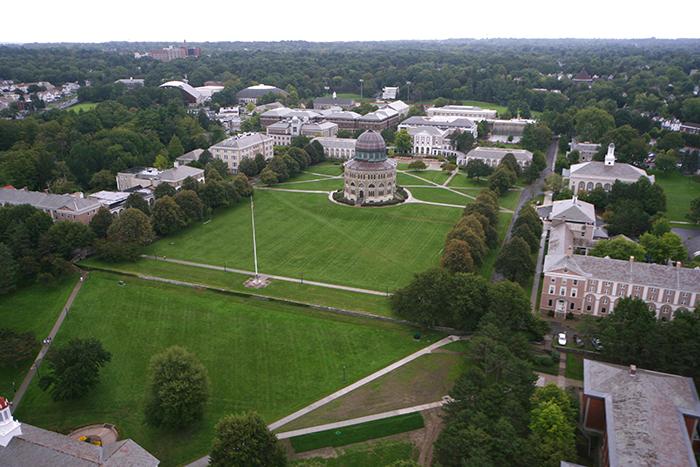
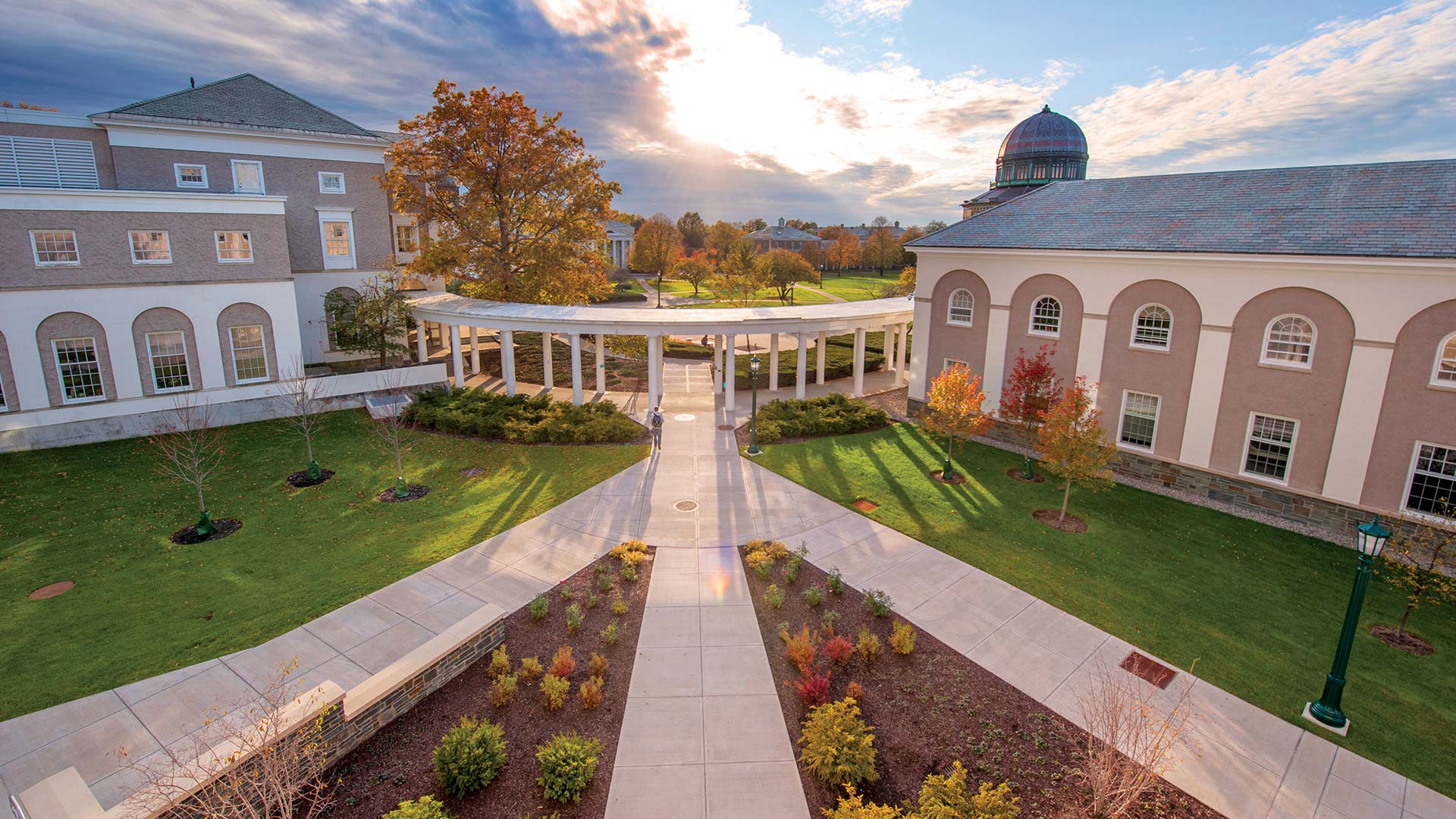
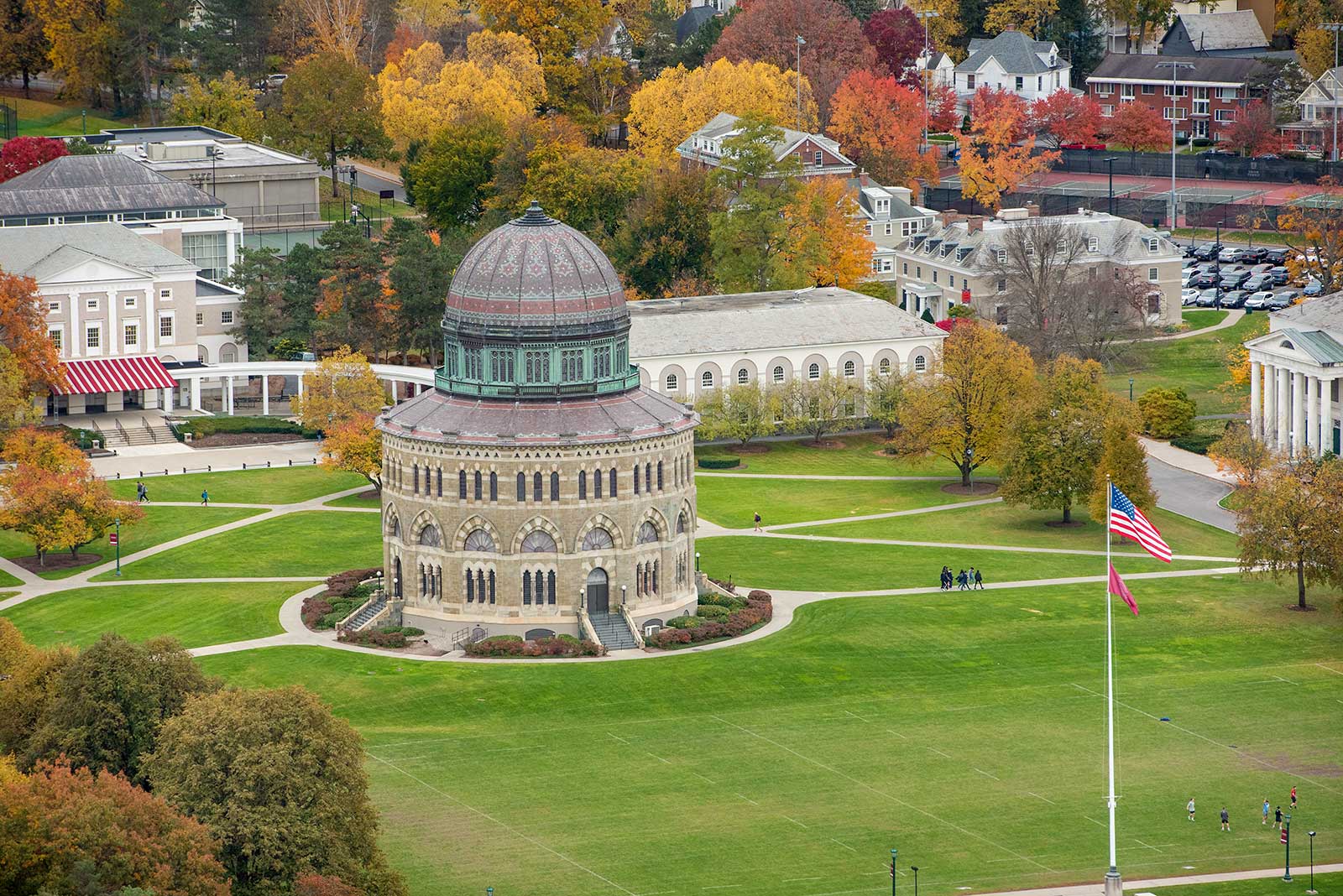
Union College seal · sourceA plan, a campus, a legacy | Union College · sourceUnion pictures: Our scenic campus | Union College · sourceUnion pictures: Our scenic campus | Union College · source