Admit rate has ranged 54%–70% over the last 5 years — notably volatile. Source: IPEDS via Urban Institute.
Acceptance & SAT from Common Data Set / IPEDS; net price, earnings & graduation from the U.S. Dept. of Education College Scorecard. Figures lag ~1–2 years — verify with the school.
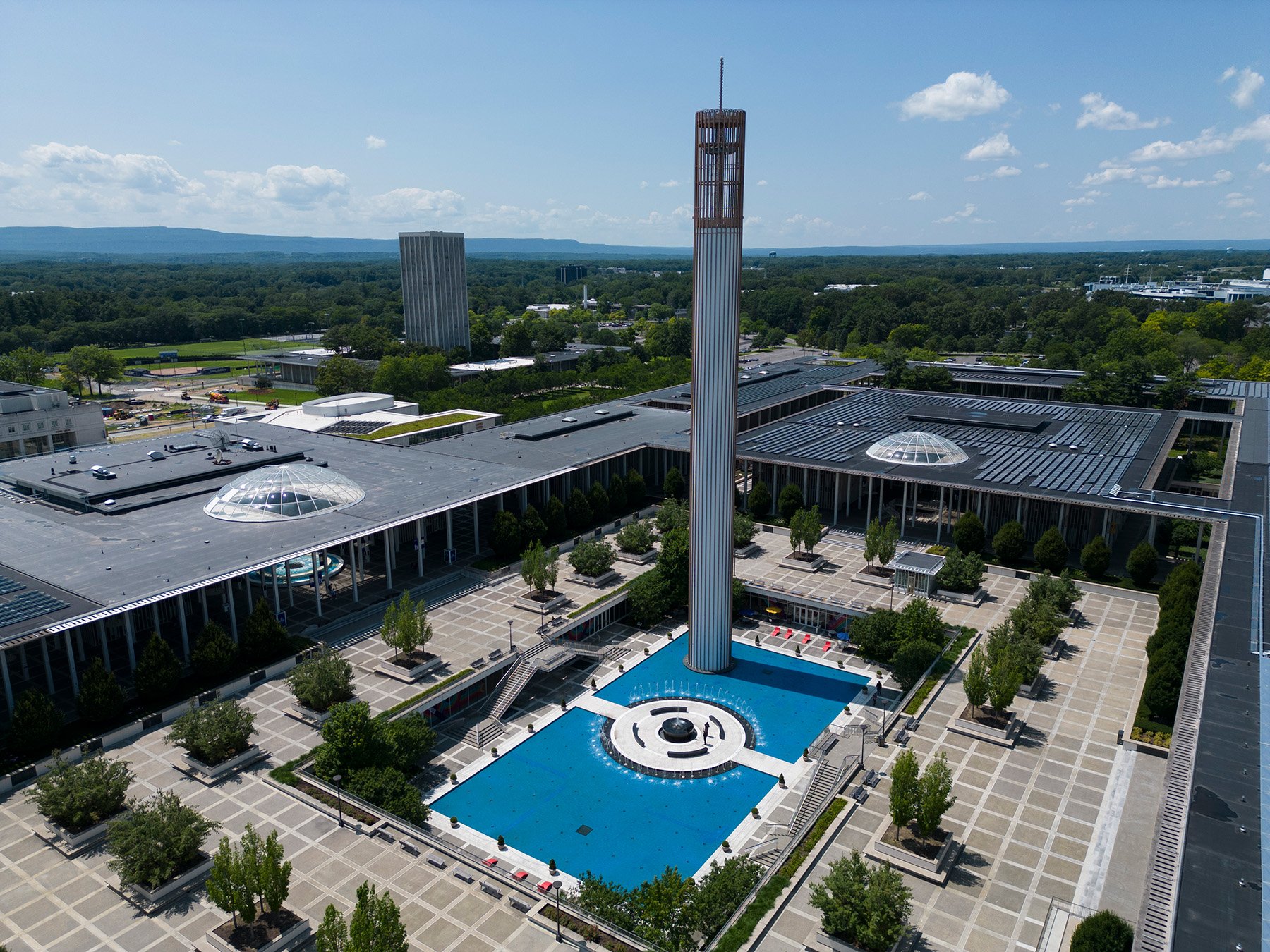
The University at Albany is a large, public research university that serves as a pragmatic engine of upward mobility in New York's capital. Its identity is split between a reputation as a classic, spirited SUNY party school and its serious, nationally recognized strengths in public administration, criminal justice, and the sciences. The campus offers a quintessential big-state-university experience—complete with sprawling residential quads and Division I sports—while its location provides unparalleled access to government internships and a direct pipeline to stable, well-paying public-sector careers.
Admission requirements
Test scores required
Required
High school transcript
Grade point average
Letters of recommendation
Test scores (SAT/ACT)
College-prep program
TOEFL (non-native English)
Considered (not required)
Class rank
Source: IPEDS Admissions survey (2022) via Urban Institute. Covers formal factors only — it does not reflect essays, extracurriculars, or other holistic criteria.
More details
Undergrad enrollment
12,564
In-state tuition
$10,866
Out-of-state tuition
$31,256
No-Loan Policy
Data not provided in sources
Graduation Rate
61%
Meets Full Need
Data not provided in sources
ED Share of Class
Data not provided in sources
First-Year Retention
Data not provided in sources
Demonstrated Interest
Not considered
Median Earnings (10yr)
$67,979
Outcomes & value
Outcomes & value
Median earnings (10 yr)
$67,979
Value (earnings ÷ net price)
4.0×
Median debt at graduation
$19,500
Graduation rate
61%
First-year retention
83%
Reducing loan balance (3 yr)
67%
Pell (lower-income) share
44%
First-gen share (among federal-aid recipients)
30%
Top-earning majors
Median earnings by field of study (highest credential), ~2 years after completion.
Accounting and Related Services$49,962
Information Science/Studies$43,798
Computer and Information Sciences, General$40,510
Business Administration, Management and Operations$38,289
Economics$38,048
Natural Resources Conservation and Research$37,568
Applicants here also applied to
The schools that most often appear alongside University at Albany on applicants’ lists, from our self-reported outcomes corpus.
Co-application frequency from self-reported results — directional peer discovery, not a recommendation.
Campus & location
Campus safety
On-campus violent crimes (2024)
18
Per 1,000 students
1.03
On-campus criminal offenses classed as violent (murder/non-negligent manslaughter, rape, robbery, aggravated assault) for the most recent reported year. Source: U.S. Dept. of Education Campus Safety and Security (Clery Act). Counts reflect what’s reported to the school, and urban campuses often report more partly due to non-student incidents nearby — read alongside campus size and setting, not as a standalone safety verdict.
Climate
Pleasant days / yr
87
Summer high
82°F
Winter low
22°F
Annual rain
46.7"
Annual snow
37.9"
Natural-hazard risk
Relatively Moderate
Pleasant days counts days per year with a mean temperature of 55–75°F, a high at or below 90°F, a low at or above 45°F, and little precipitation — a transparent comfort measure, not a weighting we invented. Computed from Open-Meteo ERA5 daily history (2019–2023). Natural-hazard risk is the county’s composite rating from the FEMA National Risk Index.
Quick answers
What is the acceptance rate at University at Albany?
University at Albany's acceptance rate is approximately 69% (Albany, NY), based on the most recent figures we compiled from public and primary sources.
How much does University at Albany cost?
At University at Albany, the average net price (after aid) is about $17,167 per year. Actual cost varies with financial aid and residency.
How many undergraduates attend University at Albany?
University at Albany enrolls approximately 12,564 undergraduate students.
Where is University at Albany located?
University at Albany is located in Albany, NY.
Admissions
UAlbany operates as a moderately selective, high-volume public university, reviewing tens of thousands of applications annually. For the Fall 2025 cycle, the university received approximately 35,500 applications. The admissions process is , with SAT and ACT scores not required for most applicants. The admitted student profile for that cycle shows a mid-range GPA of 89-96 (or 3.3-4.0 on a 4.0 scale). External sources report an SAT range of 1150–1320 and an ACT range of 24–30 for admitted students, with 45% reporting a GPA of 3.75 or higher. The university offers an early action plan, and data shows an early of 86.5%, significantly higher than the regular decision pool. According to the framework, UAlbany considers factors like rigor of secondary school record, class rank, GPA, and the application essay as "important" in its decisions, while it lists demonstrated interest as "not considered." The rate—the percentage of admitted students who enroll—has been reported as 35.64% in recent years.
Earnings = median of students working ~10 years after entry; debt = median of graduates. Value divides 10-yr earnings by one year’s net price — read it as earnings per dollar of annual cost, not a full lifetime ROI; it favors lower-cost schools. Source: U.S. Dept. of Education College Scorecard. Figures lag ~2 years and reflect all students, not your intended major.
Public Administration and Social Service Professions, Other$35,416
Criminology$33,993
Source: U.S. Dept. of Education College Scorecard (field-of-study earnings). Figures cover graduates who received federal aid and lag ~2 years; not all programs report data.
UAlbany offers a comprehensive slate of over 50 undergraduate majors and minors, spanning from psychology and biology to art history and computer engineering. The academic culture is defined by its deep, practical connections to the New York State government apparatus surrounding it. The most popular majors cluster in the Social Sciences; Business, Management, Marketing, and Related Support Services; and Psychology. Its standout reputation, however, is built on its public affairs cluster. The university is nationally recognized for its programs in public administration, political science, criminal justice, and international affairs, which benefit from direct access to the state capital for internships and research. Beyond the public sector, the sciences and business programs are also highlighted as strong, with many students engaging in research opportunities as undergraduates. The curriculum is supported by graduate and doctoral level programs in many of these same fields, creating a robust research environment.
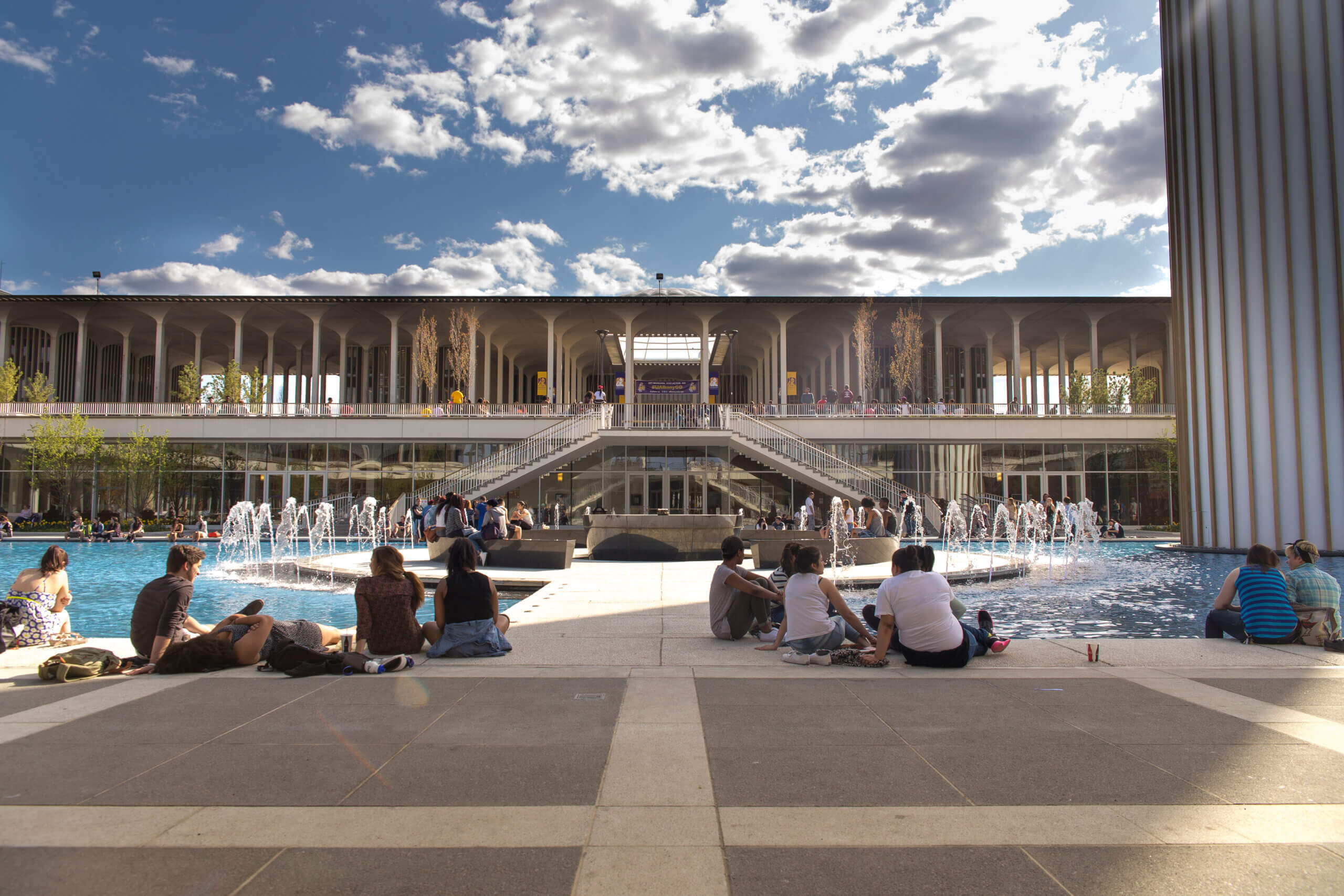
Life at UAlbany is the archetypal large public university experience, centered on a active, residential campus. The university strongly encourages living on campus, citing data that students who do so all four years "do better academically, feel more connected to the campus community and graduate at higher rates." The campus provides extensive facilities, including gyms, fitness classes, and a medical center. Student life is animated by a diverse student body representing many backgrounds and cultures, supported by a wide array of clubs, activities, and cultural events like apple picking, hiking, and attending NCAA Division I sporting events. The university's historical reputation as a "party school" is a topic of discussion among students, with some online forums questioning if that scene remains dominant, indicating a social life that can range from Greek life to more low-key, club-oriented activities. The overall vibe is one of a self-contained community where it's easy to find a niche, whether in a dorm, a club, or at a basketball game.
UAlbany graduates enter the workforce with a significant earnings advantage, particularly over time. Early career salaries are reported at $38,469 one year after graduation. This figure grows substantially, reaching a median of $64,597 five years post-graduation. The long-term financial payoff is clear, with a reported 10-year median earnings figure of $67,979. The university's career center reports having outcomes data for roughly 54.4% of recent graduates. The average time to graduate is 4.2 years, and the average student debt upon graduation is $19,500. These outcomes reflect the strong placement of graduates into stable, growing careers, especially in government, business, and professional services, leveraging the university's location and program strengths.
As a public SUNY institution, UAlbany presents a relatively affordable , especially for New York State residents. A significant majority of students receive financial aid, with one source indicating 96% of full-time beginning undergraduates receive grant or scholarship aid, and another reporting 69.17% of students receive financial aid with an average aid package of $14,572. The university provides both merit-based and , and students must reapply each year by submitting the FAFSA. The Office of Financial Aid states that awards may vary each year based on factors like federal funding and changes in a student's financial situation. The university offers payment plans and encourages families to use its Net Price Calculator for an early estimate. There is no indication in the provided sources that UAlbany has a policy of meeting 100% of demonstrated financial need or a "no-loan" policy where loans are replaced entirely by grants.
The University at Albany's singular advantage is its position as the premier public university in New York's capital. This isn't just a location; it's the core of its identity. It transforms a standard large-university education into a direct professional pipeline. A student majoring in criminal justice or public administration isn't just learning theory—they're likely interning at the state police headquarters or a legislative office a short bus ride away. This practical, embedded access creates a career-focused culture distinct from more insular collegiate experiences. Furthermore, it manages to pair this serious, policy-wonk edge with the full-throated, spirited atmosphere of a traditional state school, complete with campus-wide events, Division I athletics, and a vast array of student clubs. The result is a university that offers a clear value proposition: a vibrant, comprehensive college experience that efficiently translates into solid, long-term career outcomes, particularly in the public and nonprofit sectors that form the backbone of the region's economy.
University at Albany seal · sourceUniversity at Albany - State University of New York · sourceUniversity at Albany--SUNY - Profile, Rankings and Data | US News Best Colleges · sourceUniversity at Albany (SUNY) | Study New York · source