Admit rate has ranged 61%–70% over the last 5 years — notably volatile, though the latest figure above (74%) falls outside that window. Source: IPEDS via Urban Institute.
Acceptance & SAT from Common Data Set / IPEDS; net price, earnings & graduation from the U.S. Dept. of Education College Scorecard. Figures lag ~1–2 years — verify with the school.
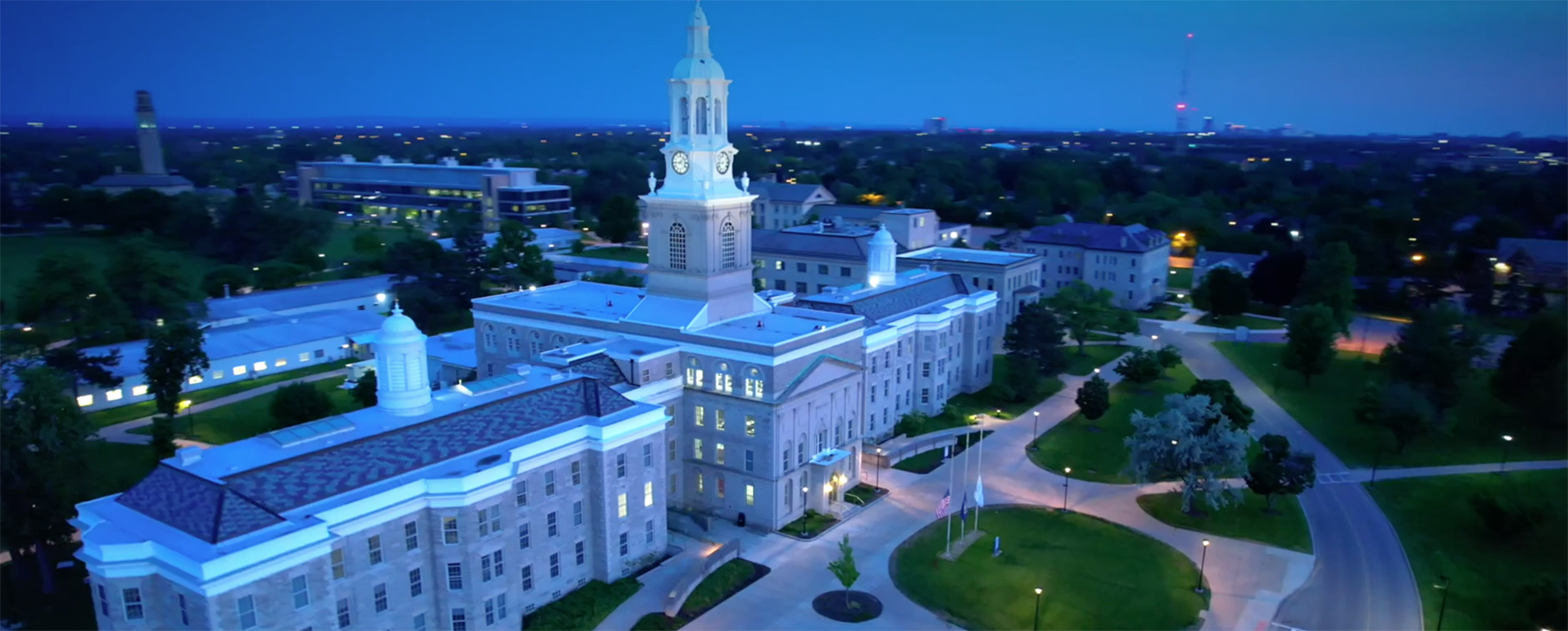
The University at Buffalo is the flagship of the SUNY system, a massive public research university where scale is both its defining feature and its primary challenge. It offers an enormous academic menu—the largest in SUNY—with particular strength in engineering, business, and the health sciences, all delivered at a public-university price point. The vibe is self-directed and pragmatic; you're here for a high-value degree and serious research opportunities, not a curated, hand-holding experience.
Admission requirements
Test-optional — scores considered if submitted
Required
High school transcript
Grade point average
TOEFL (non-native English)
Considered (not required)
Class rank
Letters of recommendation
Test scores (SAT/ACT)
College-prep program
Demonstrated competencies
Source: IPEDS Admissions survey (2022) via Urban Institute. Covers formal factors only — it does not reflect essays, extracurriculars, or other holistic criteria.
More details
Undergrad enrollment
20,112
In-state tuition
$10,936
Out-of-state tuition
$31,536
No-Loan Policy
Not found in sources
Meets Full Need
Not found in sources
Demonstrated Interest
Not considered
Median Earnings (10yr)
$70,814
Six-Year Graduation Rate
73%
First-Year Retention Rate
Not found in sources
Priority Application Date
February 1
Average Financial Aid Package
$13,182
Students Receiving Financial Aid
Outcomes & value
Outcomes & value
Median earnings (10 yr)
$70,814
Value (earnings ÷ net price)
3.4×
Median debt at graduation
$19,000
Graduation rate
75%
First-year retention
85%
Reducing loan balance (3 yr)
68%
Pell (lower-income) share
33%
First-gen share (among federal-aid recipients)
28%
Top-earning majors
Median earnings by field of study (highest credential), ~2 years after completion.
Clinical/Medical Laboratory Science/Research and Allied Professions$70,456
Computer Engineering$67,101
Registered Nursing, Nursing Administration, Nursing Research and Clinical Nursing$66,681
Computer Science$61,020
Aerospace, Aeronautical, and Astronautical/Space Engineering$59,485
Industrial Engineering
Applicants here also applied to
The schools that most often appear alongside Buffalo on applicants’ lists, from our self-reported outcomes corpus.
Co-application frequency from self-reported results — directional peer discovery, not a recommendation.
Campus & location
Campus safety
On-campus violent crimes (2024)
7
Per 1,000 students
0.22
On-campus criminal offenses classed as violent (murder/non-negligent manslaughter, rape, robbery, aggravated assault) for the most recent reported year. Source: U.S. Dept. of Education Campus Safety and Security (Clery Act). Counts reflect what’s reported to the school, and urban campuses often report more partly due to non-student incidents nearby — read alongside campus size and setting, not as a standalone safety verdict.
Climate
Pleasant days / yr
92
Summer high
78°F
Winter low
23°F
Annual rain
45.8"
Annual snow
45.2"
Natural-hazard risk
Relatively High
Pleasant days counts days per year with a mean temperature of 55–75°F, a high at or below 90°F, a low at or above 45°F, and little precipitation — a transparent comfort measure, not a weighting we invented. Computed from Open-Meteo ERA5 daily history (2019–2023). Natural-hazard risk is the county’s composite rating from the FEMA National Risk Index.
Quick answers
What is the acceptance rate at University at Buffalo?
University at Buffalo's acceptance rate is approximately 74% (Buffalo, NY), based on the most recent figures we compiled from public and primary sources.
What SAT score do you need for University at Buffalo?
Admitted students at University at Buffalo typically score 1210–1380 on the SAT (the middle-50% range). Scores outside this band are still admitted, especially with strong applications.
How much does University at Buffalo cost?
At University at Buffalo, the average net price (after aid) is about $20,995 per year. Actual cost varies with financial aid and residency.
How many undergraduates attend University at Buffalo?
University at Buffalo enrolls approximately 20,112 undergraduate students.
Where is University at Buffalo located?
University at Buffalo is located in Buffalo, NY.
Admissions
UB's admissions process is best described as broadly accessible but with clear academic benchmarks. The university admits a significant majority of its applicants, with an early notably higher than its regular rate. Academic preparation is the paramount factor. The indicates that rigor of secondary school record, class rank, GPA, and standardized test scores are all rated as "very important" in the admissions decision. For the Fall 2024 cycle, the middle 50% SAT range for admitted students was 1210–1380, and the ACT range was 27–32. Nearly half of admitted students reported an unweighted GPA of 3.75 or higher. Notably, demonstrated interest is listed as "not considered" in the Common Data Set's factor importance grid (C7), meaning campus visits or contact with admissions officers won't move the needle. The priority application date is February 1st, and admitted students have until May 1st to secure their spot with a $150 tuition deposit, which is refundable until that date.
Earnings = median of students working ~10 years after entry; debt = median of graduates. Value divides 10-yr earnings by one year’s net price — read it as earnings per dollar of annual cost, not a full lifetime ROI; it favors lower-cost schools. Source: U.S. Dept. of Education College Scorecard. Figures lag ~2 years and reflect all students, not your intended major.
$59,350
Electrical, Electronics, and Communications Engineering$57,860
Civil Engineering$56,810
Source: U.S. Dept. of Education College Scorecard (field-of-study earnings). Figures cover graduates who received federal aid and lag ~2 years; not all programs report data.
Scale defines the academic experience at UB. With over 140 majors and 150+ undergraduate degrees, it boasts the largest range of academic programs in the entire SUNY system. This vast catalog allows for incredible flexibility and niche specializations, but it also means students must be proactive in navigating their path. The most popular majors cluster in professional and STEM fields: Business, Management, Marketing, and Related Support Services (16% of 2024 graduates), Engineering (14%), Social Sciences (13%), and Biological and Biomedical Sciences. The university is a major research institution, and students often highlight the research opportunities available, particularly in STEM fields, as a major draw. The flip side of this scale, as noted in student discussions, is that introductory courses can be very large, and the onus is on the student to seek out faculty mentorship and engage with resources. It's an environment built for the self-starter who wants access to extensive facilities and a wide array of programs without the premium price tag of a private research university.
Life at UB is a classic large-university experience: what you make of it. The campus community is big and diverse, serving over 30,000 students. There is no shortage of organized activity—the university reports more than 400 student clubs and organizations, a Division I athletics program, concerts, and speakers. Student Life departments explicitly aim to support student well-being and academic success by building a healthy campus culture. However, student anecdotes frequently point to a commuter-school vibe, especially after the first year, and note that the social scene can feel fragmented unless you actively plug into clubs, Greek life, or campus events. The university promotes a "diverse and inclusive community with students from various cultural and ethnic backgrounds." For those living on campus, the residential experience provides a more concentrated community, but many students move off-campus after their freshman year. The overall culture is often described as independent and focused; students are there to work, with social life being an add-on rather than the central focus.
UB delivers solid return on investment, particularly for a public university. The six-year graduation rate is reported at 73%, which places it in the top 20% of institutions nationally. Earnings growth for graduates is strong. While starting salaries average around $44,259 one year after graduation, that figure climbs significantly over time. Data shows average earnings of $68,437 five years out and $70,814 ten years after entry. This progression suggests the value of a UB degree compounds in the job market, likely aided by the university's strong professional networks in business, engineering, and healthcare. The School of Management, for example, publishes salary and employment statistics for its graduates, indicating a career-focused approach in key colleges. For students who graduate, the trajectory points to strong mid-career earnings that justify the upfront investment.
As a public flagship, UB's value proposition is central to its appeal. The average —what students pay after grants and scholarships—is reported between $18,524 and $20,995 per year. A significant majority of incoming students (57% to 76%, depending on the source) receive some form of financial aid, with the average aid package around $13,182. The university encourages students to carefully review financial aid offers, noting that a smaller scholarship at a school with lower overall costs might offer better long-term value. There is no indication in the provided sources that UB has a "no-loan" policy for meeting full financial need; standard federal and institutional loans appear to be part of the aid landscape. The financial aid office emphasizes that students must meet Satisfactory Academic Progress (SAP) standards to maintain eligibility. The bottom line: UB is priced as a public university, making its strong outcomes in engineering, business, and health fields particularly cost-effective for in-state students and a competitive option for out-of-state students seeking a large research university experience.
UB stands out as the pragmatic powerhouse of the SUNY system. It doesn't offer a cozy, small-college feel; instead, it trades that for sheer size, scope, and opportunity. Its singular advantage is providing a top-tier public research university experience—with all the accompanying labs, faculty, and program depth—at a public-university price. This is especially compelling in high-cost fields like engineering, pharmacy, and business, where its schools have strong reputations. The scale means you can find your niche among 400+ clubs and a diverse student body, but it also demands self-reliance. You won't be coddled, but you will have the tools to build a serious education and a career-launching resume. For students who are focused, independent, and seeking high-value professional preparation without the Ivy League price tag, UB is a hard-to-beat option. It's a place where the ROI is clear, the academic options are vast, and your experience is largely what you make of it.
University at Buffalo seal · sourceUniversity at Buffalo - North Campus - Visit Buffalo · sourceWelcome to the University at Buffalo - University at Buffalo · sourceAbout the University - Office of Government and Community Relations - University at Buffalo · source