Admit rate has ranged 44%–49% over the last 5 years. Source: IPEDS via Urban Institute.
Acceptance & SAT from Common Data Set / IPEDS; net price, earnings & graduation from the U.S. Dept. of Education College Scorecard. Figures lag ~1–2 years — verify with the school.
Stony Brook University is a public research powerhouse on Long Island that operates like a state-funded MIT, with a laser focus on STEM, health sciences, and undergraduate research. It attracts a massive, academically serious applicant pool with its reputation for high-value degrees, but campus social life is famously subdued, with a 'suitcase school' vibe as many students commute or leave on weekends. This is a place for self-starters who come to work, not to party, and who are drawn by the gravitational pull of its research institutes and strong post-graduate outcomes.
Admission requirements
Test-optional — scores considered if submitted
Required
High school transcript
Grade point average
Letters of recommendation
College-prep program
TOEFL (non-native English)
Considered (not required)
Class rank
Test scores (SAT/ACT)
Source: IPEDS Admissions survey (2022) via Urban Institute. Covers formal factors only — it does not reflect essays, extracurriculars, or other holistic criteria.
More details
Undergrad enrollment
18,101
In-state tuition
$10,931
Out-of-state tuition
$32,741
No-Loan Policy
No
Graduation Rate
76%
Meets Full Need
No
Average Aid Package
$15,561
Demonstrated Interest
Not considered
Median Earnings (10yr)
$74,502
First-Year Students Receiving Aid
82%
Outcomes & value
Outcomes & value
Median earnings (10 yr)
$74,502
Value (earnings ÷ net price)
4.0×
Median debt at graduation
$18,228
Graduation rate
76%
First-year retention
90%
Reducing loan balance (3 yr)
72%
Pell (lower-income) share
39%
First-gen share (among federal-aid recipients)
36%
Top-earning majors
Median earnings by field of study (highest credential), ~2 years after completion.
Registered Nursing, Nursing Administration, Nursing Research and Clinical Nursing$85,898
Allied Health Diagnostic, Intervention, and Treatment Professions$82,756
Clinical/Medical Laboratory Science/Research and Allied Professions$76,460
Computer and Information Sciences, General$76,170
Computer Engineering$67,101
Engineering, General
Applicants here also applied to
The schools that most often appear alongside Stony Brook on applicants’ lists, from our self-reported outcomes corpus.
Co-application frequency from self-reported results — directional peer discovery, not a recommendation.
Campus & location
Campus safety
On-campus violent crimes (2024)
14
Per 1,000 students
0.53
On-campus criminal offenses classed as violent (murder/non-negligent manslaughter, rape, robbery, aggravated assault) for the most recent reported year. Source: U.S. Dept. of Education Campus Safety and Security (Clery Act). Counts reflect what’s reported to the school, and urban campuses often report more partly due to non-student incidents nearby — read alongside campus size and setting, not as a standalone safety verdict.
Climate
Pleasant days / yr
100
Summer high
81°F
Winter low
30°F
Annual rain
52.5"
Annual snow
18.6"
Natural-hazard risk
Relatively High
Pleasant days counts days per year with a mean temperature of 55–75°F, a high at or below 90°F, a low at or above 45°F, and little precipitation — a transparent comfort measure, not a weighting we invented. Computed from Open-Meteo ERA5 daily history (2019–2023). Natural-hazard risk is the county’s composite rating from the FEMA National Risk Index.
Deep dive — research, future-scholar output & economic mobility▾
Research output
Institutional h-index
922
Scholarly works
130,040
Institutional research volume and impact from OpenAlex. The h-index reflects large research universities and will be low for teaching-focused liberal-arts colleges — not a measure of undergraduate quality.
Quick answers
What is the acceptance rate at Stony Brook University?
Stony Brook University's acceptance rate is approximately 49% (Stony Brook, NY), based on the most recent figures we compiled from public and primary sources.
What SAT score do you need for Stony Brook University?
Admitted students at Stony Brook University typically score 1330–1500 on the SAT (the middle-50% range). Scores outside this band are still admitted, especially with strong applications.
How much does Stony Brook University cost?
At Stony Brook University, the average net price (after aid) is about $18,784 per year. Actual cost varies with financial aid and residency.
How many undergraduates attend Stony Brook University?
Stony Brook University enrolls approximately 18,101 undergraduate students.
Where is Stony Brook University located?
Stony Brook University is located in Stony Brook, NY.
Admissions
Stony Brook's admissions process is selective and numerically driven, reflecting its status as a premier public STEM destination. The university received a record 55,880 applications for the Class of 2028. While the overall is 49%, selectivity varies dramatically by residency: out-of-state and international applicants face significantly higher acceptance rates (62.91% and 67.09%, respectively) compared to in-state applicants, for whom the rate is a more competitive 39.95% to 41.57%. The middle 50% SAT range for admitted students is 1330–1500, with a corresponding ACT range of 29–34. The average high school GPA is a strong 90-96 or 3.7+. The university offers a non-binding Early Action deadline of November 1, with decisions released by the end of January. For the Class of 2028, the separate Early Decision program was markedly more competitive, with 606 students accepted from 3,550 applications—a 17.07% acceptance rate. Demonstrated interest is not considered in the admissions process, per the . The most important academic factors are the rigor of secondary school record, class rank, GPA, and standardized test scores (though policies are in place).
Application Volume: Record 55,880 applications for the Class of 2028.
Residency Divide: In-state acceptance is ~41%, while out-of-state and international rates are above 62%.
Early Decision: Far more selective than regular decision, with a 17.07% admit rate for the Class of 2028.
Policy: Test-optional admissions are available, and demonstrated interest is not a factor.
Earnings = median of students working ~10 years after entry; debt = median of graduates. Value divides 10-yr earnings by one year’s net price — read it as earnings per dollar of annual cost, not a full lifetime ROI; it favors lower-cost schools. Source: U.S. Dept. of Education College Scorecard. Figures lag ~2 years and reflect all students, not your intended major.
$62,154
Human Computer Interaction$62,012
Information Science/Studies$60,523
Source: U.S. Dept. of Education College Scorecard (field-of-study earnings). Figures cover graduates who received federal aid and lag ~2 years; not all programs report data.
Academics at Stony Brook are unapologetically rigorous and research-centric, built for students who want to dive deep into their fields from day one. The university offers over 200 majors, minors, and combined-degree programs, with its greatest strengths concentrated in the sciences, engineering, and health professions. Its identity is inextricably linked to its research enterprise: 98% of tenured faculty hold the highest degree in their field, and the university boasts a formidable record of 2,330+ inventions and 700+ U.S. patents. This culture permeates the undergraduate experience through programs like URECA (Undergraduate Research and Creative Activities), which integrates research directly into the curriculum. High-impact educational practices are common, with 80% of students participating in first-year experiences, 61% in learning communities, and 90% in writing-in-the-disciplines courses. The faculty includes seven Nobel Prize award winners, underscoring the caliber of scholarship present on campus. This is not a liberal arts college with a broad distribution requirement philosophy; it's an institution where the intellectual energy is channeled toward specialization, innovation, and professional preparation.
The social scene at Stony Brook is its most consistent critique and a defining characteristic. Described by students as a "suitcase school," the campus empties out on weekends and evenings, with many students commuting from Long Island or returning home. As one student bluntly put it, "The town doesn't accept the student's presence, and everyone leaves on the weekends/evenings." This creates a campus life that is often quiet and requires initiative to navigate. The university officially promotes a vibrant community with hundreds of clubs and activities, a dynamic first-year experience, and NCAA Division I athletics. However, student reflections point to a desire for more events and initiatives that bridge gaps between various groups to foster deeper relationships. The Office of Student Life advocates for students and fosters campus involvement, but the overall vibe is one of academic focus rather than a traditional, residential college social whirl. For students who are self-sufficient, focused on their studies, and content with a smaller circle of like-minded peers, it works. For those seeking a bustling, constantly active college town atmosphere, it can feel isolating.
Stony Brook delivers on its promise of a high-return investment, particularly for STEM and health sciences graduates. The graduation rate is a strong 76%, significantly above the national midpoint for four-year colleges. The payoff is clear in the earnings data: median earnings for bachelor's degree recipients are $81,850 according to the College Scorecard, with other sources reporting $78,458 five years after graduation and $75,334 at the five-year mark from internal dashboards. Early career earnings average $54,300. These strong outcomes are achieved with relatively moderate debt; the median undergraduate student debt is about $19,000. An analysis of over 43,000 Stony Brook bachelor's recipients shows consistent salary growth from one to five years post-graduation. In short, students who navigate the rigorous academics tend to graduate on time and launch into careers with salaries that outpace national averages, making the Stony Brook degree a potent engine for economic mobility.
As a public SUNY university, Stony Brook's headline cost is lower than private peers, but the after aid is the critical figure for families. The average net price is $18,784. A significant majority (82%) of full-time, first-year undergraduates receive some form of grant or scholarship aid, with the average aid package totaling $15,561. The average need-based scholarship or grant award is $10,755. It is important to note that Stony Brook is not among the colleges that meet 100% of demonstrated financial need with a no-loan policy. Financial aid is a mix of grants, scholarships, work-study, and loans, and qualifying for most federal aid requires registration for at least six credits per term. Families should use the university's Net Price Calculator for a personalized estimate, as the actual cost can vary widely based on financial circumstances.
Stony Brook stands out as a rare beast: a large public university that functions with the intense, specialized focus of a top-tier technical institute. Its identity is forged in its labs and research centers, not its quad. This creates a specific and powerful value proposition. You come here for unparalleled access to undergraduate research alongside Nobel laureates and patent-holding faculty, for a brutally honest STEM education that employers respect, and for a ticket to a high-earning career without the crushing debt of a private university. The trade-off is equally clear: you are not signing up for a cozy, traditional college experience. The social life is what you make it, often among a cohort of equally driven and sometimes commuter-focused peers. It’s a university that makes no apologies for its priorities. For the right student—the future engineer, researcher, or healthcare professional who is self-motivated, academically relentless, and views college primarily as a launchpad—Stony Brook is not just a good choice; it’s one of the most strategically sound investments in American public higher education.
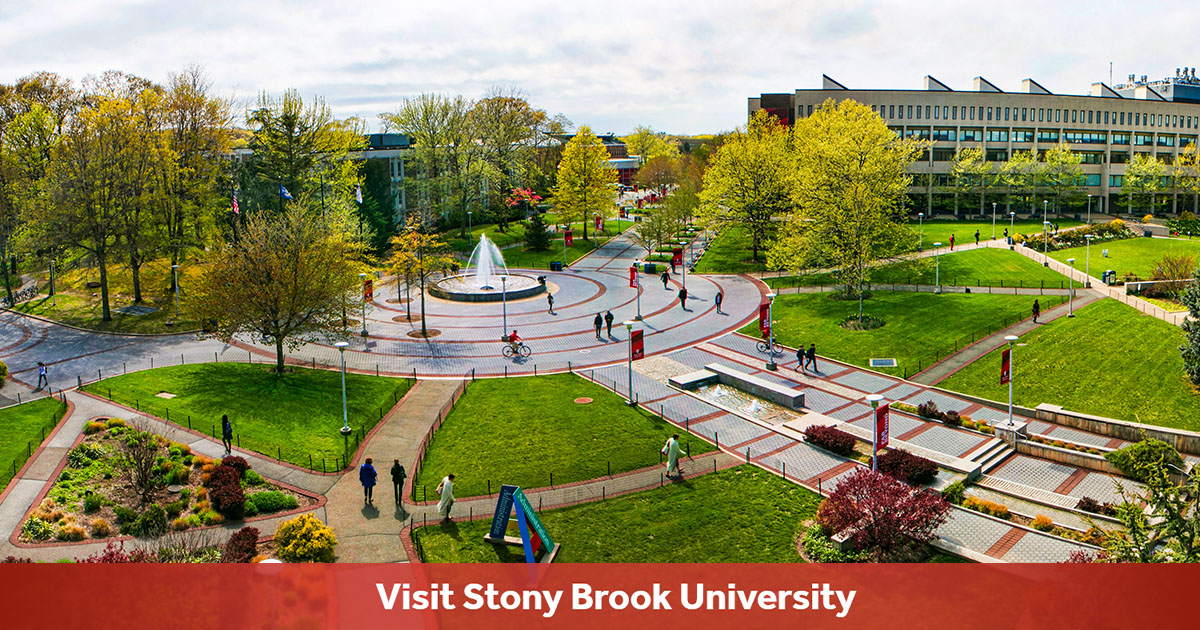
Stony Brook University seal · sourceVisit Stony Brook University · sourceCampus of Stony Brook University - Wikipedia · sourceStony Brook Celebrates 60th Anniversary of West Campus - SBU News · source