Admit rate has ranged 77%–82% over the last 5 years. Source: IPEDS via Urban Institute.
Acceptance & SAT from Common Data Set / IPEDS; net price, earnings & graduation from the U.S. Dept. of Education College Scorecard. Figures lag ~1–2 years — verify with the school.
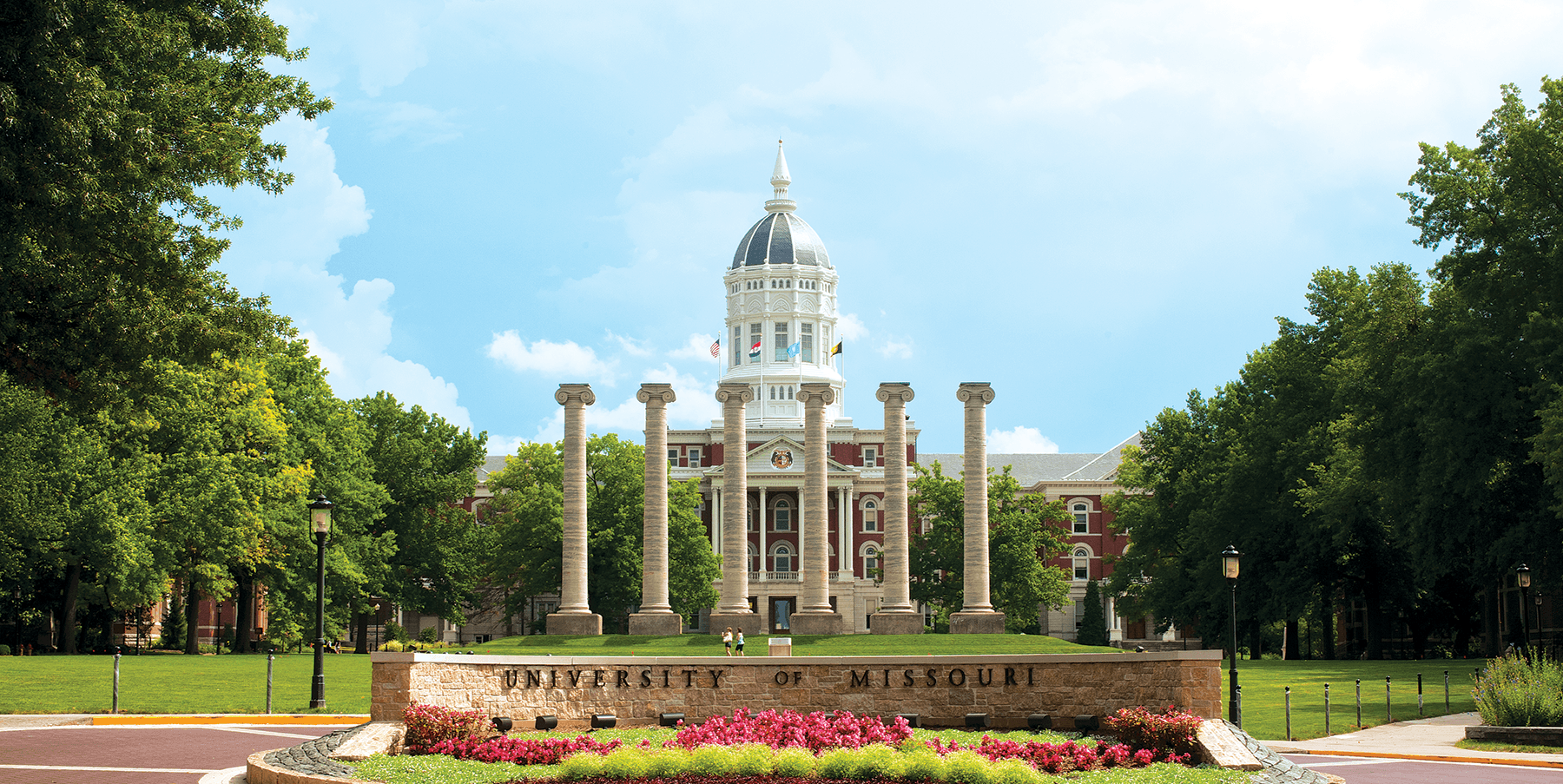
The University of Missouri-Columbia, known universally as Mizzou, is a sprawling, flagship public research university that feels like a quintessential Big Ten campus dropped in the middle of Missouri. It's a place where you can major in Floral Artistry and Management, cheer for the Tigers in a packed stadium, and benefit from a surprisingly accessible admissions process. Mizzou's identity is anchored by its historic, nationally renowned journalism school and a student experience defined by a powerful sense of community, Greek life, and Midwestern spirit.
Admission requirements
Test-optional — scores considered if submitted
Required
High school transcript
College-prep program
TOEFL (non-native English)
Considered (not required)
Grade point average
Class rank
Letters of recommendation
Test scores (SAT/ACT)
Demonstrated competencies
Source: IPEDS Admissions survey (2022) via Urban Institute. Covers formal factors only — it does not reflect essays, extracurriculars, or other holistic criteria.
More details
Undergrad enrollment
23,929
In-state tuition
$14,837
Out-of-state tuition
$36,056
Graduation Rate
75%
Median Earnings (10yr)
$63,403
Number of Degree Programs
300+
Successful Outcomes Rate (within 6 months)
95.4%
Outcomes & value
Outcomes & value
Median earnings (10 yr)
$63,403
Value (earnings ÷ net price)
3.1×
Median debt at graduation
$20,500
Graduation rate
75%
First-year retention
93%
Reducing loan balance (3 yr)
70%
Pell (lower-income) share
20%
First-gen share (among federal-aid recipients)
20%
Top-earning majors
Median earnings by field of study (highest credential), ~2 years after completion.
Computer Engineering$69,897
Industrial Engineering$69,338
Electrical, Electronics, and Communications Engineering$67,101
Mechanical Engineering$66,004
Computer and Information Sciences, General$63,666
Chemical Engineering$62,012
Campus & location
Campus safety
On-campus violent crimes (2024)
17
Per 1,000 students
0.55
On-campus criminal offenses classed as violent (murder/non-negligent manslaughter, rape, robbery, aggravated assault) for the most recent reported year. Source: U.S. Dept. of Education Campus Safety and Security (Clery Act). Counts reflect what’s reported to the school, and urban campuses often report more partly due to non-student incidents nearby — read alongside campus size and setting, not as a standalone safety verdict.
Climate
Pleasant days / yr
79
Summer high
87°F
Winter low
27°F
Annual rain
45.1"
Annual snow
19"
Natural-hazard risk
Relatively Moderate
Pleasant days counts days per year with a mean temperature of 55–75°F, a high at or below 90°F, a low at or above 45°F, and little precipitation — a transparent comfort measure, not a weighting we invented. Computed from Open-Meteo ERA5 daily history (2019–2023). Natural-hazard risk is the county’s composite rating from the FEMA National Risk Index.
Quick answers
What is the acceptance rate at University of Missouri-Columbia?
University of Missouri-Columbia's acceptance rate is approximately 78% (Columbia, MO), based on the most recent figures we compiled from public and primary sources.
What SAT score do you need for University of Missouri-Columbia?
Admitted students at University of Missouri-Columbia typically score 1150–1330 on the SAT (the middle-50% range). Scores outside this band are still admitted, especially with strong applications.
How much does University of Missouri-Columbia cost?
At University of Missouri-Columbia, the average net price (after aid) is about $20,268 per year. Actual cost varies with financial aid and residency.
How many undergraduates attend University of Missouri-Columbia?
University of Missouri-Columbia enrolls approximately 23,929 undergraduate students.
Where is University of Missouri-Columbia located?
University of Missouri-Columbia is located in Columbia, MO.
Admissions
Mizzou's admissions process is notably accessible, with a high that reflects its role as the state's flagship land-grant university. The university provides clear, standardized criteria for automatic admission, focusing on a combination of GPA and test scores. For freshmen, the stated requirement is earning at least a 24 composite on the ACT or an 1160 SAT Total score. The middle 50% range for admitted students who submit scores is an SAT between 1150 and 1330, or an ACT between 23 and 30. The university offers a Calculator for prospective students to estimate costs and aid. Notably, sources discussing Early Decision policies and Demonstrated Interest refer to Columbia University (an Ivy League school), not the University of Missouri-Columbia; the provided sources for Mizzou do not contain information on whether it has an Early Decision program or considers demonstrated interest.
Earnings = median of students working ~10 years after entry; debt = median of graduates. Value divides 10-yr earnings by one year’s net price — read it as earnings per dollar of annual cost, not a full lifetime ROI; it favors lower-cost schools. Source: U.S. Dept. of Education College Scorecard. Figures lag ~2 years and reflect all students, not your intended major.
Civil Engineering$57,995
Agricultural Mechanization$57,318
Source: U.S. Dept. of Education College Scorecard (field-of-study earnings). Figures cover graduates who received federal aid and lag ~2 years; not all programs report data.
With over 300 degree programs, Mizzou offers an enormous academic menu, from classic liberal arts to highly specialized fields. Students can chart a path through popular majors like Business and Journalism—the latter is frequently cited as a top program nationally—or explore unique offerings like a BS in Fitness Programming and Management (Strength and Conditioning) or Floral Artistry and Management. The scale is vast, but student reviews suggest many professors are passionate about teaching and student success, helping to personalize the large-university experience. The university encourages students to identify their interests and strengths, offering career exploration resources through its Majors website.
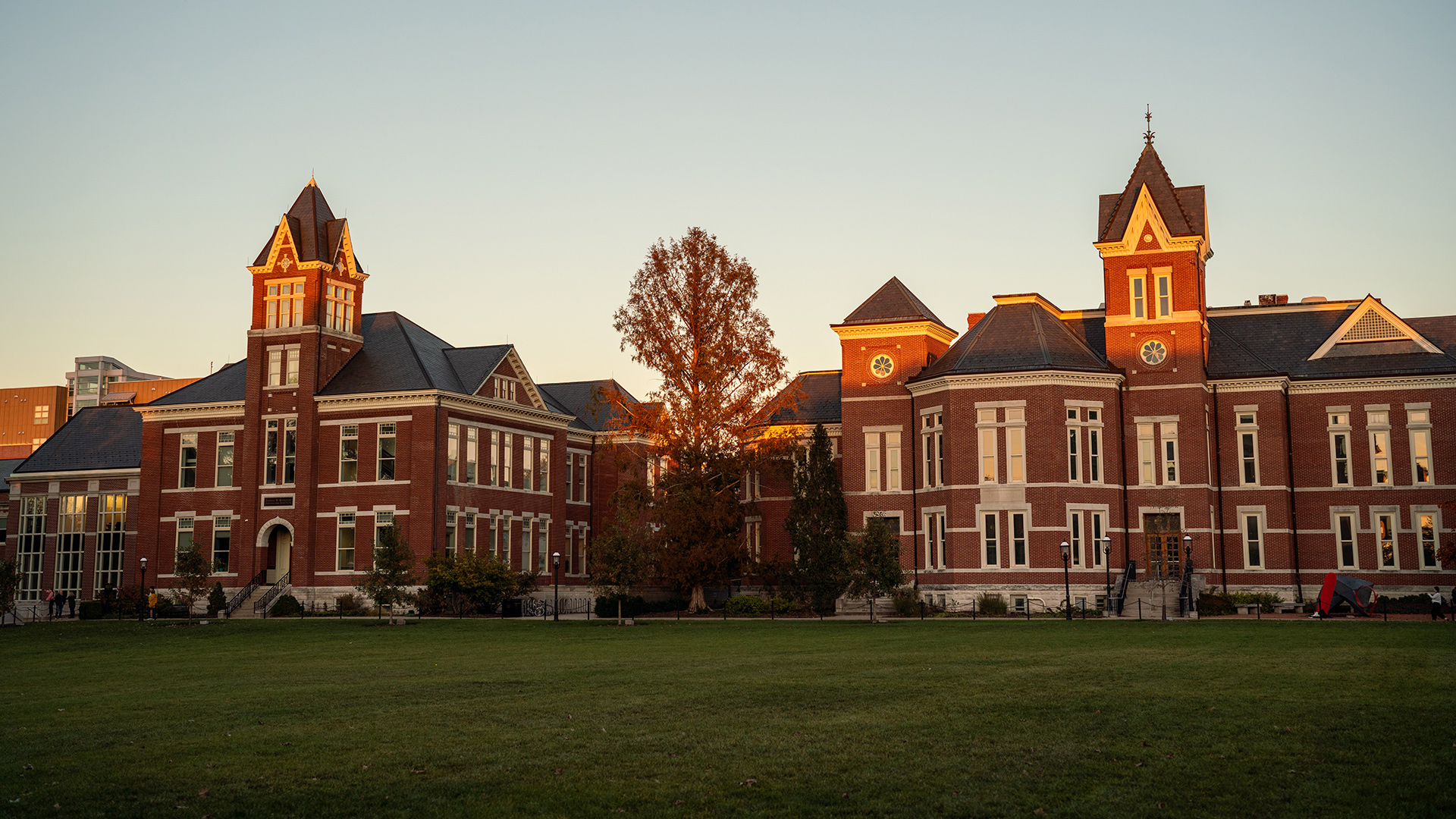
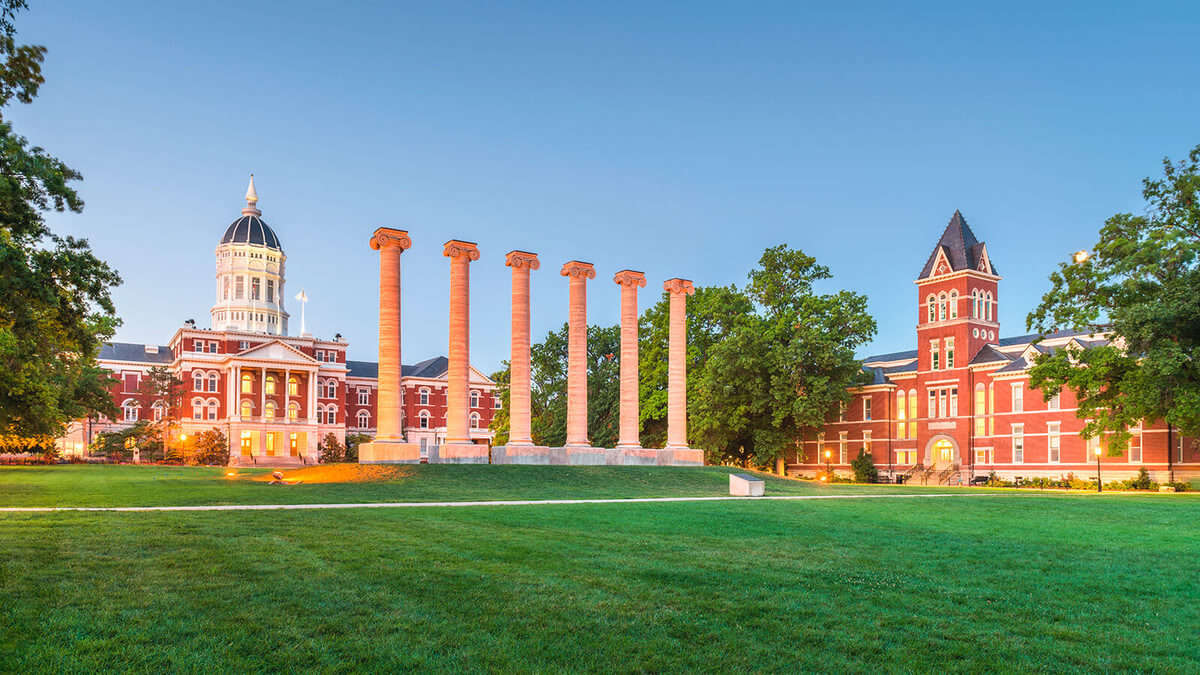
Life at Mizzou is defined by a vibrant, all-encompassing campus culture. The university promotes its beautiful campus as the perfect backdrop for forming lasting memories, with hundreds of student organizations, events, and activities designed to foster community. Greek life is a significant part of the social fabric, described by students as "pretty big." From the moment students arrive, there's an emphasis on finding one's fit within the large student body. The adjacent city of Columbia—often highlighted as a top student city—adds to the appeal with its own restaurants, shops, and music scene. Student life resources focus on wellness, mental health, and campus engagement, creating a supportive environment beyond the classroom.
Mizzou graduates enter the workforce with strong results. The university reports that within six months of spring graduation, 95.4% of graduates have successful outcomes, which includes employment, graduate school, or other pursuits. This high placement rate underscores the effectiveness of its career services and the marketability of its degrees. The graduation rate is solid, with sources citing rates between 73% and 76%, placing it in the top 20% nationally. These outcomes suggest that students who navigate Mizzou's large ecosystem successfully are well-positioned for their next steps.
As a public flagship, Mizzou's after aid is significantly lower than many private institutions, though out-of-state students pay a premium. The university provides a Net Price Calculator for prospective students to estimate their federal, state, and Mizzou-specific need-based grants and scholarships. Financial aid applications require the FAFSA. While the university offers loans as part of aid packages (including Federal Direct Unsubsidized Loans that don't require demonstrated need), the provided sources do not indicate that Mizzou has a "no-loan" policy for low-income students or that it meets 100% of demonstrated financial need for all admitted students. The focus is on providing estimates and guiding students through the process of funding their education.
Mizzou stands out for delivering a classic, large-scale Big Ten university experience—complete with powerhouse athletics, sprawling Greek life, and a massive array of academic programs—at a public-school price point and with an accessible admissions bar. Its singular claim to fame is the Missouri School of Journalism, a historic and perennially top-ranked program that gives the entire campus a media-savvy edge. Beyond that, it's the embodiment of a full-immersion college town: Columbia is a destination in itself, and the campus culture is all-in, fostering a strong sense of Tiger identity. For students who want the spirited community of a major university without the cutthroat selectivity, Mizzou offers a compelling, high-value package where it's easy to find your niche and emerge with a degree that delivers solid career outcomes.
University of Missouri-Columbia seal · sourceVisit Mizzou: Explore Campus Life at the University of Missouri · sourceVisit Mizzou | Mizzou · sourceUniversity of Missouri-Columbia — Admissions, Tuition & Acceptance Rate | Appily · source