Admit rate has ranged 75%–77% over the last 5 years, though the latest figure above (72%) falls outside that window. Source: IPEDS via Urban Institute.
Acceptance & SAT from Common Data Set / IPEDS; net price, earnings & graduation from the U.S. Dept. of Education College Scorecard. Figures lag ~1–2 years — verify with the school.
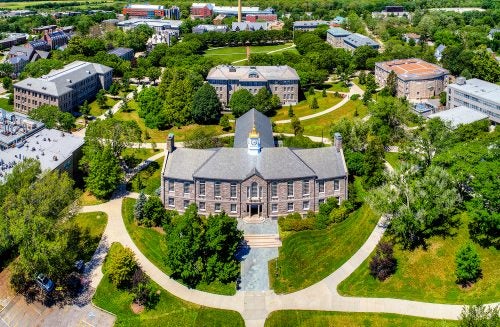
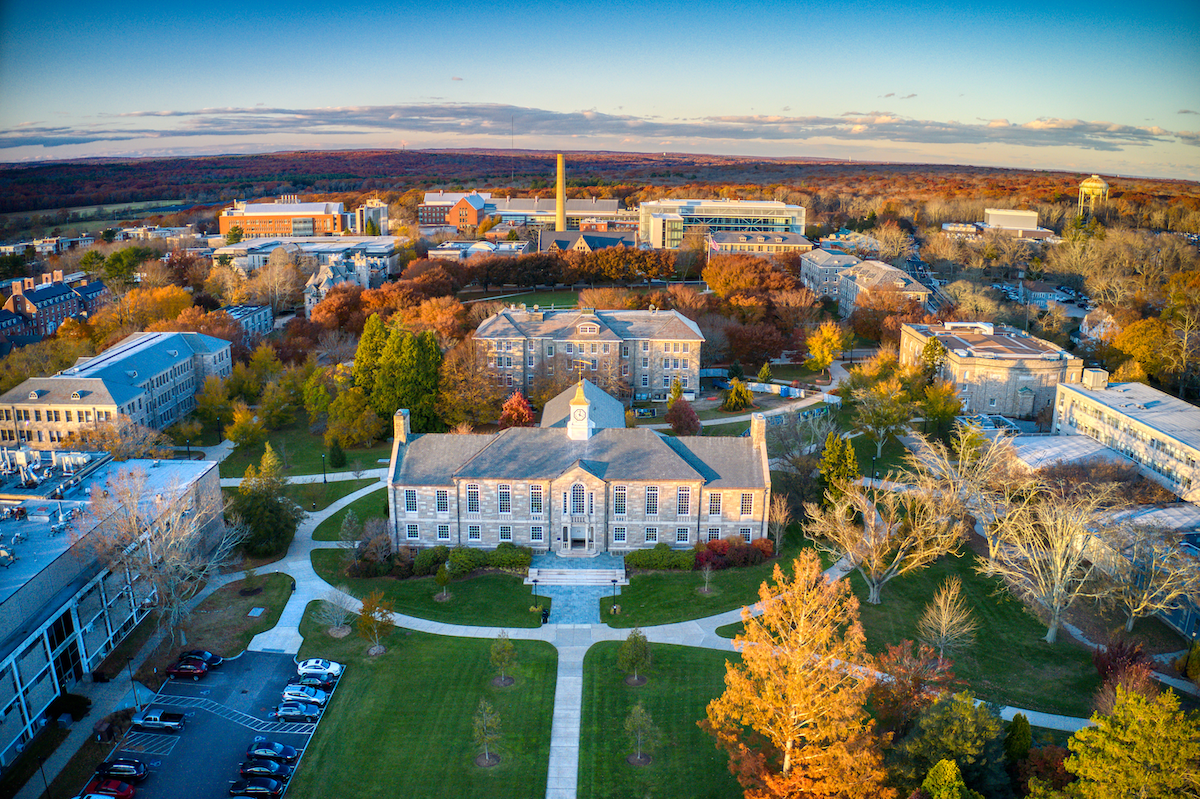
The University of Rhode Island is a public research university that feels like a sprawling, spirited coastal campus where the Atlantic is practically a quad. It’s defined by a pragmatic, accessible ethos—a place where strong, career-oriented programs in pharmacy, nursing, and oceanography anchor a broad undergraduate experience, and where Greek life and over 120 student organizations fuel a social scene as active as the research labs. This isn't a cutthroat ivory tower; it's a work-hard, play-hard state flagship where most who apply get in, many find their footing in the sciences or arts, and graduates leave with solid earning potential and manageable debt.
Admission requirements
Test-optional — scores considered if submitted
Required
High school transcript
Grade point average
Letters of recommendation
College-prep program
TOEFL (non-native English)
Considered (not required)
Class rank
Test scores (SAT/ACT)
Source: IPEDS Admissions survey (2022) via Urban Institute. Covers formal factors only — it does not reflect essays, extracurriculars, or other holistic criteria.
More details
Undergrad enrollment
13,381
In-state tuition
$16,942
Out-of-state tuition
$37,146
Early Decision
Option available (Class of 2029+)
Graduation Rate
73%
Classes <20 Students
37.5%
Demonstrated Interest
Considered
Student-Faculty Ratio
17:1
Median Earnings (10yr)
$69,743
First-Year Receiving Aid
98%
Outcomes & value
Outcomes & value
Median earnings (10 yr)
$69,743
Value (earnings ÷ net price)
3.3×
Median debt at graduation
$22,250
Graduation rate
73%
First-year retention
84%
Reducing loan balance (3 yr)
69%
Pell (lower-income) share
22%
First-gen share (among federal-aid recipients)
26%
Top-earning majors
Median earnings by field of study (highest credential), ~2 years after completion.
Electrical, Electronics, and Communications Engineering$72,693
Computer Engineering$71,473
Computer and Information Sciences, General$67,995
Registered Nursing, Nursing Administration, Nursing Research and Clinical Nursing$66,332
Mechanical Engineering$63,880
Industrial Engineering
Applicants here also applied to
The schools that most often appear alongside University of Rhode Island on applicants’ lists, from our self-reported outcomes corpus.
Co-application frequency from self-reported results — directional peer discovery, not a recommendation.
Campus & location
Campus safety
On-campus violent crimes (2024)
9
Per 1,000 students
0.56
On-campus criminal offenses classed as violent (murder/non-negligent manslaughter, rape, robbery, aggravated assault) for the most recent reported year. Source: U.S. Dept. of Education Campus Safety and Security (Clery Act). Counts reflect what’s reported to the school, and urban campuses often report more partly due to non-student incidents nearby — read alongside campus size and setting, not as a standalone safety verdict.
Climate
Pleasant days / yr
106
Summer high
77°F
Winter low
29°F
Annual rain
55.1"
Annual snow
20.7"
Natural-hazard risk
Relatively Low
Pleasant days counts days per year with a mean temperature of 55–75°F, a high at or below 90°F, a low at or above 45°F, and little precipitation — a transparent comfort measure, not a weighting we invented. Computed from Open-Meteo ERA5 daily history (2019–2023). Natural-hazard risk is the county’s composite rating from the FEMA National Risk Index.
Deep dive — research, future-scholar output & economic mobility▾
Research output
Institutional h-index
466
Scholarly works
47,910
Institutional research volume and impact from OpenAlex. The h-index reflects large research universities and will be low for teaching-focused liberal-arts colleges — not a measure of undergraduate quality.
Economic mobility
Mobility rate
1.6%
Bottom → top quintile
34%
From bottom quintile
5%
Mobility rate = the share of students who both start in the bottom household-income quintile and reach the top quintile; bottom → top is that chance conditional on starting at the bottom. Source: Opportunity Insights Mobility Report Cards (Chetty, Friedman, Saez, Turner & Yagan). Reflects 1980–82 birth cohorts, so it’s directional, not current.
Quick answers
What is the acceptance rate at University of Rhode Island?
University of Rhode Island's acceptance rate is approximately 72% (Kingston, RI), based on the most recent figures we compiled from public and primary sources.
What SAT score do you need for University of Rhode Island?
Admitted students at University of Rhode Island typically score 1020–1280 on the SAT (the middle-50% range). Scores outside this band are still admitted, especially with strong applications.
How much does University of Rhode Island cost?
At University of Rhode Island, the average net price (after aid) is about $21,440 per year. Actual cost varies with financial aid and residency.
How many undergraduates attend University of Rhode Island?
University of Rhode Island enrolls approximately 13,381 undergraduate students.
Where is University of Rhode Island located?
University of Rhode Island is located in Kingston, RI.
Admissions
URI operates with a high-access, moderately selective admissions model. With a 72% acceptance rate, the university admits a clear majority of its applicants, characterizing itself as "less selective." The process is holistic but grounded in academic preparedness. For the admitted class, the middle 50% GPA range is 3.4–4.1 on a 4.0 scale. Test scores are optional but submitted by a minority of applicants; for those who do submit, the middle 50% SAT range is 1170–1340 (with a separate source noting 1020–1280) and the ACT range is 27–32.
The university considers demonstrated interest as part of its evaluation, meaning campus visits, contact with admissions, and engagement can factor into decisions. For students certain URI is their first choice, the university recently implemented an Early Decision (ED) option, starting with the Class of 2029. While a specific ED isn't provided in the sources, one notes that some schools have higher rates for early plans. The overall yield rate—the percentage of admitted students who enroll—is low, at around 15-16%. This means URI admits many more students than it expects to enroll, typical for a public university where students have multiple affordable options.
Key factors in admission, per the , include the rigor of secondary school record, GPA, and standardized test scores (if submitted). Talent/abilities in areas of interest to the institution, like sports or the arts, also receive special consideration.
Earnings = median of students working ~10 years after entry; debt = median of graduates. Value divides 10-yr earnings by one year’s net price — read it as earnings per dollar of annual cost, not a full lifetime ROI; it favors lower-cost schools. Source: U.S. Dept. of Education College Scorecard. Figures lag ~2 years and reflect all students, not your intended major.
$63,749
Ocean Engineering$63,600
Biomedical/Medical Engineering$61,814
Source: U.S. Dept. of Education College Scorecard (field-of-study earnings). Figures cover graduates who received federal aid and lag ~2 years; not all programs report data.
URI offers a comprehensive, career-focused education across more than 90 undergraduate majors. The academic environment is defined by a 17:1 student-faculty ratio, with 37.5% of classes having fewer than 20 students, suggesting a mix of large introductory lectures and smaller, upper-level seminars.
The curriculum is notably strong in the sciences and health professions. Students and external reviews consistently highlight "excellent science programs," with stand-out majors in nursing and pharmacy—the latter described by students as "one of the top in the country." Beyond these flagships, the university provides a broad range of programs from German language and literature to computer engineering, all searchable through its academic programs database.
The vibe is one of applied learning and research opportunity, particularly given its coastal location, which fuels programs in oceanography and marine affairs. It’s a place where, as one prospective student noted, the draw is often the practical value of in-state tuition paired with reputable programs, rather than intangible prestige. The focus is on building a foundation for a career, with a dedication to "academic excellence, artistic creativity, and intellectual curiosity" across its colleges.
Life at URI is dominated by a classic, active New England campus social scene. A significant portion of students—39%—live in college-owned housing, while the majority (61%) live off-campus, many in the surrounding Kingston area or nearby beach towns.
Greek life is a major force, with many students noting it "dominates the campus social scene." This creates a recognizable rhythm of parties, formals, and philanthropy events. Beyond fraternities and sororities, the university fosters involvement through over 120 student organizations, ranging from cycling and sailing clubs to slam poetry and meditation groups. Students can get involved with the student newspaper, radio station, or countless other special interest clubs.
The campus itself is described as a "welcoming community" on a "beautiful campus near the ocean," offering countless options for creating your future. The location is a key part of the identity—close enough to beaches for a quick escape and within reach of Providence, the state's capital city. The overall promise is one of forging lifelong friendships and building a foundation for life, with social, academic, and outdoor opportunities intertwined.
URI graduates enter the workforce with solid, pragmatic outcomes. The four-year graduation rate is 59%, while the overall six-year graduation rate is 73%. This suggests many students take between four and six years to complete their degrees, which is common at public research universities.
Earnings data shows strong mid-career traction. The median salary six years after graduation is reported as $57,446. Other sources indicate earnings five years after graduation reach $67,282, and median earnings ten years after entry are $69,743. There is variance by major; for example, computer engineering graduates are reported to earn more. The university actively tracks post-graduate steps through its First Destination Survey, which captures data on employment, graduate school, and other plans immediately after graduation.
These figures paint a picture of a university whose graduates typically secure stable, middle-class careers, particularly from its flagship professional programs, without the stratospheric debt or earnings of elite private institutions.
URI positions itself as an affordable public option, particularly for Rhode Island residents, with financial aid playing a crucial role. The average net price after aid is $21,440. A significant majority of students receive assistance, with 98% of full-time, first-year undergraduates receiving grant or scholarship aid in a recent academic year, and the average aid package noted as $17,388.
The university's aid philosophy is need-based. Most financial aid is awarded on the basis of demonstrated financial need. The university does not advertise a "no-loan" policy or a guarantee to meet 100% of demonstrated need for all students. Loans remain a standard part of many aid packages, and there are loan options available that do not require a demonstration of financial need to help cover remaining costs. Students are encouraged to use the URI Calculator for a personalized estimate of costs after grants and scholarships.
URI stands out as the unpretentious, ocean-adjacent workhorse of New England public higher education. Its identity isn't built on exclusivity but on reliable quality and specific, formidable strengths. You come here for the top-tier pharmacy program, the highly-regarded nursing school, and the excellent science offerings that leverage its coastal setting, not for a fancy name on a diploma.
It’s a campus of clear trade-offs: high admission accessibility paired with a need to be proactive to thrive; a social scene heavily influenced by Greek life alongside a vast array of niche clubs; large lecture halls for intro courses and smaller classes in the majors. The vibe is decidedly communal and activity-oriented—a place to get involved, whether in a research lab, on a club sailing trip, or at a frat party. For in-state students, it’s a compelling value proposition. For all, it offers a direct path to a reputable degree and a career, wrapped up in a classic, spirited college experience where the beach is never far from mind. It’s a university that knows what it is: a practical, vibrant, and scenic launchpad.
University of Rhode Island seal · sourceCampuses – The University of Rhode Island · sourceWelcome Back! – Rhody Today · sourceUniversity of Rhode Island (URI) - Profile, Rankings and Data | US News Best Colleges · source