Admit rate has ranged 12%–27% over the last 5 years — notably volatile. Source: IPEDS via Urban Institute.
Acceptance & SAT from Common Data Set / IPEDS; net price, earnings & graduation from the U.S. Dept. of Education College Scorecard. Figures lag ~1–2 years — verify with the school.
Colgate University is a fiercely selective, top-tier liberal arts college that punches far above its weight in career outcomes and alumni network strength. Set in the rural, picturesque village of Hamilton, New York, it cultivates a tight-knit, tradition-rich campus culture where rigorous academics are balanced by a vibrant, often Greek-influenced social scene. Its defining characteristic is a powerful return on investment, consistently ranking among the nation's best for the economic mobility it provides its graduates.
Admission requirements
Test-optional — scores considered if submitted
Required
High school transcript
Grade point average
Letters of recommendation
College-prep program
TOEFL (non-native English)
Considered (not required)
Class rank
Test scores (SAT/ACT)
Source: IPEDS Admissions survey (2022) via Urban Institute. Covers formal factors only — it does not reflect essays, extracurriculars, or other holistic criteria.
More details
Undergrad enrollment
3,180
In-state tuition
$70,306
Out-of-state tuition
$70,306
No-Loan Policy
Yes, incomes < $200k
Graduation Rate
91%
Meets Full Need
Yes
ED Share of Class
Data not in provided sources
On-Campus Housing
93%
Most Popular Majors
Economics, Political Science
First-Year Retention
Data not in provided sources
Demonstrated Interest
Data not in provided sources
Median Earnings (10yr)
Outcomes & value
Outcomes & value
Median earnings (10 yr)
$85,139
Value (earnings ÷ net price)
3.0×
Median debt at graduation
$15,000
Graduation rate
91%
First-year retention
93%
Reducing loan balance (3 yr)
86%
Pell (lower-income) share
13%
First-gen share (among federal-aid recipients)
18%
Financial health
2.6 / 3.0Meets the federal financial-responsibility standard
U.S. Dept. of Education Financial Responsibility Composite Score (FY2022-23). Scale −1.0 to 3.0; ≥1.5 meets the standard. Reported for private nonprofit & for-profit institutions only — public universities are state-backed and not scored, so this is a stability signal, not a ranking.
Top-earning majors
Median earnings by field of study (highest credential), ~2 years after completion.
Economics$67,995
Computer Science$66,171
International Relations and National Security Studies$53,775
Political Science and Government$53,358
Romance Languages, Literatures, and Linguistics$47,260
Psychology, General$47,260
Applicants here also applied to
The schools that most often appear alongside Colgate on applicants’ lists, from our self-reported outcomes corpus.
Co-application frequency from self-reported results — directional peer discovery, not a recommendation.
Campus & location
Campus safety
On-campus violent crimes (2024)
1
Per 1,000 students
0.31
On-campus criminal offenses classed as violent (murder/non-negligent manslaughter, rape, robbery, aggravated assault) for the most recent reported year. Source: U.S. Dept. of Education Campus Safety and Security (Clery Act). Counts reflect what’s reported to the school, and urban campuses often report more partly due to non-student incidents nearby — read alongside campus size and setting, not as a standalone safety verdict.
Climate
Pleasant days / yr
90
Summer high
76°F
Winter low
18°F
Annual rain
49"
Annual snow
64.9"
Natural-hazard risk
Relatively Low
Pleasant days counts days per year with a mean temperature of 55–75°F, a high at or below 90°F, a low at or above 45°F, and little precipitation — a transparent comfort measure, not a weighting we invented. Computed from Open-Meteo ERA5 daily history (2019–2023). Natural-hazard risk is the county’s composite rating from the FEMA National Risk Index.
Deep dive — research, future-scholar output & economic mobility▾
Research output
Institutional h-index
188
Scholarly works
8,533
Institutional research volume and impact from OpenAlex. The h-index reflects large research universities and will be low for teaching-focused liberal-arts colleges — not a measure of undergraduate quality.
Economic mobility
Mobility rate
0.9%
Bottom → top quintile
37%
From bottom quintile
2%
Mobility rate = the share of students who both start in the bottom household-income quintile and reach the top quintile; bottom → top is that chance conditional on starting at the bottom. Source: Opportunity Insights Mobility Report Cards (Chetty, Friedman, Saez, Turner & Yagan). Reflects 1980–82 birth cohorts, so it’s directional, not current.
Quick answers
What is the acceptance rate at Colgate University?
Colgate University's acceptance rate is approximately 14% (Hamilton, NY), based on the most recent figures we compiled from public and primary sources.
What SAT score do you need for Colgate University?
Admitted students at Colgate University typically score 1430–1540 on the SAT (the middle-50% range). Scores outside this band are still admitted, especially with strong applications.
How much does Colgate University cost?
At Colgate University, the average net price (after aid) is about $28,786 per year. Actual cost varies with financial aid and residency.
How many undergraduates attend Colgate University?
Colgate University enrolls approximately 3,180 undergraduate students.
Where is Colgate University located?
Colgate University is located in Hamilton, NY.
Admissions
Gaining admission to Colgate is a highly competitive endeavor, firmly placing it among the most selective liberal arts colleges in the country. The university receives tens of thousands of applications for a first-year class of around 800 students. The admitted student profile is exceptionally strong: the middle 50% SAT range is 1460–1530, with an ACT range of 33–35, and the average GPA is 3.81. A remarkable 78% of admitted students ranked in the top 10% of their high school class, with 89% in the top 20%. The public/private high school ratio is nearly even at 53% public and 47% private.
Applying Early Decision provides a significant statistical advantage. While the overall is highly selective, the Early Decision acceptance rate is notably higher. For the Class of 2028, 471 ED applicants were accepted from a pool of 2,450, translating to an ED acceptance rate of 19.2%. Historical data shows ED acceptance rates have fluctuated but remained substantially above the regular decision rate, such as 46.97% for the Class of 2024 and 40.75% for the Class of 2023. This strategy fills a large portion of the incoming class, making the regular decision pool even more competitive.
Colgate's admissions office considers a holistic range of factors. According to the framework, important considerations include the rigor of secondary school record, class rank, GPA, standardized test scores, application essay, recommendations, extracurricular activities, and character/personal qualities. The university accepts the GED in place of a high school diploma.
Earnings = median of students working ~10 years after entry; debt = median of graduates. Value divides 10-yr earnings by one year’s net price — read it as earnings per dollar of annual cost, not a full lifetime ROI; it favors lower-cost schools. Source: U.S. Dept. of Education College Scorecard. Figures lag ~2 years and reflect all students, not your intended major.
Natural Resources Conservation and Research$44,942
Philosophy$43,798
Source: U.S. Dept. of Education College Scorecard (field-of-study earnings). Figures cover graduates who received federal aid and lag ~2 years; not all programs report data.
Colgate's academic identity is rooted in a comprehensive and demanding liberal arts core, designed to foster intellectual curiosity and rigorous discourse across disciplines. The curriculum is organized into four academic divisions: Arts and Humanities, Natural Sciences and Mathematics, Social Sciences, and University Studies. Students can explore 57 majors and several additional minors, providing substantial breadth within a focused, residential college environment.
While exploration is encouraged, distinct academic pathways have emerged as particularly prominent. The most popular majors are Econometrics and Quantitative Economics, Political Science and Government, and other social sciences. Other significant areas of study include English Language and Literature, Environmental Studies, Neuroscience, and Biology/Biological Sciences, each comprising about 4% of graduates. This distribution reflects a student body gravitating toward pre-professional and research-oriented fields within the liberal arts framework.
The academic culture is characterized by close faculty-student interaction and high expectations. The university's promotional materials emphasize "the power of rigorous discourse" and "the energetic pursuit of knowledge." This translates to a challenging workload where students are expected to engage deeply with material and contribute actively in small classroom settings. The academic experience is the central pillar of life at Colgate, preparing students not just for first jobs but for adaptable, critical thinking careers.
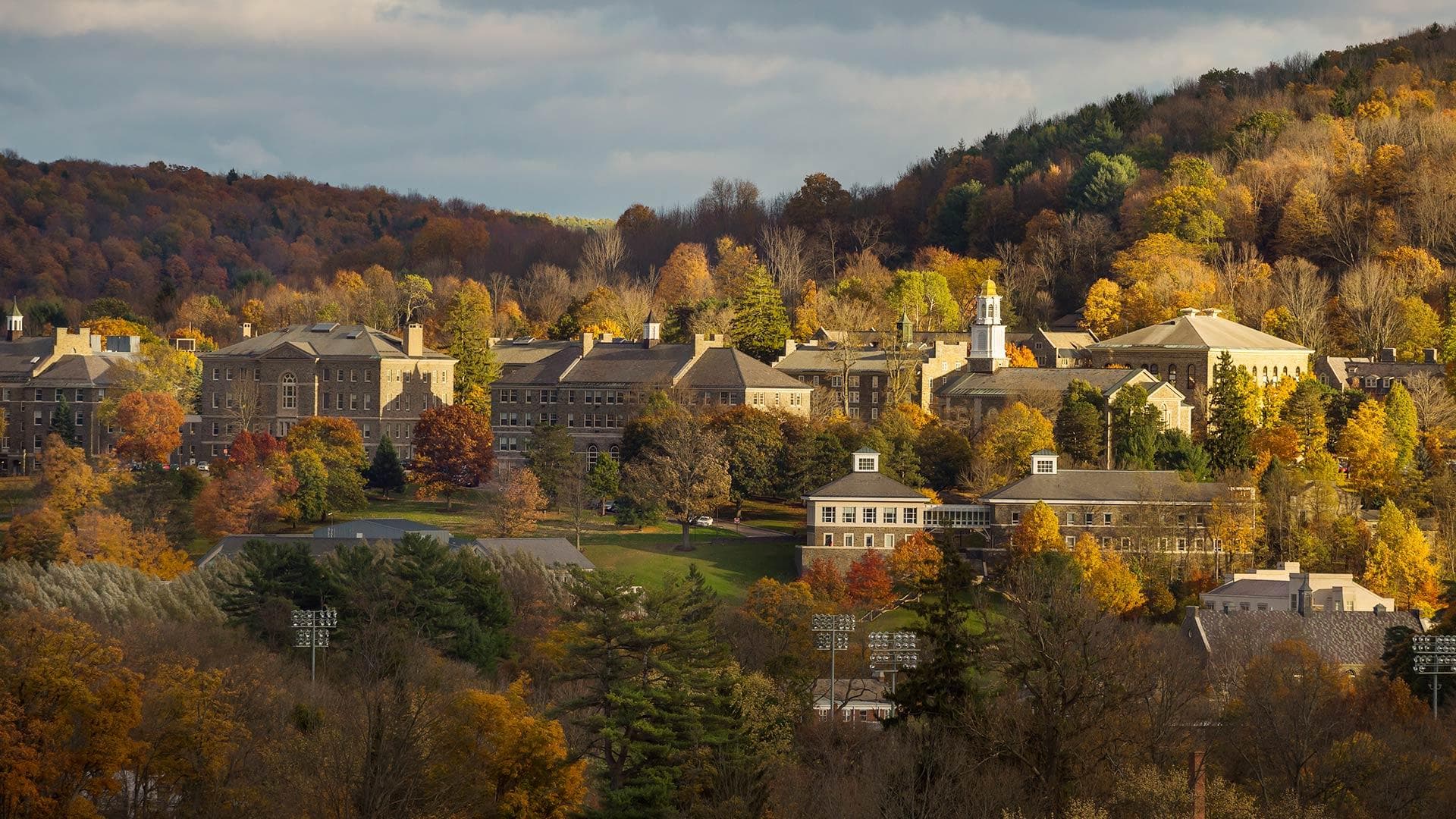
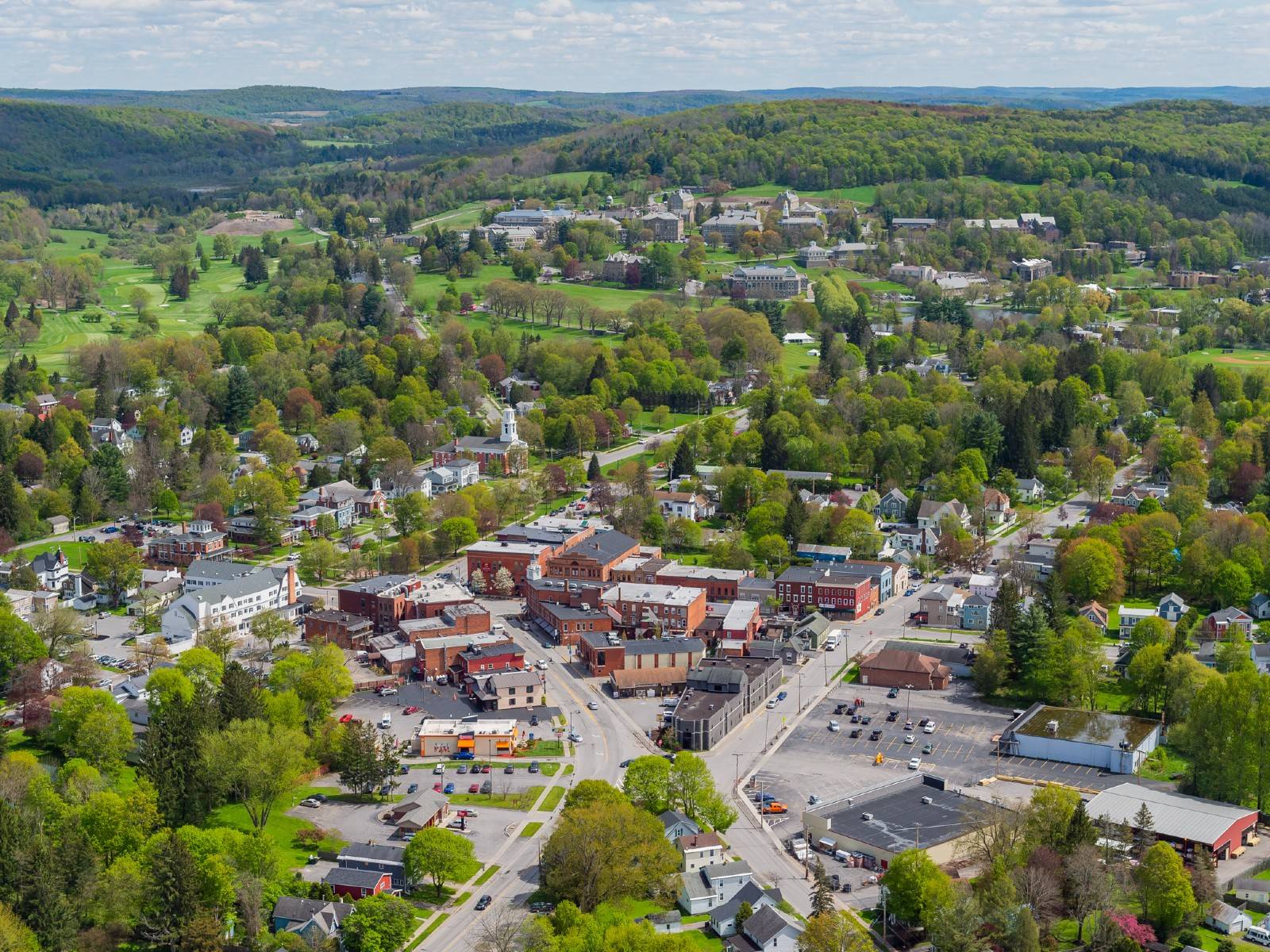
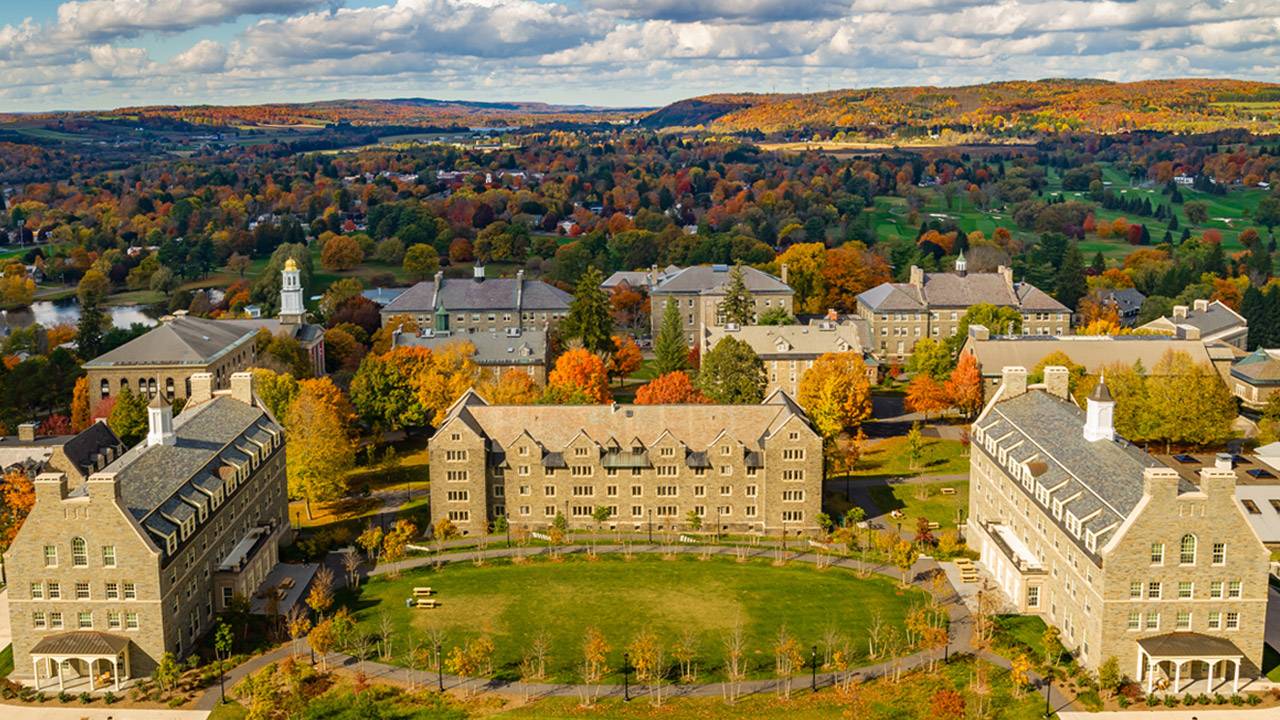
Life at Colgate is defined by an immersive, all-encompassing campus culture in the secluded village of Hamilton, New York. The residential experience is paramount, with 93% of students living in college-owned, -operated, or -affiliated housing. This creates a tight-knit, self-contained community where friendships are forged in dorms, dining halls, and the handful of local establishments. The campus itself is renowned for its stunning, park-like beauty and historic limestone buildings, providing a picturesque and cohesive setting for the four-year experience.
Social life is active and heavily structured around campus traditions and organizations. Greek life plays a significant role, with a large portion of the student body participating in fraternities and sororities, which often anchor the weekend social scene. Students describe the social environment as vibrant and friendly, though its insular nature means that "making friends is easy if you put yourself out there," as one student noted. The university actively works on "creating a campus culture of community, ritual, and pride" through residential life programs, campus-wide events, and a strong emphasis on athletics.
With the nearest city of significant size (Syracuse) about an hour away, students largely look inward for entertainment and community. This fosters a strong sense of shared identity and school spirit, centered around Division I athletics (especially hockey and football), outdoor activities in the surrounding Chenango Valley, and longstanding campus traditions. The result is a classic, intense liberal arts college experience where academic and social lives are deeply intertwined within the 'Colgate bubble.'
Colgate's most compelling selling point is the exceptional return on investment it delivers to its graduates. The university boasts an outstanding graduation rate of 91%, placing it in the top 5% of institutions nationally. This success extends to student-athletes, who achieve a 98% graduation success rate, with the average four-year Academic Progress Rate (APR) for teams at 996.
Where Colgate truly distinguishes itself is in the economic outcomes of its alumni. The university has been ranked #2 in the nation for economic outcomes, ahead of elite institutions like MIT, Stanford, Harvard, Princeton, and Yale. This ranking measures the value-added earnings of graduates, indicating that Colgate provides a significant boost to students' long-term earning potential relative to their backgrounds. While specific median earnings figures vary by source, the trajectory is clear: earnings one year after graduation are reported around $46,979, jumping to approximately $78,336 five years out. This powerful career launch is fueled by a robust, loyal alumni network known for actively supporting fellow graduates in fields like finance, consulting, law, and public policy.
The combination of high graduation rates and strong post-graduate earnings underscores a fundamental truth about Colgate: it is an institution that reliably converts a rigorous liberal arts education into tangible, lifelong professional success and economic mobility.
Colgate has made a substantial and highly public commitment to affordability through its Colgate Commitment initiative, fundamentally reshaping its financial aid philosophy. The cornerstone of this policy is a no-loan guarantee for a wide swath of the student body. As of its latest expansion, students with annual family income levels up to $200,000 will have their demonstrated financial need met with a grant-based aid package that excludes federal loans. For families with incomes up to $175,000, the university pledges that the parent contribution will be $0, effectively making Colgate tuition-free for them.
The university is committed to meeting 100% of the demonstrated financial need of all admitted students. For those who do receive aid, the average financial aid package is substantial. A significant portion of the student body—over a third—benefits from this support. The , or average cost after aid and scholarships, reflects this commitment to accessibility. QuestBridge partners note additional supports, such as waiving the standard student contribution for first-year students.
This aggressive aid policy, supported by a dedicated $100 million fundraising pursuit, is a direct investment in socioeconomic diversity and a recognition of the high sticker price of a Colgate education. It signals that the university is actively competing for high-achieving students from middle- and upper-middle-income families by removing the barrier of debt for a majority of aided students.
Colgate University stands out for its powerful, almost paradoxical blend of a classic, insular liberal arts experience with remarkably potent real-world outcomes. It is not a place for the half-committed. Its remote location in Hamilton demands full immersion, fostering an intense community spirit and a campus culture rich in tradition—from Greek life to hockey games—that binds alumni for life. This creates the famed 'Colgate bubble,' a cohesive environment where lifelong networks are formed.
What truly separates Colgate from its peers is the demonstrable economic horsepower it gives its graduates. The #2 national ranking for economic outcomes isn't just a marketing point; it's a data-driven validation that a Colgate degree provides exceptional value-added earning potential, rivaling and even surpassing Ivy League institutions. This outcome is the product of a rigorous academic curriculum that leans toward economics, political science, and the sciences, coupled with a famously dedicated and successful alumni network that actively opens doors in finance, consulting, and beyond.
Finally, the Colgate Commitment financial aid program is a game-changer. By eliminating loans for families with incomes up to $200,000, Colgate has put significant financial muscle behind its promise of accessibility, directly addressing the affordability crisis in elite higher education. In essence, Colgate offers the complete package: the intimate, transformative undergraduate experience of a top liberal arts college, with the career-launching power and financial accessibility typically associated with much larger, wealthier research universities.
Colgate University seal · sourceA Sense of Place - This is Colgate. · sourceOur Location | Colgate University · sourceColgate at a Glance | Colgate University · source