Admit rate has ranged 27%–30% over the last 5 years, though the latest figure above (37%) falls outside that window. Source: IPEDS via Urban Institute.
Acceptance & SAT from Common Data Set / IPEDS; net price, earnings & graduation from the U.S. Dept. of Education College Scorecard. Figures lag ~1–2 years — verify with the school.
Case Western Reserve University is a powerhouse of a research institution that feels like a secret handshake among the nation's top STEM and pre-professional students. It combines the academic intensity of a tech institute with the breadth of a university, anchored in Cleveland's surprisingly rich cultural ecosystem. The vibe is one of driven, collaborative pragmatism—students come for the unparalleled research access and graduate with some of the highest earning potential in the Midwest.
Admission requirements
Test-optional — scores considered if submitted
Required
High school transcript
Grade point average
Letters of recommendation
College-prep program
TOEFL (non-native English)
Considered (not required)
Class rank
Test scores (SAT/ACT)
Demonstrated competencies
Source: IPEDS Admissions survey (2022) via Urban Institute. Covers formal factors only — it does not reflect essays, extracurriculars, or other holistic criteria.
More details
Undergrad enrollment
6,437
In-state tuition
$66,608
Out-of-state tuition
$66,608
Graduation Rate
87%
Meets Full Need
Yes
Demonstrated Interest
Not considered
Median Earnings (10yr)
$87,989
Mid-Career Median Salary (4yr out)
$94,000
Outcomes & value
Outcomes & value
Median earnings (10 yr)
$87,989
Value (earnings ÷ net price)
2.1×
Median debt at graduation
$24,000
Graduation rate
87%
First-year retention
92%
Reducing loan balance (3 yr)
85%
Pell (lower-income) share
18%
First-gen share (among federal-aid recipients)
11%
Financial health
3.0 / 3.0Meets the federal financial-responsibility standard
U.S. Dept. of Education Financial Responsibility Composite Score (FY2022-23). Scale −1.0 to 3.0; ≥1.5 meets the standard. Reported for private nonprofit & for-profit institutions only — public universities are state-backed and not scored, so this is a stability signal, not a ranking.
Top-earning majors
Median earnings by field of study (highest credential), ~2 years after completion.
Computer Science$71,575
Mechanical Engineering$69,854
Electrical, Electronics, and Communications Engineering$68,219
Chemical Engineering$66,325
Biomedical/Medical Engineering$63,997
Aerospace, Aeronautical, and Astronautical/Space Engineering$63,501
Applicants here also applied to
The schools that most often appear alongside Case Western on applicants’ lists, from our self-reported outcomes corpus.
Co-application frequency from self-reported results — directional peer discovery, not a recommendation.
Campus & location
Campus safety
On-campus violent crimes (2024)
5
Per 1,000 students
0.40
On-campus criminal offenses classed as violent (murder/non-negligent manslaughter, rape, robbery, aggravated assault) for the most recent reported year. Source: U.S. Dept. of Education Campus Safety and Security (Clery Act). Counts reflect what’s reported to the school, and urban campuses often report more partly due to non-student incidents nearby — read alongside campus size and setting, not as a standalone safety verdict.
Climate
Pleasant days / yr
96
Summer high
78°F
Winter low
26°F
Annual rain
49.3"
Annual snow
40.7"
Natural-hazard risk
Relatively High
Pleasant days counts days per year with a mean temperature of 55–75°F, a high at or below 90°F, a low at or above 45°F, and little precipitation — a transparent comfort measure, not a weighting we invented. Computed from Open-Meteo ERA5 daily history (2019–2023). Natural-hazard risk is the county’s composite rating from the FEMA National Risk Index.
Deep dive — research, future-scholar output & economic mobility▾
Research output
Institutional h-index
1,027
Scholarly works
171,493
Institutional research volume and impact from OpenAlex. The h-index reflects large research universities and will be low for teaching-focused liberal-arts colleges — not a measure of undergraduate quality.
Future-scholar output
Science & engineering PhDsper-capita yield 9.7
Share of this school’s graduates who go on to earn research doctorates (2010–20), by national rank and per-capita yield (NSF institutional-yield ratio). A signal of a research-oriented student culture — not a causal promise, since it partly reflects who enrolls. Only top producers appear. Source: NSF NCSES, Baccalaureate Origins of U.S. Research Doctorate Recipients.
Economic mobility
Mobility rate
1.8%
Bottom → top quintile
Quick answers
What is the acceptance rate at Case Western Reserve University?
Case Western Reserve University's acceptance rate is approximately 37% (Cleveland, OH), based on the most recent figures we compiled from public and primary sources.
What SAT score do you need for Case Western Reserve University?
Admitted students at Case Western Reserve University typically score 1430–1540 on the SAT (the middle-50% range). Scores outside this band are still admitted, especially with strong applications.
How much does Case Western Reserve University cost?
At Case Western Reserve University, the average net price (after aid) is about $41,190 per year. Actual cost varies with financial aid and residency.
How many undergraduates attend Case Western Reserve University?
Case Western Reserve University enrolls approximately 6,437 undergraduate students.
Where is Case Western Reserve University located?
Case Western Reserve University is located in Cleveland, OH.
Admissions
Case Western Reserve operates in a selective but not hyper-competitive admissions tier, with a published of 37%. The university is , but for those who submit, the middle 50% SAT range is 1430–1540 (superscored), and the ACT range is 32–34. The academic profile of admitted students is strong, with the majority reporting high school GPAs of 3.75 and above. The university offers both Early Decision I & II and Early Action plans; data suggests the Early Action acceptance rate has been notably higher than the regular decision rate, historically around 23-24%. A distinctive feature of CWRU's admissions is its low rate—only about 16% of admitted students choose to enroll, a figure often discussed in student forums. According to the , the university does not consider 'level of applicant's interest' (demonstrated interest) in its admissions decisions, making campus visits and outreach optional rather than strategic necessities. The most important factors in admission are academic: rigor of secondary school record, class rank, GPA, standardized test scores (if submitted), and the application essay. Recommendations, extracurricular activities, and character/personal qualities are rated as 'important' but not 'very important.'
Earnings = median of students working ~10 years after entry; debt = median of graduates. Value divides 10-yr earnings by one year’s net price — read it as earnings per dollar of annual cost, not a full lifetime ROI; it favors lower-cost schools. Source: U.S. Dept. of Education College Scorecard. Figures lag ~2 years and reflect all students, not your intended major.
Civil Engineering$61,814
Registered Nursing, Nursing Administration, Nursing Research and Clinical Nursing$60,045
Source: U.S. Dept. of Education College Scorecard (field-of-study earnings). Figures cover graduates who received federal aid and lag ~2 years; not all programs report data.
Mobility rate = the share of students who both start in the bottom household-income quintile and reach the top quintile; bottom → top is that chance conditional on starting at the bottom. Source: Opportunity Insights Mobility Report Cards (Chetty, Friedman, Saez, Turner & Yagan). Reflects 1980–82 birth cohorts, so it’s directional, not current.
CWRU's academic identity is defined by its deep integration of a top-tier research enterprise with undergraduate education. The university offers more than 100 undergraduate programs across its colleges, with a heavy emphasis on STEM, healthcare, business, and the social sciences. The most popular majors reflect this: Engineering, Biological and Biomedical Sciences, Social Sciences, and Business, Management, and Marketing. The curriculum is built for flexibility and depth, supporting over 145 dual-degree programs, including accelerated options for graduate and professional degrees. What truly sets the academic experience apart is the immediate and pervasive access to research. As a nationally recognized research institution, opportunities for undergraduates to work alongside faculty on groundbreaking projects are not reserved for seniors; they are a fundamental part of the culture from the first year. This hands-on, inquiry-based approach is frequently cited by students as the defining feature of a CWRU education. The workload is notoriously heavy, and the academic atmosphere is described as collaborative rather than cutthroat—students are in it together, problem-solving in labs and libraries. The faculty, many of whom are leading researchers in their fields, are noted for being accessible and invested in teaching, a combination that creates a rigorous but supportive intellectual environment.
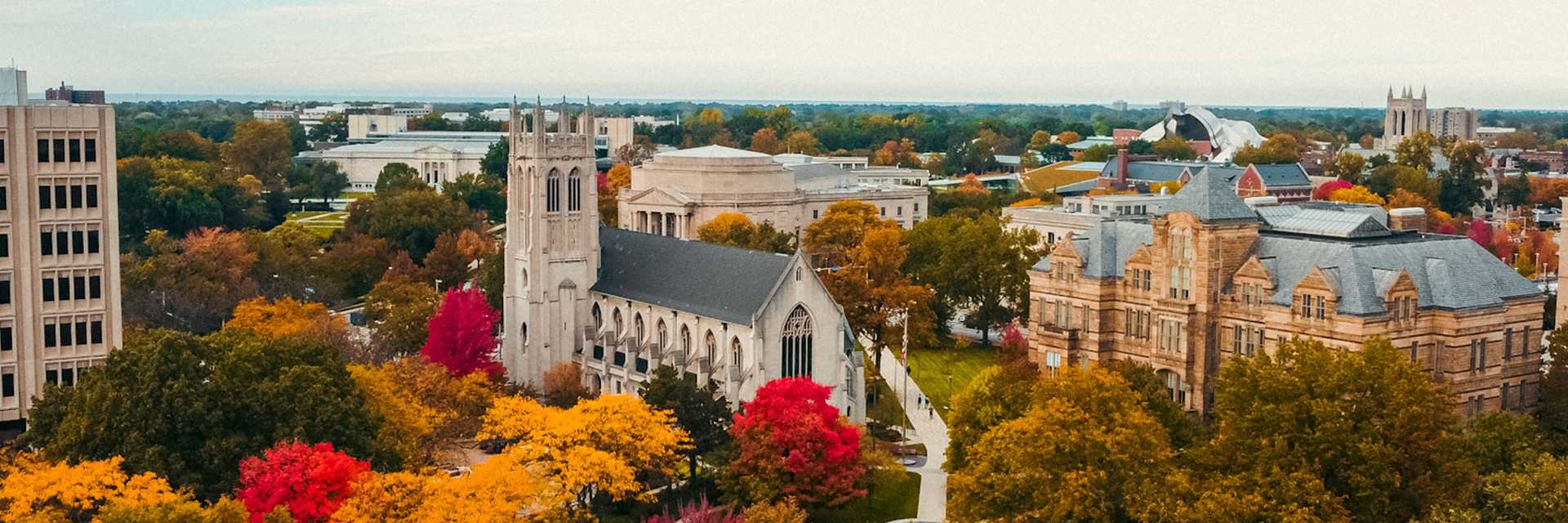
The CWRU student experience is a deliberate fusion of intense academics and a vibrant, self-made social scene on an urban campus. Located in Cleveland's University Circle, a 550-acre cultural and educational district, the campus is surrounded by world-class museums, the Cleveland Orchestra, and the Cleveland Clinic. This isn't a secluded college town; it's an integrated part of a major city's intellectual hub. On campus, life is driven by over 200 student organizations, ranging from academic clubs and competitive robotics teams to cultural groups and performing arts. While Greek life is present, it is not the dominant social force. Students describe a campus culture that is far from 'depressing'—there's always something happening, from world-renowned speakers to student-run events, though you often have to seek it out. The residential system and campus traditions, like the Hudson Relays and Springfest, help build community. The student body is characterized as pragmatic, intellectually curious, and diverse, with a shared understanding that everyone is there to work hard. The urban setting provides endless off-campus opportunities for internships, volunteering, food, and entertainment, making the Case experience as much about engaging with Cleveland as it is about campus life.
The return on investment from a CWRU degree is stark and compelling, particularly in the STEM and healthcare fields. The university consistently ranks #1 in Ohio for graduate earnings. Just four years after graduation, the median salary for alumni is reported at $94,000, with a median starting salary range of $75,000–$79,000. The longer-term payoff is also strong, with a median earnings figure of $87,989 ten years after entry. This financial success is underpinned by exceptional professional and graduate school placement rates. The medical school for CWRU pre-meds is 78%, nearly double the national average of 45%. Similarly, 91% of law school applicants are accepted. The four-year graduation rate is 73%, and the six-year rate is 87%, indicating most students complete their degrees efficiently and move directly into high-impact careers or advanced study. These outcomes are a direct result of the university's research-intensive curriculum, strong industry connections in engineering and healthcare, and a career services apparatus that leverages the powerful CWRU alumni network.
Case Western Reserve is a private institution with a correspondingly high sticker price, but it couples this with a robust financial aid policy designed to increase accessibility. Crucially, CWRU meets 100% of demonstrated financial need for all admitted undergraduate students through a combination of grants, scholarships, work-study, and loans. The university offers both need-based and . The average after aid is $41,190. For families seeking an early estimate, the university provides a Net Price Calculator and a quick MyinTuition cost estimator tool. It's important to note that while CWRU meets full need, its admissions process is need-aware for international students and for domestic students in the waitlist pool, meaning financial need may be considered in those specific contexts. For admitted domestic students, the financial aid package is constructed to bridge the gap between the and the calculated family contribution. Discussions among students and parents on forums highlight that aid packages can vary, but the commitment to meeting full need is a cornerstone of the university's official policy.
Case Western Reserve carves out a unique niche in American higher education by offering an Ivy League-caliber research experience at a notably higher , all within the dynamic, affordable context of Cleveland. It stands out for three interconnected reasons. First, its undergraduate research access is unparalleled for an institution of its selectivity; students don't just hear about research, they do it from day one, often with publication or patent potential. Second, it provides a pragmatic, high-ROI education with crystal-clear pathways to top medical schools, engineering firms, and tech companies, resulting in graduate earnings that lead its state. Finally, its location in University Circle is a masterstroke, embedding the campus in a dense ecosystem of world-class hospitals, museums, and cultural institutions that become extensions of the classroom. This isn't a university for students seeking a traditional, rah-rah collegiate experience. It's for the intellectually voracious, self-directed learner who wants the tools to solve real-world problems and isn't afraid of a heavy workload in exchange for extraordinary opportunity. The culture is one of collaborative intensity, where the line between studying and doing is beautifully blurred.
Case Western Reserve University seal · sourceAbout | Case Western Reserve University · sourceCase Western Reserve University - Campus Tour · sourceHistory | Case Western Reserve University · source
_(14780244314).jpg?width=1600)