Admit rate has ranged 45%–57% over the last 5 years — notably volatile, though the latest figure above (33%) falls outside that window. Source: IPEDS via Urban Institute.
Acceptance & SAT from Common Data Set / IPEDS; net price, earnings & graduation from the U.S. Dept. of Education College Scorecard. Figures lag ~1–2 years — verify with the school.
Fairfield University is a selective, Jesuit Catholic institution on the Connecticut coast that has rapidly transformed into a destination for ambitious, career-focused students. It combines a classic liberal arts core with powerhouse business and health professions programs, all delivered within a tight-knit, residential community where 73% of undergraduates live on a campus praised for its friendly, inclusive vibe. The university's defining characteristic is its relentless focus on tangible outcomes: 97% of graduates are employed, in grad school, or in service within six months, with alumni earning salaries well above national averages.
Admission requirements
Test-optional — scores considered if submitted
Required
High school transcript
Grade point average
Letters of recommendation
College-prep program
TOEFL (non-native English)
Considered (not required)
Class rank
Test scores (SAT/ACT)
Source: IPEDS Admissions survey (2022) via Urban Institute. Covers formal factors only — it does not reflect essays, extracurriculars, or other holistic criteria.
More details
Undergrad enrollment
5,373
In-state tuition
$58,350
Out-of-state tuition
$58,350
No-Loan Policy
Not in sources
Graduation Rate
84%
Meets Full Need
Yes
ED Share of Class
Not in sources
First-Year Retention
Not in sources
Demonstrated Interest
Considered
Median Earnings (10yr)
$88,794
Outcomes & value
Outcomes & value
Median earnings (10 yr)
$88,794
Value (earnings ÷ net price)
1.8×
Median debt at graduation
$26,000
Graduation rate
84%
First-year retention
91%
Reducing loan balance (3 yr)
82%
Pell (lower-income) share
7%
First-gen share (among federal-aid recipients)
17%
Financial health
3.0 / 3.0Meets the federal financial-responsibility standard
U.S. Dept. of Education Financial Responsibility Composite Score (FY2022-23). Scale −1.0 to 3.0; ≥1.5 meets the standard. Reported for private nonprofit & for-profit institutions only — public universities are state-backed and not scored, so this is a stability signal, not a ranking.
Top-earning majors
Median earnings by field of study (highest credential), ~2 years after completion.
Registered Nursing, Nursing Administration, Nursing Research and Clinical Nursing$76,749
Management Information Systems and Services$69,338
Mechanical Engineering$68,666
Finance and Financial Management Services$64,608
Accounting and Related Services$62,343
Mathematics
Applicants here also applied to
The schools that most often appear alongside Fairfield University on applicants’ lists, from our self-reported outcomes corpus.
Co-application frequency from self-reported results — directional peer discovery, not a recommendation.
Campus & location
Campus safety
On-campus violent crimes (2024)
2
Per 1,000 students
0.29
On-campus criminal offenses classed as violent (murder/non-negligent manslaughter, rape, robbery, aggravated assault) for the most recent reported year. Source: U.S. Dept. of Education Campus Safety and Security (Clery Act). Counts reflect what’s reported to the school, and urban campuses often report more partly due to non-student incidents nearby — read alongside campus size and setting, not as a standalone safety verdict.
Climate
Pleasant days / yr
99
Summer high
80°F
Winter low
28°F
Annual rain
56.1"
Annual snow
21.2"
Pleasant days counts days per year with a mean temperature of 55–75°F, a high at or below 90°F, a low at or above 45°F, and little precipitation — a transparent comfort measure, not a weighting we invented. Computed from Open-Meteo ERA5 daily history (2019–2023).
Deep dive — research, future-scholar output & economic mobility▾
Research output
Institutional h-index
182
Scholarly works
6,668
Institutional research volume and impact from OpenAlex. The h-index reflects large research universities and will be low for teaching-focused liberal-arts colleges — not a measure of undergraduate quality.
Economic mobility
Mobility rate
1.6%
Bottom → top quintile
63%
From bottom quintile
2%
Mobility rate = the share of students who both start in the bottom household-income quintile and reach the top quintile; bottom → top is that chance conditional on starting at the bottom. Source: Opportunity Insights Mobility Report Cards (Chetty, Friedman, Saez, Turner & Yagan). Reflects 1980–82 birth cohorts, so it’s directional, not current.
Quick answers
What is the acceptance rate at Fairfield University?
Fairfield University's acceptance rate is approximately 33% (Fairfield, CT), based on the most recent figures we compiled from public and primary sources.
What SAT score do you need for Fairfield University?
Admitted students at Fairfield University typically score 1260–1390 on the SAT (the middle-50% range). Scores outside this band are still admitted, especially with strong applications.
How much does Fairfield University cost?
At Fairfield University, the average net price (after aid) is about $48,095 per year. Actual cost varies with financial aid and residency.
How many undergraduates attend Fairfield University?
Fairfield University enrolls approximately 5,373 undergraduate students.
Where is Fairfield University located?
Fairfield University is located in Fairfield, CT.
Admissions
Fairfield's admissions landscape has shifted dramatically, moving from a regional safety to a fiercely selective national contender. For the Class of 2029, the university reported a record-setting cycle with an average weighted GPA of 3.90 and a middle 50% SAT range of 1310–1420 for those who submitted scores. A staggering 62% of applicants chose to apply . The selectivity has intensified further; for a subsequent cycle, the university reported its largest-ever applicant pool yielded a 21% admit rate, marking a 62% surge in applications. The early decision pathway remains a significantly more favorable route for committed applicants; external sources report Early Decision as high as 80-82%, compared to the overall rate. The university uses the Common Application and considers a student's academic record—including rigor of secondary school record, GPA, and class rank—as "very important" factors in admission. Demonstrated interest is rated as "considered," indicating it plays a role in the evaluation process but is not among the most critical factors.
Earnings = median of students working ~10 years after entry; debt = median of graduates. Value divides 10-yr earnings by one year’s net price — read it as earnings per dollar of annual cost, not a full lifetime ROI; it favors lower-cost schools. Source: U.S. Dept. of Education College Scorecard. Figures lag ~2 years and reflect all students, not your intended major.
$61,516
International Business$53,775
Business Administration, Management and Operations$53,552
Source: U.S. Dept. of Education College Scorecard (field-of-study earnings). Figures cover graduates who received federal aid and lag ~2 years; not all programs report data.
Fairfield's academic identity is a purposeful blend of Jesuit liberal arts tradition and pre-professional punch. The university offers more than 100 undergraduate, graduate, and professional degrees and certifications across its five schools. The most popular majors cluster squarely in high-return fields: Business, Management, Marketing, and Related Support Services, followed by Health Professions and Related Programs. Finance is the single most conferred undergraduate degree. This doesn't mean the arts and sciences are an afterthought; students can choose from over 50 majors and minors, including programs like American Studies, Ancient Mediterranean Studies, and a comprehensive chemistry and biochemistry curriculum. The academic experience is designed to be multidisciplinary and hands-on, reflecting the Jesuit principle of educating the whole person for leadership and service. The curriculum aims to provide both a broad foundational education and the specific, applicable skills demanded by today's job market.
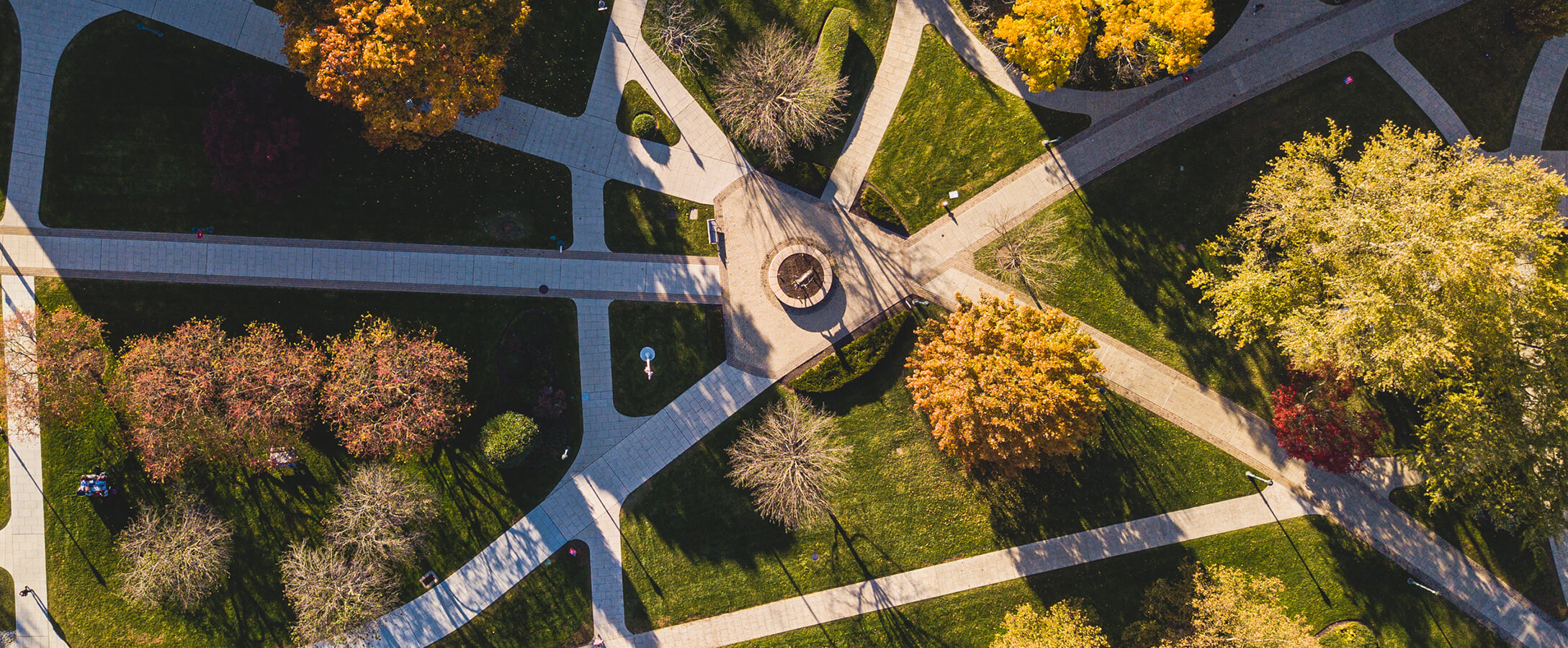
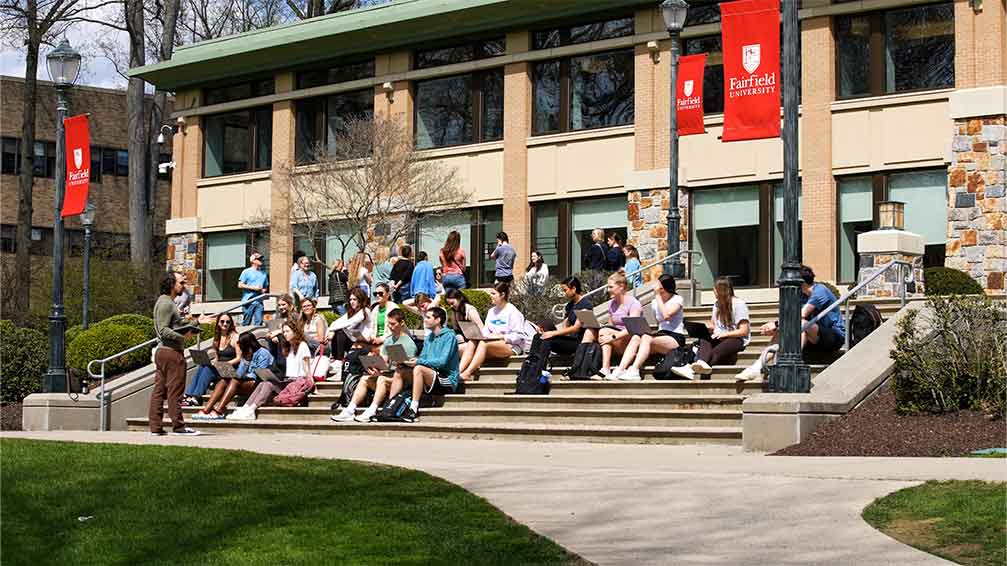
Life at Fairfield is overwhelmingly residential and communal, creating a classic New England college experience with a modern, inclusive feel. A full 73% of undergraduates live in college-owned, -operated, or -affiliated housing, fostering a campus-centric environment where it's easy to form connections. Students and external reviews consistently describe the campus as "friendly," "vibrant," "welcoming," and "inclusive," a place where students from all backgrounds feel they belong. The university actively cultivates this through a robust slate of student clubs and organizations, recreation, and dining options. There's also a dedicated International Student Life program that provides tailored resources and support for students from around the globe. The overall vibe is one of an engaged, supportive community where social and academic lives are deeply intertwined on a picturesque campus just minutes from the Long Island Sound.
Outcomes are where Fairfield's value proposition crystallizes. The university's graduation rate of 84% places it in the top tier nationally, indicating strong student support and persistence. This success translates directly into post-graduate results. For the Class of 2025, a remarkable 97% of graduates were employed, in graduate school, or participating in a volunteer service program within six months of graduation. The average starting salary for that class, excluding bonuses, was $73,334. This performance has earned Fairfield national recognition for return on investment (ROI), including rankings that consider post-graduate earnings and overall student outcomes. The long-term financial payoff is significant, with alumni median earnings a decade after entry substantially above the national average for college graduates. Fairfield effectively delivers on the promise of a degree that leads to concrete, well-compensated career pathways.
Attending Fairfield requires a significant financial investment, but the university works to offset the sticker price with institutional aid. The average after aid—the actual cost to students—is substantial. Approximately 35% of students receive financial aid, with the average aid package reported to be around $32,097. Fairfield meets the demonstrated financial need of admitted students through a package that may include grants, scholarships, student employment (work-study), and student loans. The university uses both federal and institutional methodology to calculate need. It's important to note that while aid packages include loans, the university does not advertise a universal "no-loan" policy for low-income families; loans are a standard component of aid awards for those who demonstrate need. All students seeking aid must submit the FAFSA, and the university provides a Net Price Calculator for families to estimate their individual cost.
Fairfield University stands out for its potent and deliberate evolution. It has successfully leveraged its Jesuit liberal arts foundation to build a contemporary, outcomes-oriented university that competes for top students. Its distinctiveness lies in several converging factors:
The Selectivity Surge: Its rapid ascent in admissions competitiveness—from a 33% to a reported 21%—signals a dramatic shift in reputation and demand, placing it among the most sought-after private universities in the Northeast.
The Jesuit-Professional Hybrid: It refuses to be pigeonholed. It offers the reflective, values-based education of a Jesuit college alongside nationally ranked business and nursing schools, appealing to students who want both a philosophical foundation and a direct career launchpad.
The Residential Certainty: With nearly three-quarters of students on campus, it guarantees the immersive, community-driven experience that many families seek, distinguishing it from commuter-heavy peers.
The ROI Focus: Every statistic and ranking it publicizes underscores a commitment to tangible post-graduate success. The 97% placement rate and strong median earnings are not happy accidents; they are the documented return on the university's educational model.
In essence, Fairfield is for the student who wants the tight-knit community and intellectual grounding of a classic liberal arts college but insists on walking off the graduation stage with a clear, lucrative, and meaningful next step already in hand.