Admit rate has ranged 76%–79% over the last 5 years, though the latest figure above (66%) falls outside that window. Source: IPEDS via Urban Institute.
Acceptance & SAT from Common Data Set / IPEDS; net price, earnings & graduation from the U.S. Dept. of Education College Scorecard. Figures lag ~1–2 years — verify with the school.

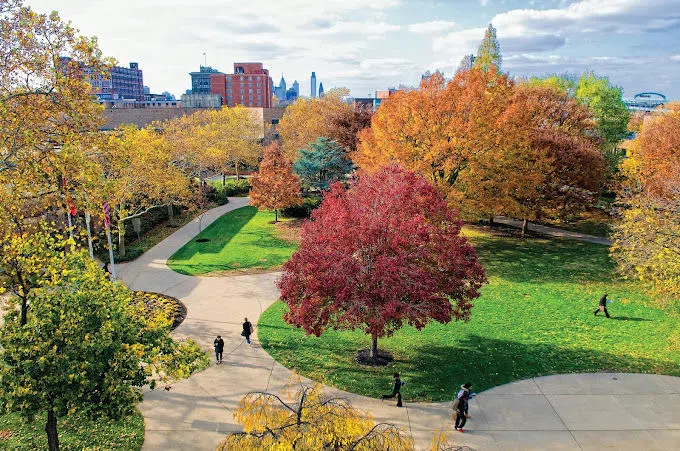
Rutgers University–Camden is the intimate, urban sibling in the sprawling Rutgers system, offering a tight-knit, family-like atmosphere on a compact campus just across the river from Philadelphia. It trades the massive scale of New Brunswick for a more personal, accessible education, with a focus on practical outcomes and a significant number of commuter students. The university has earned national recognition for its performance in student outcomes, particularly graduation rates and post-graduate earnings, positioning it as a strong value proposition for New Jersey residents.
Admission requirements
Test-optional — scores considered if submitted
Required
High school transcript
Grade point average
College-prep program
TOEFL (non-native English)
Considered (not required)
Class rank
Test scores (SAT/ACT)
Source: IPEDS Admissions survey (2022) via Urban Institute. Covers formal factors only — it does not reflect essays, extracurriculars, or other holistic criteria.
More details
Undergrad enrollment
3,753
In-state tuition
$17,764
Out-of-state tuition
$37,276
No-Loan Policy
Yes, for NJ residents with incomes < $65k (Bridging the Gap)
Graduation Rate
67%
On-Campus Housing
17%
Student-Faculty Ratio
12:1
Median Earnings (10yr)
$74,479
Classes Under 20 Students
54.6%
Outcomes & value
Outcomes & value
Median earnings (10 yr)
$74,479
Value (earnings ÷ net price)
4.0×
Median debt at graduation
$21,500
Graduation rate
67%
First-year retention
80%
Reducing loan balance (3 yr)
70%
Pell (lower-income) share
48%
First-gen share (among federal-aid recipients)
35%
Top-earning majors
Median earnings by field of study (highest credential), ~2 years after completion.
Registered Nursing, Nursing Administration, Nursing Research and Clinical Nursing$72,975
Computer and Information Sciences, General$71,778
Clinical/Medical Laboratory Science/Research and Allied Professions$64,087
Finance and Financial Management Services$60,001
Accounting and Related Services$58,382
Health Services/Allied Health/Health Sciences, General
Applicants here also applied to
The schools that most often appear alongside Rutgers University-Camden on applicants’ lists, from our self-reported outcomes corpus.
On-campus criminal offenses classed as violent (murder/non-negligent manslaughter, rape, robbery, aggravated assault) for the most recent reported year. Source: U.S. Dept. of Education Campus Safety and Security (Clery Act). Counts reflect what’s reported to the school, and urban campuses often report more partly due to non-student incidents nearby — read alongside campus size and setting, not as a standalone safety verdict.
Climate
Pleasant days / yr
89
Summer high
85°F
Winter low
30°F
Annual rain
49.8"
Annual snow
12.8"
Natural-hazard risk
Relatively Moderate
Pleasant days counts days per year with a mean temperature of 55–75°F, a high at or below 90°F, a low at or above 45°F, and little precipitation — a transparent comfort measure, not a weighting we invented. Computed from Open-Meteo ERA5 daily history (2019–2023). Natural-hazard risk is the county’s composite rating from the FEMA National Risk Index.
Quick answers
What is the acceptance rate at Rutgers University-Camden?
Rutgers University-Camden's acceptance rate is approximately 66% (Camden, NJ), based on the most recent figures we compiled from public and primary sources.
What SAT score do you need for Rutgers University-Camden?
Admitted students at Rutgers University-Camden typically score 1050–1300 on the SAT (the middle-50% range). Scores outside this band are still admitted, especially with strong applications.
How much does Rutgers University-Camden cost?
At Rutgers University-Camden, the average net price (after aid) is about $18,745 per year. Actual cost varies with financial aid and residency.
How many undergraduates attend Rutgers University-Camden?
Rutgers University-Camden enrolls approximately 3,753 undergraduate students.
Where is Rutgers University-Camden located?
Rutgers University-Camden is located in Camden, NJ.
Admissions
Rutgers–Camden operates as the most accessible point of entry into the Rutgers system, with an admissions process that is classified as "somewhat selective." The university's is 66%, making it significantly less selective than the flagship New Brunswick campus. The middle 50% SAT range for admitted students is 1050–1300. While the outlines the factors considered in admissions, specific details on the weight of demonstrated interest or early decision acceptance rates for the Camden campus are not explicitly detailed in the provided sources. The admissions office can be reached at 856-225-6104 or [email protected].
The academic experience at Rutgers–Camden is defined by its manageable scale and focus on undergraduate education. The student-faculty ratio is 12:1, and over half (54.6%) of classes have fewer than 20 students, fostering a more personalized learning environment than is typical at large state universities. The curriculum offers nearly 40 undergraduate majors and 50 minors across the arts, sciences, humanities, and business. Popular majors, according to student data, include Nursing, Business, and Psychology. The School of Arts and Sciences provides a wide array of programs, from Africana Studies and Art (with concentrations in Animation, Graphic Design, and Painting) to Biology, Chemistry, and beyond. This structure allows students to explore varied interests while benefiting from the resources and reputation of the broader Rutgers University system.
Earnings = median of students working ~10 years after entry; debt = median of graduates. Value divides 10-yr earnings by one year’s net price — read it as earnings per dollar of annual cost, not a full lifetime ROI; it favors lower-cost schools. Source: U.S. Dept. of Education College Scorecard. Figures lag ~2 years and reflect all students, not your intended major.
$57,318
Mathematics$55,693
Business Administration, Management and Operations$52,858
Source: U.S. Dept. of Education College Scorecard (field-of-study earnings). Figures cover graduates who received federal aid and lag ~2 years; not all programs report data.
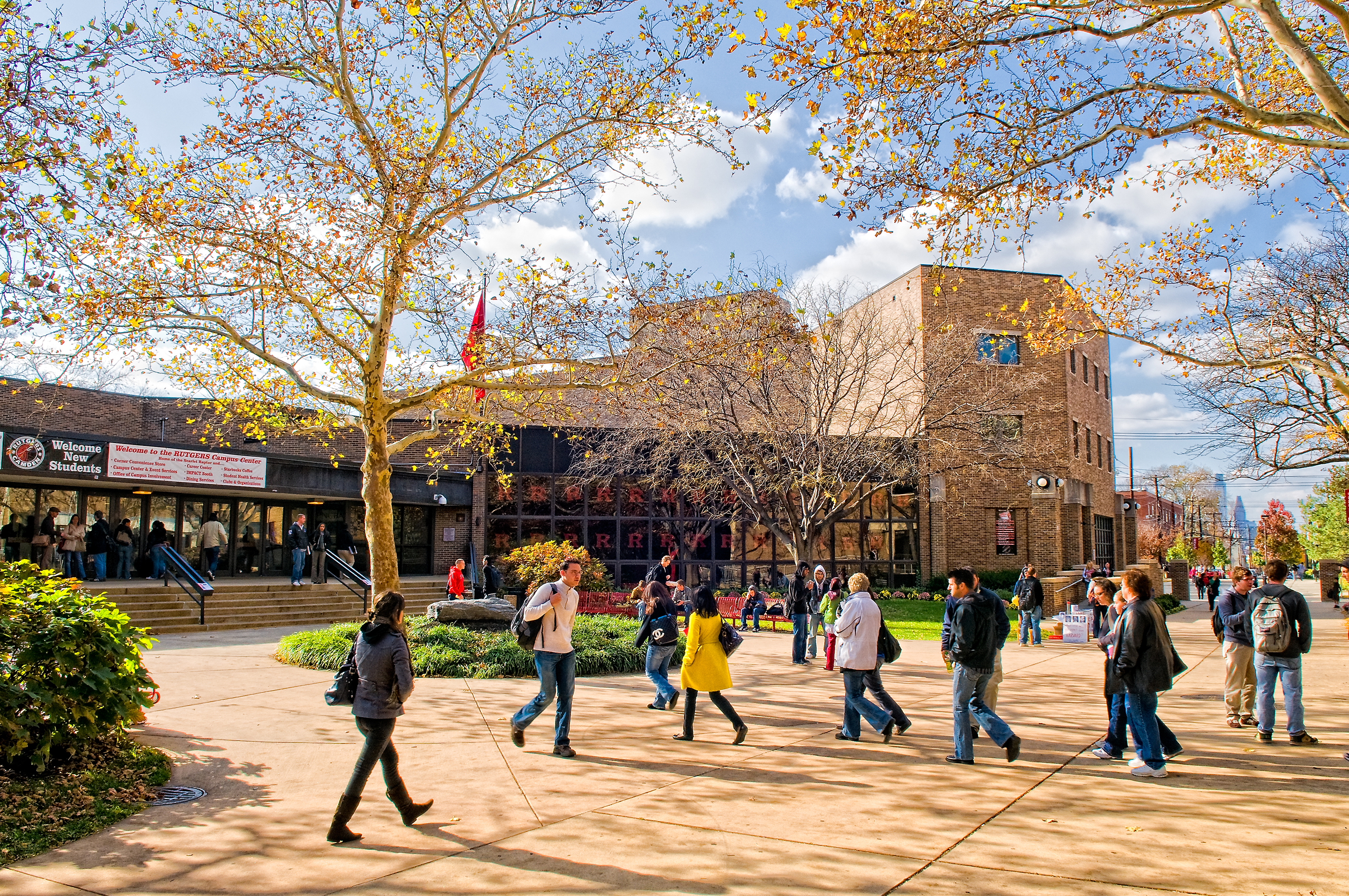
Campus life at Rutgers–Camden is distinctly commuter-oriented and intimate. Only 17% of students live in college-owned, -operated, or -affiliated housing, with the overwhelming majority—83%—living off-campus. The university describes itself as "the most intimate of all the Rutgers' campuses," which creates a close-knit, "feeling of family." The Campus Center serves as the central hub for student activity, offering dining options, meeting spaces, and resources for student organizations through the Division of Student Affairs. Students are encouraged to participate in cultural and social activities to build community. Its location in Camden, directly adjacent to Philadelphia, provides easy access to the professional, cultural, and social opportunities of a major city, a defining characteristic of the student experience.
Rutgers–Camden's strongest selling point may be its tangible results for graduates. The university boasts a graduation rate of 67%, which places it above the national midpoint for four-year colleges. This performance in student outcomes, including graduation rates and post-graduate earnings, earned Rutgers–Camden national recognition as one of Washington Monthly's "25 Best-in-Class Colleges." The median earnings for graduates ten years after entry are $74,479. Other sources note earnings five years after graduation at $75,436 per year. These figures underscore the university's effectiveness in preparing students, particularly those from New Jersey, for successful careers and financial stability.
As a public university, Rutgers–Camden aims to provide an affordable pathway to a Rutgers degree, especially for in-state students. The average after aid is $18,745. A significant 94% of full-time beginning undergraduates receive grant or scholarship aid. The university offers a notable program called "Bridging the Gap," which is designed to help eligible New Jersey resident students reduce or avoid student loan debt. This grant specifically targets students with family incomes between $0 and $65,000, functioning as a no-loan policy for that income bracket. Financial aid packages for qualifying students include scholarships, awards, grants, loans, and work-study. Rutgers also provides a net price calculator to give prospective students an early, personalized estimate of attendance costs.
Rutgers–Camden carves out a unique niche by offering the brand recognition and resources of the Rutgers system within a small-college environment. It stands out for its compelling value proposition: a personalized education (with small classes and a 12:1 student-faculty ratio) at a public university price, coupled with strong post-graduate outcomes that have garnered national praise. The "Bridging the Gap" grant is a transformative policy that makes a Rutgers education genuinely accessible to lower-income New Jersey families by replacing loans with grants. Its intimate, family-like campus culture is a deliberate contrast to the massive state university experience, appealing to students who want proximity to a major city (Philadelphia) without getting lost in a crowd of tens of thousands. It’s a practical, outcomes-oriented campus that proves a state university education can be both personal and powerful.