Admit rate has ranged 16%–22% over the last 5 years, though the latest figure above (25%) falls outside that window. Source: IPEDS via Urban Institute.
Acceptance & SAT from Common Data Set / IPEDS; net price, earnings & graduation from the U.S. Dept. of Education College Scorecard. Figures lag ~1–2 years — verify with the school.
Olin College is a tiny, radical experiment in engineering education that feels more like a high-stakes startup than a traditional college. Founded in 1997 with a massive endowment, it offers a hyper-collaborative, project-based curriculum to a handpicked class of just over 400 undergraduates, all of whom receive a substantial merit scholarship. The result is an intense, familial community of tinkerers and entrepreneurs who graduate with some of the highest earnings in the country and almost no debt.
Admission requirements
Test-optional — scores considered if submitted
Required
High school transcript
Grade point average
Letters of recommendation
College-prep program
Considered (not required)
Class rank
Test scores (SAT/ACT)
TOEFL (non-native English)
Source: IPEDS Admissions survey (2022) via Urban Institute. Covers formal factors only — it does not reflect essays, extracurriculars, or other holistic criteria.
More details
Undergrad enrollment
377
In-state tuition
$66,398
Out-of-state tuition
$66,398
No-Loan Policy
Yes
Graduation Rate
96%
Meets Full Need
Yes
ED Share of Class
63%
First-Year Retention
98%
Demonstrated Interest
Considered
Student-Faculty Ratio
9:1
Median Earnings (10yr)
$129,455
Universal Merit Scholarship
$10,000/year
Outcomes & value
Outcomes & value
Median earnings (10 yr)
$129,455
Value (earnings ÷ net price)
5.1×
Median debt at graduation
$19,500
Graduation rate
96%
First-year retention
98%
Pell (lower-income) share
12%
Earnings = median of students working ~10 years after entry; debt = median of graduates. Value divides 10-yr earnings by one year’s net price — read it as earnings per dollar of annual cost, not a full lifetime ROI; it favors lower-cost schools. Source: U.S. Dept. of Education College Scorecard. Figures lag ~2 years and reflect all students, not your intended major.
Financial health
2.2 / 3.0Meets the federal financial-responsibility standard
U.S. Dept. of Education Financial Responsibility Composite Score (FY2022-23). Scale −1.0 to 3.0; ≥1.5 meets the standard. Reported for private nonprofit & for-profit institutions only — public universities are state-backed and not scored, so this is a stability signal, not a ranking.
Top-earning majors
Median earnings by field of study (highest credential), ~2 years after completion.
Mechanical Engineering$78,343
Electrical, Electronics, and Communications Engineering$76,460
Engineering, General$75,706
Source: U.S. Dept. of Education College Scorecard (field-of-study earnings). Figures cover graduates who received federal aid and lag ~2 years; not all programs report data.
Co-application frequency from self-reported results — directional peer discovery, not a recommendation.
Campus & location
Campus safety
On-campus violent crimes (2024)
1
On-campus criminal offenses classed as violent (murder/non-negligent manslaughter, rape, robbery, aggravated assault) for the most recent reported year. Source: U.S. Dept. of Education Campus Safety and Security (Clery Act). Counts reflect what’s reported to the school, and urban campuses often report more partly due to non-student incidents nearby — read alongside campus size and setting, not as a standalone safety verdict.
Climate
Pleasant days / yr
91
Summer high
82°F
Winter low
25°F
Annual rain
50"
Annual snow
33.1"
Natural-hazard risk
Relatively Moderate
Pleasant days counts days per year with a mean temperature of 55–75°F, a high at or below 90°F, a low at or above 45°F, and little precipitation — a transparent comfort measure, not a weighting we invented. Computed from Open-Meteo ERA5 daily history (2019–2023). Natural-hazard risk is the county’s composite rating from the FEMA National Risk Index.
Deep dive — research, future-scholar output & economic mobility▾
Research output
Institutional h-index
102
Scholarly works
1,227
Institutional research volume and impact from OpenAlex. The h-index reflects large research universities and will be low for teaching-focused liberal-arts colleges — not a measure of undergraduate quality.
Quick answers
What is the acceptance rate at Franklin W Olin College of Engineering?
Franklin W Olin College of Engineering's acceptance rate is approximately 25% (Needham, MA), based on the most recent figures we compiled from public and primary sources.
What SAT score do you need for Franklin W Olin College of Engineering?
Admitted students at Franklin W Olin College of Engineering typically score 1493–1558 on the SAT (the middle-50% range). Scores outside this band are still admitted, especially with strong applications.
How much does Franklin W Olin College of Engineering cost?
At Franklin W Olin College of Engineering, the average net price (after aid) is about $25,171 per year. Actual cost varies with financial aid and residency.
How many undergraduates attend Franklin W Olin College of Engineering?
Franklin W Olin College of Engineering enrolls approximately 377 undergraduate students.
Where is Franklin W Olin College of Engineering located?
Franklin W Olin College of Engineering is located in Needham, MA.
Admissions
Gaining admission to Olin is a highly selective, holistic process focused on identifying students who are not just academically stellar but also collaborative, hands-on problem-solvers. The college receives about 1,000 applications annually for a class of roughly 110 students. While the is reported variably between 18% and 25.2% across sources, the canonical figure is 25%. The academic profile of admitted students is exceptionally strong: the middle 50% SAT range is 1493–1558, the middle 50% ACT range is 34–35, and the middle 50% unweighted GPA is 3.80–4.03. Notably, 72% of admitted students for the Class of 2029 submitted test scores. The rate—the percentage of admitted students who enroll—is reported as high as 56% in some sources, indicating strong appeal among those admitted. A significant portion of the class is filled through binding Early Decision plans; for one recent cycle, the college anticipated enrolling 63% of the first-year class through Early Decision I, II, and athletic recruitment. The indicates that the "level of applicant's interest" is a factor "Considered" in admissions decisions.
Olin's academic model is a deliberate break from the lecture-heavy, theory-first approach of traditional engineering schools. The curriculum is intensely interdisciplinary, integrating engineering, design, entrepreneurship, and the humanities from day one. Students don't declare a major until the end of their sophomore year, choosing from three ABET-accredited degrees: Electrical and Computer Engineering (ECE), Mechanical Engineering (ME), or simply Engineering (E). The "Engineering" degree is a flexible, customizable major that allows students to combine technical disciplines with significant work in arts, humanities, social sciences, or entrepreneurship. The pedagogy is overwhelmingly project-based and team-oriented, emphasizing real-world problem-solving, prototyping, and iteration. This is enabled by an exceptionally low student-faculty ratio of 9:1, fostering close mentorship and a collaborative rather than competitive intellectual culture. There are no graduate students, so undergraduates have full access to faculty, labs, and project leadership roles.
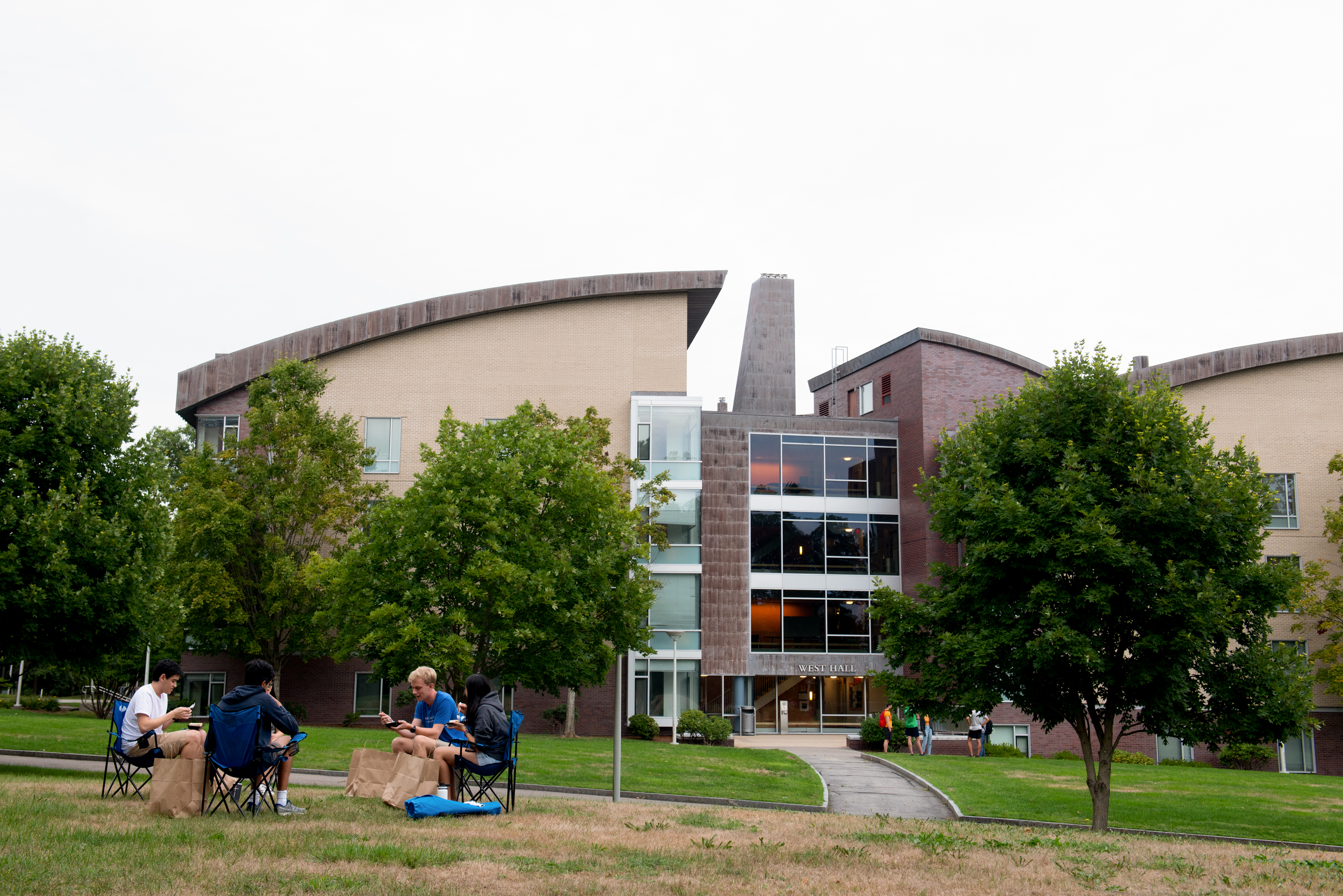
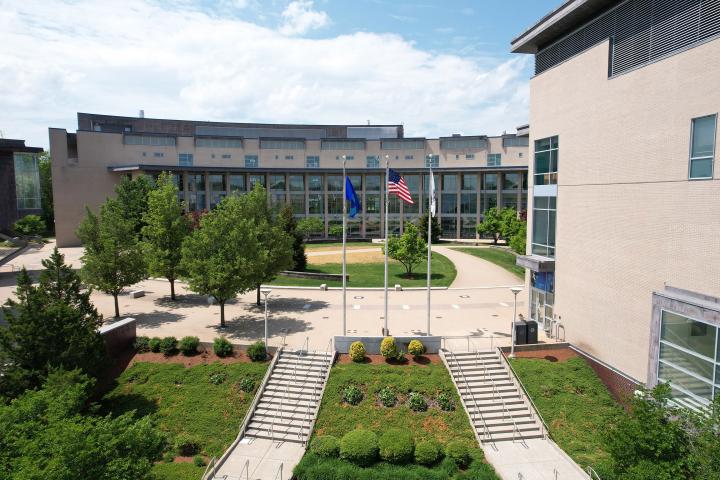
With only about 400 undergraduates total, Olin's campus is profoundly close-knit, often described as a "family-like" or "startup" atmosphere. The culture is self-consciously dynamic, entrepreneurial, and creative, where everyone—students, faculty, and staff—is deeply engaged. Students are known for being exceptionally busy, constantly running between team projects, club activities, and personal ventures. The campus itself is modern and compact, with the Academic and Campus Center (the "ARC") serving as the cultural heart, offering spaces for collaboration, learning, and leisure. The small size fosters a supportive and collaborative environment; it's a place where you know everyone, and peer support is the norm. This intensity can be all-consuming, but for students who thrive on constant creation and collaboration, it's exhilarating. The college's location in Needham, Massachusetts, provides easy access to the academic and professional resources of Greater Boston, though the campus itself forms a self-contained, highly active community.
Olin's outcomes are staggering, validating its unconventional educational model. The college reports a six-year graduation rate of 95% for first-time, full-time students, with the canonical graduation rate set at 96%. First-year retention is exceptionally high at 98%. Career outcomes are a major selling point. For the Class of 2023-24, 50% of graduates were employed with an average starting salary of $90,922. The longer-term payoff is even more impressive: the median earnings ten years after entry are $129,455, a figure that places Olin among the very top colleges in the country for postgraduate earnings. This combination of high graduation rates, near-perfect retention, and elite earning potential underscores the effectiveness of Olin's focused, hands-on approach in preparing students for high-impact engineering and technology roles.
Olin's financial model is as distinctive as its pedagogy. The published is high, but two powerful policies dramatically reduce the for nearly all students. First, every admitted student receives the merit-based Olin Tuition Scholarship, which provides $10,000 per year ($40,000 total) toward tuition. Second, and more significantly, Olin is committed to meeting 100% of demonstrated financial need for all admitted students for up to eight semesters. Crucially, this need is met with a no-loan policy; packages are composed entirely of grants and scholarships (like the Olin Need-Based Grant) and a standard work-study expectation, with no required student loans. As a result, the average need-based scholarship or grant award is $65,832, and the average aid package is $69,152. The canonical average net price after all aid is $25,171. This means most students graduate with little to no debt, a transformative factor given their high earning potential.
Olin College stands out not as a slightly better version of a traditional engineering school, but as a complete reinvention of the concept. It is a purpose-built laboratory for a new kind of engineer: one who is as comfortable with human-centered design and business models as with differential equations and circuit boards. Its singularity stems from several intertwined factors: its youth and intentionality (founded in 1997 with a blank slate and a $460 million endowment), its radical pedagogy of integrated, project-based learning, and its unmatched financial proposition of universal and a no-loan, full-need-met guarantee. This creates a unique ecosystem—a small, selective, and generously funded community where every student is both a guinea pig and a beneficiary of a grand educational experiment. The outcome is a graduate who is not just technically proficient but is a proactive entrepreneur, a collaborative team member, and, as the earnings data shows, exceptionally valuable in the marketplace. For the right student—a hands-on builder who thrives on collaboration and ambiguity—Olin offers a transformative and financially sustainable path that no other institution can replicate.
Franklin W Olin College of Engineering seal · sourceFranklin W. Olin College of Engineering - Profile, Rankings and Data | US News Best Colleges · sourceAbout | Olin College of Engineering | Olin College of Engineering · sourceFranklin W. Olin College of Engineering - Profile, Rankings and Data | US News Best Colleges · source