Admit rate has ranged 10%–18% over the last 5 years. Source: IPEDS via Urban Institute.
Acceptance & SAT from Common Data Set / IPEDS; net price, earnings & graduation from the U.S. Dept. of Education College Scorecard. Figures lag ~1–2 years — verify with the school.
Harvey Mudd College is not just a top-tier STEM school; it's a singular intellectual boot camp for the most tenacious math and science minds, wrapped in the quirky, collaborative culture of the Claremont Consortium. The curriculum is a notorious, broad-based gauntlet—every student, regardless of major, tackles a core of advanced math, physics, chemistry, biology, and computer science, forging graduates who are as adept at engineering a circuit as they are at critiquing a novel. This brutal but beloved interdisciplinary rigor, combined with a tight-knit, fun-loving residential community that has no Greek life but plenty of pranks, produces alumni who command Silicon Valley salaries and top PhD program spots with equal ease.
Admission requirements
Test-optional — scores considered if submitted
Required
High school transcript
Letters of recommendation
College-prep program
TOEFL (non-native English)
Considered (not required)
Grade point average
Class rank
Test scores (SAT/ACT)
Source: IPEDS Admissions survey (2022) via Urban Institute. Covers formal factors only — it does not reflect essays, extracurriculars, or other holistic criteria.
More details
Undergrad enrollment
921
In-state tuition
$68,613
Out-of-state tuition
$68,613
Graduation Rate
92%
Meets Full Need
Yes
Median Earnings (10yr)
$138,687
Median Starting Salary
$112,500
Outcomes & value
Outcomes & value
Median earnings (10 yr)
$138,687
Value (earnings ÷ net price)
3.9×
Median debt at graduation
$25,000
Graduation rate
92%
First-year retention
96%
Pell (lower-income) share
15%
Earnings = median of students working ~10 years after entry; debt = median of graduates. Value divides 10-yr earnings by one year’s net price — read it as earnings per dollar of annual cost, not a full lifetime ROI; it favors lower-cost schools. Source: U.S. Dept. of Education College Scorecard. Figures lag ~2 years and reflect all students, not your intended major.
Financial health
3.0 / 3.0Meets the federal financial-responsibility standard
U.S. Dept. of Education Financial Responsibility Composite Score (FY2022-23). Scale −1.0 to 3.0; ≥1.5 meets the standard. Reported for private nonprofit & for-profit institutions only — public universities are state-backed and not scored, so this is a stability signal, not a ranking.
Top-earning majors
Median earnings by field of study (highest credential), ~2 years after completion.
Computer Science$142,581
Mathematics and Computer Science$122,038
Engineering, General$81,997
Source: U.S. Dept. of Education College Scorecard (field-of-study earnings). Figures cover graduates who received federal aid and lag ~2 years; not all programs report data.
Co-application frequency from self-reported results — directional peer discovery, not a recommendation.
Campus & location
Campus safety
On-campus violent crimes (2024)
1
On-campus criminal offenses classed as violent (murder/non-negligent manslaughter, rape, robbery, aggravated assault) for the most recent reported year. Source: U.S. Dept. of Education Campus Safety and Security (Clery Act). Counts reflect what’s reported to the school, and urban campuses often report more partly due to non-student incidents nearby — read alongside campus size and setting, not as a standalone safety verdict.
Climate
Pleasant days / yr
176
Summer high
89°F
Winter low
46°F
Annual rain
33.3"
Annual snow
3.5"
Natural-hazard risk
Very High
Pleasant days counts days per year with a mean temperature of 55–75°F, a high at or below 90°F, a low at or above 45°F, and little precipitation — a transparent comfort measure, not a weighting we invented. Computed from Open-Meteo ERA5 daily history (2019–2023). Natural-hazard risk is the county’s composite rating from the FEMA National Risk Index.
Deep dive — research, future-scholar output & economic mobility▾
Research output
Institutional h-index
152
Scholarly works
4,589
Institutional research volume and impact from OpenAlex. The h-index reflects large research universities and will be low for teaching-focused liberal-arts colleges — not a measure of undergraduate quality.
Future-scholar output
Science & engineering PhDsper-capita yield 28.7
Share of this school’s graduates who go on to earn research doctorates (2010–20), by national rank and per-capita yield (NSF institutional-yield ratio). A signal of a research-oriented student culture — not a causal promise, since it partly reflects who enrolls. Only top producers appear. Source: NSF NCSES, Baccalaureate Origins of U.S. Research Doctorate Recipients.
Economic mobility
Mobility rate
2.9%
Bottom → top quintile
Quick answers
What is the acceptance rate at Harvey Mudd College?
Harvey Mudd College's acceptance rate is approximately 13% (Claremont, CA), based on the most recent figures we compiled from public and primary sources.
What SAT score do you need for Harvey Mudd College?
Admitted students at Harvey Mudd College typically score 1500–1570 on the SAT (the middle-50% range). Scores outside this band are still admitted, especially with strong applications.
How much does Harvey Mudd College cost?
At Harvey Mudd College, the average net price (after aid) is about $35,924 per year. Actual cost varies with financial aid and residency.
How many undergraduates attend Harvey Mudd College?
Harvey Mudd College enrolls approximately 921 undergraduate students.
Where is Harvey Mudd College located?
Harvey Mudd College is located in Claremont, CA.
Admissions
Getting into Harvey Mudd is an exercise in elite self-selection. The college is very selective, with an hovering around 13%. For the Fall 2024 entering class, the yield rate—the percentage of admitted students who enroll—was 36%. The middle 50% SAT range for admitted students is 1500–1570, with a similar ACT range of 34–36. Notably, the college has reported that among admitted students, 40% submitted SAT scores and 20% submitted ACT scores, indicating that standardized tests remain an important, though not exclusive, component of the review.
The admissions process includes an Early Decision option. For the Class of 2028, the Early Decision acceptance rate was reported as 16.16%, suggesting a potential advantage for committed applicants. The is the primary source for institutional priorities, and while specific weightings for factors like demonstrated interest are detailed therein, the overall process seeks students with exceptional academic records in STEM and a clear alignment with Mudd's unique, collaborative, and intensive culture.
Mobility rate = the share of students who both start in the bottom household-income quintile and reach the top quintile; bottom → top is that chance conditional on starting at the bottom. Source: Opportunity Insights Mobility Report Cards (Chetty, Friedman, Saez, Turner & Yagan). Reflects 1980–82 birth cohorts, so it’s directional, not current.
The academic experience at Harvey Mudd is defined by a famously rigorous and intentionally broad core curriculum, known as the Common Core. This program requires every student, irrespective of their eventual major, to take a substantial sequence of courses in mathematics, physics, chemistry, biology, computer science, and engineering, alongside a robust set of humanities and social science classes. The stated goal is to equip students with interdisciplinary problem-solving skills and the ability to adapt to any field.
Students then choose from a focused set of majors, all grounded in this integrated approach. The most popular majors, by percentage of graduates, are:
Engineering, General (28%)
Mathematics and Computer Science (24%)
Computer and Information Sciences, General (17%)
Physics, General (14%)
The college describes its curriculum as one that "integrates vigorous STEM and liberal arts courses to educate talented scientists, engineers, and mathematicians." There is no "weak" major in terms of academic rigor or reputation; the intensity is uniform. The trade-off is a workload that is legendary, designed to push students to their intellectual limits within a deeply collaborative, rather than cutthroat, environment.
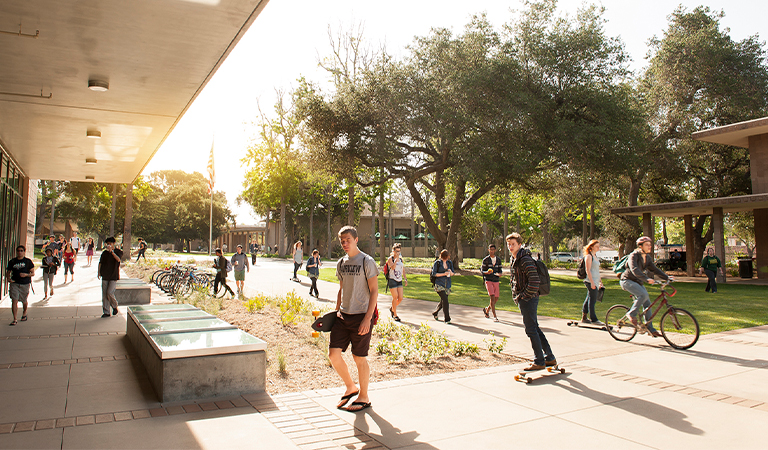
Life at Mudd is a study in intense contrasts: relentless academic pressure balanced by a profoundly close-knit, creative, and fun-loving community. The college actively nurtures an environment where students "study together, play together and explore interests." With no Greek life on campus, the social scene is dominated by dorm culture, where strong residential communities fill the social niche. Parties are mostly weekend or break events, often organized by individual dorms.
The campus culture is vibrant with student-led events, long-standing traditions, and social activities. Students report a collaborative, rather than competitive, vibe where helping peers through problem sets is the norm. While the workload is "highly rigorous," students find time for clubs, socializing, and free time by virtue of being in the trenches together. The Office of Campus Life (OCL) complements this by fostering student cooperation, leadership, and responsible advocacy. The overall atmosphere is one of shared purpose and mutual support, where the same students debating quantum mechanics by day are likely organizing a campus-wide prank or game night by evening.
The return on Harvey Mudd's grueling academic investment is exceptionally high, both in immediate employment and long-term earnings. The college reports that about 60% of seniors enter the workforce directly after graduation, with a median starting salary of $112,500. Many others proceed directly to top graduate and PhD programs, often with full fellowships.
The graduation rate is 92%, with a high rate of students completing their degrees in four years. Long-term earnings data underscores the value of the degree; the median earnings for graduates ten years after entry are notably high, reflecting the premium placed on Mudd's rigorous, interdisciplinary training in the marketplace and in academia.
Harvey Mudd College is committed to making its education accessible through a robust financial aid program. The college states it is committed to meeting 100 percent of a student's demonstrated financial need through a combination of institutional, federal, and state grants, scholarships, loans, and work-study. The average financial aid offer is $54,412, of which about $44,279 typically comes in the form of grants and scholarships (both need-based and merit-based).
This substantial aid brings the average net price after aid down significantly from the full . Families are encouraged to use the college's official Calculator for a personalized estimate. While the institution meets full demonstrated need, the composition of aid packages—the balance of grants versus loans—is a key detail for prospective students to evaluate.
Harvey Mudd stands apart in the landscape of elite STEM education by rejecting narrow specialization in favor of forced intellectual breadth. Its signature Common Core is a dare: it assumes that the best engineers and computer scientists must also be proficient in advanced physics, chemistry, and biology, and that all scientists benefit from deep engagement with the humanities. This creates a unique graduate profile—the engineer who can model a system, code a simulation, and write a compelling proposal for it.
This academic intensity is leavened by a distinct collaborative and quirky campus culture. Without Greek life, social identity is built around dorm affiliations and shared survival of the core, fostering a level of camaraderie and mutual support rare at such a competitive level. The result is a paradox: a place of immense stress that students fiercely love, producing graduates who are not just technically superb but also adaptable, ethical, and broadly literate problem-solvers who immediately command top salaries and prestigious academic placements.
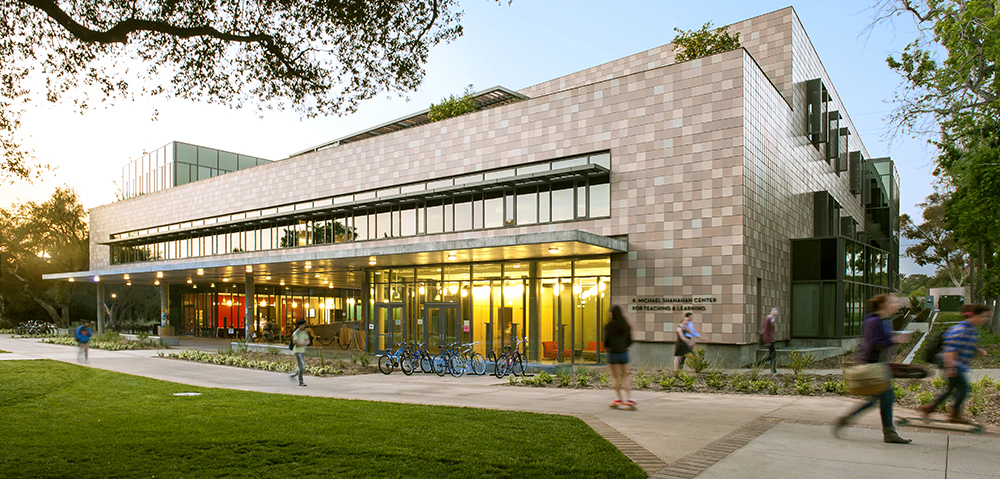
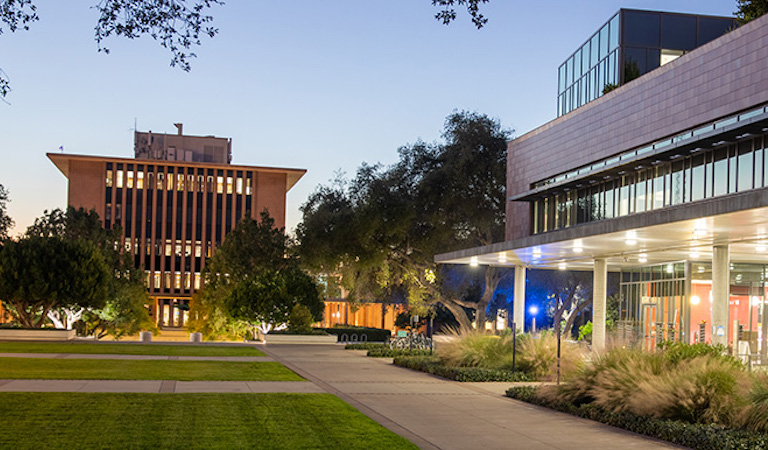
Harvey Mudd College seal · sourceVisit Campus | About | Harvey Mudd College · sourceFramed: Why is Harvey Mudd College's campus so brutal? - The Student Life · sourceVisiting Harvey Mudd College | Admission and Financial Aid | Harvey Mudd College · source