Admit rate has ranged 37%–41% over the last 5 years, though the latest figure above (44%) falls outside that window. Source: IPEDS via Urban Institute.
Acceptance & SAT from Common Data Set / IPEDS; net price, earnings & graduation from the U.S. Dept. of Education College Scorecard. Figures lag ~1–2 years — verify with the school.
Occidental College carves out a singular niche as the only small liberal arts college embedded in the heart of Los Angeles. It offers a classic, rigorous liberal arts curriculum with a distinctly Californian, social justice-oriented ethos, all within a tight-knit, collaborative campus community that feels like a world apart from the sprawling city just beyond its gates. This is where you get the intimate, discussion-based seminars of a traditional LAC, but your 'campus' extends to the internships, culture, and chaos of LA.
Admission requirements
Test-optional — scores considered if submitted
Required
High school transcript
Letters of recommendation
TOEFL (non-native English)
Considered (not required)
Grade point average
Class rank
Test scores (SAT/ACT)
College-prep program
Demonstrated competencies
Source: IPEDS Admissions survey (2022) via Urban Institute. Covers formal factors only — it does not reflect essays, extracurriculars, or other holistic criteria.
More details
Undergrad enrollment
1,877
In-state tuition
$66,274
Out-of-state tuition
$66,274
Graduation Rate
81%
Meets Full Need
Yes
ED Share of Class
~50%
First-Year Retention
Not Stated in Sources
Median Earnings (10yr)
$75,951
Outcomes & value
Outcomes & value
Median earnings (10 yr)
$75,951
Value (earnings ÷ net price)
2.0×
Median debt at graduation
$23,000
Graduation rate
81%
First-year retention
90%
Reducing loan balance (3 yr)
88%
Pell (lower-income) share
17%
First-gen share (among federal-aid recipients)
18%
Earnings = median of students working ~10 years after entry; debt = median of graduates. divides 10-yr earnings by net price — read it as earnings per dollar of annual cost, not a full lifetime ROI; it favors lower-cost schools. Source: U.S. Dept. of Education College Scorecard. Figures lag ~2 years and reflect all students, not your intended major.
Financial health
3.0 / 3.0Meets the federal financial-responsibility standard
U.S. Dept. of Education Financial Responsibility Composite Score (FY2022-23). Scale −1.0 to 3.0; ≥1.5 meets the standard. Reported for private nonprofit & for-profit institutions only — public universities are state-backed and not scored, so this is a stability signal, not a ranking.
Top-earning majors
Median earnings by field of study (highest credential), ~2 years after completion.
Mathematics$57,318
Economics$55,078
Sociology$41,565
Area Studies$39,369
Political Science and Government$37,779
Natural Resources Conservation and Research$37,208
International Relations and National Security Studies
Applicants here also applied to
The schools that most often appear alongside Occidental College on applicants’ lists, from our self-reported outcomes corpus.
Co-application frequency from self-reported results — directional peer discovery, not a recommendation.
Campus & location
Campus safety
On-campus violent crimes (2024)
2
On-campus criminal offenses classed as violent (murder/non-negligent manslaughter, rape, robbery, aggravated assault) for the most recent reported year. Source: U.S. Dept. of Education Campus Safety and Security (Clery Act). Counts reflect what’s reported to the school, and urban campuses often report more partly due to non-student incidents nearby — read alongside campus size and setting, not as a standalone safety verdict.
Climate
Pleasant days / yr
207
Summer high
87°F
Winter low
45°F
Annual rain
24.5"
Natural-hazard risk
Very High
Pleasant days counts days per year with a mean temperature of 55–75°F, a high at or below 90°F, a low at or above 45°F, and little precipitation — a transparent comfort measure, not a weighting we invented. Computed from Open-Meteo ERA5 daily history (2019–2023). Natural-hazard risk is the county’s composite rating from the FEMA National Risk Index.
Deep dive — research, future-scholar output & economic mobility▾
Research output
Institutional h-index
152
Scholarly works
4,627
Institutional research volume and impact from OpenAlex. The h-index reflects large research universities and will be low for teaching-focused liberal-arts colleges — not a measure of undergraduate quality.
Economic mobility
Mobility rate
3.3%
Bottom → top quintile
39%
From bottom quintile
9%
Mobility rate = the share of students who both start in the bottom household-income quintile and reach the top quintile; bottom → top is that chance conditional on starting at the bottom. Source: Opportunity Insights Mobility Report Cards (Chetty, Friedman, Saez, Turner & Yagan). Reflects 1980–82 birth cohorts, so it’s directional, not current.
Quick answers
What is the acceptance rate at Occidental College?
Occidental College's acceptance rate is approximately 44% (Los Angeles, CA), based on the most recent figures we compiled from public and primary sources.
What SAT score do you need for Occidental College?
Admitted students at Occidental College typically score 1380–1520 on the SAT (the middle-50% range). Scores outside this band are still admitted, especially with strong applications.
How much does Occidental College cost?
At Occidental College, the average net price (after aid) is about $38,263 per year. Actual cost varies with financial aid and residency.
How many undergraduates attend Occidental College?
Occidental College enrolls approximately 1,877 undergraduate students.
Where is Occidental College located?
Occidental College is located in Los Angeles, CA.
Admissions
Occidental operates a selective admissions process with a clear strategic advantage for those who apply through its binding Early Decision (ED) plans. While the overall is 44%, the admit rate for Early Decision applicants is significantly higher at 65%. This ED pathway fills about half of the incoming class, signaling that demonstrated commitment is a powerful factor. The college is , accepting the Common Application, and evaluates applicants holistically. The middle 50% SAT range for admitted students who submit scores is 1380–1520, indicating a strong academic profile. The rate—the percentage of admitted students who enroll—is relatively low at 17.8%, which is common for liberal arts colleges competing with larger universities, but underscores the importance of the ED pool in building the class.
Romance Languages, Literatures, and Linguistics$35,060
Source: U.S. Dept. of Education College Scorecard (field-of-study earnings). Figures cover graduates who received federal aid and lag ~2 years; not all programs report data.
The academic experience at Oxy is defined by its commitment to the liberal arts and interdisciplinary learning within a small-college setting. Students choose from more than 45 majors, minors, and programs, with majors requiring a minimum of 32 units. The curriculum is designed to sharpen critical thinking, clear communication, and innovative problem-solving. A defining characteristic, frequently highlighted by the community itself, is its identity as "the only small liberal arts college in a major city: Los Angeles." This unique positioning infuses the academic culture with a caring, supportive faculty and an engagement with social justice issues. The learning environment is intensely collaborative rather than cutthroat, with students and professors noted for being super friendly. The small size fosters close mentorship and hands-on research opportunities, creating an academic experience that feels personal and deeply connected.
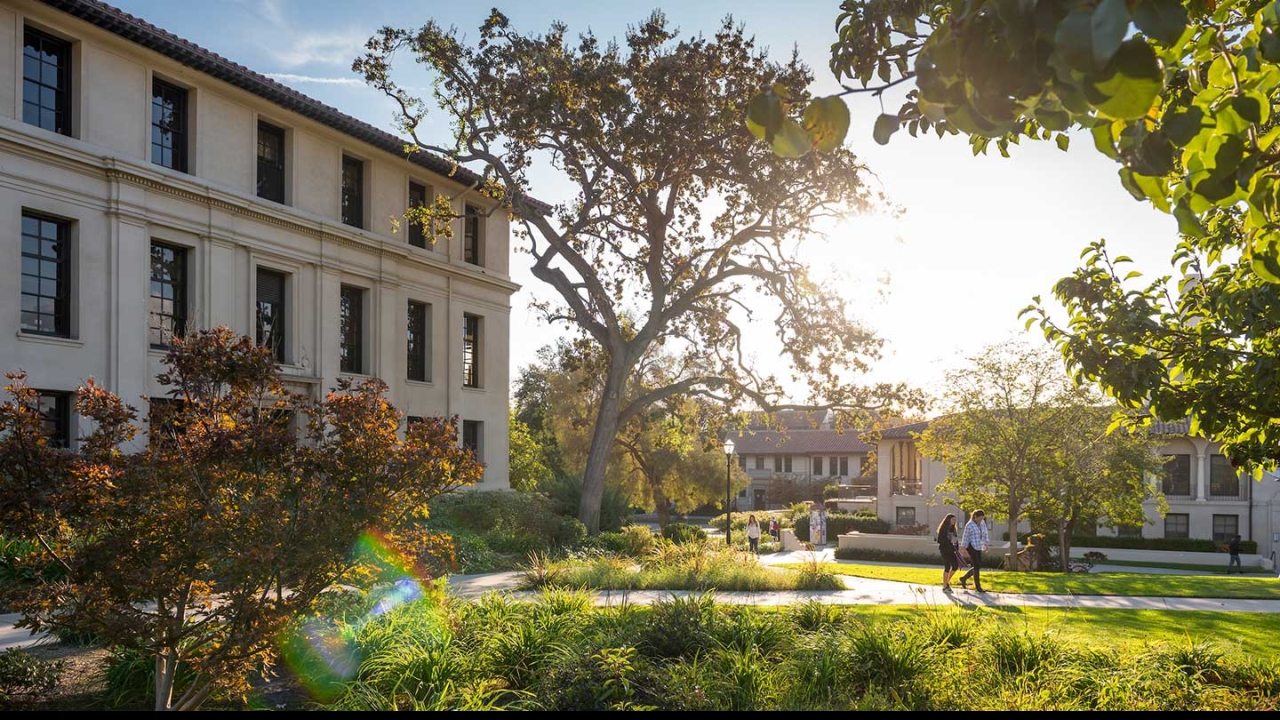
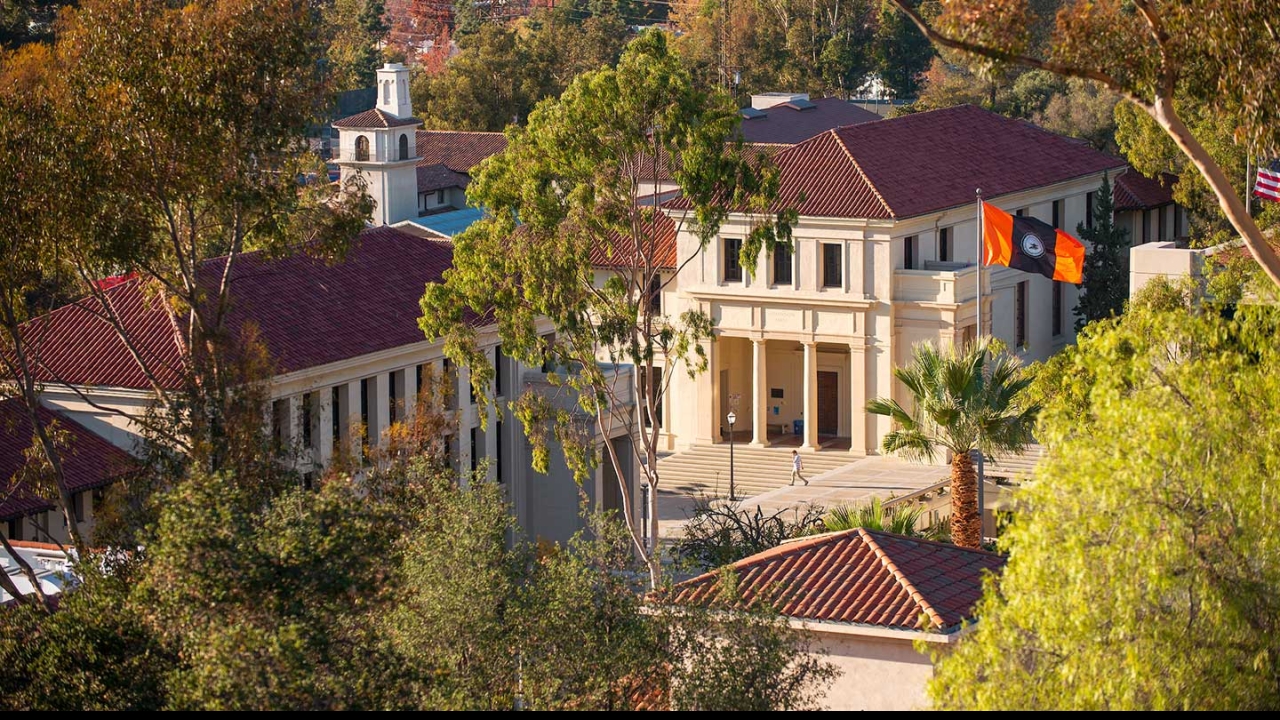
Life at Oxy is a study in contrasts: a small, residential liberal arts campus nestled in the Eagle Rock neighborhood of Los Angeles. The on-campus community is described as "small and tight-knit" and highly collaborative. Students have access to hundreds of campus clubs and organizations, ranging from Greek life and musical ensembles to intramural athletics. The college promotes a formal "Culture of Care" designed to encourage administrators, faculty, staff, and students to support one another's well-being. The undeniable X-factor, however, is the city itself. Los Angeles serves as an extended campus, offering world-class internships, cultural institutions, and entertainment. This duality means students can enjoy the intimacy and support of a close community while having the infinite resources and adventures of a global metropolis at their doorstep—a balance that defines the Oxy experience.
Occidental graduates are well-prepared for life after college, with strong graduation rates and solid career trajectories. The college's graduation rate is 81%. In terms of earnings, the median salary for alumni ten years after entry is $75,951. Earlier career data shows recent graduates earning an average starting salary of around $51,800, with mid-career professionals holding Oxy degrees reporting average earnings of approximately $107,700. The college's Career Services office tracks graduate outcomes, noting specific median earnings for majors like Biology ($59,985) and Cognitive Science ($78,782), which often exceed national benchmarks for high school graduates and college workers. This data reflects the value of the liberal arts degree combined with the professional opportunities afforded by its Los Angeles location.
As a private institution, Occidental carries a high sticker price, but it mitigates this with a robust and generous financial aid program. The college meets 100% of the demonstrated financial need for all admitted U.S. citizens and permanent residents who apply for aid on time. This commitment is a cornerstone of its access policy. The average after aid is $38,263. Financial aid packages are primarily need-based and can include grants, scholarships, work-study, and loans. The college offers a limited number of merit scholarships, but the focus is squarely on need-based assistance. Prospective students are encouraged to use the college's net price calculators to get a personalized estimate, as the combination of grants and scholarships can significantly lower the out-of-pocket cost for many families.
Occidental's unique selling proposition is impossible to replicate: it is the quintessential small liberal arts college, but it's in Los Angeles. This isn't a campus on the outskirts of a city; it's an integrated part of LA's fabric. The result is an academic and social culture that blends the intimate, discussion-based, mentorship-driven model of schools like Amherst or Williams with the boundless opportunity, diversity, and creative energy of a world capital. The college leans into this identity with a social justice orientation and a collaborative 'Culture of Care.' You come for the close relationships with professors and the tight-knit dorm life, but you stay for the film industry internships, the research at Caltech or JPL, and the ability to hike in the mountains and see a concert on the same day. For students who want the classic liberal arts experience but can't imagine being isolated from a major urban center, Oxy is essentially the only game in town.
Occidental College seal · sourceOur Campus | Occidental College · sourceOur Campus | Occidental College · sourceMaps & Directions | Occidental College · source