Admit rate has ranged 37%–49% over the last 5 years — notably volatile. Source: IPEDS via Urban Institute.
Acceptance & SAT from Common Data Set / IPEDS; net price, earnings & graduation from the U.S. Dept. of Education College Scorecard. Figures lag ~1–2 years — verify with the school.
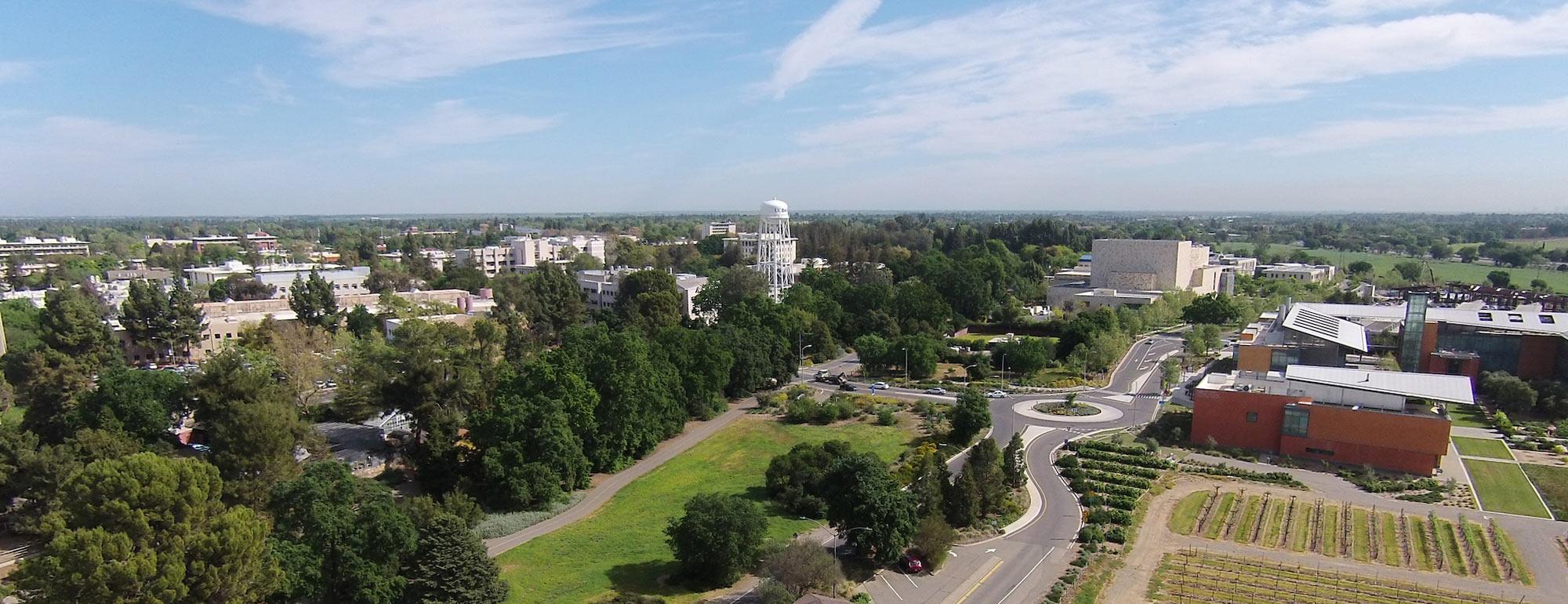
UC Davis is a sprawling, intellectually formidable public research university that feels like a world unto itself. It’s a place where you can bike for miles under a canopy of trees, conduct groundbreaking research in a world-class veterinary hospital, and join a student body that’s as earnest and outdoorsy as it is academically driven. Forget the cutthroat UC stereotype—Davis cultivates a collaborative, ‘find what you look for’ vibe, anchored by its undisputed global leadership in agriculture, environmental science, and veterinary medicine.
Admission requirements
Test-blind — scores not considered
Required
High school transcript
Grade point average
College-prep program
TOEFL (non-native English)
Source: IPEDS Admissions survey (2022) via Urban Institute. Covers formal factors only — it does not reflect essays, extracurriculars, or other holistic criteria.
More details
Undergrad enrollment
32,253
In-state tuition
$16,774
Out-of-state tuition
$50,974
No-Loan Policy
Yes, for qualifying students
Graduation Rate
86%
Meets Full Need
Yes, for qualifying students
ED Share of Class
Not applicable (UCs have no Early Decision)
First-Year Retention
Not stated in sources
Demonstrated Interest
Not considered
Median Earnings (10yr)
$80,838
Outcomes & value
Outcomes & value
Median earnings (10 yr)
$80,838
Value (earnings ÷ net price)
5.5×
Median debt at graduation
$13,000
Graduation rate
86%
First-year retention
93%
Reducing loan balance (3 yr)
83%
Pell (lower-income) share
31%
First-gen share (among federal-aid recipients)
41%
Top-earning majors
Median earnings by field of study (highest credential), ~2 years after completion.
Computer Engineering$82,440
Computer and Information Sciences, General$81,609
Engineering, General$70,370
Civil Engineering$67,516
Mechanical Engineering$67,324
Chemical Engineering$62,409
Applicants here also applied to
The schools that most often appear alongside UC Davis on applicants’ lists, from our self-reported outcomes corpus.
On-campus criminal offenses classed as violent (murder/non-negligent manslaughter, rape, robbery, aggravated assault) for the most recent reported year. Source: U.S. Dept. of Education Campus Safety and Security (Clery Act). Counts reflect what’s reported to the school, and urban campuses often report more partly due to non-student incidents nearby — read alongside campus size and setting, not as a standalone safety verdict.
Climate
Pleasant days / yr
107
Summer high
96°F
Winter low
41°F
Annual rain
20.7"
Natural-hazard risk
Relatively Moderate
Pleasant days counts days per year with a mean temperature of 55–75°F, a high at or below 90°F, a low at or above 45°F, and little precipitation — a transparent comfort measure, not a weighting we invented. Computed from Open-Meteo ERA5 daily history (2019–2023). Natural-hazard risk is the county’s composite rating from the FEMA National Risk Index.
Deep dive — research, future-scholar output & economic mobility▾
Research output
Institutional h-index
1,210
Scholarly works
299,153
Institutional research volume and impact from OpenAlex. The h-index reflects large research universities and will be low for teaching-focused liberal-arts colleges — not a measure of undergraduate quality.
Future-scholar output
Science & engineering PhDstop 13 nationally
Humanities & social-science PhDstop 48 nationally
Share of this school’s graduates who go on to earn research doctorates (2010–20), by national rank and per-capita yield (NSF institutional-yield ratio). A signal of a research-oriented student culture — not a causal promise, since it partly reflects who enrolls. Only top producers appear. Source: NSF NCSES, Baccalaureate Origins of U.S. Research Doctorate Recipients.
Economic mobility
Mobility rate
Quick answers
What is the acceptance rate at University of California-Davis?
University of California-Davis's acceptance rate is approximately 42% (Davis, CA), based on the most recent figures we compiled from public and primary sources.
How much does University of California-Davis cost?
At University of California-Davis, the average net price (after aid) is about $14,741 per year. Actual cost varies with financial aid and residency.
How many undergraduates attend University of California-Davis?
University of California-Davis enrolls approximately 32,253 undergraduate students.
Where is University of California-Davis located?
University of California-Davis is located in Davis, CA.
Admissions
Gaining admission to UC Davis is a selective, holistic process that draws a massive applicant pool from across California and the globe. The university received 78,092 freshman applications for a recent cycle, admitting 30,508, which results in an overall admit rate that fluctuates around the low 40s. The middle 50% of admitted freshmen present a high school GPA between 4.00 and 4.26 (weighted). Notably, UC Davis—like all UC campuses—is test-blind; SAT or ACT scores are not considered for admissions or scholarship decisions, though students may self-report them. The process is driven by the comprehensive UC review, weighing academic achievement in the context of opportunities available, along with personal qualities, extracurriculars, and leadership. Demonstrated interest, such as campus visits or contact with the admissions office, is not a factor in decisions. The rate—the percentage of admitted students who enroll—is relatively low, reported at around 15-16%, which is typical for a public university competing with other top UCs and private schools. The waitlist is actively used; one year, a remarkable 44.84% of students who accepted a spot on the waitlist were ultimately admitted, though in other years that number can be far lower, with one source noting only 24 admissions from a waitlist pool of over 3,200.
Earnings = median of students working ~10 years after entry; debt = median of graduates. Value divides 10-yr earnings by one year’s net price — read it as earnings per dollar of annual cost, not a full lifetime ROI; it favors lower-cost schools. Source: U.S. Dept. of Education College Scorecard. Figures lag ~2 years and reflect all students, not your intended major.
Aerospace, Aeronautical, and Astronautical/Space Engineering
$61,516
Business/Managerial Economics$51,750
Source: U.S. Dept. of Education College Scorecard (field-of-study earnings). Figures cover graduates who received federal aid and lag ~2 years; not all programs report data.
Co-application frequency from self-reported results — directional peer discovery, not a recommendation.
4.4%
Bottom → top quintile
52%
From bottom quintile
9%
Mobility rate = the share of students who both start in the bottom household-income quintile and reach the top quintile; bottom → top is that chance conditional on starting at the bottom. Source: Opportunity Insights Mobility Report Cards (Chetty, Friedman, Saez, Turner & Yagan). Reflects 1980–82 birth cohorts, so it’s directional, not current.
UC Davis operates on an intellectual scale that is both broad and profoundly deep. It offers over 100 undergraduate majors spanning every conceivable discipline, from Aerospace Science and Engineering to African American and African Studies. The academic identity is powerfully shaped by its land-grant mission, manifesting in premier, globally ranked programs in agriculture, forestry, and environmental sciences. The university is consistently ranked #1 in the nation for agriculture and forestry. This excellence extends to its world-renowned School of Veterinary Medicine—the top veterinary program in the country—which creates a ripple effect of research opportunities and academic rigor across related life science fields. But Davis is far from a one-trick cow; it boasts formidable strength across a wide spectrum: engineering, biological sciences, chemistry, economics, business, hospitality management, political science, and computer science are all highlighted as areas of distinction. The culture, as described by students, is one of academic rigor without cutthroat competition; you can find intense pre-med or engineering tracks, but also a supportive, collaborative atmosphere where students often study together. The sheer size of the research enterprise means undergraduates have exceptional access to hands-on projects, labs, and fieldwork, making theory tangible.
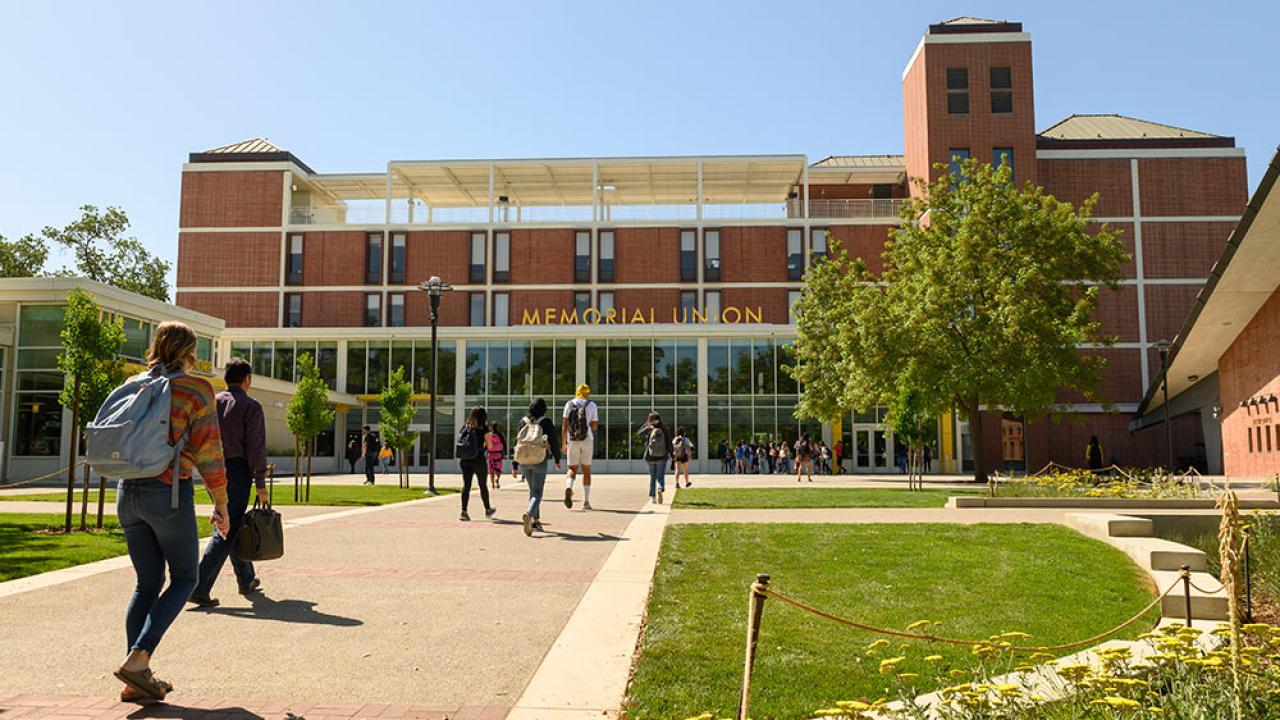
Life at Davis is defined by its unique physical setting and a student-crafted, proactive social culture. The campus itself is a 5,300-acre arboreal oasis—more park than concrete jungle—where the primary mode of transport is the bicycle. Miles of dedicated bike paths (the ‘Davis bike loop’) weave through campus and into the adjacent, charming college town of Davis, creating a laid-back, eco-conscious, and active vibe. The social scene is famously self-directed: ‘you find what you look for.’ If you’re looking for parties, they exist in the surrounding apartments and through Greek life (which is present but not dominant). If you’re looking for activism, it’s a historically engaged campus. If you’re looking for club sports, intramurals, over 800 student organizations, or quiet coffee-shop study sessions, you’ll find that too. The student body is notably diverse and friendly, fostering a palpable sense of community. Campus is ‘alive with activity,’ offering countless ways to socialize, engage, and lead. From the iconic Picnic Day (the largest student-run event in the nation) to casual gatherings at the ARC (Activities and Recreation Center) or the MU (Memorial Union), there’s a constant, low-pressure hum of activity. The culture is not one of handed-down tradition, but of creation; students build their own Davis experience, which often includes hiking, trips to Lake Tahoe or San Francisco, and enjoying the famously sunny Northern California weather.
A UC Davis degree is a powerful launchpad, delivering strong returns on investment. The university’s graduation rate is exceptionally high for a public institution, consistently reported between 85% and 89%, which places it in the top tier nationally. This speaks to both the quality of the students it admits and the support systems in place. The earnings outcomes are robust. According to federal data, the median earnings for students working ten years after entry are $73,086. This aligns with broader University of California data showing that alumni, on average, more than double their earnings within a decade of graduation, starting between $50,000 and $60,000 directly after college. Other sources note early-career earnings around $45,000 to $58,461, which is significantly above typical U.S. college outcomes. The practical, research-infused education—particularly in STEM, agriculture, and health fields—prepares graduates for immediate impact in the workforce or for top graduate and professional programs. The vast UC alumni network in California and beyond provides a formidable career advantage.
As a public university, UC Davis offers a significant value proposition, especially for in-state students, though the cost for out-of-state families is considerable. The average net price after grants and scholarships—the real cost families pay—is reported by various sources between $14,741 and $17,315. For lower-income families, this can be much lower; for example, families making $0-$30,000 per year pay an average net price of $9,211. Crucially, UC Davis is recognized as a ‘no-loan’ school for qualifying students. This means the university meets 100% of the demonstrated financial need for eligible students (typically California residents from low- and middle-income families) through grants, scholarships, and work-study, without requiring loans as part of the initial aid package. This policy removes a significant barrier to access. All students are encouraged to use the university's official Financial Aid Estimator to get a personalized projection of costs and aid. While the aid offer is generous, some families may still choose to utilize federal loans to cover their expected family contribution or other costs, but they are not mandated by the university's package.
UC Davis stands out for its singular ability to combine the heft and resources of a world-class research powerhouse with the feel of a collaborative, livable college town. It’s not just a top university; it’s the undisputed global leader in agricultural and environmental sciences, operating a ‘living laboratory’ of farms, arboreta, and reserves. This preeminence is matched by its #1 ranked School of Veterinary Medicine, creating an unparalleled ecosystem for students passionate about life sciences, sustainability, food systems, and animal health. Beyond its academic peaks, Davis offers a unique quality of life that is hard to replicate. The bike-centric, green campus fosters a healthy, down-to-earth student culture that is academically serious but not intensely stressful. The ‘find what you look for’ ethos empowers students to shape their own experience, whether that’s in a cutting-edge genetics lab, at the student-run coffee house, or on a mountain biking trail. It’s a place where you can get a premier, practical education that leads to strong financial outcomes, all while enjoying a genuinely pleasant and engaging daily life. For students seeking a major research university without the cutthroat pressure or urban density, Davis is a compelling and distinctive choice.
University of California-Davis seal · sourceLocations | UC Davis · sourceGet to Know Campus When You Don't Live Nearby | UC Davis · sourceUC Davis School of Medicine - Wikipedia · source