Admit rate has ranged 77%–88% over the last 5 years — notably volatile, though the latest figure above (76%) falls outside that window. Source: IPEDS via Urban Institute.
Acceptance & SAT from Common Data Set / IPEDS; net price, earnings & graduation from the U.S. Dept. of Education College Scorecard. Figures lag ~1–2 years — verify with the school.
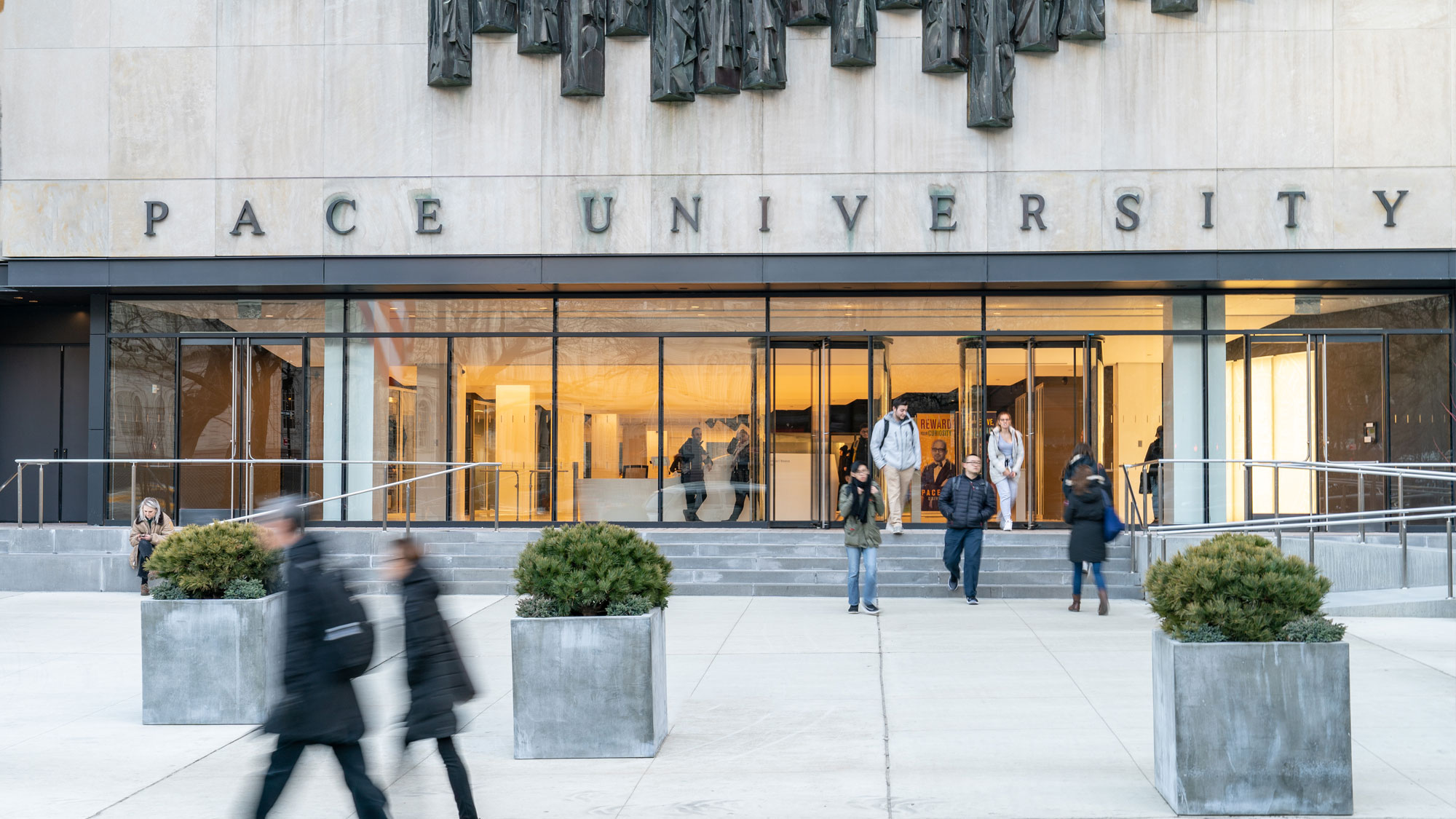
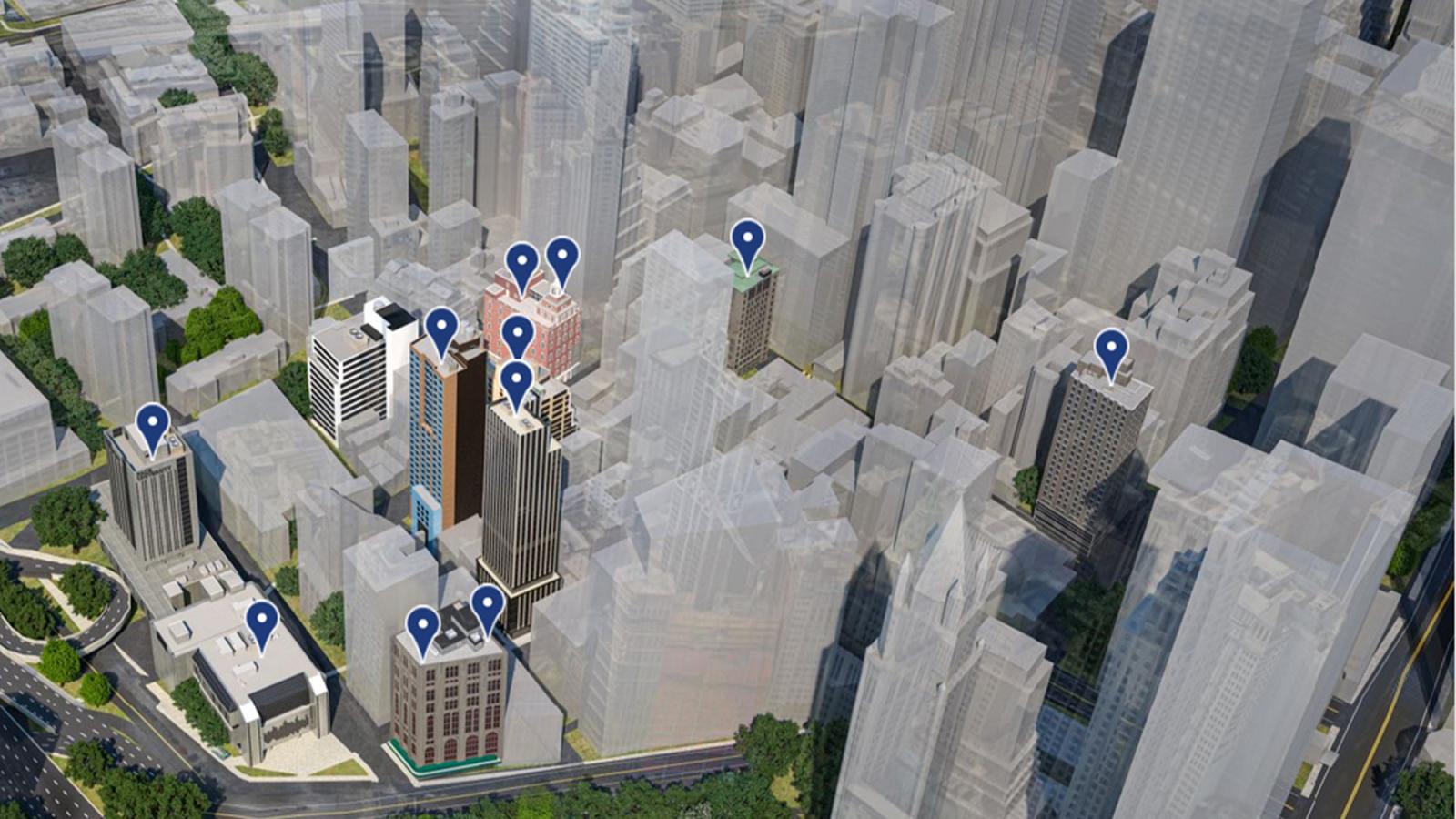
Pace University is a private institution anchored in the heart of New York City, offering a pragmatic, career-forward education with its feet firmly planted in the real world of business, performing arts, and tech. Its identity is split between the high-energy, skyscraper-dense NYC campus and the more traditional, leafy Westchester campus, appealing to students who want the internship and networking opportunities of a global capital without the cutthroat selectivity of its Ivy neighbors. The vibe is less about cloistered academia and more about getting to work—whether that's on Wall Street, in a Broadway rehearsal room, or in a cybersecurity lab.
Admission requirements
Test-optional — scores considered if submitted
Required
High school transcript
Grade point average
Letters of recommendation
TOEFL (non-native English)
Considered (not required)
Class rank
Test scores (SAT/ACT)
Source: IPEDS Admissions survey (2022) via Urban Institute. Covers formal factors only — it does not reflect essays, extracurriculars, or other holistic criteria.
More details
Undergrad enrollment
7,665
In-state tuition
$53,290
Out-of-state tuition
$53,290
Graduation Rate
60%
Demonstrated Interest
Considered
Median Earnings (10yr)
$70,378
Students Receiving Grant/Scholarship Aid
99%
Outcomes & value
Outcomes & value
Median earnings (10 yr)
$70,378
Value (earnings ÷ net price)
2.3×
Median debt at graduation
$23,250
Graduation rate
60%
First-year retention
75%
Reducing loan balance (3 yr)
64%
Pell (lower-income) share
27%
First-gen share (among federal-aid recipients)
29%
Financial health
2.6 / 3.0Meets the federal financial-responsibility standard
U.S. Dept. of Education Financial Responsibility Composite Score (FY2022-23). Scale −1.0 to 3.0; ≥1.5 meets the standard. Reported for private nonprofit & for-profit institutions only — public universities are state-backed and not scored, so this is a stability signal, not a ranking.
Top-earning majors
Median earnings by field of study (highest credential), ~2 years after completion.
Registered Nursing, Nursing Administration, Nursing Research and Clinical Nursing$90,727
Co-application frequency from self-reported results — directional peer discovery, not a recommendation.
Campus & location
Campus safety
On-campus violent crimes (2024)
8
Per 1,000 students
0.60
On-campus criminal offenses classed as violent (murder/non-negligent manslaughter, rape, robbery, aggravated assault) for the most recent reported year. Source: U.S. Dept. of Education Campus Safety and Security (Clery Act). Counts reflect what’s reported to the school, and urban campuses often report more partly due to non-student incidents nearby — read alongside campus size and setting, not as a standalone safety verdict.
Climate
Pleasant days / yr
90
Summer high
83°F
Winter low
29°F
Annual rain
54.4"
Annual snow
18.3"
Natural-hazard risk
Relatively High
Pleasant days counts days per year with a mean temperature of 55–75°F, a high at or below 90°F, a low at or above 45°F, and little precipitation — a transparent comfort measure, not a weighting we invented. Computed from Open-Meteo ERA5 daily history (2019–2023). Natural-hazard risk is the county’s composite rating from the FEMA National Risk Index.
Deep dive — research, future-scholar output & economic mobility▾
Research output
Institutional h-index
190
Scholarly works
10,104
Institutional research volume and impact from OpenAlex. The h-index reflects large research universities and will be low for teaching-focused liberal-arts colleges — not a measure of undergraduate quality.
Economic mobility
Mobility rate
8.4%
Bottom → top quintile
56%
From bottom quintile
15%
Mobility rate = the share of students who both start in the bottom household-income quintile and reach the top quintile; bottom → top is that chance conditional on starting at the bottom. Source: Opportunity Insights Mobility Report Cards (Chetty, Friedman, Saez, Turner & Yagan). Reflects 1980–82 birth cohorts, so it’s directional, not current.
Quick answers
What is the acceptance rate at Pace University?
Pace University's acceptance rate is approximately 76% (New York, NY), based on the most recent figures we compiled from public and primary sources.
What SAT score do you need for Pace University?
Admitted students at Pace University typically score 1180–1340 on the SAT (the middle-50% range). Scores outside this band are still admitted, especially with strong applications.
How much does Pace University cost?
At Pace University, the average net price (after aid) is about $30,892 per year. Actual cost varies with financial aid and residency.
How many undergraduates attend Pace University?
Pace University enrolls approximately 7,665 undergraduate students.
Where is Pace University located?
Pace University is located in New York, NY.
Admissions
Pace University operates with a moderately selective admissions process, accepting a significant majority of its applicants. The university offers both Early Decision (ED) and regular decision pathways, with a notably higher for those who apply binding Early Decision. Demonstrated interest is a factor considered in the admissions evaluation.
Overall Selectivity: Pace's admissions are characterized as "less selective" or "somewhat selective."
Early Decision Advantage: Applying via Early Decision appears to offer a significant admissions advantage. One source reports an Early Decision acceptance rate of 29%, compared to a 75% overall rate.
Application Volume: In a recent cycle, Pace received 28,469 applications and accepted 21,961 of them.
Enrollment Yield: Of those accepted, a relatively small portion—8.8%—ultimately enrolled, indicating that many admitted students choose other options.
Admissions Factors: According to the , which Pace participates in, the university considers demonstrated interest as part of its .
Test Scores: Admitted students typically present standardized test scores within a competitive range.
Earnings = median of students working ~10 years after entry; debt = median of graduates. Value divides 10-yr earnings by one year’s net price — read it as earnings per dollar of annual cost, not a full lifetime ROI; it favors lower-cost schools. Source: U.S. Dept. of Education College Scorecard. Figures lag ~2 years and reflect all students, not your intended major.
$64,005
Accounting and Related Services$61,058
Computer Science$59,417
Source: U.S. Dept. of Education College Scorecard (field-of-study earnings). Figures cover graduates who received federal aid and lag ~2 years; not all programs report data.
Pace's academic identity is defined by its strong professional orientation and "learn by doing" philosophy. The curriculum is explicitly future-forward, with a focus on fields where market demand is growing. Small classes and personal mentorship are emphasized as key components of the educational experience.
Signature Strengths: The university is known for robust programs in business, management, marketing, the visual and performing arts, and health professions. It also aims to leverage strengths in data science, cybersecurity, and artificial intelligence.
Program Structure: Certain specialized programs, like a finance-focused opportunity, are open only to specific non-finance majors within the Lubin School of Business and select non-business majors such as information systems, computer science, and economics.
Student Perspective: External reviews note that students in performing arts programs, in particular, praise the conservatory-style training and opportunities.
Educational Approach: The university promotes a "real-world, future-forward curriculum" backed by powerful academic support systems.
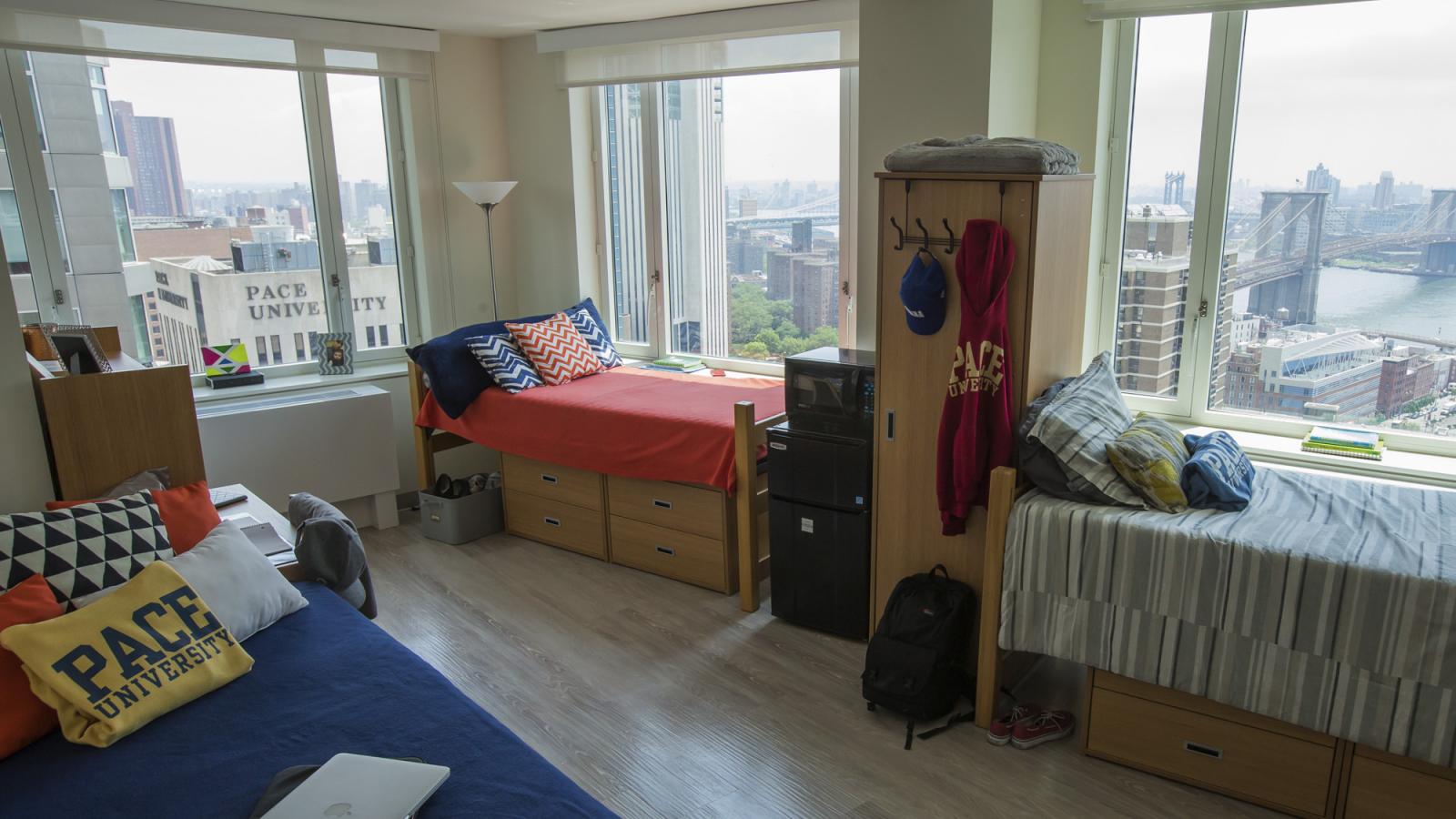
Life at Pace, especially on its flagship New York City campus, is intrinsically linked to the energy of the city itself. The campus serves as a home base for a diverse student body deeply engaged in clubs, cultural organizations, and the professional fabric of NYC.
Campus Size & Population: The NYC campus is home to over 9,125 students, with more than 1,000 first-year students typically living on campus.
Clubs and Organizations: Students have access to more than 50 student clubs and organizations. These span a wide range of interests, including more than 20 cultural student organizations focused on communities from "Latin flavor to rainbow pride," as well as groups dedicated to politics and advocacy.
Residential Experience: Residential life is described as "full of learning experiences led by wonderful student leaders."
Overall Vibe: The student life office fosters a community aimed at personal and academic growth, with endless opportunities for leadership roles and engagement that extend "just beyond campus walls" into the cultural and professional landscape of New York.
Pace University markets strong career outcomes for its graduates, with data pointing to high employment rates and salaries that often exceed regional averages. The graduation rate, however, is a point of comparison with peer institutions.
Employment Success: Recent data for bachelor's graduates shows impressive placement rates. The Class of 2025 reported a 90% outcomes rate with an average full-time salary of $75,827. The Class of 2024 reported a 93% outcomes rate.
Salary Premium: Graduates report earning a significant premium over comparison benchmarks. One survey found Pace graduates earning an average salary approximately 21% higher than the provincial average. Another source indicates bachelor's graduates earn over $11,000 more than a comparison group.
Graduation Rate: The overall graduation rate is reported at 61%, with women graduating at a higher rate of 64%. This rate is positioned as 45% of comparable institutions, suggesting it is a metric the university is working to improve.
Mid-Career Earnings: The median earnings ten years after entry are a strong indicator of the long-term value of a Pace degree.
Pace University is a private institution with a corresponding tuition price, but it works to offset costs through a combination of need-based and . The vast majority of incoming students receive some form of grant or scholarship.
Aid Prevalence: 99% of Pace University's full-time beginning undergraduates receive grant or scholarship aid.
Types of Aid: Financial aid at Pace comes in four forms: scholarships, grants, on-campus employment, and loans. Need-based grants include the Pace Grant and Pace Assistance Award, which require full-time enrollment and demonstrated financial need.
Net Price: The average —the cost after aid and scholarships are applied—is a key figure for families. Pace provides a Net Price Calculator and a Merit Scholarship Estimator to help families forecast costs.
Loan Policy: Like most universities, Pace includes federal loans as part of financial aid packages for students who demonstrate need, as well as direct unsubsidized loans for those who do not. The university's materials do not describe a "no-loan" policy for meeting full need.
Pace University carves out a distinct niche by offering unfettered access to New York City's professional ecosystem wrapped in a supportive, private university structure. It's for the student who wants the internship on day one, the Broadway audition next semester, and the finance seminar taught by a Wall Street veteran—all without competing in the hyper-elite admissions arena. Its standout feature is this direct pipeline: a curriculum explicitly designed around growing industries like data science, AI, and finance, coupled with a campus life that intentionally funnels students into the city's networks. The results speak to this model, with graduates consistently reporting high employment rates and salaries that outpace averages. While its graduation rate signals it may not be the right fit for every student, for those who are career-motivated and ready to engage, Pace delivers a practical, high-return education firmly rooted in the real world.
Pace University seal · sourceCampus Planning and Facilities | Pace University New York · sourceExplore Campus Life at Pace | Pace University New York · sourcePlan A Visit | Admission and Aid | Pace University New York · source