Admit rate has ranged 27%–44% over the last 5 years — notably volatile, though the latest figure above (25%) falls outside that window. Source: IPEDS via Urban Institute.
Acceptance & SAT from Common Data Set / IPEDS; net price, earnings & graduation from the U.S. Dept. of Education College Scorecard. Figures lag ~1–2 years — verify with the school.
Reed College is a fiercely intellectual, deliberately unconventional liberal arts college in Portland, Oregon, where academic rigor is a point of pride and the iconic senior thesis is a rite of passage. Its campus is a tight-knit, residential bubble of Tudor-Gothic architecture and intense curiosity, where students dive deep into 38 majors within a conference-style seminar culture. The college couples this demanding academic life with a generous promise to meet 100% of demonstrated financial need, attracting a cohort of independent thinkers who are as serious about ideas as they are about shaping their own community.
Admission requirements
Test-optional — scores considered if submitted
Required
High school transcript
Grade point average
Letters of recommendation
College-prep program
TOEFL (non-native English)
Considered (not required)
Class rank
Test scores (SAT/ACT)
Demonstrated competencies
Source: IPEDS Admissions survey (2022) via Urban Institute. Covers formal factors only — it does not reflect essays, extracurriculars, or other holistic criteria.
More details
Undergrad enrollment
1,320
In-state tuition
$69,350
Out-of-state tuition
$69,350
Graduation Rate
71%
Meets Full Need
Yes
Demonstrated Interest
Not considered
Median Earnings (10yr)
$62,927
Student-to-Faculty Ratio
9:1
First-Year Retention Rate
Data not in provided sources
Early Decision Share of Class
~30%
Outcomes & value
Outcomes & value
Median earnings (10 yr)
$62,927
Value (earnings ÷ net price)
1.9×
Median debt at graduation
$21,500
Graduation rate
71%
First-year retention
88%
Reducing loan balance (3 yr)
85%
Pell (lower-income) share
15%
Endowment / student
$593,815
Earnings = median of students working ~10 years after entry; debt = median of graduates. Value divides 10-yr earnings by net price — read it as earnings per dollar of annual cost, not a full lifetime ROI; it favors lower-cost schools. Source: U.S. Dept. of Education College Scorecard. Figures lag ~2 years and reflect all students, not your intended major.
Financial health
3.0 / 3.0Meets the federal financial-responsibility standard
U.S. Dept. of Education Financial Responsibility Composite Score (FY2022-23). Scale −1.0 to 3.0; ≥1.5 meets the standard. Reported for private nonprofit & for-profit institutions only — public universities are state-backed and not scored, so this is a stability signal, not a ranking.
Top-earning majors
Median earnings by field of study (highest credential), ~2 years after completion.
Economics$52,107
Multi/Interdisciplinary Studies, Other$30,409
Fine and Studio Arts$28,598
Biology, General$26,739
English Language and Literature, General$18,771
Psychology, General$16,874
Source: U.S. Dept. of Education College Scorecard (field-of-study earnings). Figures cover graduates who received federal aid and lag ~2 years; not all programs report data.
Applicants here also applied to
The schools that most often appear alongside Reed on applicants’ lists, from our self-reported outcomes corpus.
Co-application frequency from self-reported results — directional peer discovery, not a recommendation.
Campus & location
Campus safety
On-campus violent crimes (2024)
7
Per 1,000 students
5.26
On-campus criminal offenses classed as violent (murder/non-negligent manslaughter, rape, robbery, aggravated assault) for the most recent reported year. Source: U.S. Dept. of Education Campus Safety and Security (Clery Act). Counts reflect what’s reported to the school, and urban campuses often report more partly due to non-student incidents nearby — read alongside campus size and setting, not as a standalone safety verdict.
Climate
Pleasant days / yr
115
Summer high
81°F
Winter low
36°F
Annual rain
52"
Annual snow
16.3"
Natural-hazard risk
Relatively High
Pleasant days counts days per year with a mean temperature of 55–75°F, a high at or below 90°F, a low at or above 45°F, and little precipitation — a transparent comfort measure, not a weighting we invented. Computed from Open-Meteo ERA5 daily history (2019–2023). Natural-hazard risk is the county’s composite rating from the FEMA National Risk Index.
Deep dive — research, future-scholar output & economic mobility▾
Research output
Institutional h-index
177
Scholarly works
5,159
Institutional research volume and impact from OpenAlex. The h-index reflects large research universities and will be low for teaching-focused liberal-arts colleges — not a measure of undergraduate quality.
Share of this school’s graduates who go on to earn research doctorates (2010–20), by national rank and per-capita yield (NSF institutional-yield ratio). A signal of a research-oriented student culture — not a causal promise, since it partly reflects who enrolls. Only top producers appear. Source: NSF NCSES, Baccalaureate Origins of U.S. Research Doctorate Recipients.
Economic mobility
Quick answers
What is the acceptance rate at Reed College?
Reed College's acceptance rate is approximately 25% (Portland, OR), based on the most recent figures we compiled from public and primary sources.
What SAT score do you need for Reed College?
Admitted students at Reed College typically score 1290–1520 on the SAT (the middle-50% range). Scores outside this band are still admitted, especially with strong applications.
How much does Reed College cost?
At Reed College, the average net price (after aid) is about $33,013 per year. Actual cost varies with financial aid and residency.
How many undergraduates attend Reed College?
Reed College enrolls approximately 1,320 undergraduate students.
Where is Reed College located?
Reed College is located in Portland, OR.
Admissions
Gaining admission to Reed is a selective process, with the college reporting an of 25%. The middle 50% SAT range for admitted students is 1290–1520, and the average high school GPA of entering students is a perfect 4.0. The admissions office does not consider an applicant's level of demonstrated interest in its evaluation, as indicated in the . For those certain Reed is their first choice, applying through Early Decision can be a strategic advantage; traditionally, about 30 percent of the incoming class enters through Early Decision, and the admission rate for ED applicants is higher than for the regular decision pool. In recent cycles, the college has received over 9,600 applications for a first-year class of just over 300 students, resulting in a rate (the percentage of admitted students who enroll) that underscores its distinctive appeal.
Mobility rate = the share of students who both start in the bottom household-income quintile and reach the top quintile; bottom → top is that chance conditional on starting at the bottom. Source: Opportunity Insights Mobility Report Cards (Chetty, Friedman, Saez, Turner & Yagan). Reflects 1980–82 birth cohorts, so it’s directional, not current.
Reed's academic identity is built on a foundation of intense, conference-style seminars where the primary goal is the pursuit of knowledge for its own sake. The college offers 38 majors, with particular historical strength in the sciences—its physics program is notably distinguished by an on-campus nuclear research reactor operated by undergraduate students. The student-to-faculty ratio is an intimate 9:1, facilitating the close collaboration with professors that is a hallmark of the Reed experience. This rigor is not for the faint of heart; students frequently describe the workload as exceptionally demanding, leaving little free time. The intellectual journey culminates in a mandatory senior thesis, a year-long, original research project that is defended before a committee and stands as the definitive credential of a Reed education.
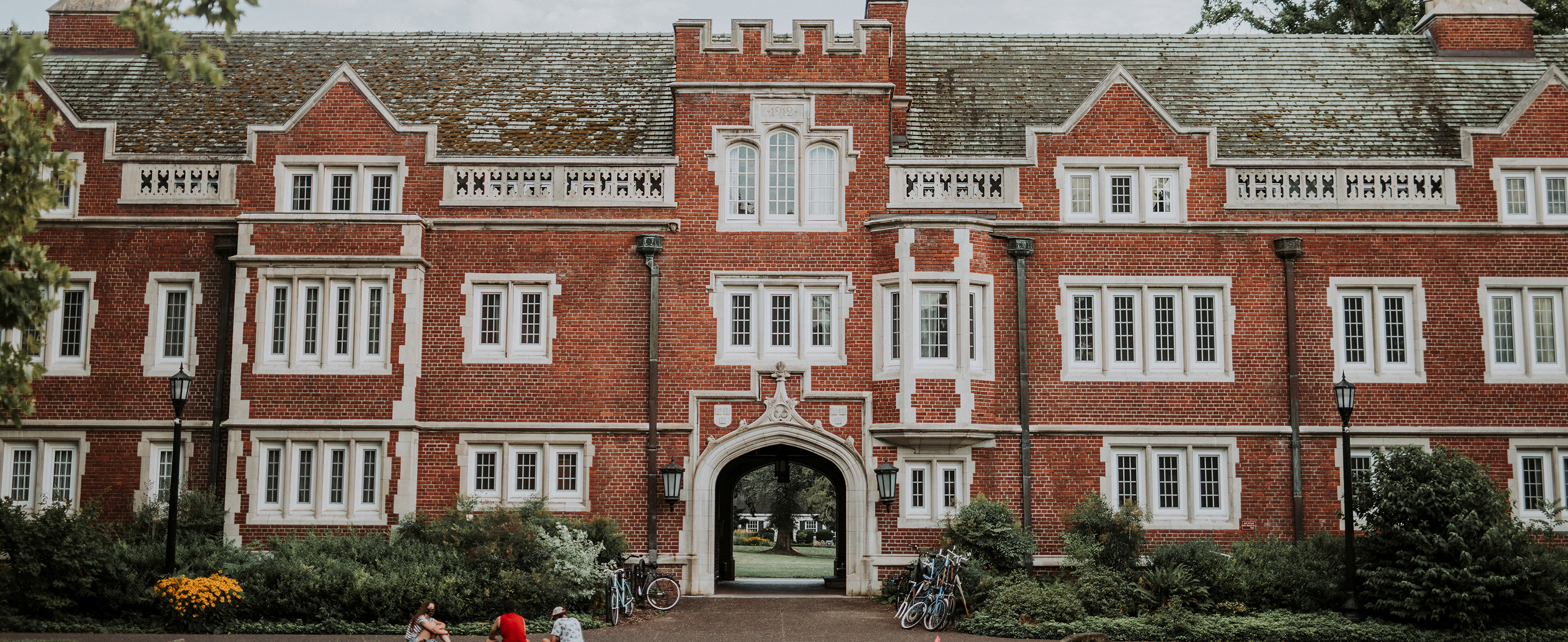
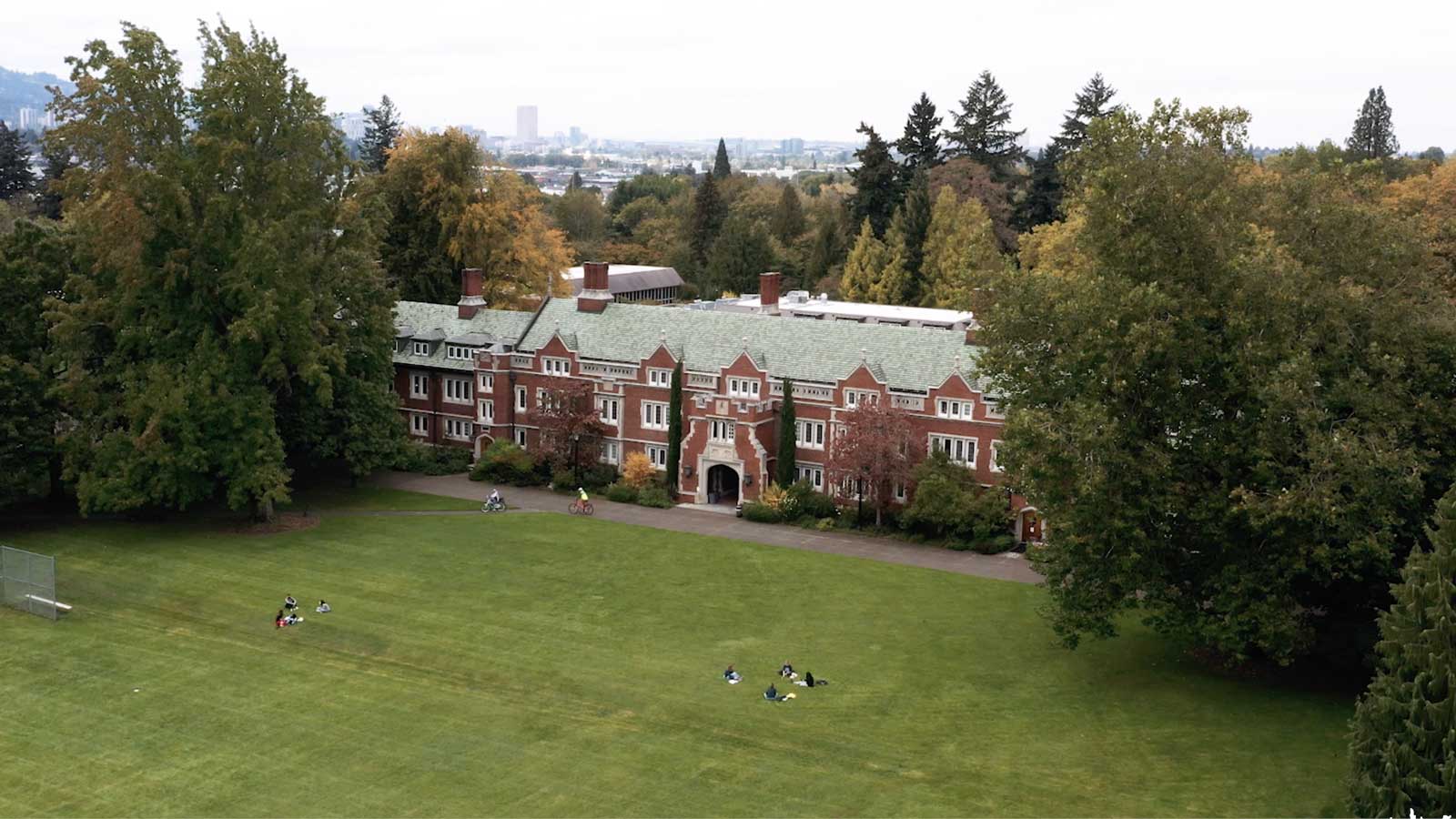
Life at Reed unfolds on a residential, 116-acre campus in Portland's Eastmoreland neighborhood, characterized by Tudor-Gothic architecture and a dense canopy of trees. The social and intellectual atmosphere is that of a self-contained, tight-knit bubble—vibrant and active for those who seek it out, but also respectful of students who prefer a quieter, more introspective college experience. The campus life office coordinates a network of student support services and promotes engagement through clubs, outdoor activities (like hiking in the nearby Pacific Northwest landscape), and campus events. This creates a community where, as one review notes, "social life can be great here if you want it to be, and if you want to just study, that's fine too." The setting in Portland provides access to a major city known for its creativity and outdoor culture, though the Reed campus itself often feels like a world apart.
Reed's graduation rate is 71%. The most definitive measure of post-graduate success for Reedies is often qualitative, rooted in the deep analytical and research skills honed by the thesis process. Alumni survey data indicates that a significant majority of graduates report their Reed education contributed "very much" or "somewhat" to their analytical and problem-solving skills, ability to work independently, and written communication abilities. While early-career salary data varies, the median earnings ten years after entry are $62,927. The college's national reputation for rigorous scholarship prepares graduates for top-tier graduate and professional programs, as well as careers that value intellectual depth and independent thought.
Reed College is committed to making its education accessible through a robust financial aid program. The cornerstone of this commitment is The Reed Promise, which states that the college meets 100% of the demonstrated financial need of all admitted students, domestic and international, for all four years. This need is met through a combination of grants, scholarships, work-study, and, for some students, loans. The average after aid is $33,013. While Reed meets full need, its policy is not explicitly a "no-loan" policy for all income levels; loans may be included in financial aid packages, though the institution's substantial gift aid often reduces borrowing. Families are encouraged to use the school's Net Price Calculator for a detailed estimate.
Reed College stands out as one of the last bastions of pure, unadulterated intellectualism in American higher education. It is a place where the life of the mind is the central organizing principle, celebrated through its legendary thesis requirement and a grading system that famously de-emphasizes competition (narrative evaluations supplement grades). This creates a culture where students are driven by curiosity rather than credentialism. Its unique features—like the student-run nuclear reactor—are not gimmicks but manifestations of this deep trust in undergraduate capability. Coupled with its location in eclectic Portland and its steadfast promise to meet full financial need, Reed attracts and cultivates a specific type of student: fiercely independent, intellectually fearless, and comfortable marching to the beat of their own drum. It's not a college for everyone, but for those who fit, it offers an unparalleled and transformative education.