Admit rate has ranged 44%–54% over the last 5 years — notably volatile. Source: IPEDS via Urban Institute.
Acceptance & SAT from Common Data Set / IPEDS; net price, earnings & graduation from the U.S. Dept. of Education College Scorecard. Figures lag ~1–2 years — verify with the school.
Santa Clara University is a Jesuit institution that has mastered the art of the Silicon Valley adjacency play. It’s a mid-sized, mission-driven campus where the liberal arts collide with pre-professional ambition, producing graduates who land in the top 1% of national earners. The vibe is sunny, collaborative, and career-focused, with a student body that knows a degree from SCU is a direct ticket into the heart of the tech economy.
Admission requirements
Test-optional — scores considered if submitted
Required
High school transcript
Grade point average
Letters of recommendation
College-prep program
TOEFL (non-native English)
Considered (not required)
Class rank
Test scores (SAT/ACT)
Source: IPEDS Admissions survey (2022) via Urban Institute. Covers formal factors only — it does not reflect essays, extracurriculars, or other holistic criteria.
More details
Undergrad enrollment
6,552
In-state tuition
$61,293
Out-of-state tuition
$61,293
No-Loan Policy
Yes, for qualifying students
Graduation Rate
88%
Meets Full Need
Yes (Santa Clara Promise)
Demonstrated Interest
Considered
Out-of-State Students
40%
Median Earnings (10yr)
$109,183
Students Receiving Financial Aid
73%
Outcomes & value
Outcomes & value
Median earnings (10 yr)
$109,183
Value (earnings ÷ net price)
2.2×
Median debt at graduation
$19,162
Graduation rate
88%
First-year retention
94%
Reducing loan balance (3 yr)
88%
Pell (lower-income) share
11%
First-gen share (among federal-aid recipients)
17%
Financial health
2.7 / 3.0Meets the federal financial-responsibility standard
U.S. Dept. of Education Financial Responsibility Composite Score (FY2022-23). Scale −1.0 to 3.0; ≥1.5 meets the standard. Reported for private nonprofit & for-profit institutions only — public universities are state-backed and not scored, so this is a stability signal, not a ranking.
Top-earning majors
Median earnings by field of study (highest credential), ~2 years after completion.
Computer Engineering$103,449
Management Information Systems and Services$80,391
Civil Engineering$79,473
Mechanical Engineering$74,576
Finance and Financial Management Services$70,456
Accounting and Related Services$69,740
Applicants here also applied to
The schools that most often appear alongside Santa Clara University on applicants’ lists, from our self-reported outcomes corpus.
On-campus criminal offenses classed as violent (murder/non-negligent manslaughter, rape, robbery, aggravated assault) for the most recent reported year. Source: U.S. Dept. of Education Campus Safety and Security (Clery Act). Counts reflect what’s reported to the school, and urban campuses often report more partly due to non-student incidents nearby — read alongside campus size and setting, not as a standalone safety verdict.
Climate
Pleasant days / yr
199
Summer high
84°F
Winter low
44°F
Annual rain
20.6"
Natural-hazard risk
Very High
Pleasant days counts days per year with a mean temperature of 55–75°F, a high at or below 90°F, a low at or above 45°F, and little precipitation — a transparent comfort measure, not a weighting we invented. Computed from Open-Meteo ERA5 daily history (2019–2023). Natural-hazard risk is the county’s composite rating from the FEMA National Risk Index.
Deep dive — research, future-scholar output & economic mobility▾
Research output
Institutional h-index
283
Scholarly works
16,741
Institutional research volume and impact from OpenAlex. The h-index reflects large research universities and will be low for teaching-focused liberal-arts colleges — not a measure of undergraduate quality.
Economic mobility
Mobility rate
2.2%
Bottom → top quintile
62%
From bottom quintile
4%
Mobility rate = the share of students who both start in the bottom household-income quintile and reach the top quintile; bottom → top is that chance conditional on starting at the bottom. Source: Opportunity Insights Mobility Report Cards (Chetty, Friedman, Saez, Turner & Yagan). Reflects 1980–82 birth cohorts, so it’s directional, not current.
Quick answers
What is the acceptance rate at Santa Clara University?
Santa Clara University's acceptance rate is approximately 48% (Santa Clara, CA), based on the most recent figures we compiled from public and primary sources.
What SAT score do you need for Santa Clara University?
Admitted students at Santa Clara University typically score 1350–1490 on the SAT (the middle-50% range). Scores outside this band are still admitted, especially with strong applications.
How much does Santa Clara University cost?
At Santa Clara University, the average net price (after aid) is about $50,062 per year. Actual cost varies with financial aid and residency.
How many undergraduates attend Santa Clara University?
Santa Clara University enrolls approximately 6,552 undergraduate students.
Where is Santa Clara University located?
Santa Clara University is located in Santa Clara, CA.
Admissions
Santa Clara's admissions process is selective but offers a strategic advantage for committed applicants. The overall is 48%, but applying early can significantly boost your odds. The early acceptance rate is notably higher, reported at 76.4% by U.S. News, with other sources citing an Early Decision acceptance rate as high as 80%. The university is , and for the Class of 2027, only 36% of applicants submitted SAT or ACT scores; those who did had an average SAT of 1,413 and an average ACT of 32. The admitted class is academically strong, with an average GPA around 3.72. Demonstrated interest is a factor Santa Clara considers in its admissions decisions, as indicated in its reports. The university accepts the Common Application with a deadline of January 7.
Key demographics of the incoming class show a commitment to diversity, with a record number of Latiné/x students in the Class of 2027. The student body is not purely local, with 40% of undergraduates coming from out-of-state.
Earnings = median of students working ~10 years after entry; debt = median of graduates. Value divides 10-yr earnings by one year’s net price — read it as earnings per dollar of annual cost, not a full lifetime ROI; it favors lower-cost schools. Source: U.S. Dept. of Education College Scorecard. Figures lag ~2 years and reflect all students, not your intended major.
Business/Managerial Economics$69,338
Economics$68,379
Source: U.S. Dept. of Education College Scorecard (field-of-study earnings). Figures cover graduates who received federal aid and lag ~2 years; not all programs report data.
SCU offers a classic Jesuit liberal arts core fused with robust professional schools, creating an academic environment that values both reflection and results. Students can choose from more than 50 majors, minors, and special programs spanning the arts, humanities, natural sciences, and social sciences. The curriculum is designed to be interdisciplinary, encouraging connections across fields. The most popular majors reflect the university's location and career orientation: Finance, Speech Communication and Rhetoric, and Psychology. The undergraduate experience is anchored in the College of Arts and Sciences, but is deeply connected to the Leavey School of Business and the School of Engineering, providing pathways into law, medicine, and teaching. The academic culture is described as supportive and engaging, where the focus on 'educating the whole person' translates into accessible professors and collaborative, rather than cutthroat, classrooms.
Life at SCU blends a friendly, tight-knit campus community with the relentless energy of its Silicon Valley backyard. The university describes itself as "grounded in the Jesuit educational tradition" with a mission to help people improve the world. Students report feeling extremely safe on campus, with 94% saying they feel secure. The social scene is self-directed: the party culture is "as much or as little as you want," offering options without overwhelming pressure. The campus commitment to arts and culture is evidenced by a thriving performing arts facility and an accredited museum of art and history. The overall vibe is often characterized as collaborative and career-focused, with students keenly aware of the professional opportunities just beyond the campus borders. The university actively works on diversity and inclusion initiatives, though student perspectives on these efforts vary.
This is where Santa Clara University truly distinguishes itself. The return on investment is staggering, driven overwhelmingly by its prime location. SCU ranks in the top 1% nationally for alumni earnings, placing #7 out of 1,503 universities—a list that includes MIT, Stanford, and Harvard. The median earnings 10 years after entry are $109,183. This financial success is underpinned by a strong graduation rate of 88%, which ranks in the top 5% of comparable universities. U.S. News has recognized SCU among the top American colleges for best return on investment, highlighting strong career outcomes and long-term financial value. The sentiment among observers is clear: "SCU graduates do well in the job market" and receive high salaries, a direct pipeline effect of being situated in one of the world's most dynamic economic ecosystems.
Attending Santa Clara requires a significant financial investment, but the university provides substantial aid to offset costs. The average after aid is $50,062. A strong majority of students—73%—receive some form of financial aid. The university has a 'Santa Clara Promise' program intended to meet the full institutional demonstrated need of billable costs for eligible students through grants (not loans). This aligns with a 'no-loan' policy for qualifying students, where 100% of financial need is met with grants and work-study, removing loans from the package. This policy is specifically highlighted for admitted first-year students who graduate from Cristo Rey Network high schools, but the principle extends to other eligible students. For those not eligible for , merit-based scholarships are available based on academic or other achievements.
Santa Clara University’s unique power lies in its potent, almost alchemical combination of identity and geography. It is not just near Silicon Valley; it is intellectually and professionally woven into its fabric. This integration transforms a solid Jesuit liberal arts education into a career launchpad of elite caliber. The data is undeniable: an alumni earnings ranking in the top 1% nationally is an outcome typically reserved for the Ivies and tech institutes, not a mid-sized comprehensive university in California. Yet SCU delivers this while maintaining a cohesive, mission-driven campus community focused on the 'whole person'—a stark contrast to the impersonal frenzy of the surrounding tech world. It offers a high-touch, values-oriented undergraduate experience that somehow also functions as a direct feeder into the highest-earning industries on the planet. For students seeking a meaningful college experience that doesn't require sacrificing professional ambition, SCU is a singular and compelling proposition.
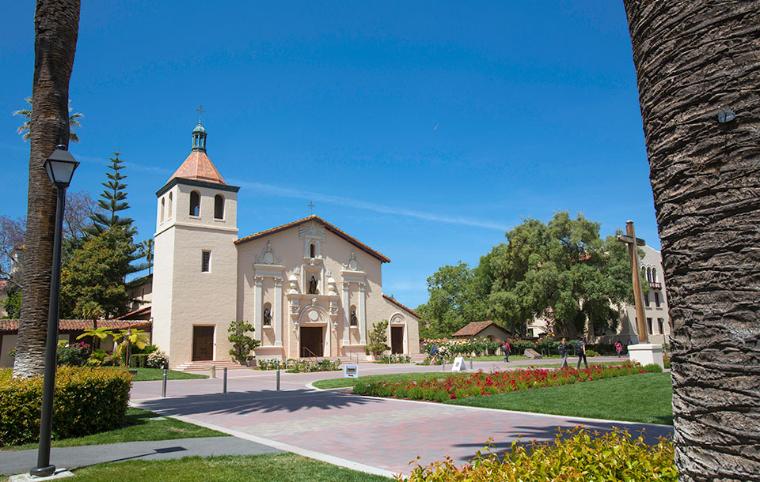
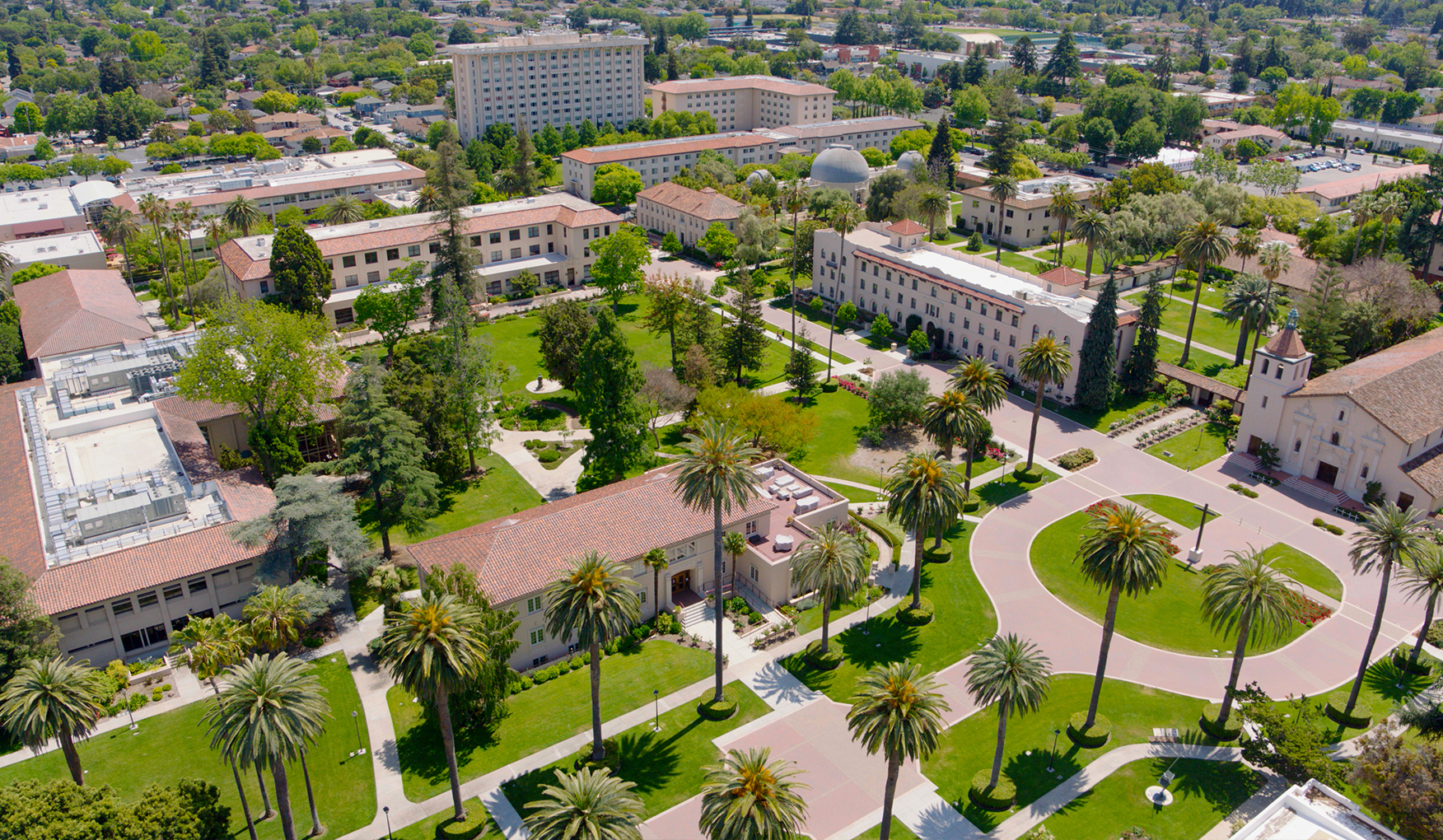
Santa Clara University seal · sourceOur Campus - About - Santa Clara University · sourceSanta Clara University, The Sobrato Campus for Discovery and Innovation - Work - ZGF · sourceA University Transformed - Santa Clara University · source
.jpg?width=1600)