Admit rate has ranged 69%–82% over the last 5 years — notably volatile. Source: IPEDS via Urban Institute.
Acceptance & SAT from Common Data Set / IPEDS; net price, earnings & graduation from the U.S. Dept. of Education College Scorecard. Figures lag ~1–2 years — verify with the school.
SUNY Polytechnic Institute carves out a distinct niche as New York State's public polytechnic, offering a laser-focused, career-oriented education in Utica. It's a place where practical, hands-on learning in engineering, nursing, and technology meets a small-campus feel, but students should be prepared for a campus life that is often described as subdued. The school's value proposition is clear: relatively accessible admissions, a solid return on investment for graduates, and the affordability of the SUNY system.
Admission requirements
Test-optional — scores considered if submitted
Required
High school transcript
Grade point average
Letters of recommendation
College-prep program
TOEFL (non-native English)
Considered (not required)
Test scores (SAT/ACT)
Source: IPEDS Admissions survey (2022) via Urban Institute. Covers formal factors only — it does not reflect essays, extracurriculars, or other holistic criteria.
More details
Undergrad enrollment
1,849
In-state tuition
$8,625
Out-of-state tuition
$21,215
No-Loan Policy
Not Stated in Sources
Graduation Rate
55%
Meets Full Need
Not Stated in Sources
ED Share of Class
Not Stated in Sources
First-Year Retention
Not Stated in Sources
Demonstrated Interest
Not Stated in Sources
Median Earnings (10yr)
$64,355
Outcomes & value
Outcomes & value
Median earnings (10 yr)
$64,355
Value (earnings ÷ net price)
4.5×
Median debt at graduation
$17,250
Graduation rate
55%
First-year retention
69%
Reducing loan balance (3 yr)
64%
Pell (lower-income) share
40%
First-gen share (among federal-aid recipients)
31%
Top-earning majors
Median earnings by field of study (highest credential), ~2 years after completion.
Registered Nursing, Nursing Administration, Nursing Research and Clinical Nursing$64,358
Electrical, Electronics, and Communications Engineering$61,516
Civil Engineering Technologies/Technicians$60,523
Mechanical Engineering Related Technologies/Technicians$59,711
Co-application frequency from self-reported results — directional peer discovery, not a recommendation.
Campus & location
Campus safety
On-campus violent crimes (2024)
0
Per 1,000 students
0.00
On-campus criminal offenses classed as violent (murder/non-negligent manslaughter, rape, robbery, aggravated assault) for the most recent reported year. Source: U.S. Dept. of Education Campus Safety and Security (Clery Act). Counts reflect what’s reported to the school, and urban campuses often report more partly due to non-student incidents nearby — read alongside campus size and setting, not as a standalone safety verdict.
Climate
Pleasant days / yr
86
Summer high
78°F
Winter low
18°F
Annual rain
59.3"
Annual snow
62.2"
Natural-hazard risk
Relatively Moderate
Pleasant days counts days per year with a mean temperature of 55–75°F, a high at or below 90°F, a low at or above 45°F, and little precipitation — a transparent comfort measure, not a weighting we invented. Computed from Open-Meteo ERA5 daily history (2019–2023). Natural-hazard risk is the county’s composite rating from the FEMA National Risk Index.
Deep dive — research, future-scholar output & economic mobility▾
Research output
Institutional h-index
266
Scholarly works
10,487
Institutional research volume and impact from OpenAlex. The h-index reflects large research universities and will be low for teaching-focused liberal-arts colleges — not a measure of undergraduate quality.
Quick answers
What is the acceptance rate at SUNY Polytechnic Institute?
SUNY Polytechnic Institute's acceptance rate is approximately 81% (Utica, NY), based on the most recent figures we compiled from public and primary sources.
What SAT score do you need for SUNY Polytechnic Institute?
Admitted students at SUNY Polytechnic Institute typically score 1025–1370 on the SAT (the middle-50% range). Scores outside this band are still admitted, especially with strong applications.
How much does SUNY Polytechnic Institute cost?
At SUNY Polytechnic Institute, the average net price (after aid) is about $14,164 per year. Actual cost varies with financial aid and residency.
How many undergraduates attend SUNY Polytechnic Institute?
SUNY Polytechnic Institute enrolls approximately 1,849 undergraduate students.
Where is SUNY Polytechnic Institute located?
SUNY Polytechnic Institute is located in Utica, NY.
Admissions
SUNY Poly is an accessible public polytechnic, with an admissions process that is more about finding students ready for its rigorous technical curriculum than competing for the most elite stats. The school accepts a significant majority of its applicants, with an of 81%. Admitted students typically present SAT scores in the middle 50% range of 1025–1370, though sources also cite ranges like 1150–1330 and 1030–1370. The rate—the percentage of admitted students who enroll—is reported to be around 10%, which is typical for a public institution of this nature. This suggests that while many are admitted, a large number choose other options, making space for students on waitlists or with late applications. The admissions office does not appear to heavily emphasize Early Decision as a strategic priority; available data sources do not specify an Early Decision acceptance rate or the share of the class filled through ED. Furthermore, while the is a standard resource for understanding application priorities, the provided sources do not include SUNY Poly's specific CDS to confirm whether demonstrated interest is a considered factor in admissions decisions.
Earnings = median of students working ~10 years after entry; debt = median of graduates. Value divides 10-yr earnings by one year’s net price — read it as earnings per dollar of annual cost, not a full lifetime ROI; it favors lower-cost schools. Source: U.S. Dept. of Education College Scorecard. Figures lag ~2 years and reflect all students, not your intended major.
Computer/Information Technology Administration and Management$48,667
Source: U.S. Dept. of Education College Scorecard (field-of-study earnings). Figures cover graduates who received federal aid and lag ~2 years; not all programs report data.
The academic identity of SUNY Poly is unequivocally practical and STEM-forward. The institution offers a focused slate of undergraduate majors, with popular and prominent programs in Nursing, Biology, Civil Engineering, Civil Engineering Technologies, Information Science, and Business. This is not a liberal arts college with a sprawling catalog; it's a polytechnic where the curriculum is designed to connect directly to industry needs and careers. The school promotes small class sizes as a key feature of its educational model. While graduation rates vary across sources, the most recent data indicates a four-year graduation rate of 53% and a six-year rate of 55%. This suggests a student body that may take longer to complete degrees, potentially due to the demanding nature of the programs or the inclusion of co-op and hands-on work experiences in their academic plans.
Life at SUNY Poly is often characterized by students as quiet and academically focused. Multiple student reviews describe a "subdued social scene," with limited on-campus parties and student life activities. The campus is primarily residential, with 99% of students living in college-owned or -affiliated housing. The school offers Division III athletics, intramural sports, and clubs to provide outlets for involvement, but the overall vibe leans more toward the studious than the raucous. The administration promotes opportunities like student shadowing for prospective students to experience campus life firsthand. For many students, the draw is the career-focused education and the affordability of the SUNY system, not a traditional, vibrant college social experience. It's a campus where you're more likely to find classmates collaborating in a lab or a study group than at a large-scale social event.
The return on investment is where SUNY Poly makes a compelling case. Graduates report strong earnings, significantly outpacing national averages. Data shows median earnings of $73,730 four years after graduation, which is 22% above the national median. Further out, median earnings five years after graduation are reported at $70,849, and six years after at $58,662. The most authoritative figure, median earnings ten years after entry, is $64,355. These numbers underscore the value of its targeted, industry-aligned programs in engineering, technology, nursing, and business. The career payoff is tangible and a central part of the school's value proposition for students investing in a public polytechnic education.
As part of the State University of New York system, SUNY Poly offers a significantly lower than private technical institutes. The average net price after aid is $14,164. A majority (54%) of first-year students receive , with the average need-based scholarship or grant award being $7,535. The school's financial aid materials explain that the 'net cost' is the minus grants and scholarships, and they encourage the use of the SUNY Net Price Calculator for personalized estimates. The provided sources do not indicate that SUNY Poly has a policy of meeting 100% of demonstrated financial need for all admitted students, nor do they mention a "no-loan" policy where loans are eliminated from aid packages for qualifying students. Affordability is achieved through state funding, institutional scholarships, and federal aid, making its career-focused programs financially accessible.
SUNY Poly stands out for its singular focus: it is New York's designated public polytechnic. This isn't a university with a polytechnic school; the entire identity is applied, career-ready education in STEM and health fields. This creates a specific type of environment—one that is less about a broad "college experience" and more about direct professional preparation. The trade-offs are clear. You get small classes, faculty likely focused on teaching and applied research, and a high probability of a strong salary after graduation, all at a public-school price. What you might sacrifice is a bustling, traditional campus social life. It's a best-fit institution for the hands-on learner who knows they want to be an engineer, a nurse, or a tech professional and wants to get there efficiently and affordably, without the distractions (or opportunities) of a larger, more socially active university.
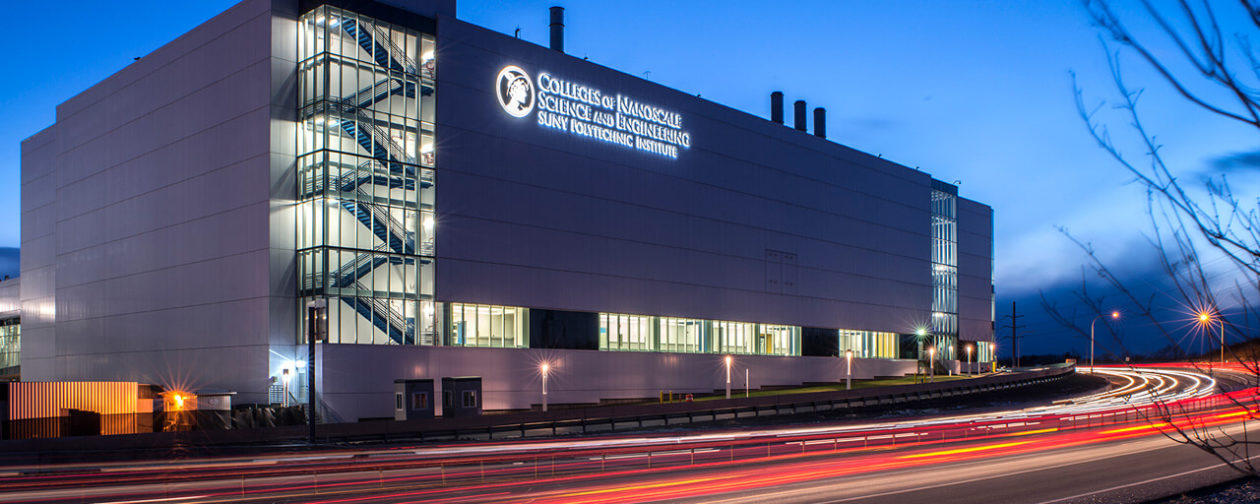
SUNY Polytechnic Institute seal · sourceSUNY Polytechnic Institute (@sunypolytechnic) • Facebook · sourceDirections to SUNY Poly - SUNY Polytechnic Institute · sourceSUNY Polytechnic Institute | Study New York · source