Admit rate has ranged 45%–75% over the last 5 years — notably volatile, though the latest figure above (35%) falls outside that window. Source: IPEDS via Urban Institute.
Acceptance & SAT from Common Data Set / IPEDS; net price, earnings & graduation from the U.S. Dept. of Education College Scorecard. Figures lag ~1–2 years — verify with the school.
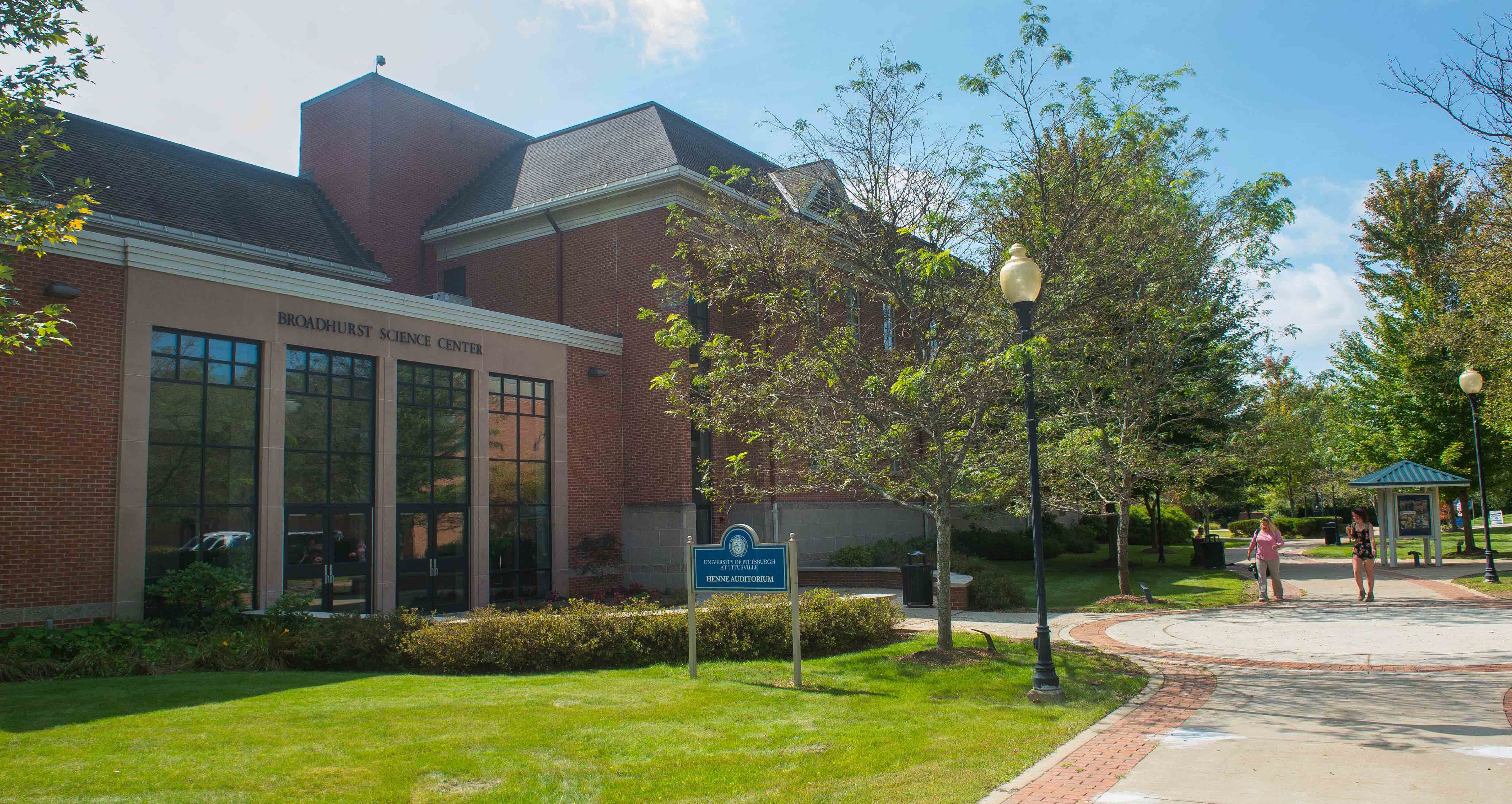
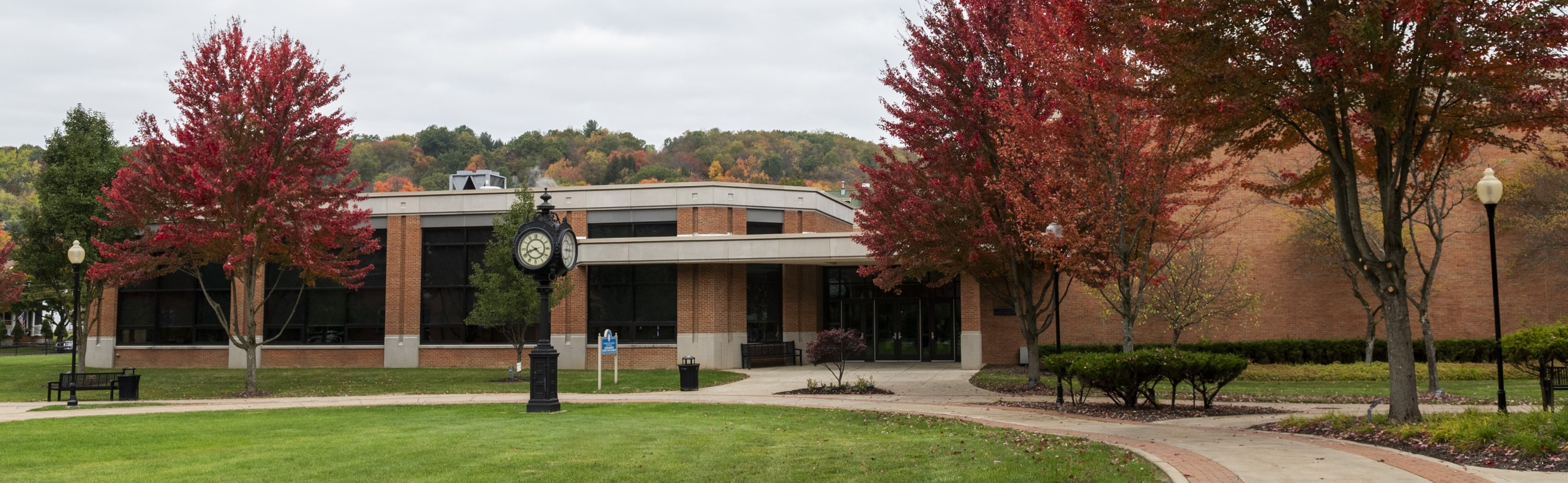
The University of Pittsburgh at Titusville is a two-year regional campus that offers a distinct, small-school entry point into the vast University of Pittsburgh system. It’s a place where career-focused associate degrees, particularly in high-demand health fields like nursing and physical therapy, are delivered in intimate classes of fewer than 20 students, with about 60% of the student body living on campus. This is not the high-stakes, research-intensive Pitt of Oakland; it’s a more accessible, hands-on proving ground where students can build a strong academic foundation before potentially transitioning to a four-year degree, all at a notably low average net price.
Admission requirements
Test-optional — scores considered if submitted
Required
High school transcript
Grade point average
Class rank
TOEFL (non-native English)
Considered (not required)
Letters of recommendation
Test scores (SAT/ACT)
College-prep program
Demonstrated competencies
Source: IPEDS Admissions survey (2022) via Urban Institute. Covers formal factors only — it does not reflect essays, extracurriculars, or other holistic criteria.
More details
Undergrad enrollment
33
In-state tuition
$11,918
Out-of-state tuition
$22,210
Decision Type
Rolling admissions
Graduation Rate
31% (based on 150% of normal time)
Campus Residency
~60% of full-time students live on campus
Popular Programs
Registered Nursing, Physical Therapy Assistant
Average Class Size
Less than 20 students
Median Earnings (10yr)
$66,125
Outcomes & value
Outcomes & value
Median earnings (10 yr)
$66,125
Value (earnings ÷ net price)
5.9×
Median debt at graduation
$24,250
Reducing loan balance (3 yr)
75%
Pell (lower-income) share
54%
First-gen share (among federal-aid recipients)
21%
Earnings = median of students working ~10 years after entry; debt = median of graduates. Value divides 10-yr earnings by one year’s net price — read it as earnings per dollar of annual cost, not a full lifetime ROI; it favors lower-cost schools. Source: U.S. Dept. of Education College Scorecard. Figures lag ~2 years and reflect all students, not your intended major.
Applicants here also applied to
The schools that most often appear alongside University of Pittsburgh-Titusville on applicants’ lists, from our self-reported outcomes corpus.
On-campus criminal offenses classed as violent (murder/non-negligent manslaughter, rape, robbery, aggravated assault) for the most recent reported year. Source: U.S. Dept. of Education Campus Safety and Security (Clery Act). Counts reflect what’s reported to the school, and urban campuses often report more partly due to non-student incidents nearby — read alongside campus size and setting, not as a standalone safety verdict.
Climate
Pleasant days / yr
94
Summer high
77°F
Winter low
22°F
Annual rain
50.7"
Annual snow
47.9"
Natural-hazard risk
Relatively Low
Pleasant days counts days per year with a mean temperature of 55–75°F, a high at or below 90°F, a low at or above 45°F, and little precipitation — a transparent comfort measure, not a weighting we invented. Computed from Open-Meteo ERA5 daily history (2019–2023). Natural-hazard risk is the county’s composite rating from the FEMA National Risk Index.
Quick answers
What is the acceptance rate at University of Pittsburgh-Titusville?
University of Pittsburgh-Titusville's acceptance rate is approximately 35% (Titusville, PA), based on the most recent figures we compiled from public and primary sources.
How much does University of Pittsburgh-Titusville cost?
At University of Pittsburgh-Titusville, the average net price (after aid) is about $11,150 per year. Actual cost varies with financial aid and residency.
How many undergraduates attend University of Pittsburgh-Titusville?
University of Pittsburgh-Titusville enrolls approximately 33 undergraduate students.
Where is University of Pittsburgh-Titusville located?
University of Pittsburgh-Titusville is located in Titusville, PA.
Admissions
Admissions at Pitt-Titusville are notably more accessible than at the flagship Pittsburgh campus, reflecting its role as a two-year, regional entry point. The university has maintained a admissions policy, extending through Fall 2025, meaning applicants are not required to submit SAT or ACT scores. The process is rolling, with decisions typically returned within two weeks of application completion. While the outlines various factors considered in admissions, the defining characteristic is the campus's selectivity relative to the main university; it serves as a pathway for students seeking the Pitt affiliation and a career-oriented start in a supportive, small-scale environment.
Application Platform: The Common Application is accepted.
Test Policy: Test-optional through Fall 2025.
Decision Timeline: Rolling admissions with decisions promised within two weeks.
Academics at Pitt-Titusville are defined by a practical, career-oriented mission centered on associate degrees. The campus confers degrees in 14 academic fields, with popular programs including Registered Nursing/Registered Nurse and Physical Therapy Assistant. These programs are designed to provide a strong foundation in the sciences and clinical knowledge, preparing students either for immediate entry into a new career or for further study. The intimate scale is a major academic asset: the average class size is less than 20 students, fostering individual attention and a close-knit learning environment. This structure provides a "strong foundation" for students, whether their goal is to enter the workforce or to begin coursework in over 100 different fields before potentially transitioning to a four-year program.
Student life at Pitt-Titusville is characterized by its residential, small-community feel within the larger University of Pittsburgh system. About 60 percent of full-time students live on campus, creating a cohesive campus environment. The university promotes involvement both in the classroom and in extracurricular activities as key to achieving personal and educational goals, encouraging students to explore new ideas and express themselves creatively. The campus's social media presence highlights this supportive, tool-giving mission, aiming to provide students with what they need to succeed. The overall vibe is that of a tight-knit, two-year community where students are known by name, a stark contrast to the anonymity possible at a large research university.
Outcomes data for Pitt-Titusville reflect its identity as a two-year, career-focused institution. The graduation rate is reported at 31% (based on 150% of normal completion time for the longest program), which is below the midpoint for two-year colleges. However, post-graduation earnings tell a more positive story about the value of its career-oriented programs. Alumni report a median salary of $49,721 one year after graduation, which rises to $69,754 five years after graduation. These earnings figures significantly outpace national averages for two-year college graduates, suggesting that its specialized programs, particularly in healthcare, lead to strong early-career financial returns for those who complete their degrees.
A major draw of Pitt-Titusville is its affordability, especially within the context of the University of Pittsburgh system. The campus offers a program of financial aid to assist students whose resources cannot meet the total cost of education. To be considered, students must complete the Free Application for Federal Student Aid (FAFSA) using the Pitt-Titusville school code 008815. The university offers merit-based scholarships alongside . The result is a low average , making a University of Pittsburgh education financially accessible for many students who begin their studies at this regional campus.
Pitt-Titusville stands out as a strategic hybrid: it offers the brand and potential pathway of the University of Pittsburgh system within a small, supportive, and affordable two-year college model. It’s a singular option for students who want a "large-school education"—access to over 100 fields of study and the Pitt name—but within a "small-school atmosphere" of intimate classes and a residential community where 60% of students live on campus. Unlike community colleges, it provides a dedicated on-ramp into the Pitt system. Its standout programs in high-wage, high-demand fields like Nursing and Physical Therapy Assistant are not just theoretical; they translate into median alumni earnings that dramatically exceed typical two-year college outcomes. For a student seeking a hands-on, career-launching education with the safety net and prestige of a major research university, Pitt-Titusville is a unique and pragmatic choice.
University of Pittsburgh-Titusville seal · sourceTitusville | University of Pittsburgh · sourceVisit Campus | Titusville | University of Pittsburgh · sourceAcademics | Titusville | University of Pittsburgh · source