Admit rate has ranged 19%–33% over the last 5 years — notably volatile. Source: IPEDS via Urban Institute.
Acceptance & SAT from Common Data Set / IPEDS; net price, earnings & graduation from the U.S. Dept. of Education College Scorecard. Figures lag ~1–2 years — verify with the school.
The University of Miami is a private research university in Coral Gables, Florida, where ambition meets a subtropical lifestyle. It’s known for its high-stakes, high-reward admissions strategy, a suite of powerhouse pre-professional programs—from business and nursing to marine science—and a campus culture that blends intense school spirit with the vibrant, fast-paced energy of its world-famous city. This is a place for students who want a serious education wrapped in sunshine, where the connections made are as valuable as the degree earned.
Admission requirements
Test-optional — scores considered if submitted
Required
High school transcript
Grade point average
Letters of recommendation
TOEFL (non-native English)
Considered (not required)
Class rank
Test scores (SAT/ACT)
College-prep program
Demonstrated competencies
Source: IPEDS Admissions survey (2022) via Urban Institute. Covers formal factors only — it does not reflect essays, extracurriculars, or other holistic criteria.
More details
Undergrad enrollment
12,913
In-state tuition
$62,616
Out-of-state tuition
$62,616
No-Loan Policy
Yes, incomes < $60k
Graduation Rate
84%
Meets Full Need
Yes, for incomes < $60k
ED Share of Class
Not stated in sources
On-Campus Housing
36%
First-Year Retention
Not stated in sources
Demonstrated Interest
Considered
Student-Faculty Ratio
11:1
Median Earnings (10yr)
$75,328
Outcomes & value
Outcomes & value
Median earnings (10 yr)
$75,328
Value (earnings ÷ net price)
2.0×
Median debt at graduation
$17,500
Graduation rate
84%
First-year retention
94%
Reducing loan balance (3 yr)
73%
Pell (lower-income) share
15%
First-gen share (among federal-aid recipients)
20%
Financial health
3.0 / 3.0Meets the federal financial-responsibility standard
U.S. Dept. of Education Financial Responsibility Composite Score (FY2022-23). Scale −1.0 to 3.0; ≥1.5 meets the standard. Reported for private nonprofit & for-profit institutions only — public universities are state-backed and not scored, so this is a stability signal, not a ranking.
Top-earning majors
Median earnings by field of study (highest credential), ~2 years after completion.
Computer Science$78,343
Mechanical Engineering$72,796
Aerospace, Aeronautical, and Astronautical/Space Engineering$71,015
Registered Nursing, Nursing Administration, Nursing Research and Clinical Nursing$65,621
Industrial Engineering$65,238
Finance and Financial Management Services
Applicants here also applied to
The schools that most often appear alongside Miami (FL) on applicants’ lists, from our self-reported outcomes corpus.
Co-application frequency from self-reported results — directional peer discovery, not a recommendation.
Campus & location
Campus safety
On-campus violent crimes (2024)
7
Per 1,000 students
0.36
On-campus criminal offenses classed as violent (murder/non-negligent manslaughter, rape, robbery, aggravated assault) for the most recent reported year. Source: U.S. Dept. of Education Campus Safety and Security (Clery Act). Counts reflect what’s reported to the school, and urban campuses often report more partly due to non-student incidents nearby — read alongside campus size and setting, not as a standalone safety verdict.
Climate
Pleasant days / yr
93
Summer high
87°F
Winter low
64°F
Annual rain
66"
Natural-hazard risk
Very High
Pleasant days counts days per year with a mean temperature of 55–75°F, a high at or below 90°F, a low at or above 45°F, and little precipitation — a transparent comfort measure, not a weighting we invented. Computed from Open-Meteo ERA5 daily history (2019–2023). Natural-hazard risk is the county’s composite rating from the FEMA National Risk Index.
Deep dive — research, future-scholar output & economic mobility▾
Research output
Institutional h-index
911
Scholarly works
169,584
Institutional research volume and impact from OpenAlex. The h-index reflects large research universities and will be low for teaching-focused liberal-arts colleges — not a measure of undergraduate quality.
Economic mobility
Mobility rate
3.0%
Bottom → top quintile
40%
From bottom quintile
7%
Mobility rate = the share of students who both start in the bottom household-income quintile and reach the top quintile; bottom → top is that chance conditional on starting at the bottom. Source: Opportunity Insights Mobility Report Cards (Chetty, Friedman, Saez, Turner & Yagan). Reflects 1980–82 birth cohorts, so it’s directional, not current.
Quick answers
What is the acceptance rate at University of Miami?
University of Miami's acceptance rate is approximately 19% (Coral Gables, FL), based on the most recent figures we compiled from public and primary sources.
What SAT score do you need for University of Miami?
Admitted students at University of Miami typically score 1320–1480 on the SAT (the middle-50% range). Scores outside this band are still admitted, especially with strong applications.
How much does University of Miami cost?
At University of Miami, the average net price (after aid) is about $37,244 per year. Actual cost varies with financial aid and residency.
How many undergraduates attend University of Miami?
University of Miami enrolls approximately 12,913 undergraduate students.
Where is University of Miami located?
University of Miami is located in Coral Gables, FL.
Admissions
Gaining admission to the University of Miami is a high-stakes proposition, defined by a sharp divide between its binding Early Decision rounds and the far more competitive Regular Decision pool. The overall sits at a selective 19%, but that figure masks a critical strategic reality: the Early Decision acceptance rate is dramatically higher, historically hovering between 44% and 61%. For the Fall 2025 cycle, the ED rate was 44%, more than double the overall rate. This creates a clear admissions advantage for students ready to commit. The admitted class is academically strong, with a middle 50% SAT superscore range of 1320–1480 and a middle 50% ACT range of 30–33. The university considers a student's rigor of secondary school record, class rank, GPA, and standardized test scores as "very important" factors in its admissions decisions. Demonstrated interest is officially considered, meaning campus visits, interviews, and communication with the admissions office can play a role. Applicants must submit either the CSS Profile and the FAFSA to be considered for .
Earnings = median of students working ~10 years after entry; debt = median of graduates. Value divides 10-yr earnings by one year’s net price — read it as earnings per dollar of annual cost, not a full lifetime ROI; it favors lower-cost schools. Source: U.S. Dept. of Education College Scorecard. Figures lag ~2 years and reflect all students, not your intended major.
$60,623
Accounting and Related Services$59,124
Entrepreneurial and Small Business Operations$58,673
Source: U.S. Dept. of Education College Scorecard (field-of-study earnings). Figures cover graduates who received federal aid and lag ~2 years; not all programs report data.
The University of Miami’s academic identity is built on a foundation of pre-professional intensity and a surprisingly intimate scale for a research powerhouse, with an average student-faculty ratio of 11:1. Students choose from over 180 undergraduate majors and programs spread across distinct colleges, but the campus culture is dominated by fields with clear career trajectories. The most popular majors are Registered Nursing, Finance, Psychology, and General Studies, reflecting a student body focused on practical outcomes. Signature strengths include the Frost School of Music, the Rosenstiel School of Marine, Atmospheric, and Earth Science, and the School of Architecture, alongside robust programs in Business, Communication, and Engineering. The curriculum bridges strong foundational work in the liberal arts and sciences with specialized, hands-on training, exemplified by its biomedical engineering program which explicitly "bridges the gap between science and engineering." This is not a place for the undecided liberal arts explorer; it’s for the student who arrives with a plan, or quickly develops one, and wants the resources of a major private university to execute it.
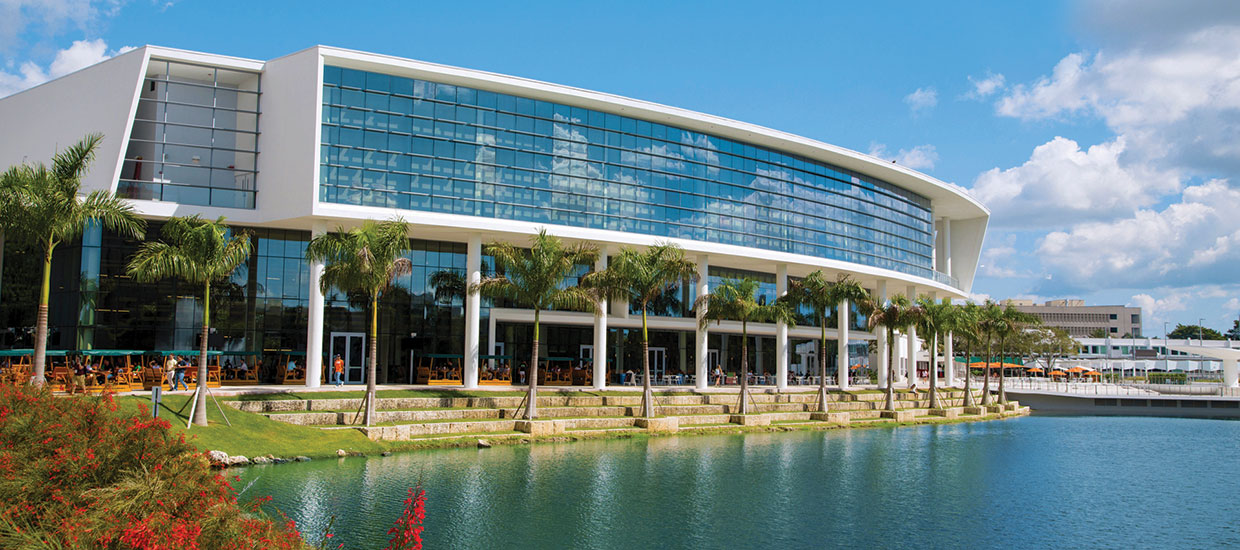
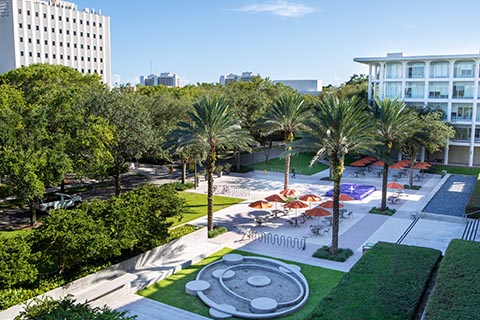
Life at the University of Miami is a study in contrasts: a self-contained, lush 239-acre campus in Coral Gables that feels like a resort, set against the backdrop of one of America’s most dynamic and international cities. Only about 36% of students live in university-owned housing, with the majority living off-campus, which fosters a more independent, urban collegiate experience. The social scene is fragmented but active, driven by over 400 student clubs and organizations, a dominant Greek life presence, and, most notably, the gravitational pull of NCAA Division I athletics, especially football. The ‘Canes are the heart of campus spirit. Students describe a need to be proactive to find their "close-knit" community, especially for those from out of state with no prior Florida ties. The university offers "unparalleled academic support" and a vast array of "enrichment activities galore, sports and cultural offerings, wellness and fitness programs," but the onus is on the student to engage. The result is a culture that rewards extroversion and initiative, blending traditional campus camaraderie with the endless opportunities—and distractions—of Miami.
The University of Miami delivers strongly on its promise of post-graduate success, with outcomes that justify its significant investment. Its six-year graduation rate of 84% places it in the top 10% of institutions nationally, indicating a high level of student support and persistence. More impressively, 95% of graduates had secured post-graduate plans—employment, graduate school, or fellowships—within six months of graduation, a figure that far exceeds the 74% average for R1 research universities. This points to an exceptionally effective career services apparatus and a deeply embedded culture of professional development. While specific median earnings data varies by source, the trajectory is clear: graduates see significant earning potential growth, with one source reporting average earnings of $54,633 one year out and $73,338 five years after graduation. The combination of high graduation rates, near-universal post-grad placement, and strong early-career earnings paints a picture of a university that effectively launches its graduates into the next phase of their lives.
Attending the University of Miami is a premium investment, with a published average after aid of $37,244. The university awards substantial financial aid, with over $275 million in university scholarships and grants awarded for Fall 2025, and a high percentage of students receiving some form of assistance. To be considered for , families must file both the CSS Profile and the FAFSA. The university has a targeted no-loan policy for lower-income families: students with a family income below $60,000 per year will not have loans included in their initial financial aid package, meeting their full demonstrated need with grants and work-study instead. However, this policy does not extend to all students, and loan expectations are included in packages for those above that threshold. All university merit and need-based aid requires full-time enrollment (12+ credits per semester). The message is one of high cost offset by significant, but strategically allocated, institutional generosity.
The University of Miami carves out a singular niche by fusing the seriousness of a top-tier private research institution with the irresistible, sun-drenched energy of its location. It’s not just a university in Miami; it is of Miami. This is most evident in its unique academic specialties—Marine Science, Meteorology, Music Business, and Architecture—that are directly shaped by and engaged with the South Florida environment and economy. Its admissions strategy is a masterclass in enrollment management, leveraging a binding Early Decision program with a significantly higher to build a committed, high-achieving class. The student experience is defined by this duality: intense school spirit centered on big-time athletics coexists with the need for individual agency to navigate a socially fragmented, largely off-campus life. The outcome is a graduate who is not only well-educated but also worldly, professionally networked, and equipped with the confidence that comes from thriving in a competitive, fast-paced environment. For students who want the classic American college experience, but with palm trees, ocean breezes, and a direct pipeline to global industries, Miami offers a compelling and distinct proposition.
University of Miami seal · sourceStudent Life | University of Miami · sourceConnect | Undergraduate Admission | University of Miami · sourceBuilding an iconic University | Life at the U | Faculty and Staff News | University of Miami · source