Admit rate has ranged 17%–25% over the last 5 years, though the latest figure above (15%) falls outside that window. Source: IPEDS via Urban Institute.
Acceptance & SAT from Common Data Set / IPEDS; net price, earnings & graduation from the U.S. Dept. of Education College Scorecard. Figures lag ~1–2 years — verify with the school.
The University of North Carolina at Chapel Hill is a public Ivy with a split personality: a fiercely competitive, academically intense institution for out-of-state students, and a more accessible, deeply cherished flagship for North Carolinians. Its culture is a potent blend of Southern charm, intense school spirit (especially around basketball), and a serious commitment to undergraduate research and public service. The university's defining tension is its dual mandate to serve its state while competing nationally, a dynamic that shapes everything from its lopsided admissions rates to its surprisingly robust financial aid.
Admission requirements
Test-optional — scores considered if submitted
Required
High school transcript
Letters of recommendation
TOEFL (non-native English)
Considered (not required)
Grade point average
Class rank
Test scores (SAT/ACT)
College-prep program
Demonstrated competencies
Source: IPEDS Admissions survey (2022) via Urban Institute. Covers formal factors only — it does not reflect essays, extracurriculars, or other holistic criteria.
More details
Undergrad enrollment
20,752
In-state tuition
$8,994
Out-of-state tuition
$41,203
No-Loan Policy
Yes, for low-income students (Carolina Covenant)
Popular Majors
Social Sciences; Biological/Biomedical Sciences; Multi/Interdisciplinary Studies
Graduation Rate
91%
Meets Full Need
Yes
First-Year Retention
Data not provided in sources
Demonstrated Interest
Not considered
Median Earnings (10yr)
$72,200
Outcomes & value
Outcomes & value
Median earnings (10 yr)
$72,200
Value (earnings ÷ net price)
6.2×
Median debt at graduation
$14,000
Graduation rate
91%
First-year retention
97%
Reducing loan balance (3 yr)
81%
Pell (lower-income) share
20%
First-gen share (among federal-aid recipients)
20%
Top-earning majors
Median earnings by field of study (highest credential), ~2 years after completion.
Business Administration, Management and Operations$73,823
Computer Science$72,083
Applied Mathematics$67,660
Registered Nursing, Nursing Administration, Nursing Research and Clinical Nursing$59,534
Allied Health Diagnostic, Intervention, and Treatment Professions$58,943
Information Science/Studies
Applicants here also applied to
The schools that most often appear alongside UNC on applicants’ lists, from our self-reported outcomes corpus.
Co-application frequency from self-reported results — directional peer discovery, not a recommendation.
Campus & location
Campus safety
On-campus violent crimes (2024)
19
Per 1,000 students
0.59
On-campus criminal offenses classed as violent (murder/non-negligent manslaughter, rape, robbery, aggravated assault) for the most recent reported year. Source: U.S. Dept. of Education Campus Safety and Security (Clery Act). Counts reflect what’s reported to the school, and urban campuses often report more partly due to non-student incidents nearby — read alongside campus size and setting, not as a standalone safety verdict.
Climate
Pleasant days / yr
106
Summer high
88°F
Winter low
37°F
Annual rain
49"
Annual snow
2.6"
Natural-hazard risk
Relatively Low
Pleasant days counts days per year with a mean temperature of 55–75°F, a high at or below 90°F, a low at or above 45°F, and little precipitation — a transparent comfort measure, not a weighting we invented. Computed from Open-Meteo ERA5 daily history (2019–2023). Natural-hazard risk is the county’s composite rating from the FEMA National Risk Index.
Deep dive — research, future-scholar output & economic mobility▾
Research output
Institutional h-index
1,592
Scholarly works
353,535
Institutional research volume and impact from OpenAlex. The h-index reflects large research universities and will be low for teaching-focused liberal-arts colleges — not a measure of undergraduate quality.
Future-scholar output
Science & engineering PhDstop 24 nationally
Humanities & social-science PhDstop 9 nationally
Share of this school’s graduates who go on to earn research doctorates (2010–20), by national rank and per-capita yield (NSF institutional-yield ratio). A signal of a research-oriented student culture — not a causal promise, since it partly reflects who enrolls. Only top producers appear. Source: NSF NCSES, Baccalaureate Origins of U.S. Research Doctorate Recipients.
Quick answers
What is the acceptance rate at University of North Carolina at Chapel Hill?
University of North Carolina at Chapel Hill's acceptance rate is approximately 15% (Chapel Hill, NC), based on the most recent figures we compiled from public and primary sources.
What SAT score do you need for University of North Carolina at Chapel Hill?
Admitted students at University of North Carolina at Chapel Hill typically score 1390–1530 on the SAT (the middle-50% range). Scores outside this band are still admitted, especially with strong applications.
How much does University of North Carolina at Chapel Hill cost?
At University of North Carolina at Chapel Hill, the average net price (after aid) is about $11,655 per year. Actual cost varies with financial aid and residency.
How many undergraduates attend University of North Carolina at Chapel Hill?
University of North Carolina at Chapel Hill enrolls approximately 20,752 undergraduate students.
Where is University of North Carolina at Chapel Hill located?
University of North Carolina at Chapel Hill is located in Chapel Hill, NC.
Admissions
Getting into UNC-Chapel Hill is a tale of two applicant pools, defined almost entirely by residency. For the Class of 2029, the university received 78,116 applications and admitted 12,754 students, an overall of 16% [12]. However, this headline number masks a staggering disparity: out-of-state acceptance rates hover around a hyper-selective 8.1%, while in-state applicants enjoy a far more favorable rate [11]. This is driven by a state law capping out-of-state undergraduates at 18% of the student body [40]. The academic profile of the incoming class is exceptionally strong, with 95% of enrolled undergraduates reporting an unweighted high school GPA of 4.0 on a 4.0 scale [4]. The middle 50% SAT range for enrolling first-years is 1400-1520 [7]. UNC offers non-binding Early Action, and for the Class of 2030, the in-state Early Action acceptance rate was approximately 39.5% from 14,931 applicants [40]. Demonstrated interest is not considered in UNC's admissions process, as confirmed by its [42, 44, 45]. The rate—the percentage of admitted students who enroll—is 65% [38].
Key Admission Factors (per Common Data Set):
Very Important: Rigor of secondary school record, academic GPA.
Important: Standardized test scores (UNC is test-required), application essay, recommendations, extracurricular activities, talent/ability, character/personal qualities.
Considered: Class rank, status, alumni/ae relation, geographical residence, state residency, volunteer work, work experience.
Not Considered: Interview, religious affiliation/commitment, racial/ethnic status, level of applicant's interest.
Earnings = median of students working ~10 years after entry; debt = median of graduates. Value divides 10-yr earnings by one year’s net price — read it as earnings per dollar of annual cost, not a full lifetime ROI; it favors lower-cost schools. Source: U.S. Dept. of Education College Scorecard. Figures lag ~2 years and reflect all students, not your intended major.
$53,984
Dental Support Services and Allied Professions$53,775
Health and Medical Administrative Services$52,107
Source: U.S. Dept. of Education College Scorecard (field-of-study earnings). Figures cover graduates who received federal aid and lag ~2 years; not all programs report data.
Carolina offers a comprehensive liberal arts core within a large research university framework, with 79 bachelor's degree programs, 159 master's, and 85 doctoral programs [13]. The academic environment is described as rigorous and collaborative, with a strong emphasis on undergraduate research opportunities. The most popular majors cluster in the Social Sciences; Biological and Biomedical Sciences; and Multi/Interdisciplinary Studies [15]. Students frequently cite the strength of specific departments and programs, including:
Business (Kenan-Flagler): A top-ranked undergraduate business program known for its intense, team-based curriculum.
Journalism and Media: The nationally renowned Hussman School of Journalism and Media.
Public Health: The Gillings School of Global Public Health, top-ranked and offering unique undergraduate exposure.
Chemistry and Biology: Strong pre-health feeder departments with extensive research infrastructure.
Political Science and History: Reflecting the university's deep roots in public service and Southern history.
The curriculum encourages exploration, and many students pursue double majors or combine a professional school interest with a humanities degree. The scale of the university means introductory lectures can be large, but it also provides access to world-class faculty and research institutes that are rare at the undergraduate level.
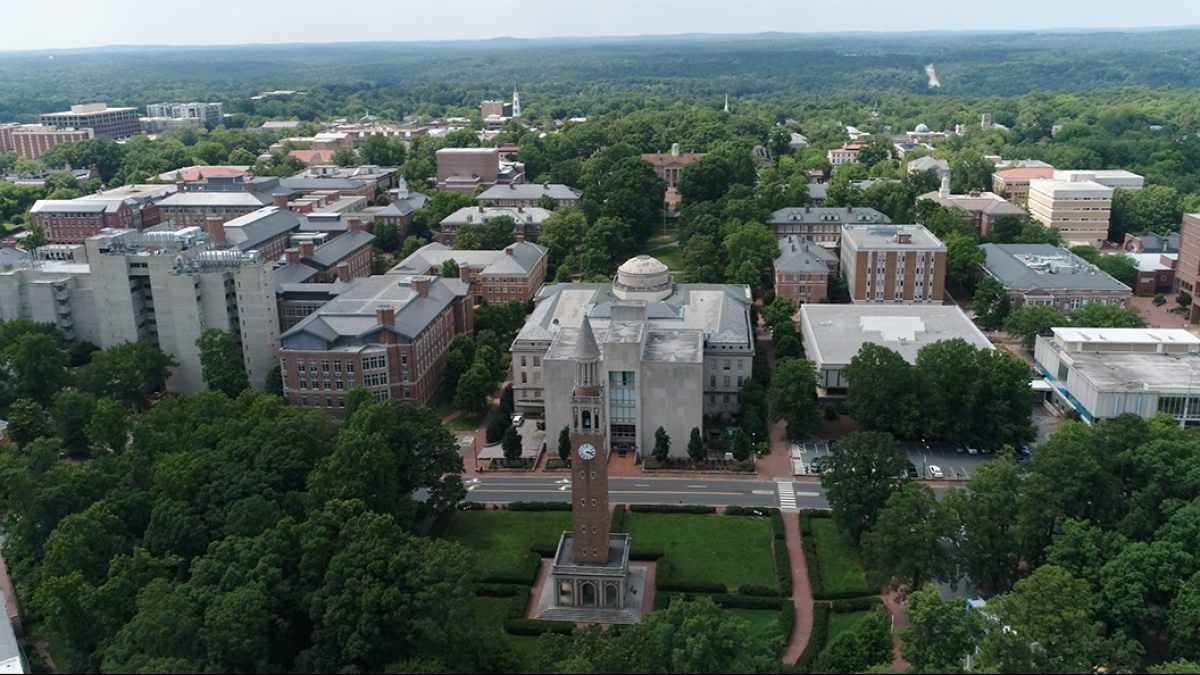
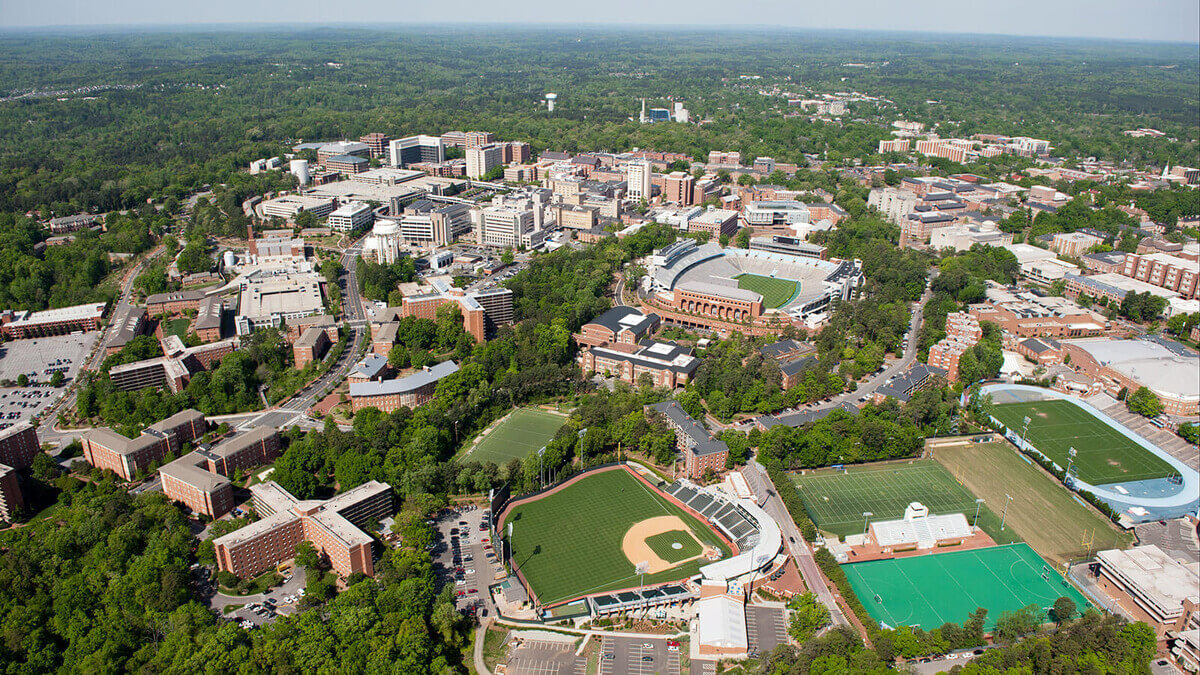
Life at Carolina is defined by a profound sense of tradition, intense school spirit, and a work-hard, play-hard ethos. The campus is famously beautiful, with a blend of historic brick buildings and modern facilities nestled in the lively college town of Chapel Hill. Franklin Street, the main drag bordering campus, is the social epicenter, lined with restaurants, bars, and shops [22].
Social Scene: UNC has a significant Greek life presence, with fraternity and sorority houses located off-campus. Parties often revolve around Greek events, house parties, and dorm hangouts [19, 22]. However, the social landscape is diverse, with hundreds of student clubs and organizations catering to every interest, from cultural associations like the Carolina Hispanic Association to academic clubs for pre-med or engineering students [21, 23].
Athletics and Spirit: Basketball is a secular religion. The rivalry with Duke is legendary, and game days in the Dean Smith Center are events that unify the entire campus and town. This athletic passion extends to other sports, fostering a strong communal identity.
The Vibe: Students describe the culture as generally friendly and collaborative, though the academic pressure is real. There's a distinct Southern politeness mixed with the drive of high achievers. The student body is largely from North Carolina, giving the campus a cohesive, in-state feel, but the out-of-state and international students add significant diversity. The balance between studying in the iconic Wilson Library and socializing on Franklin Street captures the quintessential Carolina experience.
UNC graduates enter the workforce with strong credentials and relatively low debt. The four-year graduation rate is 84%, and the six-year rate matches the canonical figure of 91% [27, 25]. The median salary six years after graduation is reported as $57,057 [27]. The university's Career Center conducts a First Destination Survey to track post-graduation outcomes, with a high percentage of graduates employed or enrolled in graduate/professional school within six months of graduation [26]. Popular destinations for graduates include roles in business, finance, healthcare, technology, and public service, with strong regional networks in the Research Triangle and the Southeast, as well as national recruitment. The "public Ivy" reputation and strength of programs like business and journalism open doors in competitive fields. The average time to degree is 4.1 years, and the median student debt for graduates is $14,000 [30].
As a public university, UNC's sticker price differs dramatically for in-state and out-of-state students. However, its financial aid policies are notably generous for a flagship public. The university meets 100% of the demonstrated financial need of admitted students [48, 49, 50]. It is one of a minority of about 75 American colleges, and a rare public university, to make this claim [48]. This commitment is operationalized through the Carolina Covenant, a program that promises debt-free financial aid packages (covering need with grants and work-study, not loans) for students from low-income families [46]. For Covenant scholars, loans are eliminated from their financial aid packages. For students outside the Covenant program, aid packages may include loans, but the university emphasizes a "low-debt" model [51]. Overall, 38% of full-time beginning undergraduates receive grant or scholarship aid [32]. The —the average cost after aid and scholarships—is reported variably, with sources citing figures like $11,140 [33] and $6,198 [36]. The university provides a Net Price Calculator for families to estimate their individual cost [31, 34, 35].
UNC-Chapel Hill occupies a unique and enviable niche in American higher education. It combines the broad academic offerings, cutting-edge research, and athletic prestige of a giant state flagship with the undergraduate focus, generous financial aid, and intimate community feel more typical of a private liberal arts college. Its defining characteristic is the intentional tension between its public mission and elite aspirations. The 18% cap on out-of-state students creates a student body that is predominantly North Carolinian, fostering a shared cultural reference point and a deep-seated loyalty to the institution. This makes Carolina feel less like a generic top-30 university and more like a family. Simultaneously, its out-of-state admissions process is as selective as the Ivy League, allowing it to compete for—and enroll—a slice of the nation's top academic talent.
Its Carolina Covenant program is a landmark in public university affordability, demonstrating a serious commitment to socioeconomic diversity that puts many wealthier private institutions to shame. The blend of top-tier programs in business, journalism, public health, and the sciences with a strong liberal arts core means students don't have to choose between pre-professional training and a broad education. Finally, the culture is unmistakable: the blend of Southern warmth, obsessive basketball fandom, and the picturesque college-town setting of Chapel Hill creates a cohesive and magnetic student experience that is both intense and deeply rewarding. It's a university that feels like a home, even as it prepares students for the world.
University of North Carolina at Chapel Hill seal · sourceThe University of North Carolina at Chapel Hill · sourceCarolina then and now | UNC-Chapel Hill · sourceUniversity of North Carolina at Chapel Hill · source