Admit rate has ranged 20%–27% over the last 5 years, though the latest figure above (17%) falls outside that window. Source: IPEDS via Urban Institute.
Acceptance & SAT from Common Data Set / IPEDS; net price, earnings & graduation from the U.S. Dept. of Education College Scorecard. Figures lag ~1–2 years — verify with the school.
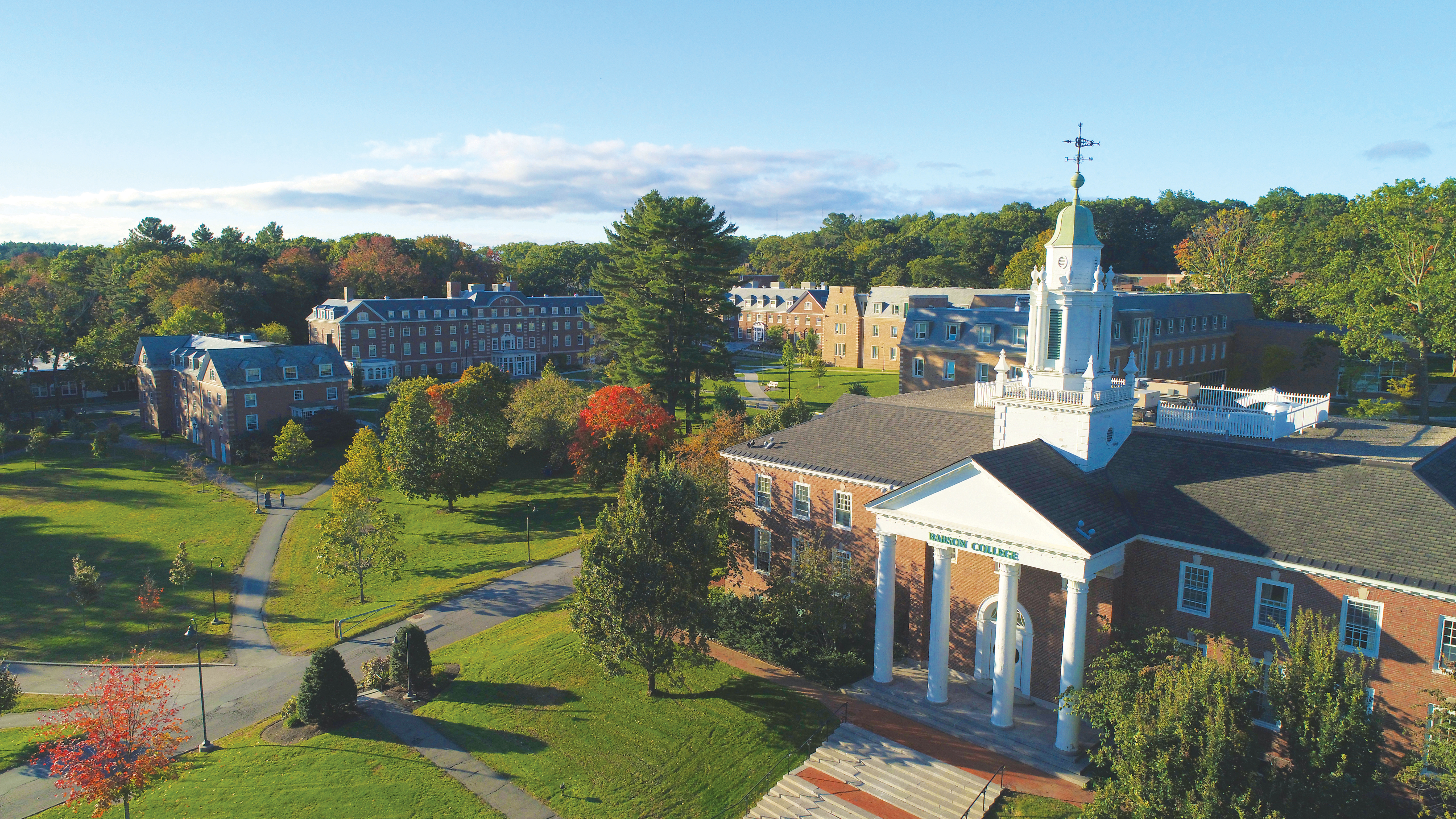
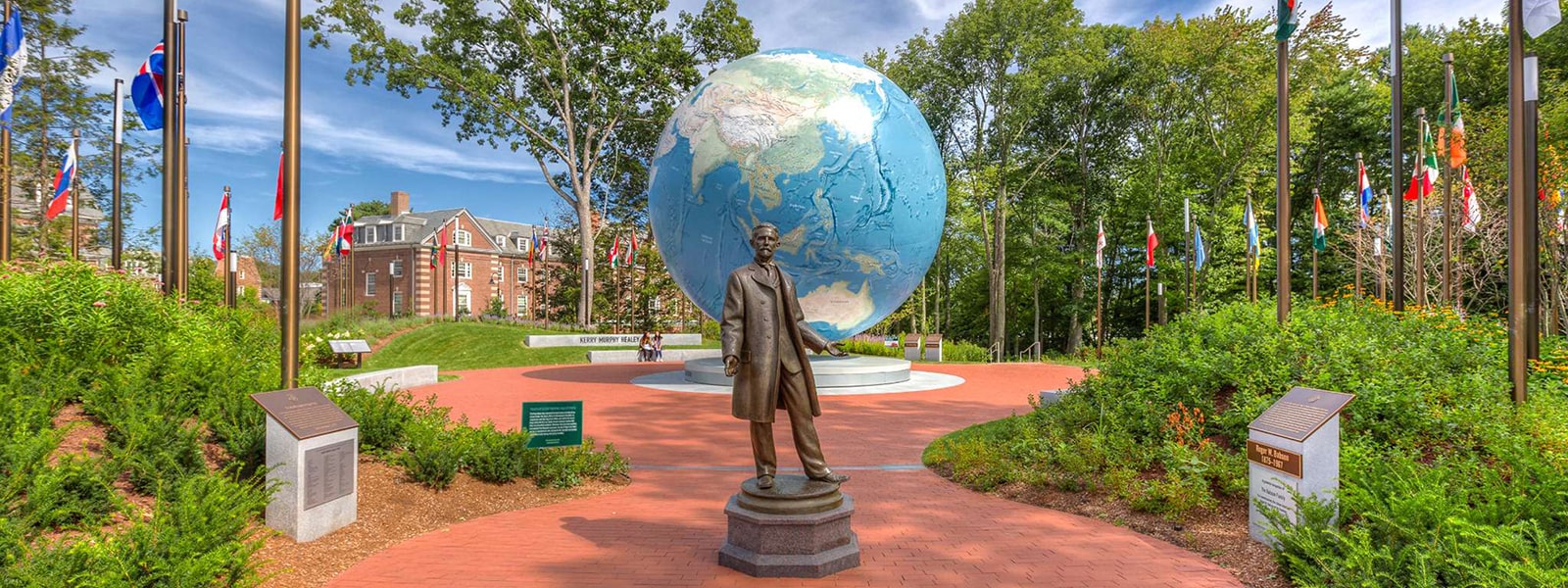
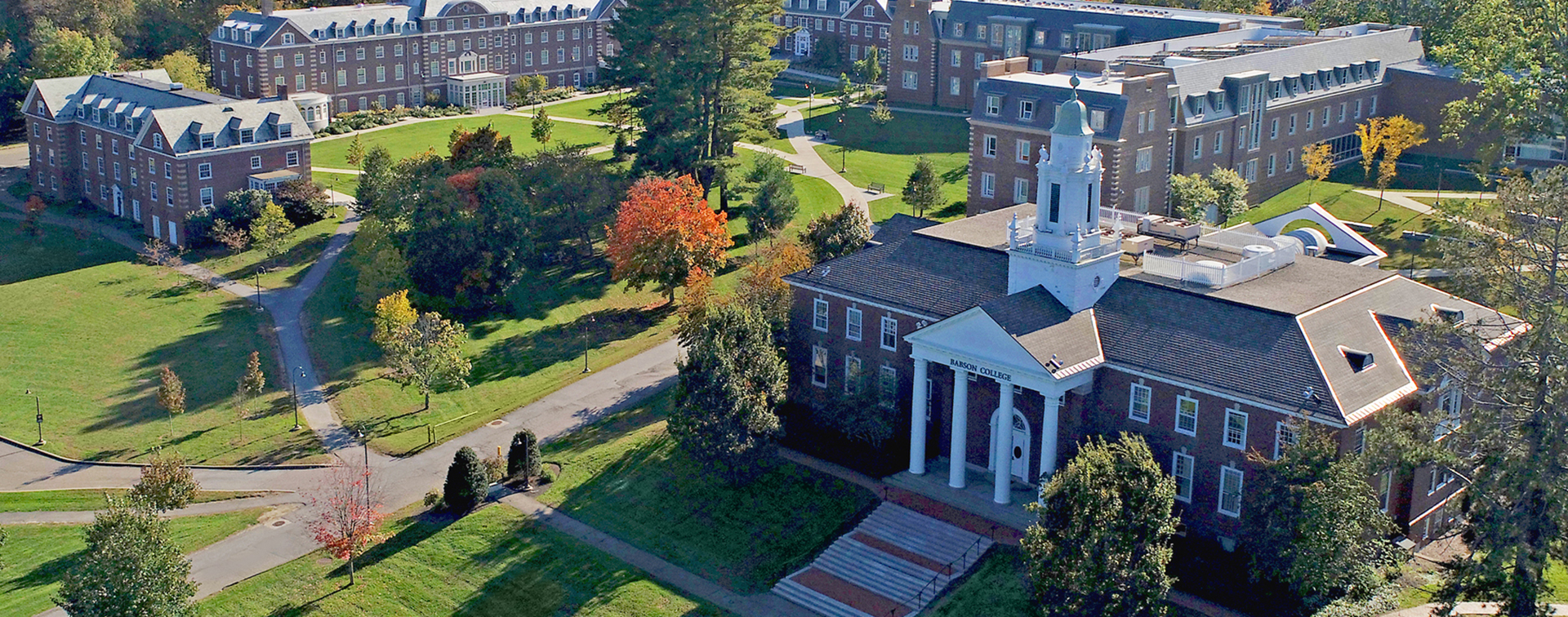
Babson College is not a typical business school; it's a singular, high-stakes incubator for entrepreneurial ambition. The entire campus—from its curriculum to its culture—is engineered to turn students into founders, investors, and business leaders, a focus that has earned it the undisputed top ranking for entrepreneurship year after year. The atmosphere is intense, pragmatic, and globally networked, attracting a self-selecting cohort of students who arrive ready to build, not just study.
Admission requirements
Test-optional — scores considered if submitted
Required
High school transcript
Grade point average
Letters of recommendation
College-prep program
TOEFL (non-native English)
Considered (not required)
Class rank
Test scores (SAT/ACT)
Demonstrated competencies
Source: IPEDS Admissions survey (2022) via Urban Institute. Covers formal factors only — it does not reflect essays, extracurriculars, or other holistic criteria.
More details
Undergrad enrollment
2,728
In-state tuition
$57,152
Out-of-state tuition
$57,152
Graduation Rate
93%
Meets Full Need
Yes
First-Year Retention
97%
Demonstrated Interest
Considered
Median Earnings (10yr)
$123,938
Early-Career Employment Rate
97.7%
Outcomes & value
Outcomes & value
Median earnings (10 yr)
$123,938
Value (earnings ÷ net price)
3.1×
Median debt at graduation
$20,000
Graduation rate
93%
First-year retention
95%
Reducing loan balance (3 yr)
91%
Pell (lower-income) share
16%
First-gen share (among federal-aid recipients)
15%
Financial health
3.0 / 3.0Meets the federal financial-responsibility standard
U.S. Dept. of Education Financial Responsibility Composite Score (FY2022-23). Scale −1.0 to 3.0; ≥1.5 meets the standard. Reported for private nonprofit & for-profit institutions only — public universities are state-backed and not scored, so this is a stability signal, not a ranking.
Top-earning majors
Median earnings by field of study (highest credential), ~2 years after completion.
Business Administration, Management and Operations$61,600
Source: U.S. Dept. of Education College Scorecard (field-of-study earnings). Figures cover graduates who received federal aid and lag ~2 years; not all programs report data.
Co-application frequency from self-reported results — directional peer discovery, not a recommendation.
Campus & location
Campus safety
On-campus violent crimes (2024)
10
Per 1,000 students
2.59
On-campus criminal offenses classed as violent (murder/non-negligent manslaughter, rape, robbery, aggravated assault) for the most recent reported year. Source: U.S. Dept. of Education Campus Safety and Security (Clery Act). Counts reflect what’s reported to the school, and urban campuses often report more partly due to non-student incidents nearby — read alongside campus size and setting, not as a standalone safety verdict.
Climate
Pleasant days / yr
91
Summer high
82°F
Winter low
25°F
Annual rain
50"
Annual snow
33.1"
Natural-hazard risk
Relatively Moderate
Pleasant days counts days per year with a mean temperature of 55–75°F, a high at or below 90°F, a low at or above 45°F, and little precipitation — a transparent comfort measure, not a weighting we invented. Computed from Open-Meteo ERA5 daily history (2019–2023). Natural-hazard risk is the county’s composite rating from the FEMA National Risk Index.
Deep dive — research, future-scholar output & economic mobility▾
Research output
Institutional h-index
233
Scholarly works
4,617
Institutional research volume and impact from OpenAlex. The h-index reflects large research universities and will be low for teaching-focused liberal-arts colleges — not a measure of undergraduate quality.
Economic mobility
Mobility rate
2.8%
Bottom → top quintile
68%
From bottom quintile
4%
Mobility rate = the share of students who both start in the bottom household-income quintile and reach the top quintile; bottom → top is that chance conditional on starting at the bottom. Source: Opportunity Insights Mobility Report Cards (Chetty, Friedman, Saez, Turner & Yagan). Reflects 1980–82 birth cohorts, so it’s directional, not current.
Quick answers
What is the acceptance rate at Babson College?
Babson College's acceptance rate is approximately 17% (Wellesley, MA), based on the most recent figures we compiled from public and primary sources.
What SAT score do you need for Babson College?
Admitted students at Babson College typically score 1390–1530 on the SAT (the middle-50% range). Scores outside this band are still admitted, especially with strong applications.
How much does Babson College cost?
At Babson College, the average net price (after aid) is about $40,514 per year. Actual cost varies with financial aid and residency.
How many undergraduates attend Babson College?
Babson College enrolls approximately 2,728 undergraduate students.
Where is Babson College located?
Babson College is located in Wellesley, MA.
Admissions
Getting into Babson is a competitive proposition for students who have already demonstrated a bias for action. The college is very selective, with a historical that has tightened significantly over the past decade, dropping from over 26% for the Class of 2020 to the current rate. The middle 50% SAT range for admitted students is 1390–1530, indicating a highly academically prepared pool. Applying early can be a strategic advantage; the combined Early Decision I and II acceptance rate has been notably higher than the overall rate, historically around 27.5% for recent classes. Demonstrated interest is a factor Babson considers in its admissions process. The college's rate—the percentage of admitted students who enroll—has historically been around 40%, reflecting its strong appeal to its target audience of future entrepreneurs and business leaders.
Earnings = median of students working ~10 years after entry; debt = median of graduates. Value divides 10-yr earnings by one year’s net price — read it as earnings per dollar of annual cost, not a full lifetime ROI; it favors lower-cost schools. Source: U.S. Dept. of Education College Scorecard. Figures lag ~2 years and reflect all students, not your intended major.
Babson's academic model is a relentless, hands-on immersion in entrepreneurial thought and action. Every student graduates with a Bachelor of Science in Business Administration, but the core experience is the nationally top-ranked entrepreneurship program. The curriculum is famously practical, built around the foundational first-year course, Foundations of Management and Entrepreneurship (FME), where students conceive, launch, and manage a real micro-business with a seed grant from the college. While business is the sole degree, students tailor their path through over 30 concentrations, which function like majors. Popular choices include finance, marketing, business analytics, and strategic management. The academic environment is intimate, with a significant portion of classes having fewer than 20 students, fostering close interaction with faculty who are often practitioners themselves. The program integrates liberal arts and sciences, sustainability, and technology, ensuring graduates are more than just specialists—they're leaders who understand the broader context of business.
Life at Babson mirrors its academic intensity: collaborative, driven, and heavily oriented toward professional development. The campus is residential, with about 76% of students living in college-owned or affiliated housing, creating a close-knit, 24/7 environment where business ideas are debated in dining halls and dorm rooms. Student life is dominated by a vast ecosystem of clubs and organizations, many with a direct business or entrepreneurial focus, from finance and consulting clubs to industry-specific associations. The division of Learner Success and Campus Life is dedicated to fostering this vibrant and supportive environment. While social life exists, it's often intertwined with networking, speaker events, and team projects. The campus atmosphere is often described as pragmatic and future-focused, attracting students who are highly motivated and comfortable in a culture that celebrates innovation and execution.
Babson's return on investment is starkly clear in its graduate outcomes. The college boasts exceptional retention and graduation rates, with a first-to-second year retention rate of 97% and a six-year graduation rate that outpaces the national average. Career outcomes are powerful and swift. For recent classes, the employment rate six months after graduation has been as high as 97.7%. Starting salaries are robust, with the Class of 2023 reporting an average of $75,579, and a significant 20% of that class commanded starting salaries north of $100,000. Early-career earnings for Babson graduates are notably high, with reports indicating they near $120,000. This strong launchpad is a direct result of the college's focused curriculum, powerful alumni network in finance and entrepreneurship, and a reputation that makes its graduates stand out in the job market.
Attending Babson requires a significant financial commitment, but the college has a substantial institutional aid program to support access. Babson meets 100% of the demonstrated financial need for incoming first-year students and commits to maintaining that level of Babson Grant aid for all four years, provided a family's financial circumstances do not change majorly. This policy is a cornerstone of their financial aid offering. Approximately 50% of undergraduates receive financial assistance. The average financial aid package is substantial. Beyond need-based aid, Babson also offers merit-based scholarships for undergraduate students, including some prestigious full-tuition awards like the Babson NFTE Scholarship. Families are encouraged to use the college's official Calculator for the best estimate of individual costs.
Babson College stands alone. It is not merely a good business school; it is the definitive incubator for entrepreneurial mindset and action. Its singular, unwavering focus on entrepreneurship—validated by its perennial #1 ranking—permeates everything: the required first-year business launch (FME), the concentration options, the club ecosystem, and the career-driven culture. This creates an environment of unparalleled intensity and practicality where students learn by doing, failing, and iterating in real time. The outcome is a graduate who is not just employable but is often the employer—a founder, an innovator, or a leader equipped to navigate ambiguity and create value. For a student certain that their future lies in creating and leading enterprises, Babson offers a concentrated, immersive, and powerfully effective four-year launchpad that no traditional university business program can replicate.
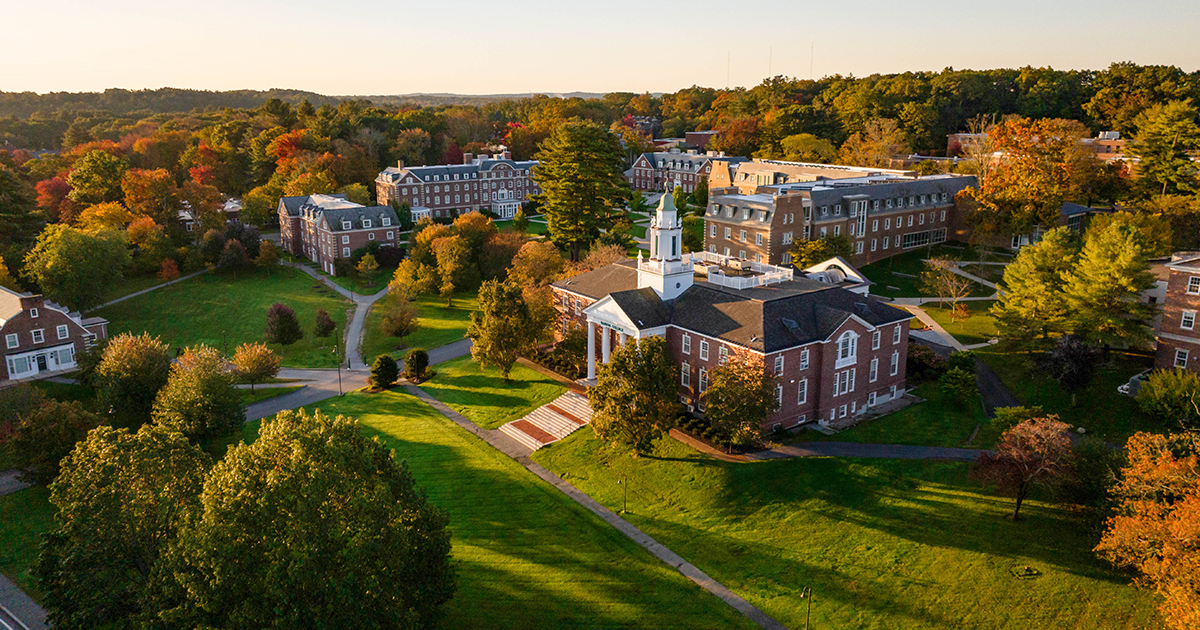
Babson College seal · sourceWellesley Main Campus | Babson College · sourceBabson Quick Facts | Babson College · sourceInside the Blank School's Eight Centers and Institutes · Babson Thought & Action · source