Admit rate has ranged 31%–39% over the last 5 years — notably volatile, though the latest figure above (29%) falls outside that window. Source: IPEDS via Urban Institute.
Acceptance & SAT from Common Data Set / IPEDS; net price, earnings & graduation from the U.S. Dept. of Education College Scorecard. Figures lag ~1–2 years — verify with the school.
Bryn Mawr College is a fiercely intellectual, women's liberal arts institution that combines rigorous academics with a distinctively supportive and quirky community. Known for its commitment to 'critical, creative and independent habits of thought,' it offers a deeply personalized education within the broader resources of the Quaker Consortium. The college backs its academic mission with a remarkably generous financial aid program, meeting full need and offering tuition-free guarantees for a wide range of middle-income families.
Admission requirements
Test-optional — scores considered if submitted
Required
High school transcript
Grade point average
Letters of recommendation
TOEFL (non-native English)
Considered (not required)
Class rank
Test scores (SAT/ACT)
College-prep program
Source: IPEDS Admissions survey (2022) via Urban Institute. Covers formal factors only — it does not reflect essays, extracurriculars, or other holistic criteria.
More details
Undergrad enrollment
1,359
In-state tuition
$65,920
Out-of-state tuition
$65,920
No-Loan Policy
Yes, incomes < $110k
Graduation Rate
82%
Meets Full Need
Yes
On-Campus Housing
90%
Demonstrated Interest
Considered
Student-Faculty Ratio
8:1
Median Earnings (10yr)
$75,217
Outcomes & value
Outcomes & value
Median earnings (10 yr)
$75,217
Value (earnings ÷ net price)
2.4×
Median debt at graduation
$25,000
Graduation rate
82%
First-year retention
92%
Reducing loan balance (3 yr)
79%
Pell (lower-income) share
15%
First-gen share (among federal-aid recipients)
15%
Financial health
2.2 / 3.0Meets the federal financial-responsibility standard
U.S. Dept. of Education Financial Responsibility Composite Score (FY2022-23). Scale −1.0 to 3.0; ≥1.5 meets the standard. Reported for private nonprofit & for-profit institutions only — public universities are state-backed and not scored, so this is a stability signal, not a ranking.
Top-earning majors
Median earnings by field of study (highest credential), ~2 years after completion.
English Language and Literature, General$24,035
Anthropology$22,667
Liberal Arts and Sciences, General Studies and Humanities$19,162
Source: U.S. Dept. of Education College Scorecard (field-of-study earnings). Figures cover graduates who received federal aid and lag ~2 years; not all programs report data.
Co-application frequency from self-reported results — directional peer discovery, not a recommendation.
Campus & location
Campus safety
On-campus violent crimes (2024)
2
Per 1,000 students
1.19
On-campus criminal offenses classed as violent (murder/non-negligent manslaughter, rape, robbery, aggravated assault) for the most recent reported year. Source: U.S. Dept. of Education Campus Safety and Security (Clery Act). Counts reflect what’s reported to the school, and urban campuses often report more partly due to non-student incidents nearby — read alongside campus size and setting, not as a standalone safety verdict.
Climate
Pleasant days / yr
90
Summer high
85°F
Winter low
30°F
Annual rain
51.3"
Annual snow
14.6"
Natural-hazard risk
Relatively High
Pleasant days counts days per year with a mean temperature of 55–75°F, a high at or below 90°F, a low at or above 45°F, and little precipitation — a transparent comfort measure, not a weighting we invented. Computed from Open-Meteo ERA5 daily history (2019–2023). Natural-hazard risk is the county’s composite rating from the FEMA National Risk Index.
Deep dive — research, future-scholar output & economic mobility▾
Research output
Institutional h-index
211
Scholarly works
8,404
Institutional research volume and impact from OpenAlex. The h-index reflects large research universities and will be low for teaching-focused liberal-arts colleges — not a measure of undergraduate quality.
Share of this school’s graduates who go on to earn research doctorates (2010–20), by national rank and per-capita yield (NSF institutional-yield ratio). A signal of a research-oriented student culture — not a causal promise, since it partly reflects who enrolls. Only top producers appear. Source: NSF NCSES, Baccalaureate Origins of U.S. Research Doctorate Recipients.
Economic mobility
Quick answers
What is the acceptance rate at Bryn Mawr College?
Bryn Mawr College's acceptance rate is approximately 29% (Bryn Mawr, PA), based on the most recent figures we compiled from public and primary sources.
What SAT score do you need for Bryn Mawr College?
Admitted students at Bryn Mawr College typically score 1280–1510 on the SAT (the middle-50% range). Scores outside this band are still admitted, especially with strong applications.
How much does Bryn Mawr College cost?
At Bryn Mawr College, the average net price (after aid) is about $31,759 per year. Actual cost varies with financial aid and residency.
How many undergraduates attend Bryn Mawr College?
Bryn Mawr College enrolls approximately 1,359 undergraduate students.
Where is Bryn Mawr College located?
Bryn Mawr College is located in Bryn Mawr, PA.
Admissions
Bryn Mawr is selective, with a 29% acceptance rate for the most recent class. The admissions process is test-flexible, with 67% of enrolled first-years submitting scores; the middle 50% SAT range for those who submitted was 1280–1510. Applying Early Decision provides a significant advantage—the ED has been reported as high as 36.62% to 55.45% in recent years, compared to the overall rate. Demonstrated interest is a factor Bryn Mawr 'considers' in its admissions decisions, according to the framework. The rate—the percentage of admitted students who enroll—for transfer students has historically ranged from 36% to 50%.
Earnings = median of students working ~10 years after entry; debt = median of graduates. Value divides 10-yr earnings by one year’s net price — read it as earnings per dollar of annual cost, not a full lifetime ROI; it favors lower-cost schools. Source: U.S. Dept. of Education College Scorecard. Figures lag ~2 years and reflect all students, not your intended major.
Mobility rate
1.8%
Bottom → top quintile
35%
From bottom quintile
5%
Mobility rate = the share of students who both start in the bottom household-income quintile and reach the top quintile; bottom → top is that chance conditional on starting at the bottom. Source: Opportunity Insights Mobility Report Cards (Chetty, Friedman, Saez, Turner & Yagan). Reflects 1980–82 birth cohorts, so it’s directional, not current.
The undergraduate curriculum is a liberal-arts program exclusively for women, designed to foster 'critical, creative and independent habits of thought and expression.' Students can choose from over 40 majors, minors, and concentrations, spanning from Africana Studies and Anthropology to Biochemistry and Molecular Biology. The most popular majors are Psychology, Sociology, English Language and Literature, and Biology/Biological Sciences. The academic environment is characterized by its rigor and the personalized attention enabled by an 8:1 student-faculty ratio. This creates a culture where, as noted in student reviews, supportive professors are the norm, and small class sizes are standard.
Life on Bryn Mawr's suburban campus is intensely residential and community-oriented, with 90% of students living in college-owned, -operated, or -affiliated housing. The college describes its student experience as one of 'individual growth and shared community,' where 'knowing yourself and welcoming the unknown' are both valued. Students are characterized as 'bold thinkers and intentional doers who are academically driven, civically engaged, and committed to making an impact.' This creates a unique vibe—highly driven and intellectual, but within a close-knit, supportive environment. The campus offers a range of clubs, activities, and healthy dining options, fostering a self-contained yet dynamic community.
Bryn Mawr graduates are successful by multiple measures. The college reports a strong 97% positive career outcome rate for graduates one year out. The graduation rate is 82%. The median earnings for graduates ten years after entry is $75,217. Other sources note a six-year median salary of $53,102 and an average time to degree of 4.2 years, indicating most students finish on schedule. These figures collectively paint a picture of a college that effectively prepares its graduates for meaningful, well-compensated careers.
Bryn Mawr has positioned itself as a leader in affordability among elite liberal arts colleges. The institution meets 100% of demonstrated financial need for all admitted students. Its aid policies are notably generous: it has a no-loan policy for students with family incomes below $110,000 (and assets under $500,000), replacing federal loans with grants. Furthermore, it offers a tuition-free guarantee for U.S. families with annual incomes of $175,000 or less and typical assets. The average after aid is $31,759. The college also awards merit scholarships competitively, with some as high as $45,000 per year. The average financial aid package is reported to be over $42,000.
Bryn Mawr distinguishes itself through a powerful, almost paradoxical combination: the uncompromising academic rigor and tradition of a historic Seven Sisters college, paired with a forward-thinking, radically accessible financial model. It is a women's college that prizes intellectual independence above all, yet wraps that challenge in a uniquely supportive residential community. Its membership in the Quaker Consortium with Haverford, Swarthmore, and the University of Pennsylvania allows students to access a vast curricular and social network while retaining the intimate, focused environment of a small liberal arts campus. Ultimately, Bryn Mawr stands out because it doesn't just talk about empowering women—it structures its entire philosophy, from the classroom to its financial aid packages, to actually do it. The result is a student body of 'bold thinkers and intentional doers' who are supported to take intellectual risks without the anchor of crippling debt.
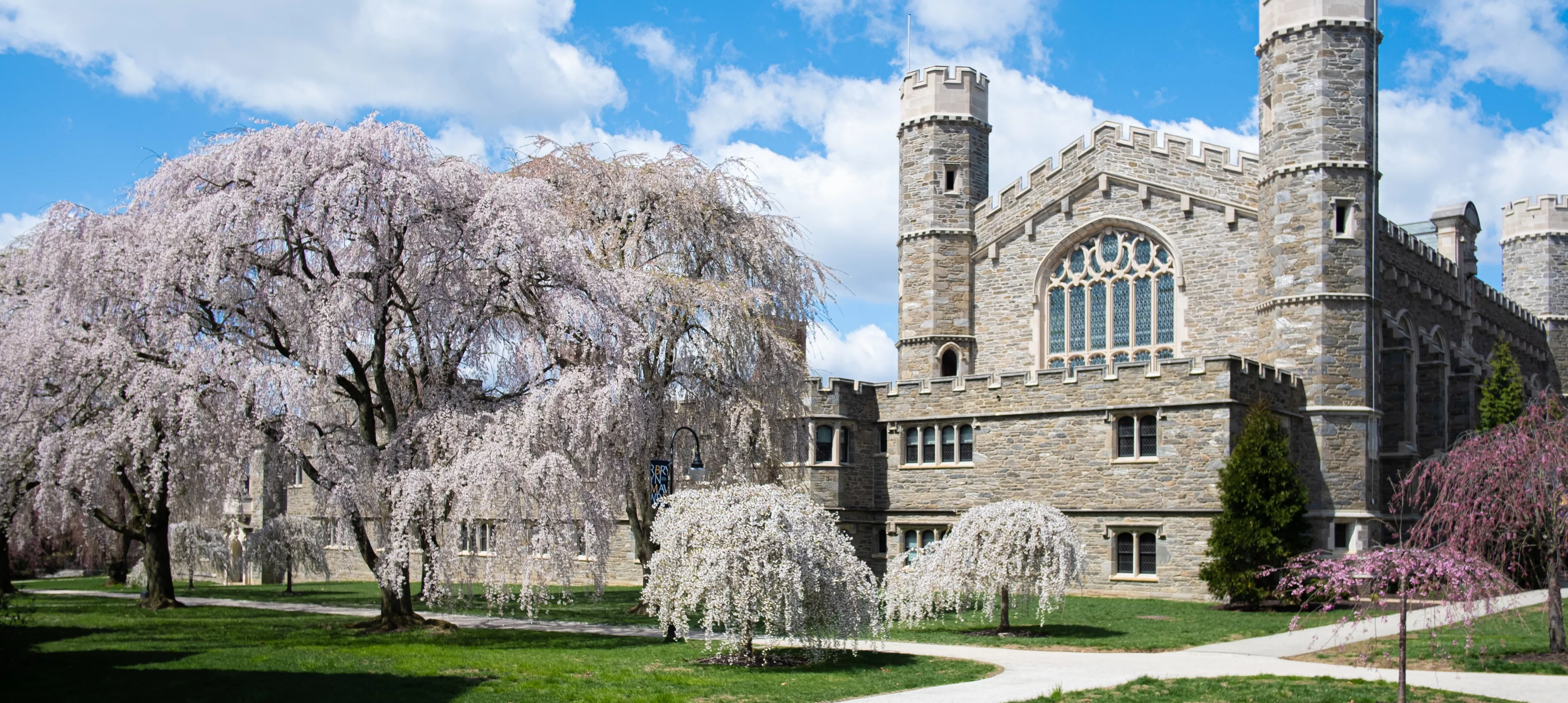
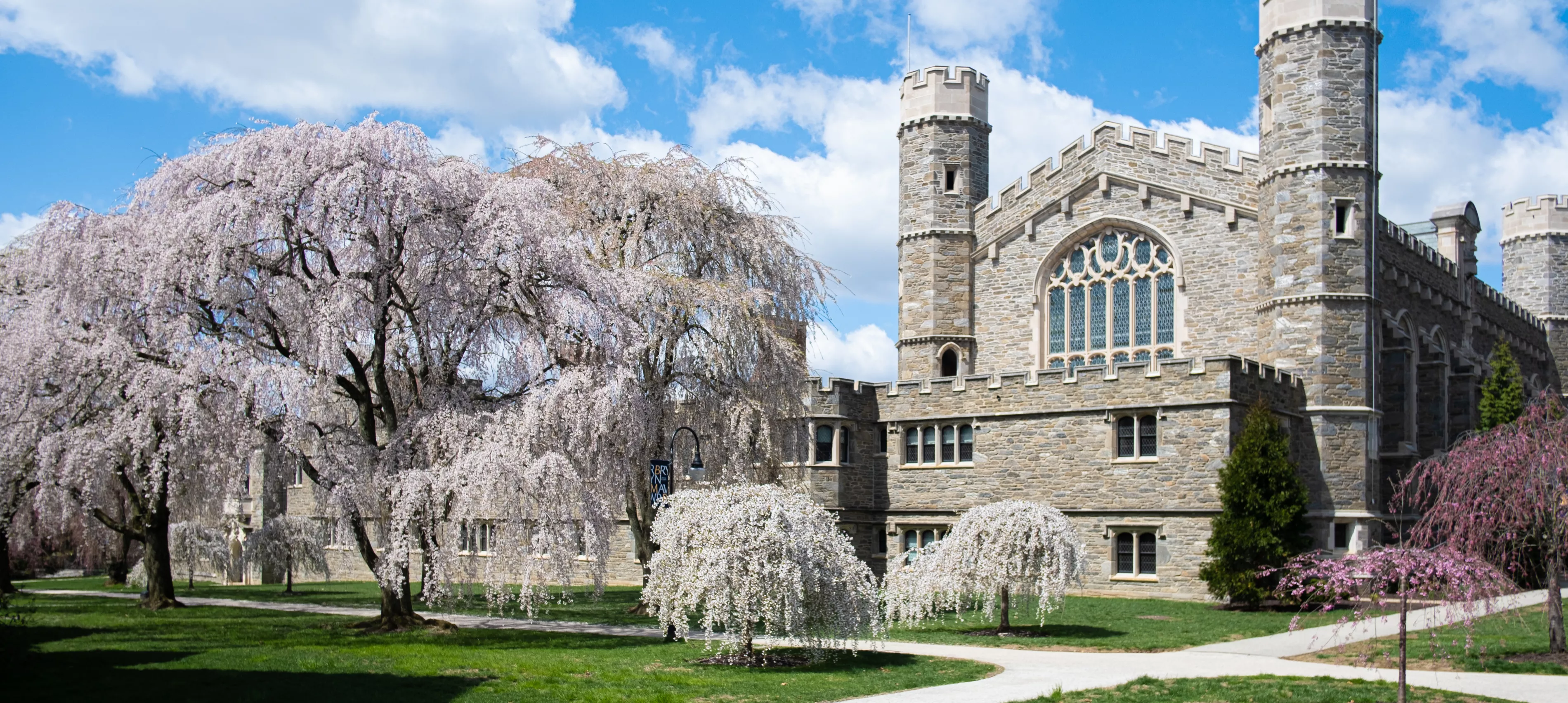
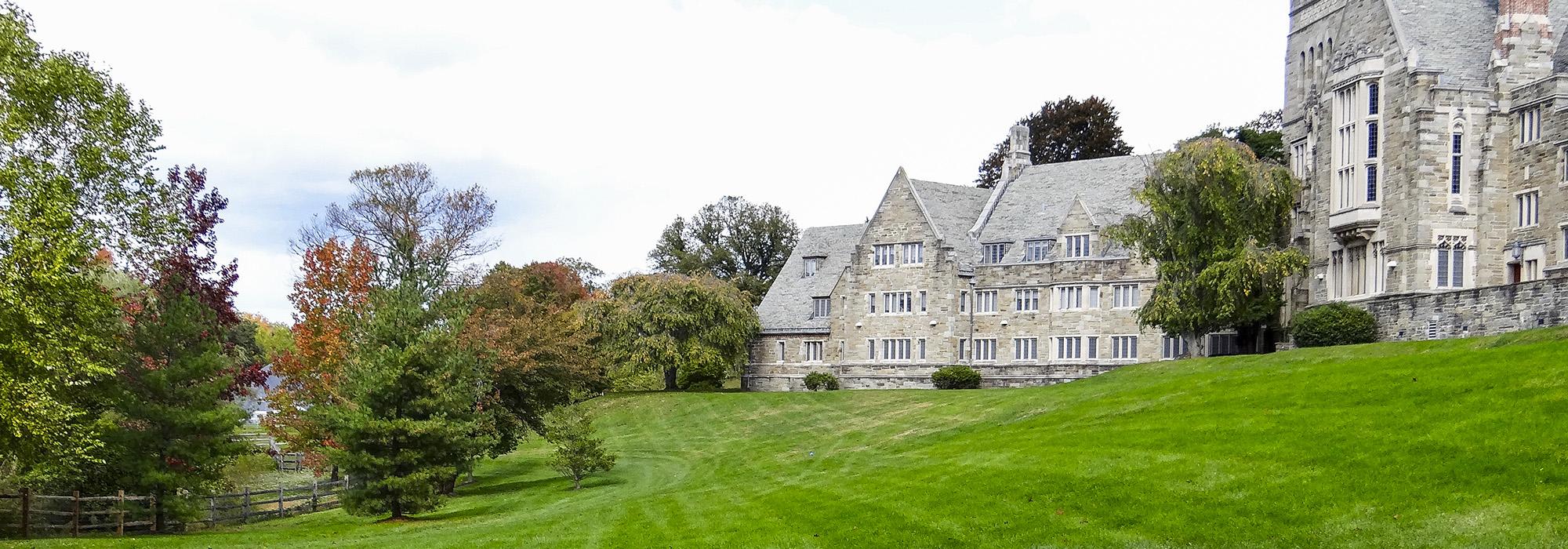
Bryn Mawr College seal · sourceOur Buildings · sourceBryn Mawr College - Admissions, Rankings, and Acceptance Rate | Varsity Tutors · sourceBryn Mawr College | TCLF · source