Admit rate has ranged 17%–22% over the last 5 years. Source: IPEDS via Urban Institute.
Acceptance & SAT from Common Data Set / IPEDS; net price, earnings & graduation from the U.S. Dept. of Education College Scorecard. Figures lag ~1–2 years — verify with the school.
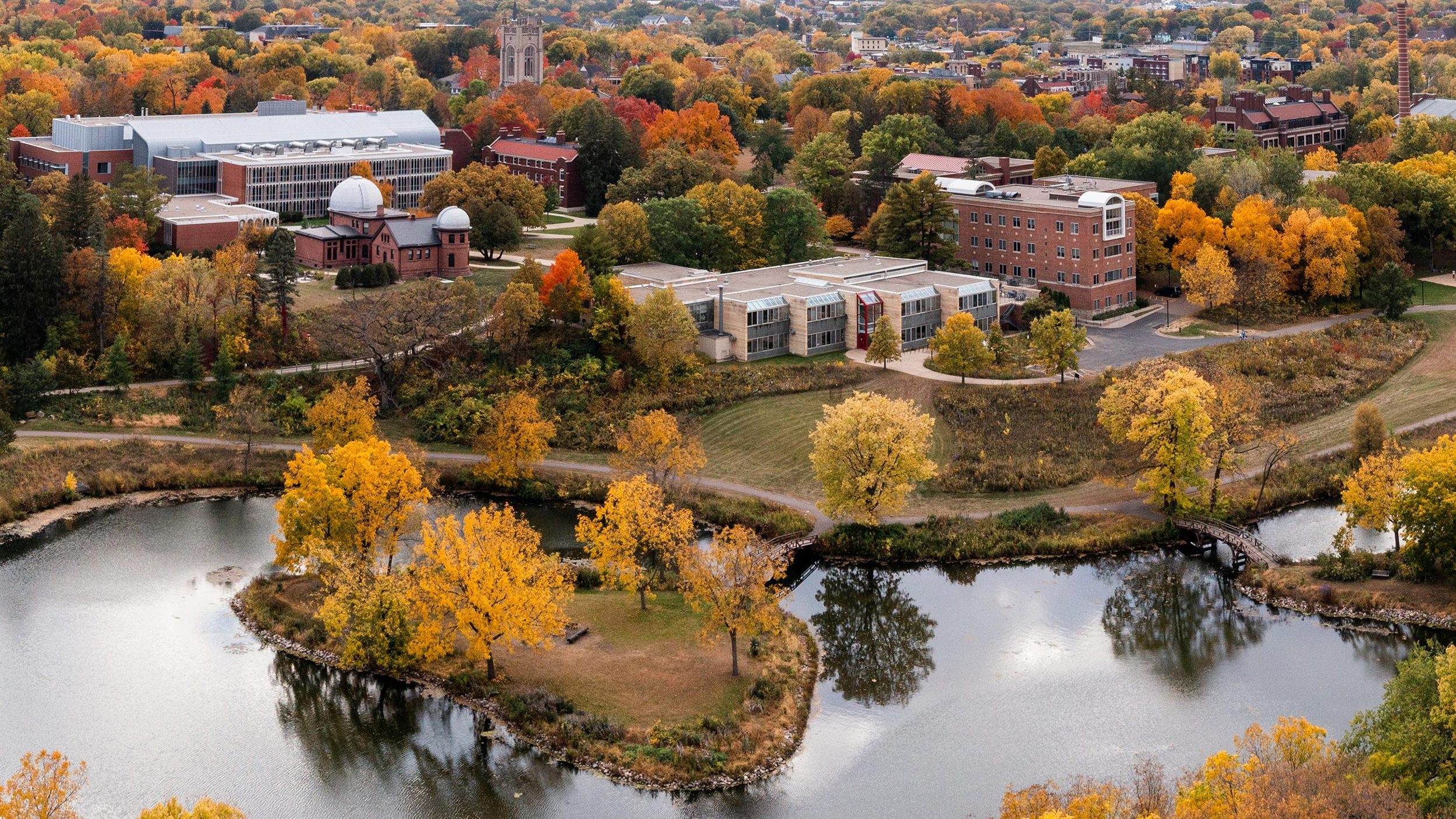
Carleton College is a small, fiercely intellectual liberal arts college in rural Minnesota that punches far above its weight. It combines a Midwestern work ethic with a quirky, collaborative intensity, where students are known as much for their passion for ultimate frisbee and winter sledding as for their devotion to a curriculum that demands serious academic rigor. The faculty, ranked first in the nation for commitment to undergraduate teaching, are the engine of an experience that is both highly challenging and highly supportive, producing graduates who are exceptionally prepared for graduate school and careers.
Admission requirements
Test-optional — scores considered if submitted
Required
High school transcript
Letters of recommendation
College-prep program
TOEFL (non-native English)
Considered (not required)
Grade point average
Class rank
Test scores (SAT/ACT)
Demonstrated competencies
Source: IPEDS Admissions survey (2022) via Urban Institute. Covers formal factors only — it does not reflect essays, extracurriculars, or other holistic criteria.
More details
Undergrad enrollment
2,086
In-state tuition
$68,892
Out-of-state tuition
$68,892
No-Loan Policy
Yes
Graduation Rate
90%
Meets Full Need
Yes
ED Share of Class
100% Yield (All ED Admits Enroll)
On-Campus Housing
97%
First-Year Retention
Not stated in sources
Demonstrated Interest
Not stated in sources
Median Earnings (10yr)
$75,525
Outcomes & value
Outcomes & value
Median earnings (10 yr)
$75,525
Value (earnings ÷ net price)
3.0×
Median debt at graduation
$16,750
Graduation rate
90%
First-year retention
96%
Reducing loan balance (3 yr)
92%
Pell (lower-income) share
17%
First-gen share (among federal-aid recipients)
16%
Financial health
3.0 / 3.0Meets the federal financial-responsibility standard
U.S. Dept. of Education Financial Responsibility Composite Score (FY2022-23). Scale −1.0 to 3.0; ≥1.5 meets the standard. Reported for private nonprofit & for-profit institutions only — public universities are state-backed and not scored, so this is a stability signal, not a ranking.
Top-earning majors
Median earnings by field of study (highest credential), ~2 years after completion.
Computer Science$76,460
Physics$42,774
Mathematics$37,568
Chemistry$36,141
Political Science and Government$33,993
Psychology, General$33,719
Social Sciences, Other
Applicants here also applied to
The schools that most often appear alongside Carleton on applicants’ lists, from our self-reported outcomes corpus.
Co-application frequency from self-reported results — directional peer discovery, not a recommendation.
Campus & location
Campus safety
On-campus violent crimes (2024)
5
On-campus criminal offenses classed as violent (murder/non-negligent manslaughter, rape, robbery, aggravated assault) for the most recent reported year. Source: U.S. Dept. of Education Campus Safety and Security (Clery Act). Counts reflect what’s reported to the school, and urban campuses often report more partly due to non-student incidents nearby — read alongside campus size and setting, not as a standalone safety verdict.
Climate
Pleasant days / yr
89
Summer high
81°F
Winter low
10°F
Annual rain
37.4"
Annual snow
43.1"
Natural-hazard risk
Relatively Low
Pleasant days counts days per year with a mean temperature of 55–75°F, a high at or below 90°F, a low at or above 45°F, and little precipitation — a transparent comfort measure, not a weighting we invented. Computed from Open-Meteo ERA5 daily history (2019–2023). Natural-hazard risk is the county’s composite rating from the FEMA National Risk Index.
Deep dive — research, future-scholar output & economic mobility▾
Research output
Institutional h-index
262
Scholarly works
7,040
Institutional research volume and impact from OpenAlex. The h-index reflects large research universities and will be low for teaching-focused liberal-arts colleges — not a measure of undergraduate quality.
Share of this school’s graduates who go on to earn research doctorates (2010–20), by national rank and per-capita yield (NSF institutional-yield ratio). A signal of a research-oriented student culture — not a causal promise, since it partly reflects who enrolls. Only top producers appear. Source: NSF NCSES, Baccalaureate Origins of U.S. Research Doctorate Recipients.
Economic mobility
Quick answers
What is the acceptance rate at Carleton College?
Carleton College's acceptance rate is approximately 20% (Northfield, MN), based on the most recent figures we compiled from public and primary sources.
What SAT score do you need for Carleton College?
Admitted students at Carleton College typically score 1450–1560 on the SAT (the middle-50% range). Scores outside this band are still admitted, especially with strong applications.
How much does Carleton College cost?
At Carleton College, the average net price (after aid) is about $25,407 per year. Actual cost varies with financial aid and residency.
How many undergraduates attend Carleton College?
Carleton College enrolls approximately 2,086 undergraduate students.
Where is Carleton College located?
Carleton College is located in Northfield, MN.
Admissions
Gaining admission to Carleton is a selective proposition, with the college admitting roughly one in five applicants. The process favors those who apply with clear intent: the college offers both Early Decision I and II rounds, and for these binding plans are significantly higher than the overall rate—for one recent cycle, the ED1 rate was just over 30%. Students admitted via ED account for a 100% rate, as they are obligated to enroll. The college has ended the practice of admissions for the fall 2024 cohort and beyond. For those placed on the waitlist, the historical average acceptance rate hovers around 9.55%. The admitted class is drawn from a diverse pool, with recent profiles showing students coming from 44 states, 422 high schools, and 17 countries, with 32% identifying as Black, Indigenous, or People of Color.
Earnings = median of students working ~10 years after entry; debt = median of graduates. Value divides 10-yr earnings by one year’s net price — read it as earnings per dollar of annual cost, not a full lifetime ROI; it favors lower-cost schools. Source: U.S. Dept. of Education College Scorecard. Figures lag ~2 years and reflect all students, not your intended major.
$26,353
Biology, General$23,034
Source: U.S. Dept. of Education College Scorecard (field-of-study earnings). Figures cover graduates who received federal aid and lag ~2 years; not all programs report data.
Mobility rate = the share of students who both start in the bottom household-income quintile and reach the top quintile; bottom → top is that chance conditional on starting at the bottom. Source: Opportunity Insights Mobility Report Cards (Chetty, Friedman, Saez, Turner & Yagan). Reflects 1980–82 birth cohorts, so it’s directional, not current.
Carleton’s academic reputation is built on a classic, rigorous liberal arts curriculum where the faculty-student relationship is paramount—the college is ranked first in the nation for faculty commitment to undergraduate teaching. There are no passive learners here; the education is described as "deep, broad, and dynamic," where "students and faculty wrestle together with ideas" to produce critical thinkers and creative problem-solvers. The most popular majors reflect a strong tilt toward the sciences and quantitative fields: Computer Science, Biology, Research and Experimental Psychology, and International Relations top the lists. Other significant majors include Mathematics (7% of graduates), Chemistry (6%), Physics (4%), and History (4%). The approach is intentionally interdisciplinary and hands-on, designed to propel learning beyond the classroom.
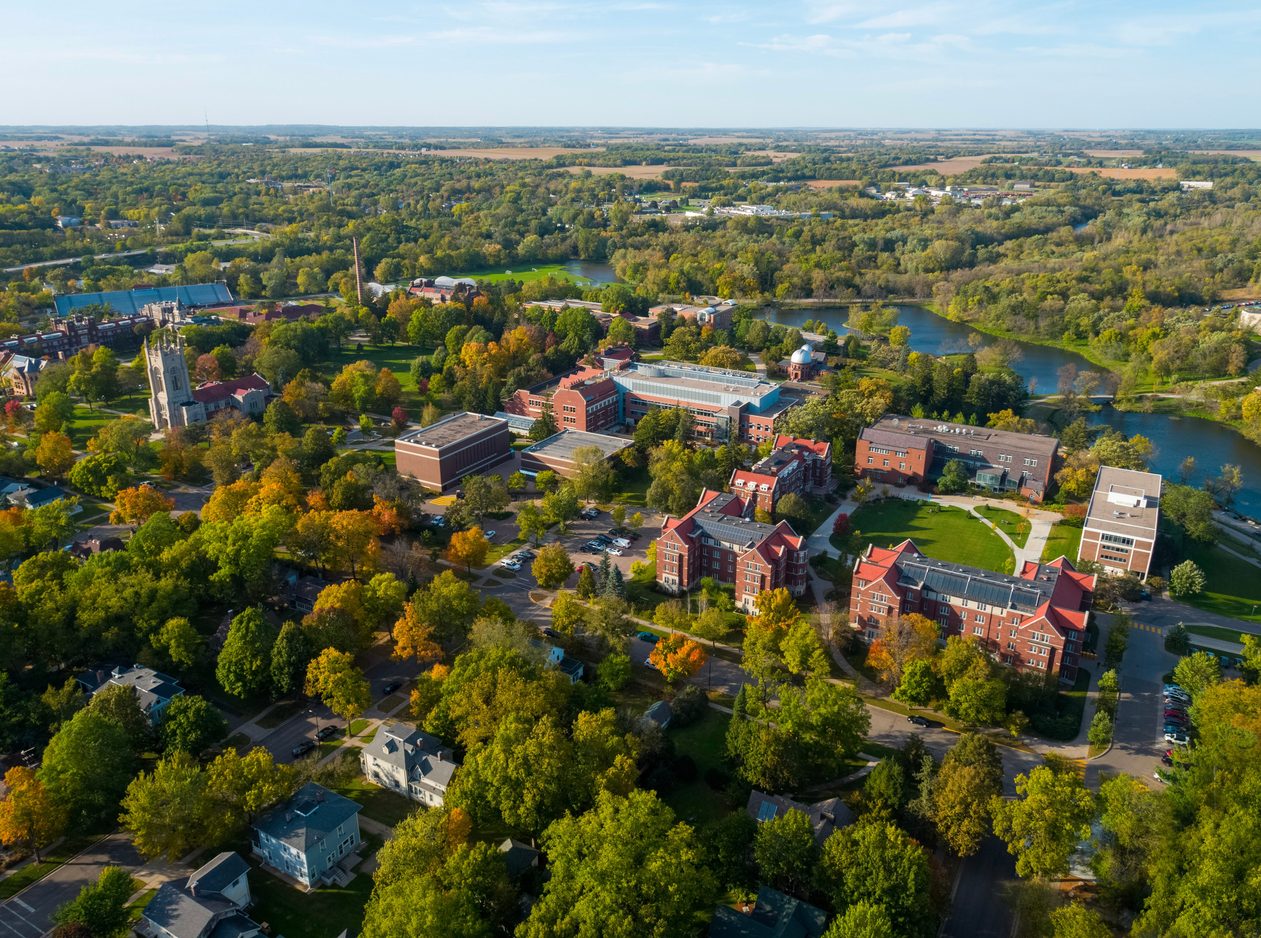
Life at Carleton is intensely residential and communal—97% of students live in college-owned, -operated, or -affiliated housing. The campus is an active learning and living environment by design, fostering a close-knit, supportive, and inclusive community. Students aren't just academics; they're community members engaged in a wide array of activities. The campus culture has its own distinct rhythms, with student-run social events playing a central role. While one campus viewpoint article provocatively states "Carleton does not have a party culture," it simultaneously acknowledges that the campus's "thirst for a ‘good party’ is what keeps students always returning," suggesting a vibrant, student-organized social scene. The Division of Student Life dedicates its staff and resources to actively engaging students in an intentional learning experience outside the classroom.
A Carleton degree is a launchpad with remarkable efficacy. Within six months of graduation, 67% of graduates are employed, 17% are in graduate school, and 15% are interning, volunteering, or traveling. The college's graduation rate is exceptionally high. Early career earnings for graduates are strong, with one source noting median earnings four years after graduation are about 11% above the national average. The outcomes reflect the value of the college's rigorous, broad-based liberal arts training, preparing graduates for a wide range of paths.
Carleton is deeply committed to accessibility through a robust, no-loan financial aid policy. The college meets 100% of the demonstrated financial need for every admitted student for all four years, and does so without including loans in the initial financial aid package for qualifying students—a practice known as a "no-loan" policy. This is awarded on an annual basis, and the college maintains a goal of having at least 50% of the student body receiving some form of financial aid. The average financial aid award is substantial. Families are encouraged to use the college's Calculator and Quick College Cost Estimator tools to anticipate costs and estimate eligibility for need-based scholarships.
Carleton stands out for the potent alchemy it achieves: it pairs top-tier academic rigor with a uniquely collaborative, unpretentious, and all-in community vibe. This isn't a place of cutthroat competition; it's where brilliant faculty, ranked #1 for teaching, choose to dedicate themselves exclusively to undergraduates, and where students—whether debating in a philosophy seminar, collaborating on a computer science project, or organizing a campus-wide event—are fully invested in each other's growth. The commitment to meeting 100% of financial need with a no-loan policy removes a major barrier, allowing the student body to be defined by intellectual curiosity rather than economic background. Located in small-town Minnesota, the campus becomes a self-contained, intense ecosystem where the life of the mind and a vibrant, student-driven social life are inextricably linked, producing graduates who are not just knowledgeable, but adaptable, communicative, and primed to lead.
Carleton College seal · sourceCarleton College: A Leading Liberal Arts College in Northfield, Minnesota · sourceMy Favorite Spots on Campus · sourceCarleton College Overview: Campus Life, Admissions & More · source