Admit rate has ranged 12%–16% over the last 5 years. Source: IPEDS via Urban Institute.
Acceptance & SAT from Common Data Set / IPEDS; net price, earnings & graduation from the U.S. Dept. of Education College Scorecard. Figures lag ~1–2 years — verify with the school.
Washington University in St. Louis is a private research university that has meticulously cultivated a reputation for rigorous academics wrapped in a collegial, almost genteel, Midwestern package. It attracts high-achieving students with its blend of top-tier programs in medicine, business, and architecture, a collaborative campus culture that shuns cutthroat competition, and a significant financial commitment to meeting full need without loans. Don't be fooled by the manicured quads and friendly vibe—the admissions process is fiercely selective, with academic rigor as the non-negotiable cornerstone.
Admission requirements
Test-optional — scores considered if submitted
Required
High school transcript
Letters of recommendation
TOEFL (non-native English)
Considered (not required)
Grade point average
Class rank
Test scores (SAT/ACT)
College-prep program
Demonstrated competencies
Source: IPEDS Admissions survey (2022) via Urban Institute. Covers formal factors only — it does not reflect essays, extracurriculars, or other holistic criteria.
More details
Undergrad enrollment
7,857
In-state tuition
$65,790
Out-of-state tuition
$65,790
No-Loan Policy
Yes, for all with demonstrated need
Graduation Rate
94%
Meets Full Need
Yes
Demonstrated Interest
Not considered
Median Earnings (10yr)
$86,182
First-Year Retention Rate
95%
Outcomes & value
Outcomes & value
Median earnings (10 yr)
$86,182
Value (earnings ÷ net price)
4.0×
Median debt at graduation
$17,500
Graduation rate
94%
First-year retention
95%
Reducing loan balance (3 yr)
88%
Pell (lower-income) share
18%
First-gen share (among federal-aid recipients)
11%
Financial health
2.4 / 3.0Meets the federal financial-responsibility standard
U.S. Dept. of Education Financial Responsibility Composite Score (FY2022-23). Scale −1.0 to 3.0; ≥1.5 meets the standard. Reported for private nonprofit & for-profit institutions only — public universities are state-backed and not scored, so this is a stability signal, not a ranking.
Top-earning majors
Median earnings by field of study (highest credential), ~2 years after completion.
Computer Science$99,517
Finance and Financial Management Services$91,744
Marketing$78,896
Systems Engineering$78,343
Mechanical Engineering$67,995
Chemical Engineering$61,516
Economics
Applicants here also applied to
The schools that most often appear alongside WashU on applicants’ lists, from our self-reported outcomes corpus.
Co-application frequency from self-reported results — directional peer discovery, not a recommendation.
Campus & location
Campus safety
On-campus violent crimes (2024)
8
Per 1,000 students
0.50
On-campus criminal offenses classed as violent (murder/non-negligent manslaughter, rape, robbery, aggravated assault) for the most recent reported year. Source: U.S. Dept. of Education Campus Safety and Security (Clery Act). Counts reflect what’s reported to the school, and urban campuses often report more partly due to non-student incidents nearby — read alongside campus size and setting, not as a standalone safety verdict.
Climate
Pleasant days / yr
79
Summer high
86°F
Winter low
28°F
Annual rain
56.2"
Annual snow
14.5"
Natural-hazard risk
Relatively High
Pleasant days counts days per year with a mean temperature of 55–75°F, a high at or below 90°F, a low at or above 45°F, and little precipitation — a transparent comfort measure, not a weighting we invented. Computed from Open-Meteo ERA5 daily history (2019–2023). Natural-hazard risk is the county’s composite rating from the FEMA National Risk Index.
Deep dive — research, future-scholar output & economic mobility▾
Research output
Institutional h-index
1,852
Scholarly works
254,615
Institutional research volume and impact from OpenAlex. The h-index reflects large research universities and will be low for teaching-focused liberal-arts colleges — not a measure of undergraduate quality.
Economic mobility
Mobility rate
1.0%
Bottom → top quintile
54%
From bottom quintile
2%
Mobility rate = the share of students who both start in the bottom household-income quintile and reach the top quintile; bottom → top is that chance conditional on starting at the bottom. Source: Opportunity Insights Mobility Report Cards (Chetty, Friedman, Saez, Turner & Yagan). Reflects 1980–82 birth cohorts, so it’s directional, not current.
Quick answers
What is the acceptance rate at Washington University in St Louis?
Washington University in St Louis's acceptance rate is approximately 12% (St. Louis, MO), based on the most recent figures we compiled from public and primary sources.
What SAT score do you need for Washington University in St Louis?
Admitted students at Washington University in St Louis typically score 1500–1570 on the SAT (the middle-50% range). Scores outside this band are still admitted, especially with strong applications.
How much does Washington University in St Louis cost?
At Washington University in St Louis, the average net price (after aid) is about $21,786 per year. Actual cost varies with financial aid and residency.
How many undergraduates attend Washington University in St Louis?
Washington University in St Louis enrolls approximately 7,857 undergraduate students.
Where is Washington University in St Louis located?
Washington University in St Louis is located in St. Louis, MO.
Admissions
Gaining admission to WashU is a high-stakes game of academic excellence, where the early decision rounds offer a statistically significant advantage. The university is "very selective" with an overall of 12% [8][10]. However, the Early Decision I and II acceptance rate is notably higher, reported at 25.26% for a recent cycle [36][38]. This creates a strategic pathway for committed applicants, with a substantial portion of the incoming class filled through binding ED plans. The admitted student profile is defined by exceptional academic credentials. The middle 50% SAT range is 1500–1570, and the ACT range is 33–35 [10][11]. While the university practices admissions, a significant portion of the freshman class still submits scores—29% submitted SAT scores and 28% submitted ACT scores in one recent class [9]. Academic factors, particularly the "rigor of secondary school record," are paramount in admissions consideration [6]. Demonstrated interest, however, is explicitly marked as "not considered" in the , meaning campus visits or contact with admissions officers do not factor into the decision [42]. The rate—the percentage of admitted students who enroll—held steady at an unspecified level while the acceptance rate remained at about 12% for the Class of 2029 [39].
Earnings = median of students working ~10 years after entry; debt = median of graduates. Value divides 10-yr earnings by one year’s net price — read it as earnings per dollar of annual cost, not a full lifetime ROI; it favors lower-cost schools. Source: U.S. Dept. of Education College Scorecard. Figures lag ~2 years and reflect all students, not your intended major.
$44,572
Design and Applied Arts$41,205
Source: U.S. Dept. of Education College Scorecard (field-of-study earnings). Figures cover graduates who received federal aid and lag ~2 years; not all programs report data.
WashU's academic landscape is defined by both breadth and depth, offering students extensive freedom to explore across disciplines. The university provides over 150 fields of study and more than 100 majors and minors [13][14][18]. This vast menu allows for the flexibility to take classes across disciplines and in any of its undergraduate schools [18]. The curriculum is organized alphabetically in the official bulletin, encompassing everything from Accounting and African & African American Studies to Ancient Studies and beyond [17]. A key part of WashU's academic reputation is its strength in providing research opportunities to students across all disciplines [15]. This integration of undergraduate students into the university's robust research enterprise is a hallmark of the experience, fostering a culture of inquiry and hands-on learning that extends far beyond the lecture hall.
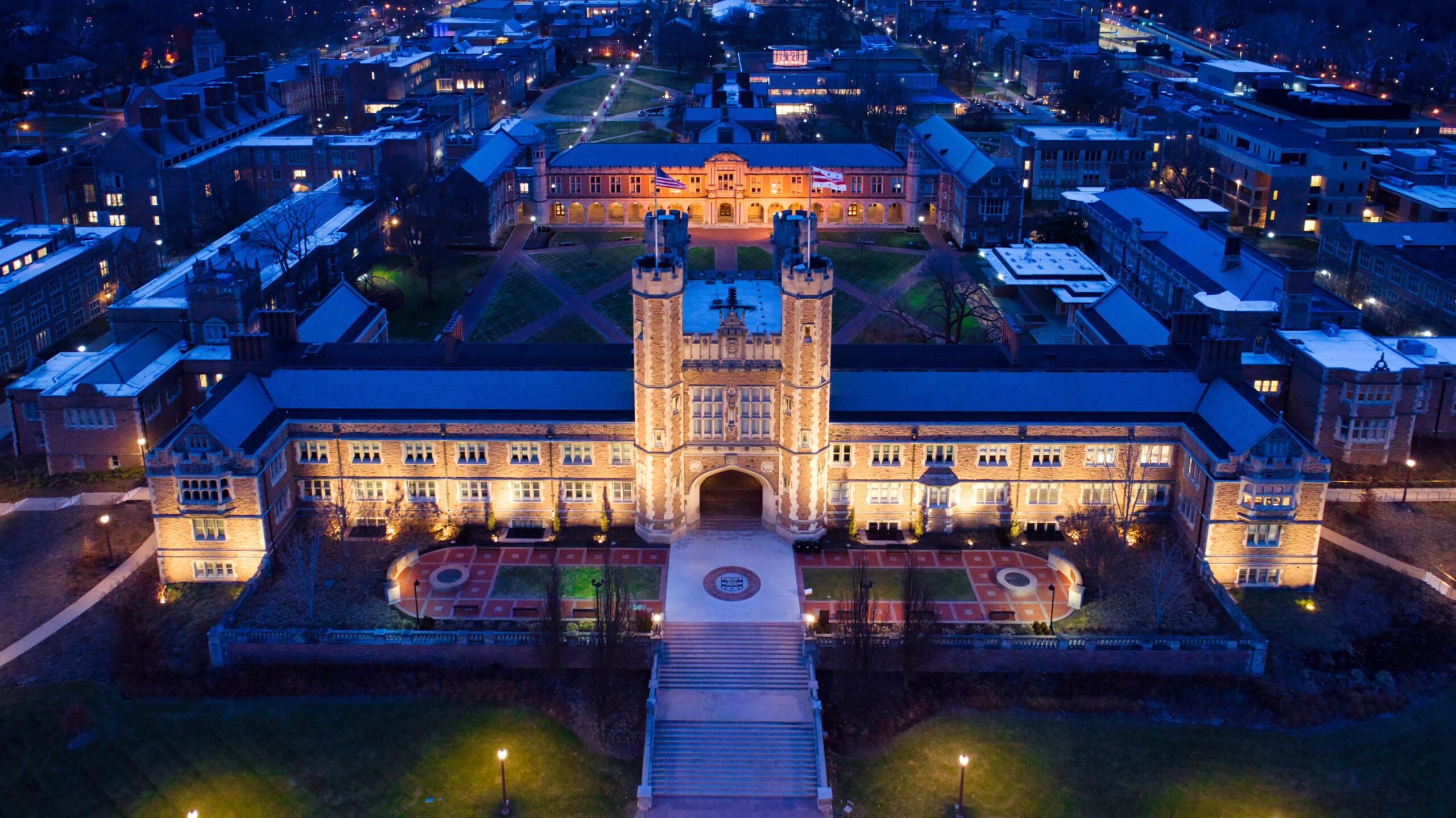
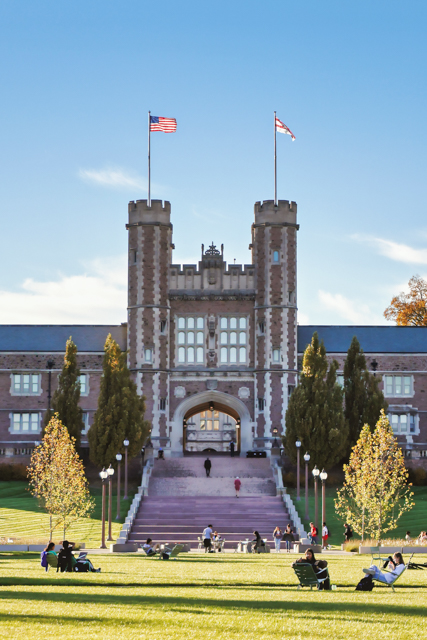
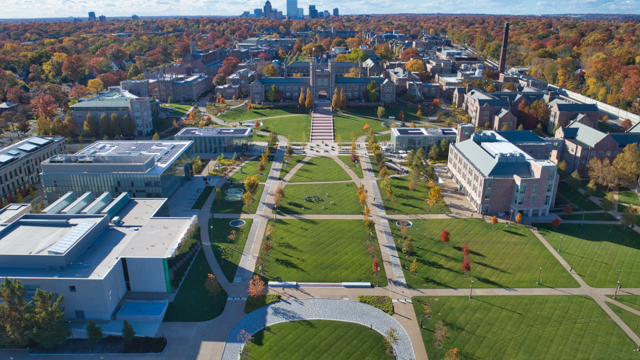
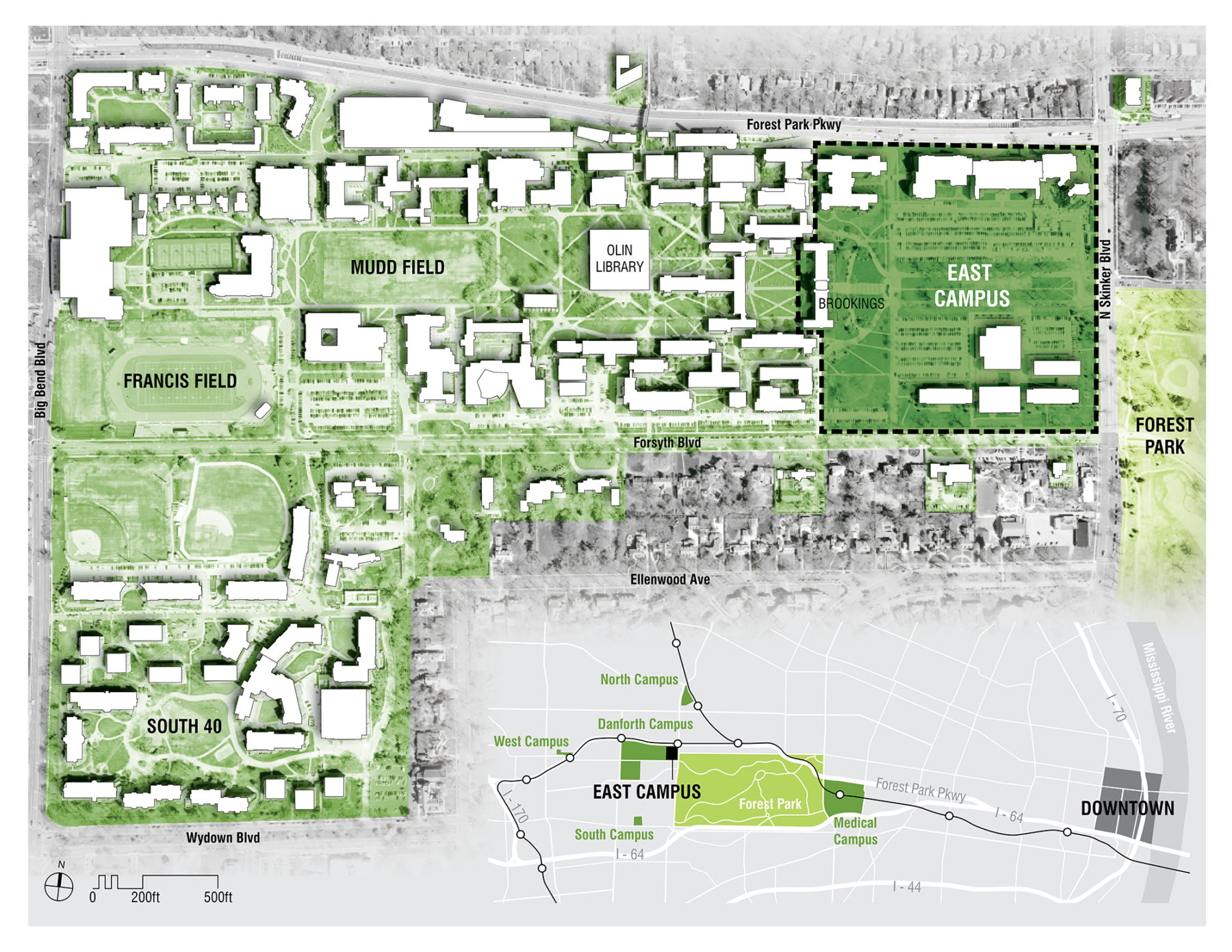
Life on the Danforth Campus balances intense academic focus with a vibrant and supportive social scene. The university describes its campus culture as one that "balances academic rigor with social exploration" [19]. Students have access to a broad range of campus organizations, including sports clubs, cultural organizations, volunteer opportunities, and pre-professional societies [22]. Greek life plays a noticeable role, with one source estimating it comprises about 30% of student life [20]. However, other descriptions suggest the social scene is "moderate, with less emphasis on traditional partying and Greek life due to recent changes" [24]. The independent student newspaper, Student Life, serves as a hub for campus news and discourse [23]. Overall, the environment is characterized as a "vibrant student life" where students find a supportive community and endless opportunities to explore passions [21]. The surrounding city of St. Louis offers additional outlets, with restaurants, bars, and cultural institutions contributing to the experience [20].
A WashU education is a substantial investment that, for most graduates, pays strong and measurable dividends. The university reports a stellar 95% first-year retention rate and a 94% six-year graduation rate for first-time, full-time students [25][29]. The graduation rate is also listed as 93% in federal data [27]. The median earnings ten years after entry are robust, with one source citing $86,182 [26] and another federal source showing an even higher figure of $95,899 [27]. Other salary data points include a median early-career salary of $83,200 [28]. These strong outcomes are supported by a high graduation rate and a culture that effectively prepares students for advanced study and professional success.
WashU has made a decisive and expensive commitment to accessibility through a sweeping no-loan financial aid policy. The total is approximately $98,000 [30]. However, the average after aid—the amount families actually pay—is significantly lower, with sources citing figures around $21,786 to $22,332 [26][31][32]. Crucially, the university is need-blind in admissions and meets 100% of demonstrated financial need for all admitted students [46]. Starting in fall 2024, WashU adopted a "no-loan" policy, removing federal loans from all financial aid packages and replacing them with scholarships and grants [45][47][48][49]. This means students with demonstrated financial need will have 100% of their need met without loans [45]. The university reports that 15% of demonstrated financial need is met without loans under this policy, and the average need-based financial aid offer is $10,000 [35]. Families are encouraged to use the university's net price calculators for personalized estimates [30][33][34].
WashU distinguishes itself through a powerful, deliberate trifecta: elite academics without the corrosive stress, a deeply collaborative student culture, and a groundbreaking financial commitment that backs its ideals with substantial resources. It has shed any lingering "safety school" perception to become a first-choice destination for high achievers who want rigorous pre-professional programs—especially in medicine, business, and architecture—without the stereotypical Ivy League angst. The campus vibe is often described as "happy" and "supportive," a place where students work hard but don't feel the need to tear each other down. Most consequentially, its recent adoption of a universal no-loan financial aid policy is a monumental shift, putting it in a tiny echelon of schools that promise to replace loans with grants for all needy students. This move transforms WashU from a financially daunting prospect into a genuinely accessible top-tier option, aligning its substantial endowment directly with its mission to attract the brightest minds, regardless of background. It's a university that has carefully engineered both its academic reputation and its ethical stance, resulting in a compelling package that competes head-on with the most historic names in higher education.
Washington University in St Louis seal · sourceUniversity Facts | WashU · sourceVisit | WashU · sourceWashington University in St. Louis East Campus Framework Plan – Sasaki · source