Admit rate has ranged 14%–20% over the last 5 years. Source: IPEDS via Urban Institute.
Acceptance & SAT from Common Data Set / IPEDS; net price, earnings & graduation from the U.S. Dept. of Education College Scorecard. Figures lag ~1–2 years — verify with the school.
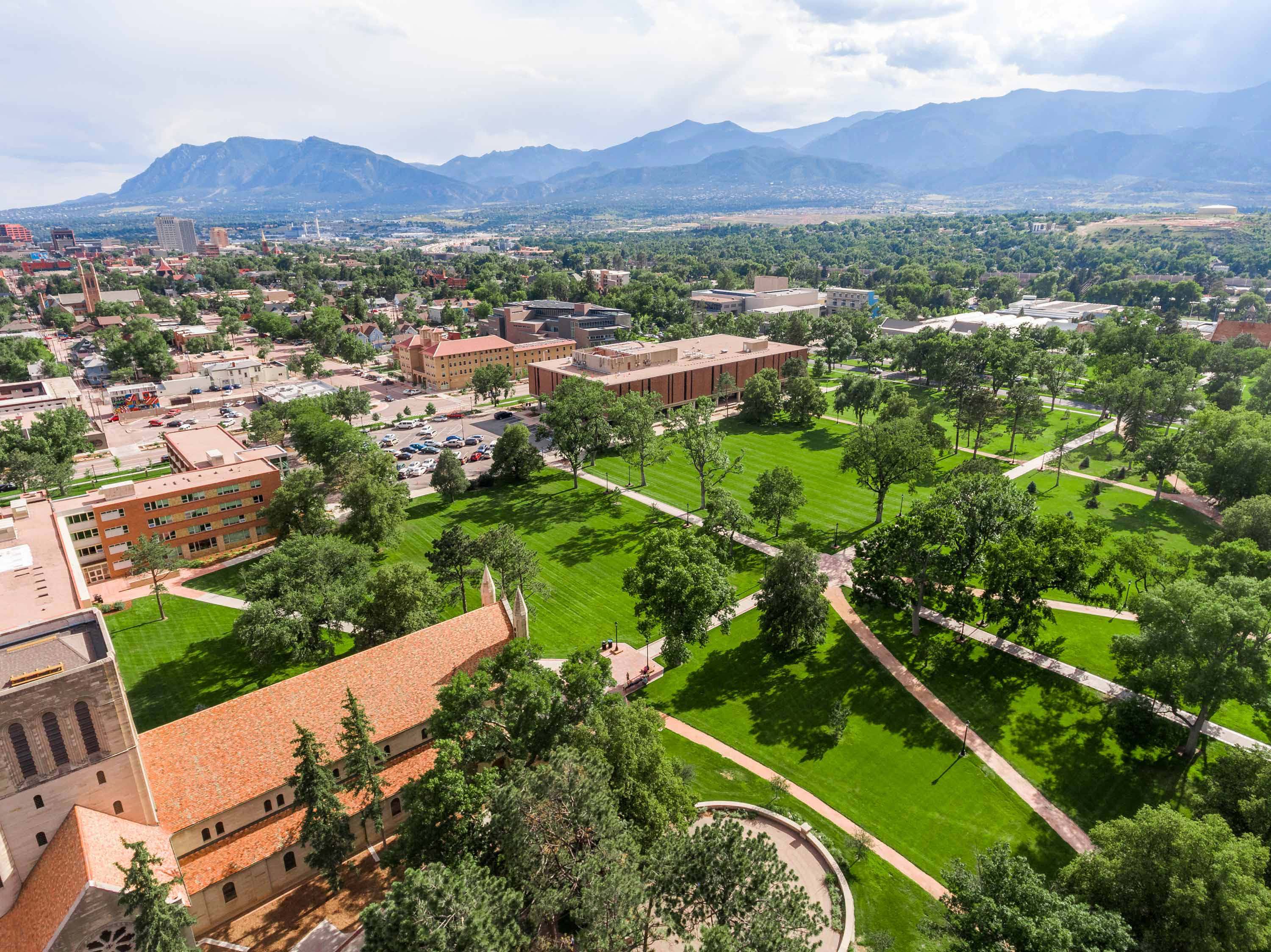
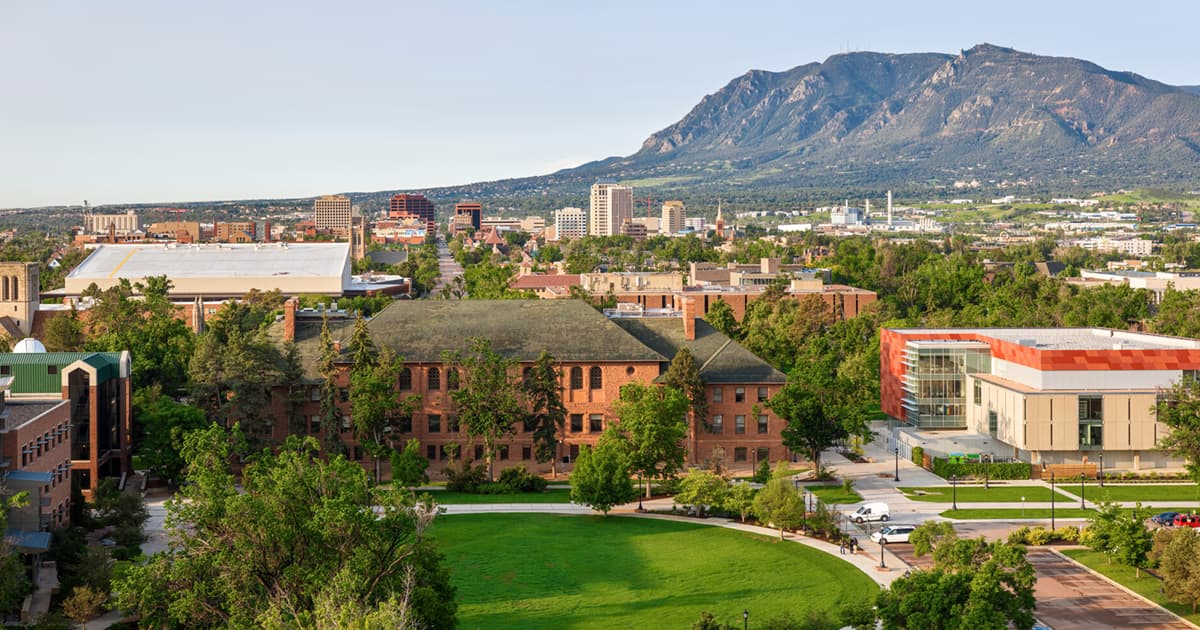
Colorado College is not your typical liberal arts school—it’s a high-adventure, academically intense experiment where students take one class at a time on the Block Plan, turning the entire campus into a focused, immersive workshop for three and a half weeks. Nestled at the foot of Pikes Peak in Colorado Springs, the vibe is fiercely intellectual but decidedly unpretentious, attracting a self-selecting tribe of outdoorsy, independent thinkers who are as likely to debate political theory on Tava Quad as they are to summit a fourteener on a weekend. It’s a place where the line between classroom and mountain trail blurs, producing graduates who are as adaptable as they are accomplished.
Admission requirements
Test-optional — scores considered if submitted
Required
High school transcript
Letters of recommendation
Considered (not required)
Grade point average
Class rank
Test scores (SAT/ACT)
College-prep program
TOEFL (non-native English)
Source: IPEDS Admissions survey (2022) via Urban Institute. Covers formal factors only — it does not reflect essays, extracurriculars, or other holistic criteria.
More details
Undergrad enrollment
2,014
In-state tuition
$70,734
Out-of-state tuition
$70,734
No-Loan Policy
Yes, for qualifying students
Graduation Rate
88%
Meets Full Need
Yes
ED Share of Class
Not explicitly stated in provided sources
First-Year Retention
Not explicitly stated in provided sources
Demonstrated Interest
Considered
Median Earnings (10yr)
$65,222
Outcomes & value
Outcomes & value
Median earnings (10 yr)
$65,222
Value (earnings ÷ net price)
2.0×
Median debt at graduation
$18,257
Graduation rate
88%
First-year retention
94%
Reducing loan balance (3 yr)
89%
Pell (lower-income) share
14%
First-gen share (among federal-aid recipients)
18%
Financial health
3.0 / 3.0Meets the federal financial-responsibility standard
U.S. Dept. of Education Financial Responsibility Composite Score (FY2022-23). Scale −1.0 to 3.0; ≥1.5 meets the standard. Reported for private nonprofit & for-profit institutions only — public universities are state-backed and not scored, so this is a stability signal, not a ranking.
Top-earning majors
Median earnings by field of study (highest credential), ~2 years after completion.
Economics$46,087
Political Science and Government$37,568
Sociology$25,194
Geological and Earth Sciences/Geosciences$21,508
English Language and Literature, General$20,482
Biology, General$20,140
Source: U.S. Dept. of Education College Scorecard (field-of-study earnings). Figures cover graduates who received federal aid and lag ~2 years; not all programs report data.
Applicants here also applied to
The schools that most often appear alongside Colorado College on applicants’ lists, from our self-reported outcomes corpus.
Co-application frequency from self-reported results — directional peer discovery, not a recommendation.
Campus & location
Campus safety
On-campus violent crimes (2024)
5
Per 1,000 students
2.45
On-campus criminal offenses classed as violent (murder/non-negligent manslaughter, rape, robbery, aggravated assault) for the most recent reported year. Source: U.S. Dept. of Education Campus Safety and Security (Clery Act). Counts reflect what’s reported to the school, and urban campuses often report more partly due to non-student incidents nearby — read alongside campus size and setting, not as a standalone safety verdict.
Climate
Pleasant days / yr
90
Summer high
84°F
Winter low
18°F
Annual rain
13.7"
Annual snow
33.7"
Natural-hazard risk
Relatively Moderate
Pleasant days counts days per year with a mean temperature of 55–75°F, a high at or below 90°F, a low at or above 45°F, and little precipitation — a transparent comfort measure, not a weighting we invented. Computed from Open-Meteo ERA5 daily history (2019–2023). Natural-hazard risk is the county’s composite rating from the FEMA National Risk Index.
Deep dive — research, future-scholar output & economic mobility▾
Research output
Institutional h-index
146
Scholarly works
5,129
Institutional research volume and impact from OpenAlex. The h-index reflects large research universities and will be low for teaching-focused liberal-arts colleges — not a measure of undergraduate quality.
Economic mobility
Mobility rate
1.8%
Bottom → top quintile
38%
From bottom quintile
5%
Mobility rate = the share of students who both start in the bottom household-income quintile and reach the top quintile; bottom → top is that chance conditional on starting at the bottom. Source: Opportunity Insights Mobility Report Cards (Chetty, Friedman, Saez, Turner & Yagan). Reflects 1980–82 birth cohorts, so it’s directional, not current.
Quick answers
What is the acceptance rate at Colorado College?
Colorado College's acceptance rate is approximately 18% (Colorado Springs, CO), based on the most recent figures we compiled from public and primary sources.
What SAT score do you need for Colorado College?
Admitted students at Colorado College typically score 1230–1460 on the SAT (the middle-50% range). Scores outside this band are still admitted, especially with strong applications.
How much does Colorado College cost?
At Colorado College, the average net price (after aid) is about $33,375 per year. Actual cost varies with financial aid and residency.
How many undergraduates attend Colorado College?
Colorado College enrolls approximately 2,014 undergraduate students.
Where is Colorado College located?
Colorado College is located in Colorado Springs, CO.
Admissions
Getting into Colorado College is a selective proposition, with an overall of 18%. The admissions process reveals a clear strategic advantage for applicants who commit early: for the class entering Fall 2026, the combined Early Decision I and II acceptance rate was 33%, significantly higher than the overall rate of 26% for that cycle. Historically, the Regular Decision round can be dramatically more competitive, with one report citing a rate as low as 3.9%. The middle 50% SAT range for admitted students is 1230–1460, and the median ACT range is 32–34; notably, 47% of accepted applicants for the Class of 2027 applied without test scores. The college considers a student's level of interest as part of its , rating 'demonstrated interest' as a 'considered' factor in admissions decisions. Contact points for the admissions office include a phone number (719-389-6344), a toll-free line (800-542-7214), and an email address ([email protected]).
Earnings = median of students working ~10 years after entry; debt = median of graduates. Value divides 10-yr earnings by one year’s net price — read it as earnings per dollar of annual cost, not a full lifetime ROI; it favors lower-cost schools. Source: U.S. Dept. of Education College Scorecard. Figures lag ~2 years and reflect all students, not your intended major.
The academic engine of Colorado College is its singular Block Plan, where students immerse themselves in a single course for an intensive 3.5-week block before moving on to the next. This structure defines the intellectual culture, fostering deep, seminar-style discussion and enabling field trips, labs, and projects that would be impossible on a traditional semester schedule. The college offers a robust liberal arts curriculum across 37 departments, from classic disciplines like English and Music to cutting-edge fields like Molecular Biology and Computer Science. Students can choose from 42 majors and 33 minors, with popular choices including Political Science and Government, Economics, Environmental Science, and Research and Experimental Psychology. The environment is described by students as active, chill, and non-pushy, with a culture that is "definitely not too psycho about academics." This unique approach demands a high degree of focus and self-discipline, creating graduates adept at mastering complex subjects in condensed timeframes.
Life at Colorado College is an extension of its academic philosophy: intense, immersive, and deeply connected to its spectacular setting. The campus social scene is vibrant and inclusive, featuring a mix of frequent parties and engaging cultural and academic events. Students are a "diverse group of curious, adventurous minds" who discuss ideas on Tava Quad, study in the modern Tutt Library, and routinely explore the surrounding wilderness, including Pikes Peak, on weekends. The residential experience is a cornerstone, with 71% of students living in college-owned, -operated, or -affiliated housing, while 29% live off-campus. The Student Life Division is committed to holistic student development, supporting a balance between rigorous academics, club involvement, internships, and work. The overall vibe is active, relaxed, and collaborative, attracting students who value both intellectual engagement and outdoor adventure.
A Colorado College education is a significant investment with a strong return. The graduation rate is 88%, and the average time to degree is 4.2 years. The six-year median salary for graduates is reported at $47,611. The college's unique Block Plan and liberal arts focus cultivate adaptable, focused graduates, with popular major outcomes showing a range: for instance, Economics graduates report some of the highest median earnings, while Biology graduates' median earnings are reported to be closer to $21,826. These figures underscore the value of the degree and the success of its graduates in entering the workforce or pursuing advanced studies.
Colorado College is a private institution with a substantial sticker price, but it is committed to making attendance feasible through a robust financial aid program. The college pledges to meet 100% of the demonstrated financial need for all admitted students through its program. This commitment is reinforced by the 'Four Corners Pledge,' which ensures families receive the greater of two calculated aid amounts. For many students, this means a 'no-loan' financial aid package where need is met through grants, work-study, and only a modest loan expectation. Approximately 57% of CC students receive financial aid, and the average annual aid package for first-year students is $58,000. The —the average cost after aid—is a critical figure for families. The college provides tools like the MyinTuition net price calculator to help families estimate their actual costs, emphasizing that students who do not apply for or qualify for need-based aid at the time of admission will not be eligible for such assistance later.
Colorado College stands out for its radical devotion to a single pedagogical idea: the Block Plan. This isn't a quirky scheduling alternative; it's a complete reimagining of the liberal arts experience that demands total immersion and produces a uniquely focused, collaborative, and adaptable student. The plan turns every month into a potential 'field semester,' where a biology class can study ecosystems on-site or a history seminar can travel to archives. This intensity is balanced by a culture that students describe as 'chill' and 'non-pushy,' rooted in a shared love for the outdoors and a lack of pretense. The location is not just a backdrop but a central character—the campus is a basecamp for exploration of the Rocky Mountains. Furthermore, the college puts significant financial muscle behind its mission with a pledge to meet 100% of demonstrated need, making this intense, location-specific education accessible. The result is a self-selecting community of driven yet down-to-earth adventurers who are trained to dive deep, think critically, and navigate complex challenges—a skillset that pays dividends long after graduation.