Admit rate has ranged 11%–19% over the last 5 years — notably volatile. Source: IPEDS via Urban Institute.
Acceptance & SAT from Common Data Set / IPEDS; net price, earnings & graduation from the U.S. Dept. of Education College Scorecard. Figures lag ~1–2 years — verify with the school.
Emory University is a private research powerhouse in Atlanta that deftly blends the intensity of a pre-med and business feeder with the intellectual curiosity of a liberal arts college. Its culture is defined by a collaborative, not cutthroat, academic vibe, set against the backdrop of a vibrant Southern city. With a recent, game-changing financial aid policy that makes it tuition-free for families earning under $200,000, Emory is aggressively redefining what an elite, need-blind education can look like.
Admission requirements
Test-optional — scores considered if submitted
Required
High school transcript
Considered (not required)
Class rank
Letters of recommendation
Test scores (SAT/ACT)
College-prep program
Demonstrated competencies
TOEFL (non-native English)
Source: IPEDS Admissions survey (2022) via Urban Institute. Covers formal factors only — it does not reflect essays, extracurriculars, or other holistic criteria.
More details
Undergrad enrollment
7,298
In-state tuition
$64,280
Out-of-state tuition
$64,280
No-Loan Policy
Yes, for all eligible students
Graduation Rate
91%
Meets Full Need
Yes
Demonstrated Interest
Not considered
Median Earnings (10yr)
$80,137
Outcomes & value
Outcomes & value
Median earnings (10 yr)
$80,137
Value (earnings ÷ net price)
3.5×
Median debt at graduation
$18,250
Graduation rate
91%
First-year retention
96%
Reducing loan balance (3 yr)
80%
Pell (lower-income) share
18%
First-gen share (among federal-aid recipients)
16%
Financial health
2.6 / 3.0Meets the federal financial-responsibility standard
U.S. Dept. of Education Financial Responsibility Composite Score (FY2022-23). Scale −1.0 to 3.0; ≥1.5 meets the standard. Reported for private nonprofit & for-profit institutions only — public universities are state-backed and not scored, so this is a stability signal, not a ranking.
Top-earning majors
Median earnings by field of study (highest credential), ~2 years after completion.
Computer Science$83,177
Business Administration, Management and Operations$77,283
Registered Nursing, Nursing Administration, Nursing Research and Clinical Nursing$64,055
Mathematics$63,028
Applied Mathematics$63,005
Economics$62,632
Applicants here also applied to
The schools that most often appear alongside Emory on applicants’ lists, from our self-reported outcomes corpus.
Co-application frequency from self-reported results — directional peer discovery, not a recommendation.
Campus & location
Campus safety
On-campus violent crimes (2024)
22
Per 1,000 students
1.46
On-campus criminal offenses classed as violent (murder/non-negligent manslaughter, rape, robbery, aggravated assault) for the most recent reported year. Source: U.S. Dept. of Education Campus Safety and Security (Clery Act). Counts reflect what’s reported to the school, and urban campuses often report more partly due to non-student incidents nearby — read alongside campus size and setting, not as a standalone safety verdict.
Climate
Pleasant days / yr
101
Summer high
86°F
Winter low
39°F
Annual rain
65.6"
Annual snow
0.7"
Natural-hazard risk
Relatively Moderate
Pleasant days counts days per year with a mean temperature of 55–75°F, a high at or below 90°F, a low at or above 45°F, and little precipitation — a transparent comfort measure, not a weighting we invented. Computed from Open-Meteo ERA5 daily history (2019–2023). Natural-hazard risk is the county’s composite rating from the FEMA National Risk Index.
Deep dive — research, future-scholar output & economic mobility▾
Research output
Institutional h-index
1,193
Scholarly works
227,200
Institutional research volume and impact from OpenAlex. The h-index reflects large research universities and will be low for teaching-focused liberal-arts colleges — not a measure of undergraduate quality.
Economic mobility
Mobility rate
1.8%
Bottom → top quintile
50%
From bottom quintile
4%
Mobility rate = the share of students who both start in the bottom household-income quintile and reach the top quintile; bottom → top is that chance conditional on starting at the bottom. Source: Opportunity Insights Mobility Report Cards (Chetty, Friedman, Saez, Turner & Yagan). Reflects 1980–82 birth cohorts, so it’s directional, not current.
Quick answers
What is the acceptance rate at Emory University?
Emory University's acceptance rate is approximately 11% (Atlanta, GA), based on the most recent figures we compiled from public and primary sources.
What SAT score do you need for Emory University?
Admitted students at Emory University typically score 1470–1550 on the SAT (the middle-50% range). Scores outside this band are still admitted, especially with strong applications.
How much does Emory University cost?
At Emory University, the average net price (after aid) is about $22,585 per year. Actual cost varies with financial aid and residency.
How many undergraduates attend Emory University?
Emory University enrolls approximately 7,298 undergraduate students.
Where is Emory University located?
Emory University is located in Atlanta, GA.
Admissions
Gaining admission to Emory is a fiercely competitive proposition, with the university firmly in the "highly selective" tier. For the Class of 2029, the middle 50% SAT range was 1470–1550, and the ACT composite range was 33–35. The academic profile of admitted students is exceptionally strong: 95% submitted a high school GPA, with an average of 3.80. A staggering 77% of those had a GPA of 3.75 or higher, including 14% with a perfect 4.0. Emory is , and for the enrolled Class of 2029, only 43% submitted SAT scores. The university offers two binding Early Decision rounds, which represent a strategic advantage for committed applicants; the Early Decision I for the Class of 2030 was 29%, a notable drop from the previous year's 31%. According to its , Emory does not consider "demonstrated interest" in its admissions decisions, focusing the evaluation on academic factors like rigor of secondary school record, GPA, and recommendations.
Test Scores (Middle 50%): SAT 1470–1550, ACT 33–35
Average High School GPA: 3.80 (95% of admitted students submitted)
GPA Distribution: 14% had a 4.0, 63% were between 3.75–3.99, 21% were between 3.50–3.74.
Early Decision I Acceptance Rate (Class of 2030): 29%
Demonstrated Interest: Not considered in admissions.
Earnings = median of students working ~10 years after entry; debt = median of graduates. Value divides 10-yr earnings by one year’s net price — read it as earnings per dollar of annual cost, not a full lifetime ROI; it favors lower-cost schools. Source: U.S. Dept. of Education College Scorecard. Figures lag ~2 years and reflect all students, not your intended major.
Allied Health Diagnostic, Intervention, and Treatment Professions$57,318
Multi/Interdisciplinary Studies, Other$53,108
Source: U.S. Dept. of Education College Scorecard (field-of-study earnings). Figures cover graduates who received federal aid and lag ~2 years; not all programs report data.
Emory's academic identity is a compelling hybrid: a rigorous liberal arts core fused with powerhouse pre-professional pathways in business and health sciences. Students can choose, combine, and pair interests from more than 80 majors and 60 minors. The most popular majors reflect this dual character, with Management Science (17%), Biology/Biological Sciences (9%), Neuroscience (7%), and Registered Nursing (6%) leading the way. This isn't a campus of cutthroat competition; the culture is repeatedly described as collaborative and interdisciplinary. Professors actively encourage students to work together, fostering an environment where peers "push one another to think creatively and work cooperatively." The undergraduate experience is anchored by Emory College of Arts and Sciences, but the presence of the highly-ranked Goizueta Business School and the proximity to the world-renowned CDC and Emory Healthcare system create unparalleled opportunities for research, internships, and professional networking in Atlanta.
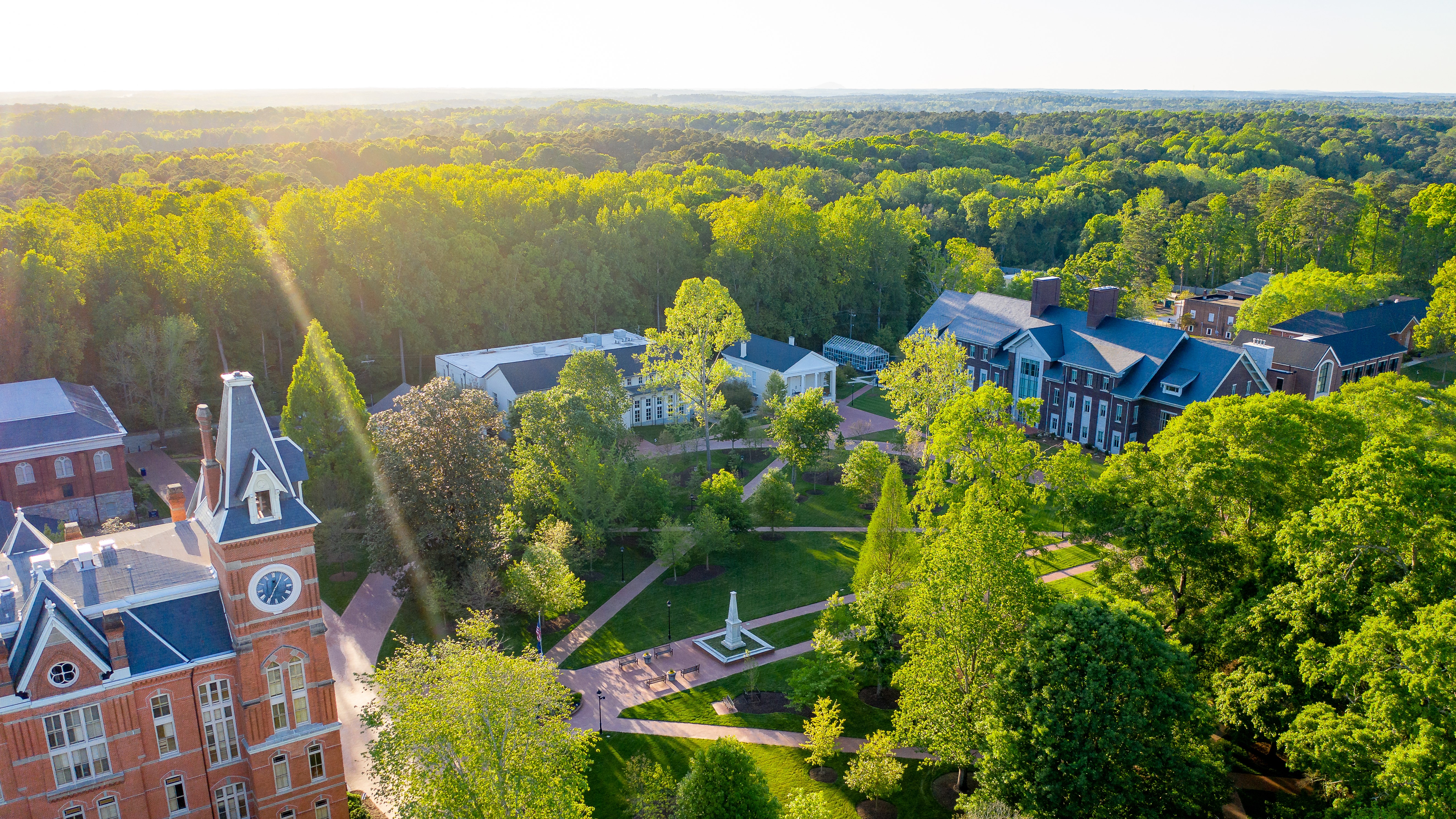
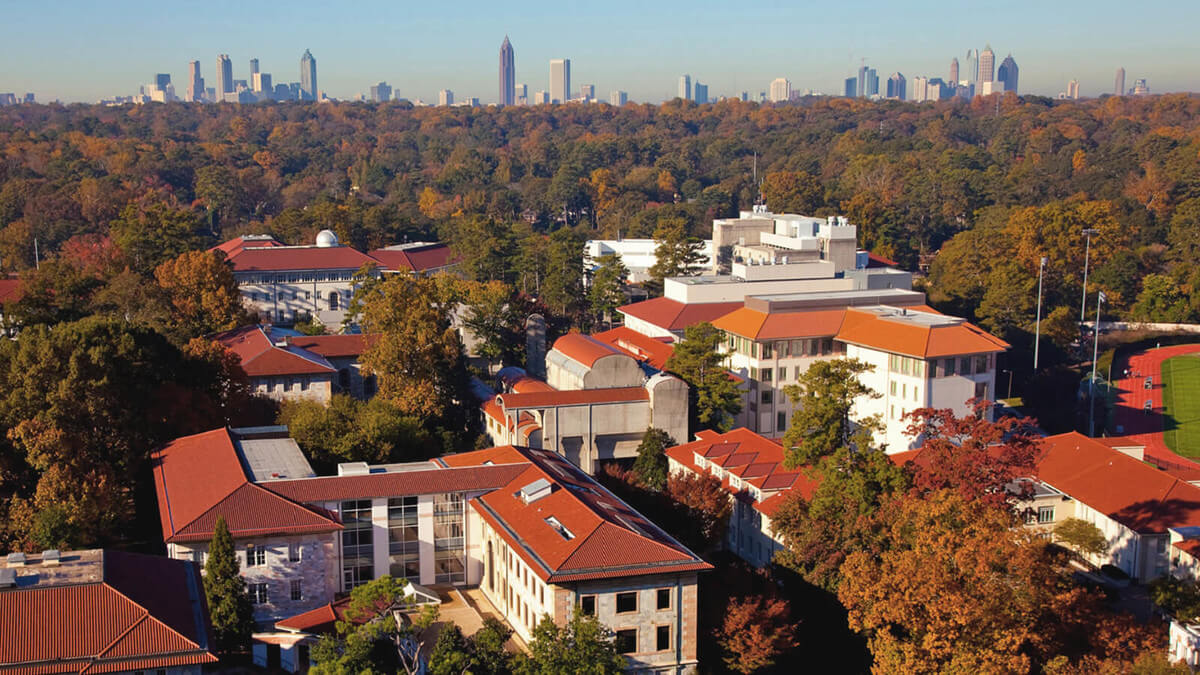
Life on Emory's wooded, suburban Atlanta campus is characterized by a tight-knit, engaged community that students describe as supportive and intellectually vibrant, not dominated by a single, overwhelming social scene. The official campus life ethos aims to catalyze a "distinctive, caring, inquiry-driven, ethically engaged, polycultural, and socially just community." Students report feeling extremely safe, with 91% saying they feel "extremely safe and secure on campus." The university fosters this through a vast array of over 80 student organizations and a focus on campus activities that share "compassion, empathy, and support … food, fun and kindness." The location in Atlanta is a massive perk, offering internships, cultural outlets, and professional connections without the intensity of an urban campus core. The overall vibe, as summed up by students, is one where people are driven but not obsessively competitive, creating a balanced environment where academic rigor coexists with a genuine sense of community.
Emory delivers on the promise of its elite education with strong postgraduate outcomes. The university's six-year graduation rate has consistently hovered around 90%, a mark of its ability to support students through to completion. For the Class of 2022, 92% of graduates were employed or in graduate school within a short time after graduation, and 96% had secured an offer within three months of graduating. Career and Professional Development data shows a consistent "knowledge rate" (the percentage of graduates for whom outcome data is known) in the high 50s to 69% for recent classes, indicating robust tracking. These outcomes are fueled by Emory's strong reputation in healthcare, business, and the liberal arts, and its deep connections in Atlanta and beyond.
Emory has launched one of the most aggressive and generous financial aid initiatives in the country, fundamentally altering its affordability. The cornerstone is the Emory Advantage program. Starting in fall 2026, undergraduate students from families with annual incomes of $200,000 or less will pay $0 in tuition. Furthermore, Emory meets 100% of demonstrated financial need for all first-degree domestic undergraduate students and has eliminated need-based loans from its aid packages, replacing them with institutional grants and scholarships. This is a no-loan policy for all eligible students. For context, before this expansion, the average after aid was reported around $27,392, and about 42-47% of beginning undergraduates received grant or scholarship aid. Emory's aid is need-based, and packages must be renewed annually with updated financial information.
Emory stands out for its powerful and increasingly rare synthesis of attributes. It's a top-tier research university that has preserved a collaborative, almost liberal-arts-college feel within its undergraduate culture. It offers the pre-professional heft of a business and pre-med powerhouse alongside a deep, interdisciplinary liberal arts curriculum. Its Atlanta location provides a dynamic, career-connected urban landscape without sacrificing a cohesive, green campus community. Most decisively, Emory has moved beyond incremental aid improvements to make a monumental statement: with its tuition-free guarantee for families under $200,000 and elimination of need-based loans, it is actively dismantling the financial barrier to elite education. This combination—intellectual rigor without toxic competition, professional opportunity within a broad academic framework, and a revolutionary commitment to accessibility—makes Emory a uniquely compelling and forward-looking choice among the nation's most selective universities.
Emory University seal · sourceDirections and Map | Emory University | Atlanta GA · sourceEmory Main Campus | Emory Continuing Education · sourceEmory University — Admissions, Tuition & Acceptance Rate | Appily · source