Admit rate has ranged 35%–54% over the last 5 years — notably volatile. Source: IPEDS via Urban Institute.
Acceptance & SAT from Common Data Set / IPEDS; net price, earnings & graduation from the U.S. Dept. of Education College Scorecard. Figures lag ~1–2 years — verify with the school.
Hunter College is the public liberal arts powerhouse of the CUNY system, a fiercely pragmatic, high-access institution where the intellectual energy of New York City is the primary campus. Its defining characteristic is a no-frills, high-stakes academic environment where a famously diverse student body—commuters, career-changers, first-generation scholars—pursues over 100 majors, from its renowned nursing and education programs to standout psychology and political science departments, all for a net price that makes it one of the most consequential engines of social mobility in the country.
Admission requirements
Test-blind — scores not considered
Required
High school transcript
Grade point average
College-prep program
TOEFL (non-native English)
Source: IPEDS Admissions survey (2022) via Urban Institute. Covers formal factors only — it does not reflect essays, extracurriculars, or other holistic criteria.
More details
Undergrad enrollment
16,289
In-state tuition
$7,382
Out-of-state tuition
$15,332
Graduation Rate
57%
Most Popular Major
Psychology, General
Median Earnings (10yr)
$63,163
Student Body Receiving Financial Support
74%
Outcomes & value
Outcomes & value
Median earnings (10 yr)
$63,163
Value (earnings ÷ net price)
21.2×
Median debt at graduation
$11,000
Graduation rate
57%
First-year retention
78%
Reducing loan balance (3 yr)
57%
Pell (lower-income) share
56%
First-gen share (among federal-aid recipients)
47%
Top-earning majors
Median earnings by field of study (highest credential), ~2 years after completion.
Registered Nursing, Nursing Administration, Nursing Research and Clinical Nursing$94,255
Computer Science$56,415
Clinical/Medical Laboratory Science/Research and Allied Professions$55,693
Teacher Education and Professional Development, Specific Subject Areas$55,286
Mathematics$40,485
Public Health
Applicants here also applied to
The schools that most often appear alongside CUNY Hunter College on applicants’ lists, from our self-reported outcomes corpus.
Co-application frequency from self-reported results — directional peer discovery, not a recommendation.
Campus & location
Campus safety
On-campus violent crimes (2024)
0
Per 1,000 students
0.00
On-campus criminal offenses classed as violent (murder/non-negligent manslaughter, rape, robbery, aggravated assault) for the most recent reported year. Source: U.S. Dept. of Education Campus Safety and Security (Clery Act). Counts reflect what’s reported to the school, and urban campuses often report more partly due to non-student incidents nearby — read alongside campus size and setting, not as a standalone safety verdict.
Climate
Pleasant days / yr
89
Summer high
83°F
Winter low
29°F
Annual rain
53.2"
Annual snow
17.8"
Natural-hazard risk
Relatively High
Pleasant days counts days per year with a mean temperature of 55–75°F, a high at or below 90°F, a low at or above 45°F, and little precipitation — a transparent comfort measure, not a weighting we invented. Computed from Open-Meteo ERA5 daily history (2019–2023). Natural-hazard risk is the county’s composite rating from the FEMA National Risk Index.
Deep dive — research, future-scholar output & economic mobility▾
Economic mobility
Mobility rate
7.5%
Bottom → top quintile
36%
From bottom quintile
21%
Mobility rate = the share of students who both start in the bottom household-income quintile and reach the top quintile; bottom → top is that chance conditional on starting at the bottom. Source: Opportunity Insights Mobility Report Cards (Chetty, Friedman, Saez, Turner & Yagan). Reflects 1980–82 birth cohorts, so it’s directional, not current.
Quick answers
What is the acceptance rate at CUNY Hunter College?
CUNY Hunter College's acceptance rate is approximately 54% (New York, NY), based on the most recent figures we compiled from public and primary sources.
What SAT score do you need for CUNY Hunter College?
Admitted students at CUNY Hunter College typically score 1100–1420 on the SAT (the middle-50% range). Scores outside this band are still admitted, especially with strong applications.
How much does CUNY Hunter College cost?
At CUNY Hunter College, the average net price (after aid) is about $2,984 per year. Actual cost varies with financial aid and residency.
How many undergraduates attend CUNY Hunter College?
CUNY Hunter College enrolls approximately 16,289 undergraduate students.
Where is CUNY Hunter College located?
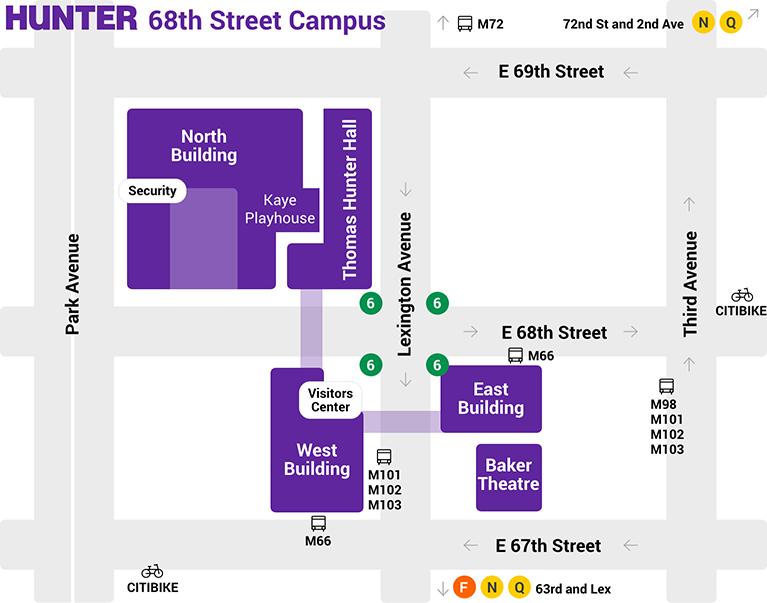
CUNY Hunter College is located in New York, NY.
Admissions
Hunter College is a selective but accessible public institution, admitting just over half of its applicants. The process is straightforward and numbers-driven, with a focus on academic preparation over extracurricular polish. For the Fall 2022 and Spring 2023 semesters, the college explicitly stated it would not utilize the SAT or ACT for admission review, a policy that may reflect a broader, trend. While the exact weight of factors like class rank, GPA, and application essays isn't detailed in the provided sources, the admissions rate suggests a process that is "fairly competitive" but far from the hyper-selective frenzy of private elites. The rate—the percentage of admitted students who enroll—is notably low, reported at 16.7%, which is typical for urban commuter schools where students are often weighing multiple affordable options. There is no mention of an Early Decision program in the sources, indicating admissions are likely conducted on a regular decision basis.
Earnings = median of students working ~10 years after entry; debt = median of graduates. Value divides 10-yr earnings by one year’s net price — read it as earnings per dollar of annual cost, not a full lifetime ROI; it favors lower-cost schools. Source: U.S. Dept. of Education College Scorecard. Figures lag ~2 years and reflect all students, not your intended major.
$39,585
Economics$39,523
Accounting and Related Services$38,559
Source: U.S. Dept. of Education College Scorecard (field-of-study earnings). Figures cover graduates who received federal aid and lag ~2 years; not all programs report data.
Hunter's academic identity is defined by its staggering breadth and several standout, professionally-oriented departments. The college offers more than 100 fields of study, covering everything from adolescence education and anthropology to nursing, urban affairs, women’s studies, and Arabic. The most popular majors reflect both pre-professional tracks and classic liberal arts: Psychology, General; Human Biology; Computer Science; Biology/Biological Sciences, General; and Sociology. Psychology is far and away the leader, with the college awarding about 591 degrees in that subject annually. Student reviews highlight "great" programs in nursing, psychology, political science, and education, suggesting these are areas of particular strength and student satisfaction. The curriculum is comprehensive, but the vibe is intensely practical—this is a place where students are often building careers while they earn degrees.
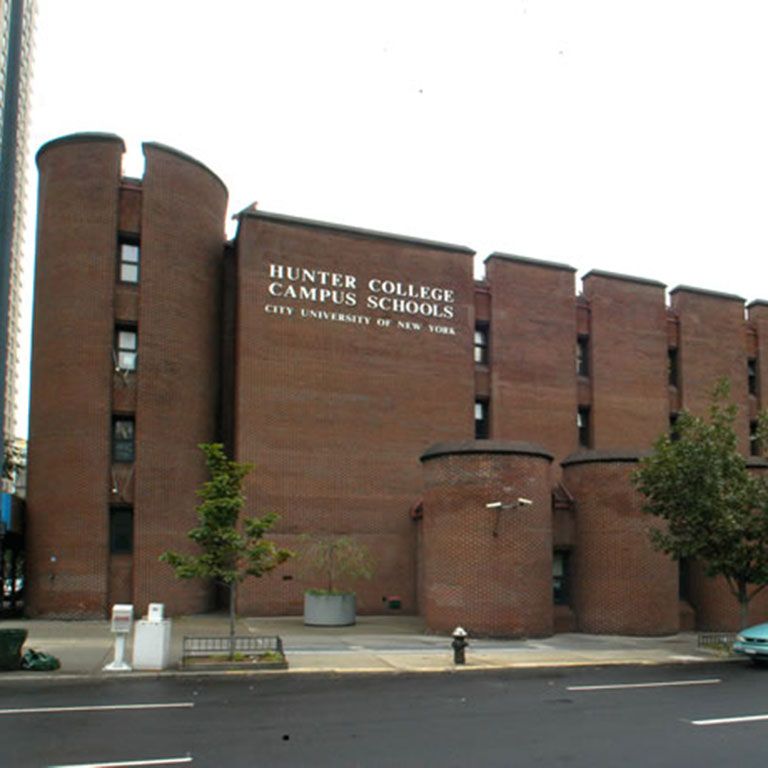
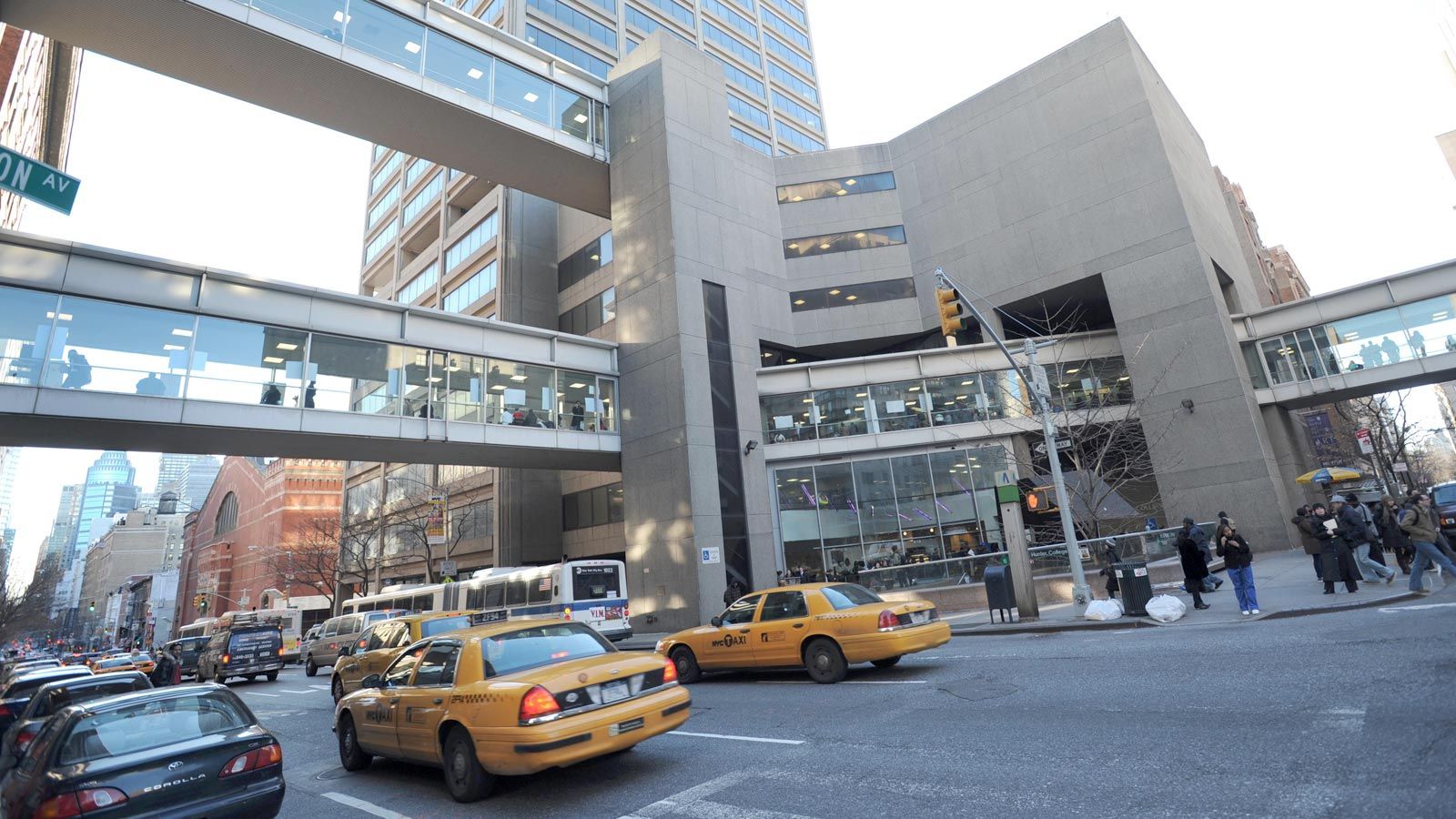
Life at Hunter is unequivocally that of a commuter school in the heart of Manhattan. The campus itself is described as crowded, and students openly question the social scene on platforms like Reddit. The official college materials promote participation in athletics, student organizations, visual and performing arts, and volunteering, and there is a diverse array of student clubs focused on academics, careers, culture, arts, faith, advocacy, and community. Niche reviews note that students feel comfortable on campus and appreciate the college's diversity and acceptance, with no widespread reports of safety issues. However, the social fabric is largely self-constructed; the city of New York serves as the primary quad, dining hall, and student union. For those who seek it out, there is organized campus life, but the default experience is one of autonomy, where students flow in for classes and often out to jobs, internships, and the city's infinite offerings.
Hunter College delivers solid, life-changing returns on a minimal investment. The graduation rate is a point of focus, with sources reporting figures between 56.9% and 61%, placing it in the average range for similar institutions. The real story is in post-graduate earnings. According to the College Scorecard, the median earnings 10 years after entry are strong for a public institution. Other sources report graduates earning a median salary of $50,414, with earnings five years after graduation reaching $70,493 per year. One year out, graduates report earnings of $46,228. These figures underscore Hunter's role as a launchpad into the New York professional world, particularly in fields like healthcare, education, public service, and the sciences. The average debt at graduation is reported as $12,907, a fraction of the national average, making the financial risk low and the potential payoff significant.
This is where Hunter College makes its most powerful argument. The average after aid is remarkably low, positioning Hunter as one of the most affordable four-year degrees in a major American city. A vast majority (74%) of Hunter students receive some form of financial support. is central, with students eligible for federal and state aid, Pell grants, and work-study. The average aid package awarded is $5,917, with the average need-based scholarship or grant award at $9,245. There is no indication in the provided sources of a "no-loan" policy or a guarantee to meet full financial need; aid appears to be a mix of grants, scholarships, and federal loans. The financial aid office emphasizes that students do not have to be registered full-time to receive aid, a crucial flexibility for its working student population. The overarching message is clear: Hunter is committed to making college financially possible, leveraging public funding to keep costs down for its predominantly New York student body.
Hunter College stands out not for manicured quads or rah-rah spirit, but for its raw, uncompromising value proposition: a rigorous, comprehensive education in the epicenter of global culture at a cost that doesn't require a lifetime of debt. It is the archetypal New York City school—unsentimental, diverse, demanding, and endlessly resourceful. Its strengths are the strengths of the city itself: world-class faculty drawn to the intellectual capital, professional networks embedded in every industry, and a student body that brings a staggering array of life experiences into the classroom. The popular majors in psychology, nursing, and education point to its mission of producing the city's essential workers—the therapists, nurses, teachers, and civil servants who make New York run. For the self-directed, ambitious student who sees college as a means to an end rather than a four-year retreat, Hunter offers an unparalleled opportunity to engage with academia while building a real life in the real world. It is, in the best sense, a factory for the professional middle class.
CUNY Hunter College seal · source68th Street Campus Map | Hunter College · sourceOur Campus | Hunter College · sourceContact Us | Hunter College · source