Admit rate has ranged 38%–44% over the last 5 years. Source: IPEDS via Urban Institute.
Acceptance & SAT from Common Data Set / IPEDS; net price, earnings & graduation from the U.S. Dept. of Education College Scorecard. Figures lag ~1–2 years — verify with the school.
Binghamton University is the crown jewel of New York's public university system, a research powerhouse with the competitive edge and intellectual intensity of a private school. Known for its fiercely driven student body, a campus culture that swings from rigorous academics to raucous weekend parties, and a stunning return on investment, Binghamton delivers a high-octane, high-value education that punches far above its public-school weight.
Admission requirements
Test-optional — scores considered if submitted
Required
High school transcript
Grade point average
Letters of recommendation
TOEFL (non-native English)
Considered (not required)
Test scores (SAT/ACT)
College-prep program
Demonstrated competencies
Source: IPEDS Admissions survey (2022) via Urban Institute. Covers formal factors only — it does not reflect essays, extracurriculars, or other holistic criteria.
More details
Undergrad enrollment
14,655
In-state tuition
$10,567
Out-of-state tuition
$30,447
No-Loan Policy
No
Graduation Rate
82%
Meets Full Need
No policy stated
ED Share of Class
Data not in provided sources
Early Action Offered
Yes (Non-binding)
First-Year Retention
Data not in provided sources
Demonstrated Interest
Not considered
Median Earnings (10yr)
$80,596
Outcomes & value
Outcomes & value
Median earnings (10 yr)
$80,596
Value (earnings ÷ net price)
3.7×
Median debt at graduation
$18,500
Graduation rate
82%
First-year retention
89%
Reducing loan balance (3 yr)
76%
Pell (lower-income) share
28%
First-gen share (among federal-aid recipients)
25%
Top-earning majors
Median earnings by field of study (highest credential), ~2 years after completion.
Computer Science$75,921
Management Information Systems and Services$73,949
Computer Engineering$72,214
Registered Nursing, Nursing Administration, Nursing Research and Clinical Nursing$69,775
Electrical, Electronics, and Communications Engineering$69,002
Industrial Engineering
Applicants here also applied to
The schools that most often appear alongside Binghamton on applicants’ lists, from our self-reported outcomes corpus.
Co-application frequency from self-reported results — directional peer discovery, not a recommendation.
Campus & location
Campus safety
On-campus violent crimes (2024)
24
Per 1,000 students
1.28
On-campus criminal offenses classed as violent (murder/non-negligent manslaughter, rape, robbery, aggravated assault) for the most recent reported year. Source: U.S. Dept. of Education Campus Safety and Security (Clery Act). Counts reflect what’s reported to the school, and urban campuses often report more partly due to non-student incidents nearby — read alongside campus size and setting, not as a standalone safety verdict.
Climate
Pleasant days / yr
95
Summer high
78°F
Winter low
21°F
Annual rain
45.5"
Annual snow
45.5"
Natural-hazard risk
Relatively Moderate
Pleasant days counts days per year with a mean temperature of 55–75°F, a high at or below 90°F, a low at or above 45°F, and little precipitation — a transparent comfort measure, not a weighting we invented. Computed from Open-Meteo ERA5 daily history (2019–2023). Natural-hazard risk is the county’s composite rating from the FEMA National Risk Index.
Deep dive — research, future-scholar output & economic mobility▾
Research output
Institutional h-index
413
Scholarly works
38,457
Institutional research volume and impact from OpenAlex. The h-index reflects large research universities and will be low for teaching-focused liberal-arts colleges — not a measure of undergraduate quality.
Economic mobility
Mobility rate
5.1%
Bottom → top quintile
54%
From bottom quintile
9%
Mobility rate = the share of students who both start in the bottom household-income quintile and reach the top quintile; bottom → top is that chance conditional on starting at the bottom. Source: Opportunity Insights Mobility Report Cards (Chetty, Friedman, Saez, Turner & Yagan). Reflects 1980–82 birth cohorts, so it’s directional, not current.
Quick answers
What is the acceptance rate at Binghamton University?
Binghamton University's acceptance rate is approximately 39% (Vestal, NY), based on the most recent figures we compiled from public and primary sources.
What SAT score do you need for Binghamton University?
Admitted students at Binghamton University typically score 1340–1500 on the SAT (the middle-50% range). Scores outside this band are still admitted, especially with strong applications.
How much does Binghamton University cost?
At Binghamton University, the average net price (after aid) is about $21,620 per year. Actual cost varies with financial aid and residency.
How many undergraduates attend Binghamton University?
Binghamton University enrolls approximately 14,655 undergraduate students.
Where is Binghamton University located?
Binghamton University is located in Vestal, NY.
Admissions
Getting into Binghamton is a competitive proposition, a reality that has intensified in recent years as its reputation has soared. The university is selective, with a significant portion of its class coming from within New York State. The admissions process is holistic, weighing academic rigor above all else. The indicates that the rigor of a student's secondary school record is considered "very important," while factors like class rank, GPA, standardized test scores, and the application essay are rated as "important." Notably, demonstrated interest is not considered in the admissions process. The university offers an Early Action plan, which is non-binding. For the most recent class, the mid-50% range for high school GPA was 3.3–3.8, and for those who submitted scores, the SAT middle 50% was 1300–1450. However, the rate—the percentage of admitted students who choose to enroll—is a telling metric of its appeal; recent data suggests a yield around 18%, meaning Binghamton is often competing with, and losing students to, top-tier private institutions and flagship publics from other states. The sentiment on student forums echoes this selectivity, with reports of high schools being "ravaged by rejections/waitlists" even for strong applicants.
Earnings = median of students working ~10 years after entry; debt = median of graduates. Value divides 10-yr earnings by one year’s net price — read it as earnings per dollar of annual cost, not a full lifetime ROI; it favors lower-cost schools. Source: U.S. Dept. of Education College Scorecard. Figures lag ~2 years and reflect all students, not your intended major.
$63,430
Finance and Financial Management Services$63,005
Accounting and Related Services$60,325
Source: U.S. Dept. of Education College Scorecard (field-of-study earnings). Figures cover graduates who received federal aid and lag ~2 years; not all programs report data.
Binghamton's academic engine is Harpur College of Arts and Sciences, the liberal arts core around which the university's specialized schools of Management, Nursing, Engineering, and Community and Public Affairs orbit. The faculty is a point of pride: 93% hold the highest terminal degree in their field, and the roster includes more than 60 distinguished professors. This scholarly heft supports over 130 academic programs. The most popular majors reflect a blend of pre-professional ambition and deep inquiry: Biology, Psychology, Neuroscience, and Economics consistently top the list. The academic culture is known for its intensity. As one student noted on Reddit, "there is a diversity of academic ability at Binghamton," but the workload and expectations are significant, especially in specialized and STEM fields. The English department, for example, offers comprehensive study with noted strengths in creative writing, critical theory, and postcolonial studies. This creates an environment where students are often described as "career-focused" and highly motivated, treating their education as a direct pathway to high-impact careers or top graduate programs.
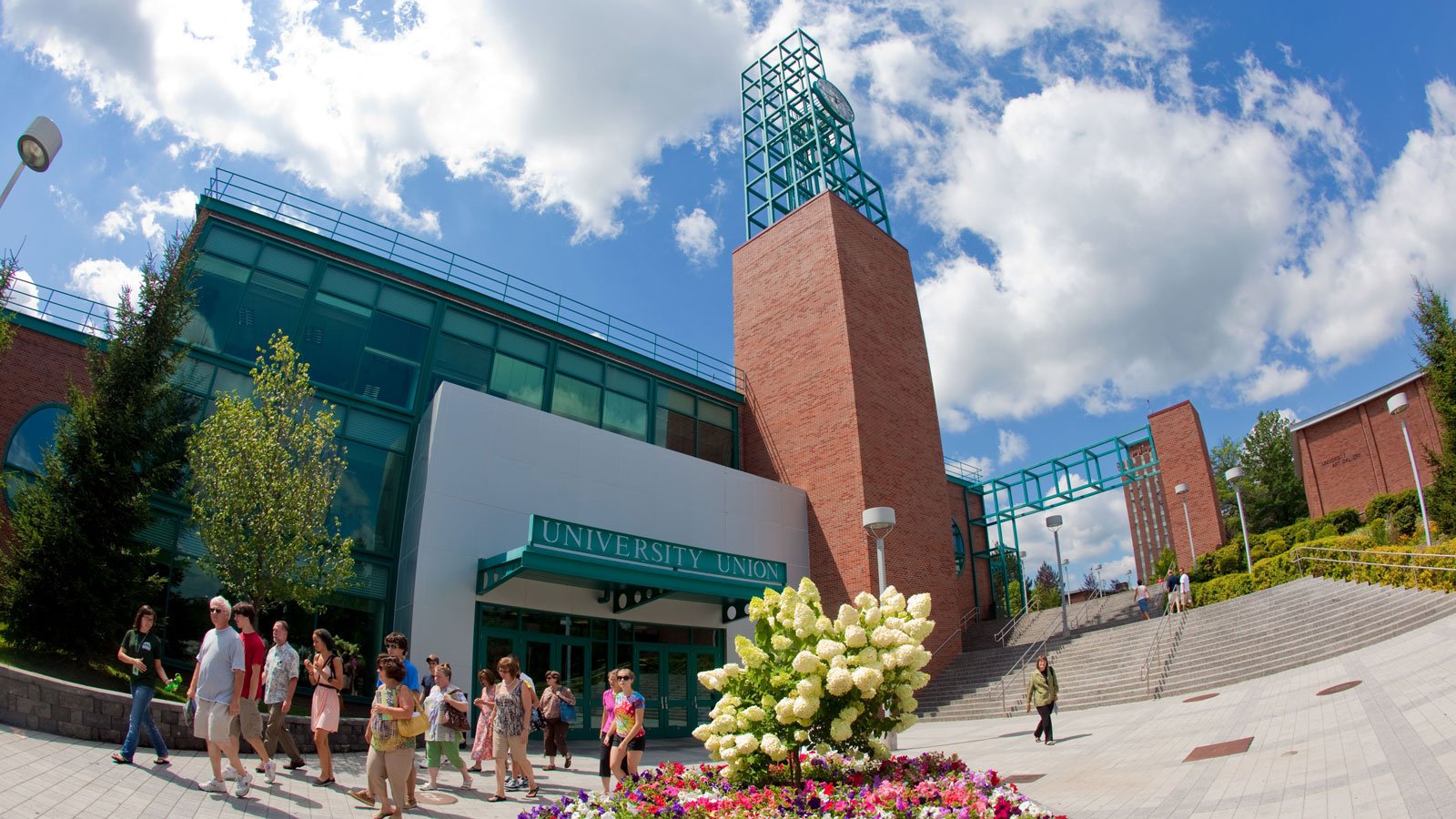
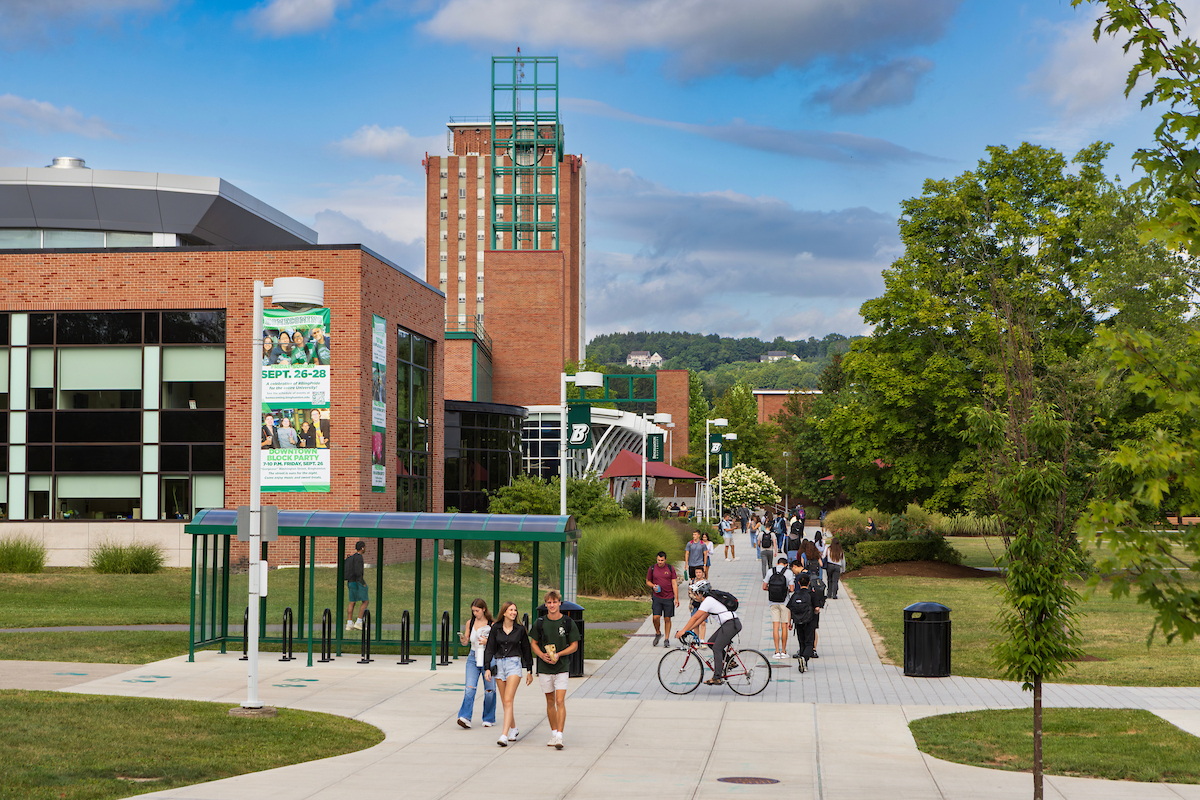
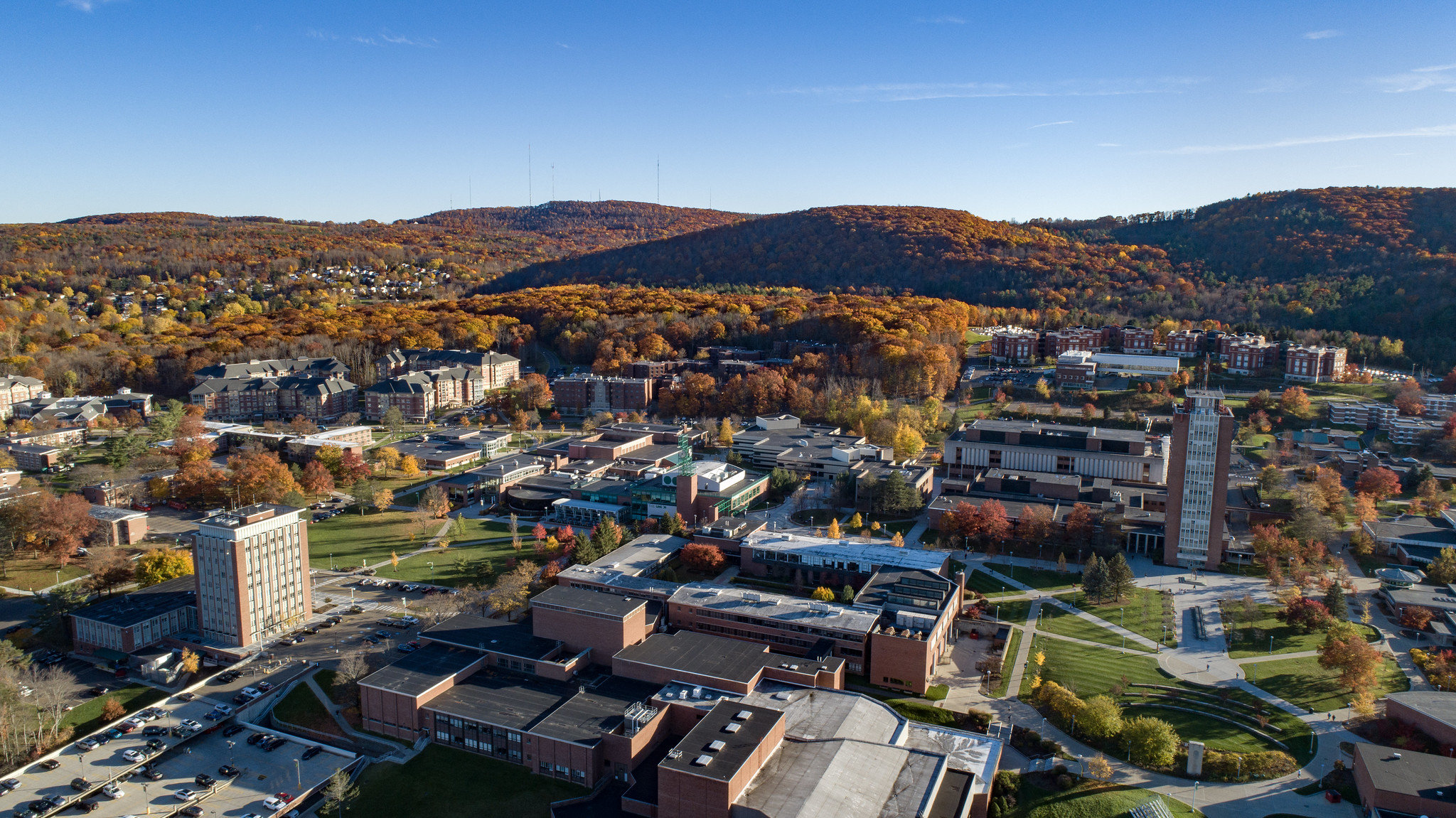
Life at Binghamton is defined by a distinct, almost tribal, residential community system and a social scene with a notorious reputation. The campus is organized into six unique residential communities—each with its own dining hall, quad, traditions, and student government. This structure fosters strong initial bonds but can also create self-contained social bubbles. The weekend social life is legendary. According to Niche student polls, about 50% report "lots of options Wednesday-Saturday," while 12% say there are "tons of raging parties almost any night of the week." The party culture, heavily centered around fraternities and off-campus houses, is a dominant feature. Students describe a clear dichotomy: intense focus on academics during the week, followed by a release on weekends. The location in Vestal, a suburb of the small city of Binghamton, means that while there are some downtown bars, restaurants, and events, the campus itself is the primary hub of activity. Students fill their time with over 300 clubs, NCAA Division I athletics (the Bearcats), and a steady stream of performances and events, but the overarching vibe is one of a self-sufficient, spirited, and sometimes rowdy campus community where you have to actively seek out your niche.
This is where the Binghamton value proposition crystallizes. The university boasts exceptionally strong outcomes that rival those of far more expensive private colleges. Within six months of graduation, 88.2% of graduates are employed or enrolled in graduate school. For those employed full-time, the average starting salary is a robust $79,486. The university's graduation rate is a key indicator of student success and institutional support, placing it in the top tier nationally for public universities. Binghamton graduates are highly sought after; the Fleishman Career Center reports that employers actively recruit on campus, and the university claims a 14% higher law school for its graduates compared to the national average. The data paints a clear picture: students come for the academic rigor and public-school price, and leave with a degree that commands immediate respect in the job market and opens doors to elite professional and graduate schools.
As a public university, Binghamton's sticker price presents a significant value, especially for in-state students. The —the average cost after grants and scholarships are applied—is where the real advantage lies. Financial aid is primarily need-based, awarded in the form of grants, loans, and work-study. The university states that most assistance is awarded based on demonstrated financial need. It is important to note that Binghamton does not have a "no-loan" policy; federal direct loans, both subsidized (need-based) and unsubsidized (non-need-based), are part of the aid package for many students. All students are encouraged to use the Net Price Calculator for a personalized estimate. The overarching financial narrative is one of accessibility: a top-tier education is delivered at a public-university cost, with aid available to bridge the gap for those who qualify, making a high-outcome degree attainable without crippling private-school debt.
Binghamton University stands out because it masterfully occupies a rare sweet spot in American higher education. It delivers the academic prestige, competitive admissions, and career outcomes typically associated with elite private universities, but packages it within the accessible framework and spirited campus culture of a public flagship. It's a place where ambitious, pragmatic students converge—those who want the intense, pre-professional focus and high earning potential without the Ivy League price tag or pretension. The culture is a defining paradox: fiercely intellectual yet unabashedly social, where library marathons and fraternity parties exist in the same weekly rhythm. This combination creates graduates who are both exceptionally prepared and authentically grounded. In a landscape of skyrocketing tuition, Binghamton remains a beacon of high return on investment, proving that a public institution can not only compete with the privates but often beat them at their own game by producing graduates who are ready to work, lead, and succeed from day one.
Binghamton University seal · sourceBinghamton University named one of the nation's best colleges by U.S. News & World Report - Binghamton News · sourceBinghamton University - SUNY · sourceBinghamton University Virtual Campus Experience · source