Admit rate has ranged 15%–24% over the last 5 years — notably volatile, though the latest figure above (13%) falls outside that window. Source: IPEDS via Urban Institute.
Acceptance & SAT from Common Data Set / IPEDS; net price, earnings & graduation from the U.S. Dept. of Education College Scorecard. Figures lag ~1–2 years — verify with the school.
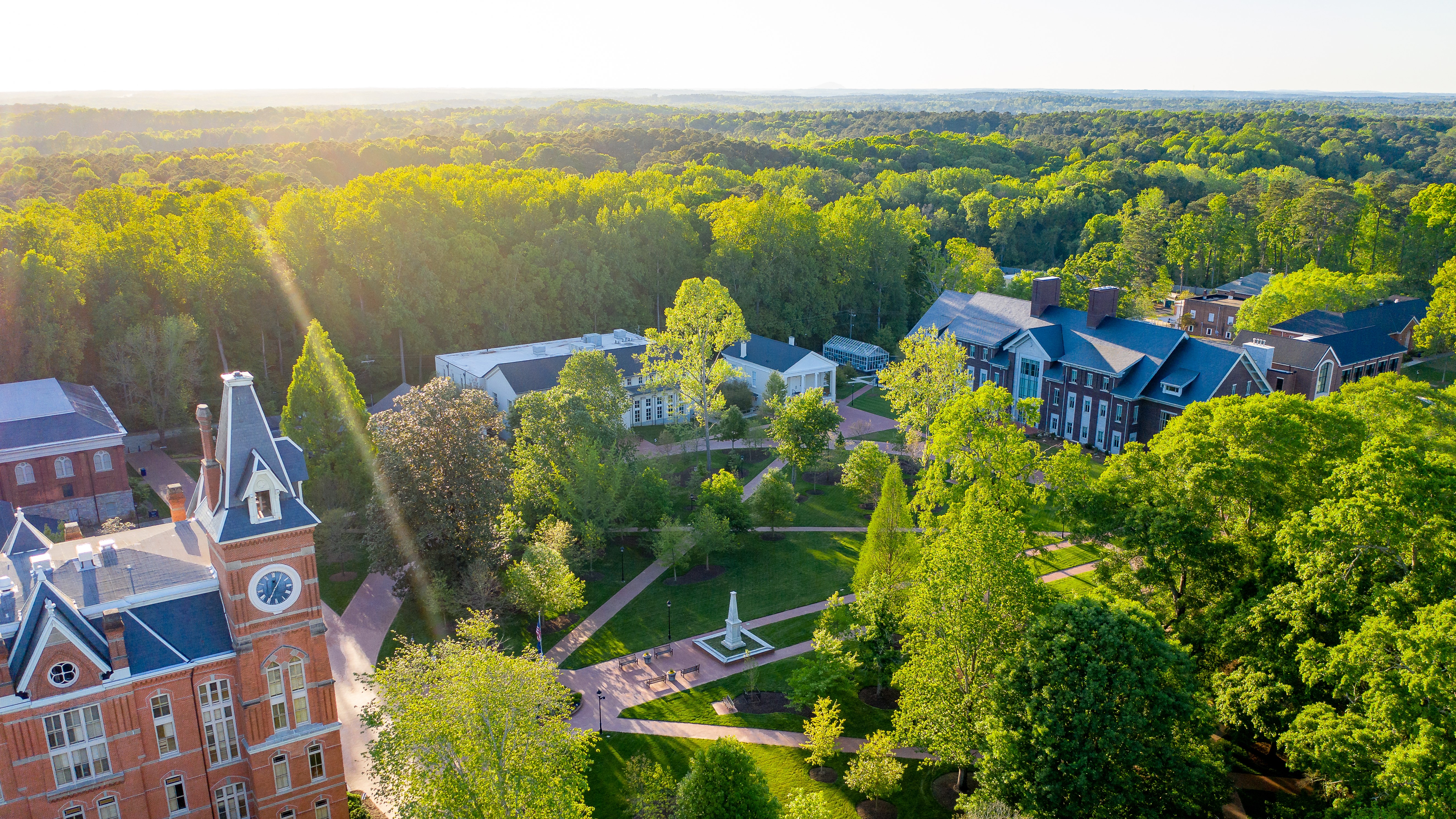
Emory University-Oxford College is not a backdoor; it's a deliberate, high-stakes academic choice. This intimate, two-year liberal arts campus in Oxford, Georgia, offers a uniquely rigorous and community-focused launchpad for an Emory degree, where students are known by name and taught in small classes before transitioning to the Atlanta campus. It's for the student who wants the resources of a top-tier research university but craves the intense, supportive incubation of a small college first—a path that yields some of Emory's most impressive graduation rates and a distinct, values-driven campus culture.
Admission requirements
Test-optional — scores considered if submitted
Required
High school transcript
Considered (not required)
Class rank
Letters of recommendation
Test scores (SAT/ACT)
College-prep program
Demonstrated competencies
TOEFL (non-native English)
Source: IPEDS Admissions survey (2022) via Urban Institute. Covers formal factors only — it does not reflect essays, extracurriculars, or other holistic criteria.
More details
Undergrad enrollment
967
In-state tuition
$64,280
Out-of-state tuition
$64,280
No-Loan Policy
Yes, for qualifying students
Graduation Rate
95%
Meets Full Need
Yes
First-Year Retention
Data not provided in sources
Demonstrated Interest
Not considered
Student-Faculty Ratio
10:1
Median Earnings (10yr)
$80,137
Outcomes & value
Outcomes & value
Median earnings (10 yr)
$80,137
Value (earnings ÷ net price)
2.1×
Median debt at graduation
$18,250
Reducing loan balance (3 yr)
80%
Pell (lower-income) share
16%
First-gen share (among federal-aid recipients)
16%
Earnings = median of students working ~10 years after entry; debt = median of graduates. Value divides 10-yr earnings by one year’s net price — read it as earnings per dollar of annual cost, not a full lifetime ROI; it favors lower-cost schools. Source: U.S. Dept. of Education College Scorecard. Figures lag ~2 years and reflect all students, not your intended major.
Applicants here also applied to
The schools that most often appear alongside Emory University-Oxford College on applicants’ lists, from our self-reported outcomes corpus.
On-campus criminal offenses classed as violent (murder/non-negligent manslaughter, rape, robbery, aggravated assault) for the most recent reported year. Source: U.S. Dept. of Education Campus Safety and Security (Clery Act). Counts reflect what’s reported to the school, and urban campuses often report more partly due to non-student incidents nearby — read alongside campus size and setting, not as a standalone safety verdict.
Climate
Pleasant days / yr
104
Summer high
87°F
Winter low
40°F
Annual rain
60.9"
Annual snow
0.7"
Natural-hazard risk
Relatively Low
Pleasant days counts days per year with a mean temperature of 55–75°F, a high at or below 90°F, a low at or above 45°F, and little precipitation — a transparent comfort measure, not a weighting we invented. Computed from Open-Meteo ERA5 daily history (2019–2023). Natural-hazard risk is the county’s composite rating from the FEMA National Risk Index.
Quick answers
What is the acceptance rate at Emory University-Oxford College?
Emory University-Oxford College's acceptance rate is approximately 13% (Oxford, GA), based on the most recent figures we compiled from public and primary sources.
What SAT score do you need for Emory University-Oxford College?
Admitted students at Emory University-Oxford College typically score 1470–1550 on the SAT (the middle-50% range). Scores outside this band are still admitted, especially with strong applications.
How much does Emory University-Oxford College cost?
At Emory University-Oxford College, the average net price (after aid) is about $37,920 per year. Actual cost varies with financial aid and residency.
How many undergraduates attend Emory University-Oxford College?
Emory University-Oxford College enrolls approximately 967 undergraduate students.
Where is Emory University-Oxford College located?
Emory University-Oxford College is located in Oxford, GA.
Admissions
Gaining admission to Oxford College is a selective endeavor, with the institution's often cited around 13%. The process is holistic, with a high school diploma required (though the stance on accepting a GED appears to vary between reporting years in s). Applicants are academically strong, with the middle 50% SAT range for admitted students typically between 1470 and 1550. Emory University's overall admissions data shows an acceptance rate that can fluctuate; for the Class of 2029, the overall rate across all admission rounds was reported at 14.95%. The university offers Early Decision (ED) plans, which can be a strategic advantage: the Early Decision I acceptance rate for both Emory College and Oxford College was 30.05%, while the Oxford College ED II rate was notably lower at 11%. Demonstrated interest is officially listed as "not considered" in the Common Data Set, meaning campus visits or contact with admissions officers are not factored into decisions. The rate—the percentage of admitted students who enroll—for Emory University overall has been reported at roughly 37.3%.
Oxford’s academic model is its defining feature: two years of intensive liberal arts foundation on a small, dedicated campus, followed by a guaranteed transition to Emory’s Atlanta campus to complete one of 80+ majors or 60+ minors. This isn't a separate curriculum but the first half of an Emory degree, designed to provide a "well-rounded liberal arts background from one of the best colleges in the US." The college prides itself on an innovative curriculum that emphasizes active learning and teaching innovation, fostering a reputation for academic rigor. The intimate scale is paramount, with a student-faculty ratio of 10:1 ensuring close mentorship and engagement. The program prepares students for an "ever-changing, complex, and diverse world," giving them a "great beginning" before they leverage the full breadth of Emory University's resources, including its engineering and nursing programs, in Atlanta.
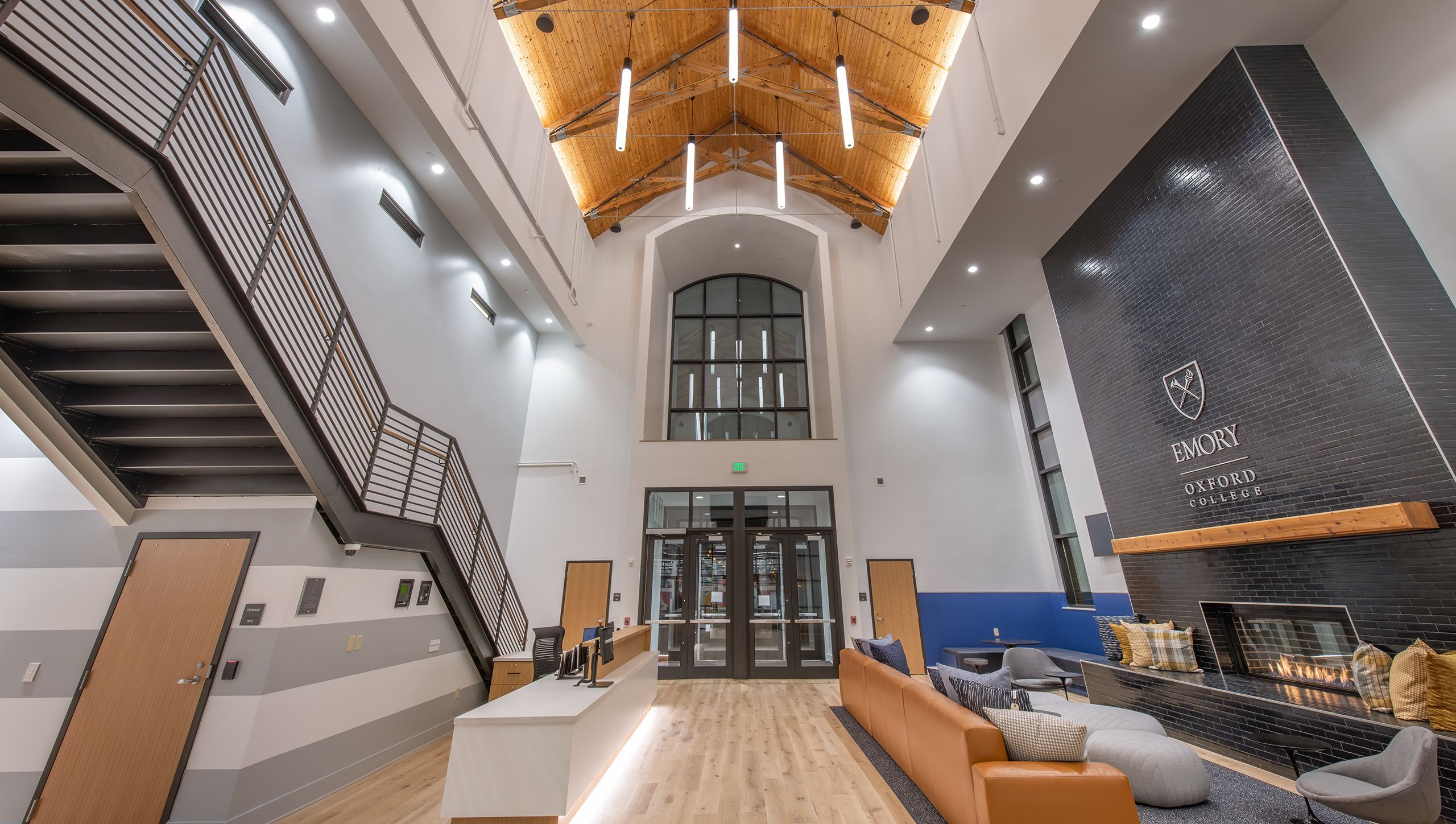
Life on the Oxford campus is deliberately crafted around community, care, and connection. Described as "vibrant," campus life is structured to welcome students "with intention, care, and joy." The social scene is often characterized as more focused on academics and close-knit relationships than a large party culture, with students noted as being "a lot more invested in school and dedicated to working." This atmosphere is underpinned by formalized "Oxford Principles"—belonging, care, accountability, and others—adopted to inspire the campus atmosphere and engagement. A slate of long-standing traditions reinforces this, designed to show that "student well-being is taken seriously, and community care is built into campus life." Students have access to health and wellness services, housing and dining, diversity and international student offices, and leadership and service opportunities. Cultural connection is fostered through student organizations listed on The Hub @ Emory, and the Campus Life team actively promotes a philosophy that "your voice matters, and your potential takes flight."
The Oxford pathway is engineered for success, and the outcomes data bears this out spectacularly. Graduation rates are exceptionally high. Oxford College's graduation rates for first-time, full-time students exceed an 85% threshold, with specific cohorts graduating at a 95.3% rate. External analyses place the overall graduation rate at 95%, ranking it in the top 5% nationally, with detailed sector reports showing a 93.62% rate for Oxford itself. This success translates directly to the Emory degree; after their two years at Oxford, students transition to Atlanta and graduate as Emory University alumni. The institutional focus on student achievement is explicit, with these high graduation rates serving as a key metric of success.
Emory University, which includes Oxford College, has made significant commitments to affordability through a robust financial aid program. The university meets 100% of demonstrated financial need for all domestic undergraduate students. Crucially, Emory has a notable "no-loan" policy for qualifying students, meaning financial need is met with grants and scholarships instead of loans. A landmark program announced in 2022 makes Emory tuition-free for students from families with annual incomes of $200,000 or less. For those receiving aid, the average grant or scholarship awarded is $61,922. The —the actual cost after grants and scholarships—varies by family income; for example, students with incomes between $30K and $48K may pay around $17,909. Aid is renewable, provided students maintain good academic standing with a GPA of 2.0 or greater and continue to demonstrate financial need.
Oxford College stands out not as a consolation prize, but as a purposeful and potent alternative within elite higher education. It uniquely synthesizes two seemingly contradictory experiences: the immersive, relationship-driven foundation of a premier liberal arts college and the boundless opportunity of a major research university. The academic intensity is legendary, with a culture that prizes "innovation in teaching and active learning" in small classes. This rigor is seamlessly coupled with an institutional ethos of radical support, codified in its Principles of Belonging and Care. The result is a launchpad of remarkable efficiency—students are known, challenged, and supported in a way that produces near-perfect graduation rates and a seamless transition to the broader Emory universe. For the student who thrives on close mentorship and a cohesive community but has ambitions that demand the resources of Emory, Oxford is not a backdoor; it's a bespoke entrance.
Emory University-Oxford College seal · sourceDirections and Map | Emory University | Atlanta GA · sourceOxford Campus | Emory University | Atlanta GA · sourceOxford College opens new student center · source