Admit rate has ranged 4%–7% over the last 5 years. Source: IPEDS via Urban Institute.
Acceptance & SAT from Common Data Set / IPEDS; net price, earnings & graduation from the U.S. Dept. of Education College Scorecard. Figures lag ~1–2 years — verify with the school.
Columbia University is not just an Ivy League school; it's a New York City institution where the Core Curriculum's great books meet the world's most dynamic urban laboratory. The result is an undergraduate experience of relentless intellectual intensity, where students debate Plato in the morning and intern on Wall Street in the afternoon, all within the gated oasis of Morningside Heights. It attracts a certain kind of student: fiercely ambitious, intellectually omnivorous, and unafraid of the pressure-cooker environment that comes with its 4% acceptance rate and sky-high post-graduate outcomes.
Admission requirements
Test-optional — scores considered if submitted
Required
High school transcript
Grade point average
Class rank
Letters of recommendation
College-prep program
Considered (not required)
Test scores (SAT/ACT)
Demonstrated competencies
TOEFL (non-native English)
Source: IPEDS Admissions survey (2022) via Urban Institute. Covers formal factors only — it does not reflect essays, extracurriculars, or other holistic criteria.
More details
Undergrad enrollment
8,973
In-state tuition
$71,845
Out-of-state tuition
$71,845
No-Loan Policy
Yes, for families with incomes < $66,000
Graduation Rate
96%
Meets Full Need
Yes, for all admitted students (domestic & international)
Demonstrated Interest
Not considered
Median Earnings (10yr)
$102,491
First-Year Students Receiving Aid
49.24%
Post-Grad Employment/Grad School Rate
86.9%
Outcomes & value
Outcomes & value
Median earnings (10 yr)
$102,491
Value (earnings ÷ net price)
4.7×
Median debt at graduation
$21,500
Graduation rate
96%
First-year retention
98%
Reducing loan balance (3 yr)
76%
Pell (lower-income) share
23%
First-gen share (among federal-aid recipients)
25%
Financial health
2.7 / 3.0Meets the federal financial-responsibility standard
U.S. Dept. of Education Financial Responsibility Composite Score (FY2022-23). Scale −1.0 to 3.0; ≥1.5 meets the standard. Reported for private nonprofit & for-profit institutions only — public universities are state-backed and not scored, so this is a stability signal, not a ranking.
Top-earning majors
Median earnings by field of study (highest credential), ~2 years after completion.
Computer Science$103,078
Registered Nursing, Nursing Administration, Nursing Research and Clinical Nursing$90,856
Operations Research$84,653
Applied Mathematics$84,653
Economics$79,419
Chemical Engineering$75,204
Applicants here also applied to
The schools that most often appear alongside Columbia on applicants’ lists, from our self-reported outcomes corpus.
Co-application frequency from self-reported results — directional peer discovery, not a recommendation.
Campus & location
Campus safety
On-campus violent crimes (2024)
31
Per 1,000 students
0.89
On-campus criminal offenses classed as violent (murder/non-negligent manslaughter, rape, robbery, aggravated assault) for the most recent reported year. Source: U.S. Dept. of Education Campus Safety and Security (Clery Act). Counts reflect what’s reported to the school, and urban campuses often report more partly due to non-student incidents nearby — read alongside campus size and setting, not as a standalone safety verdict.
Climate
Pleasant days / yr
90
Summer high
83°F
Winter low
29°F
Annual rain
54.3"
Annual snow
19.2"
Natural-hazard risk
Relatively High
Pleasant days counts days per year with a mean temperature of 55–75°F, a high at or below 90°F, a low at or above 45°F, and little precipitation — a transparent comfort measure, not a weighting we invented. Computed from Open-Meteo ERA5 daily history (2019–2023). Natural-hazard risk is the county’s composite rating from the FEMA National Risk Index.
Deep dive — research, future-scholar output & economic mobility▾
Share of this school’s graduates who go on to earn research doctorates (2010–20), by national rank and per-capita yield (NSF institutional-yield ratio). A signal of a research-oriented student culture — not a causal promise, since it partly reflects who enrolls. Only top producers appear. Source: NSF NCSES, Baccalaureate Origins of U.S. Research Doctorate Recipients.
Economic mobility
Mobility rate
3.1%
Bottom → top quintile
61%
From bottom quintile
5%
Mobility rate = the share of students who both start in the bottom household-income quintile and reach the top quintile; bottom → top is that chance conditional on starting at the bottom. Source: Opportunity Insights Mobility Report Cards (Chetty, Friedman, Saez, Turner & Yagan). Reflects 1980–82 birth cohorts, so it’s directional, not current.
Quick answers
What is the acceptance rate at Columbia University in the City of New York?
Columbia University in the City of New York's acceptance rate is approximately 4% (New York, NY), based on the most recent figures we compiled from public and primary sources.
What SAT score do you need for Columbia University in the City of New York?
Admitted students at Columbia University in the City of New York typically score 1510–1580 on the SAT (the middle-50% range). Scores outside this band are still admitted, especially with strong applications.
How much does Columbia University in the City of New York cost?
At Columbia University in the City of New York, the average net price (after aid) is about $21,590 per year. Actual cost varies with financial aid and residency.
How many undergraduates attend Columbia University in the City of New York?
Columbia University in the City of New York enrolls approximately 8,973 undergraduate students.
Where is Columbia University in the City of New York located?
Columbia University in the City of New York is located in New York, NY.
Admissions
Gaining admission to Columbia is an exercise in statistical improbability, with an hovering around 4%. The university received over 57,000 applications for a recent first-year class, admitting just over 2,200 students. Those who make it in are academic superstars: the middle 50% SAT range is 1510–1580, and the ACT range is 34–35. The average unweighted GPA for admitted students is approximately 3.9. Columbia employs a process, but the academic bar is stratospheric.
A significant strategic advantage exists for those willing to commit: Columbia's binding Early Decision program. While the overall rate is around 4%, the Early Decision acceptance rate has historically been notably higher, with estimates ranging from approximately 12.5% to 15.1% in recent cycles. This program fills a substantial portion of the incoming class. Notably, Columbia's indicates that demonstrated interest is not considered in admissions decisions, so visiting campus or emailing admissions officers won't move the needle. The focus is squarely on the applicant's academic record, essays, and personal qualities.
Earnings = median of students working ~10 years after entry; debt = median of graduates. Value divides 10-yr earnings by one year’s net price — read it as earnings per dollar of annual cost, not a full lifetime ROI; it favors lower-cost schools. Source: U.S. Dept. of Education College Scorecard. Figures lag ~2 years and reflect all students, not your intended major.
Electrical, Electronics, and Communications Engineering
$74,953
Mechanical Engineering$69,338
Source: U.S. Dept. of Education College Scorecard (field-of-study earnings). Figures cover graduates who received federal aid and lag ~2 years; not all programs report data.
Columbia's academic identity is defined by its famous Core Curriculum, a set of mandatory courses that every student in Columbia College must complete. This rigorous sequence in literature, philosophy, history, science, and the arts ensures a shared foundational intellectual experience, creating a common language among students. It's not uncommon for campus debates to jump from contemporary politics to the arguments of Hobbes or Rousseau discussed in class that morning.
Beyond the Core, students pursue majors ranging from the popular—computer science, economics, and political science are among the most sought-after—to dozens of other disciplines across the arts and sciences. Columbia Engineering offers its own set of rigorous technical programs. The university's location supercharges academics: finance classes feature guest lecturers from the Fed, art history students study originals at the Met, and urban studies majors use the five boroughs as their primary text. The pedagogy emphasizes critical analysis and intensive writing, producing graduates known for their articulate, well-defended viewpoints.
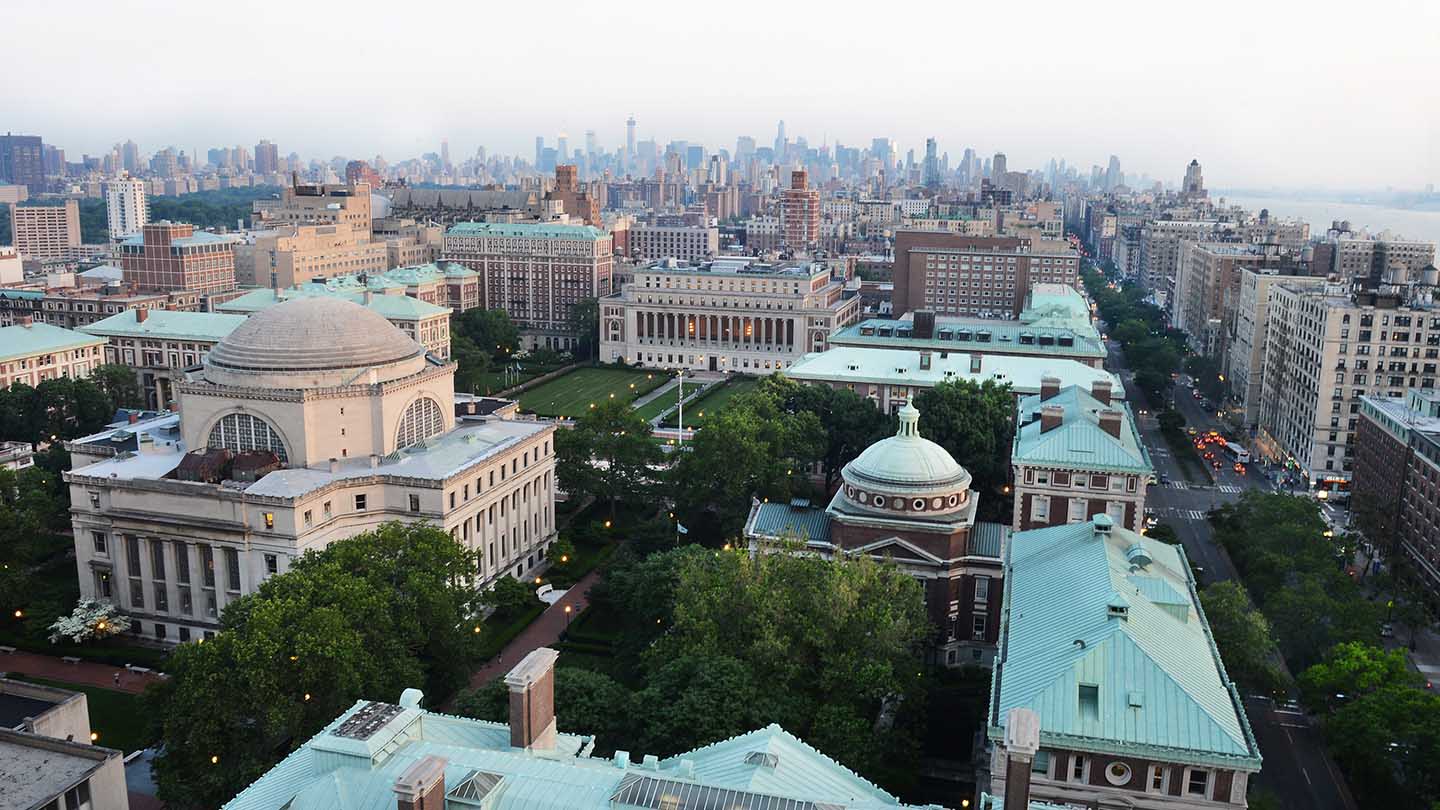
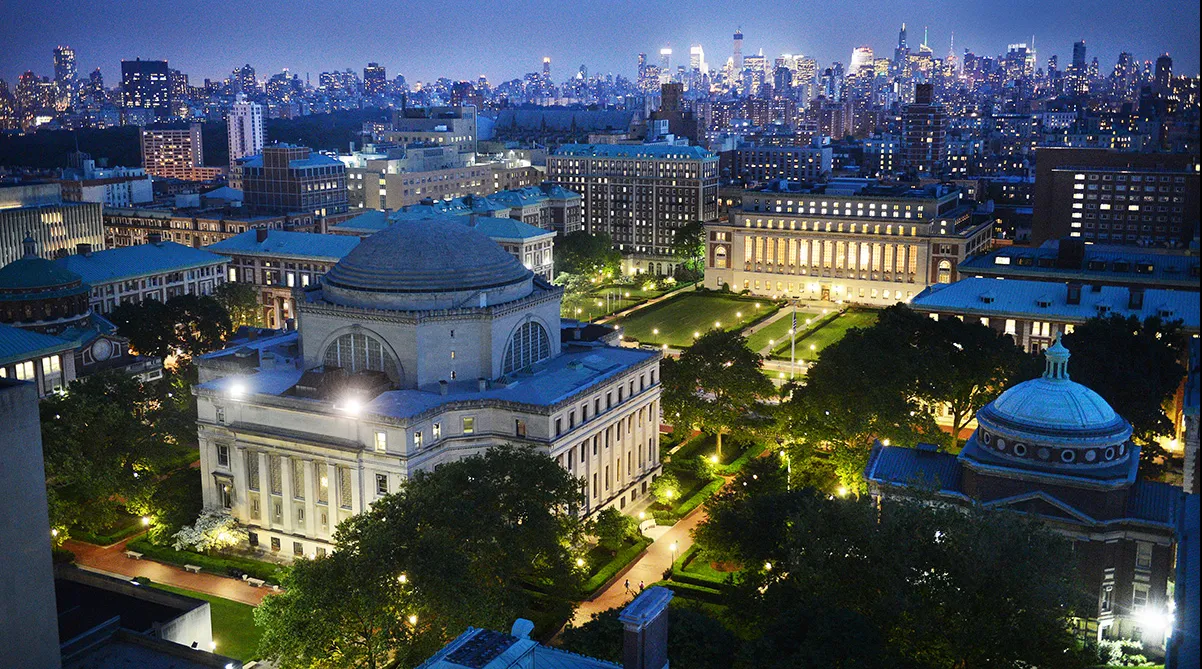
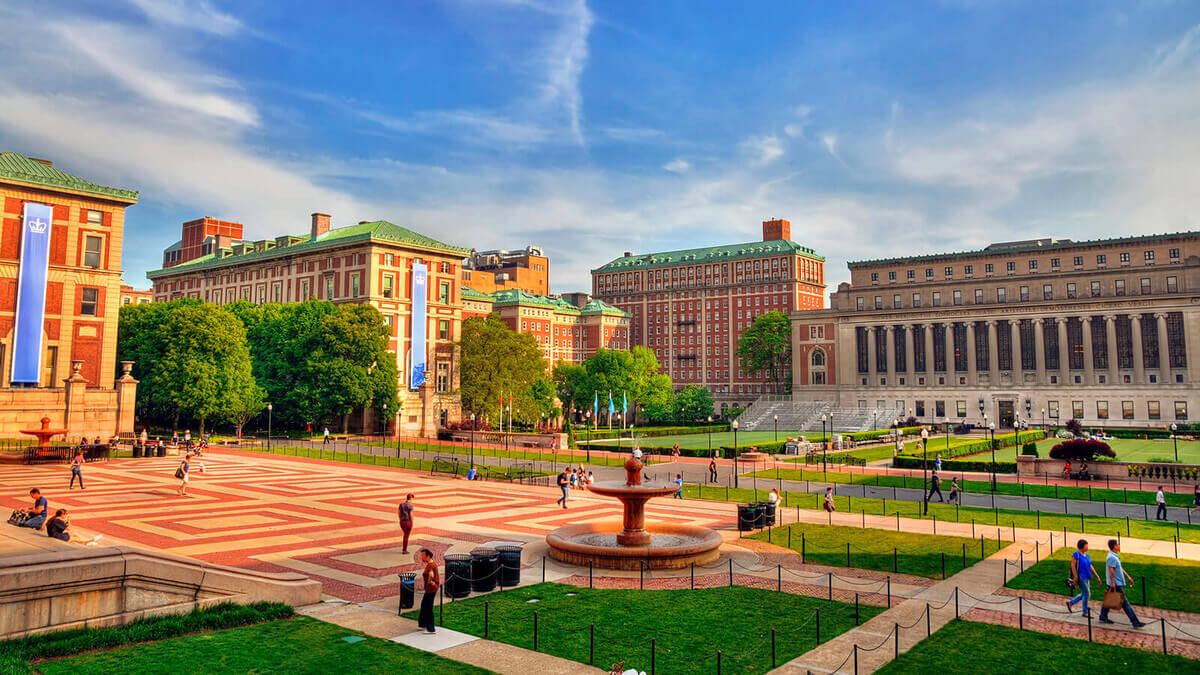
Life at Columbia is a study in contrasts: a traditional, grassy quad and neoclassical buildings set against the relentless energy of Manhattan. The campus is a self-contained village, with a vibrant community of over 40,000 students, faculty, and staff. Student clubs are described as the "heartbeat of campus culture," covering everything from robotics and journalism to global affairs and the arts. The university hosts events open to all students aimed at fostering an inclusive environment.
This doesn't mean it's a typical collegiate bubble. The relationship with New York City is integral, not incidental. Students flood into the city for internships, cultural events, and sheer exploration, making the subway an extension of the campus. This creates a specific rhythm and personality. As one student noted on a forum, "Columbia teaches you to be hypercritical of all aspects of your life." The student body is bright, curious, and often intensely driven, which can foster both incredible collaboration and a palpable sense of pressure. The experience is for those who thrive on high expectations and infinite urban possibility.
A Columbia degree is a launchpad to exceptional post-graduate success. The graduation rate is exceptionally high. Crucially, the outcomes data shows that a Columbia education pays substantial dividends. According to recent data, 86.9% of Columbia College and Engineering graduates are employed or enrolled in graduate school shortly after graduation.
The median earnings for Columbia alumni significantly outpace the national average. This financial return, combined with the university's elite network embedded in every major industry—especially in NYC's finance, media, law, and arts sectors—makes the investment a powerful one. Graduates don't just get jobs; they access careers and opportunities that are globally competitive.
Columbia's sticker price is steep, but the university operates one of the most generous need-based financial aid programs in the country. It is committed to meeting 100% of the demonstrated financial need for all admitted students, including international students. For domestic students, this evaluation is need-blind. The average first-year grant is substantial, and the average after aid is $21,590.
Columbia has a robust no-loan policy for many students. For families with annual incomes below $66,000 (and assets typical of that income level), the financial aid package consists entirely of grants and work-study, with no required student loans. For other students receiving aid, loans are capped at a manageable level. This policy makes Columbia accessible to students from all economic backgrounds and means graduates can start their careers without the burden of crushing debt, a significant advantage given the high cost of living in New York.
Columbia's singularity lies in its irreducible combination: a deep, traditional liberal arts core grafted onto the nerve center of global modernity. No other Ivy League school offers such immediate and total immersion in a world city while maintaining such a distinct, cloistered campus identity. The Core Curriculum creates a unique intellectual cohesion, forcing computer science majors to engage with Aristotle and poets to understand quantum mechanics. This shared struggle forges a distinct breed of graduate—one who can reference the Western canon in one breath and analyze the latest market trends or political upheaval in the next.
It's a place for intellectual omnivores and pragmatic idealists. The student who thrives here is self-directed, resilient, and eager to be challenged both in the seminar room and on the city streets. The outcome is not just a degree, but a particular kind of formation: worldly, critically sharp, and prepared to engage with complexity. In a landscape of elite universities, Columbia remains unmistakably itself—a New York institution with a global purpose.
Columbia University in the City of New York seal · sourceColumbia and New York | Columbia University in the City of New York · sourceColumbia University in the City of New York · sourceColumbia University Campus | Columbia Engineering · source