Admit rate has ranged 66%–78% over the last 5 years — notably volatile. Source: IPEDS via Urban Institute.
Acceptance & SAT from Common Data Set / IPEDS; net price, earnings & graduation from the U.S. Dept. of Education College Scorecard. Figures lag ~1–2 years — verify with the school.
Mercer University is a Southern institution with a split personality: a historic liberal arts college in Macon, Georgia, fused with a constellation of highly regarded professional schools. It's a place where undergraduates can pursue a classic, research-oriented arts and sciences education while rubbing shoulders with future doctors, lawyers, and engineers, all within a campus life that's active, Greek-centric, and self-contained. The vibe is traditional and community-focused, with outcomes that speak to the practical value of its broad academic portfolio.
Admission requirements
Test-optional — scores considered if submitted
Required
High school transcript
Grade point average
Letters of recommendation
College-prep program
TOEFL (non-native English)
Considered (not required)
Class rank
Test scores (SAT/ACT)
Source: IPEDS Admissions survey (2022) via Urban Institute. Covers formal factors only — it does not reflect essays, extracurriculars, or other holistic criteria.
More details
Undergrad enrollment
4,500
In-state tuition
$42,312
Out-of-state tuition
$42,312
Graduation Rate
70%
ED Share of Class
~60%
Demonstrated Interest
Considered
Median Earnings (10yr)
$58,354
Outcomes & value
Outcomes & value
Median earnings (10 yr)
$58,354
Value (earnings ÷ net price)
2.4×
Median debt at graduation
$24,199
Graduation rate
70%
First-year retention
82%
Reducing loan balance (3 yr)
47%
Pell (lower-income) share
35%
First-gen share (among federal-aid recipients)
28%
Financial health
3.0 / 3.0Meets the federal financial-responsibility standard
U.S. Dept. of Education Financial Responsibility Composite Score (FY2022-23). Scale −1.0 to 3.0; ≥1.5 meets the standard. Reported for private nonprofit & for-profit institutions only — public universities are state-backed and not scored, so this is a stability signal, not a ranking.
Top-earning majors
Median earnings by field of study (highest credential), ~2 years after completion.
Registered Nursing, Nursing Administration, Nursing Research and Clinical Nursing$62,299
Multi/Interdisciplinary Studies, Other$57,460
Business/Commerce, General$52,107
Engineering, General$49,729
Accounting and Related Services$47,260
Computer and Information Sciences, General
Applicants here also applied to
The schools that most often appear alongside Mercer University on applicants’ lists, from our self-reported outcomes corpus.
Co-application frequency from self-reported results — directional peer discovery, not a recommendation.
Campus & location
Campus safety
On-campus violent crimes (2024)
16
Per 1,000 students
1.78
On-campus criminal offenses classed as violent (murder/non-negligent manslaughter, rape, robbery, aggravated assault) for the most recent reported year. Source: U.S. Dept. of Education Campus Safety and Security (Clery Act). Counts reflect what’s reported to the school, and urban campuses often report more partly due to non-student incidents nearby — read alongside campus size and setting, not as a standalone safety verdict.
Climate
Pleasant days / yr
108
Summer high
90°F
Winter low
42°F
Annual rain
46.2"
Natural-hazard risk
Relatively Low
Pleasant days counts days per year with a mean temperature of 55–75°F, a high at or below 90°F, a low at or above 45°F, and little precipitation — a transparent comfort measure, not a weighting we invented. Computed from Open-Meteo ERA5 daily history (2019–2023). Natural-hazard risk is the county’s composite rating from the FEMA National Risk Index.
Deep dive — research, future-scholar output & economic mobility▾
Research output
Institutional h-index
214
Scholarly works
8,641
Institutional research volume and impact from OpenAlex. The h-index reflects large research universities and will be low for teaching-focused liberal-arts colleges — not a measure of undergraduate quality.
Economic mobility
Mobility rate
2.1%
Bottom → top quintile
27%
From bottom quintile
8%
Mobility rate = the share of students who both start in the bottom household-income quintile and reach the top quintile; bottom → top is that chance conditional on starting at the bottom. Source: Opportunity Insights Mobility Report Cards (Chetty, Friedman, Saez, Turner & Yagan). Reflects 1980–82 birth cohorts, so it’s directional, not current.
Quick answers
What is the acceptance rate at Mercer University?
Mercer University's acceptance rate is approximately 69% (Macon, GA), based on the most recent figures we compiled from public and primary sources.
What SAT score do you need for Mercer University?
Admitted students at Mercer University typically score 1160–1350 on the SAT (the middle-50% range). Scores outside this band are still admitted, especially with strong applications.
How much does Mercer University cost?
At Mercer University, the average net price (after aid) is about $23,847 per year. Actual cost varies with financial aid and residency.
How many undergraduates attend Mercer University?
Mercer University enrolls approximately 4,500 undergraduate students.
Where is Mercer University located?
Mercer University is located in Macon, GA.
Admissions
Mercer's admissions process is best described as moderately selective, with a clear preference for students who signal serious commitment. While the overall is accessible, the real story is in the binding Early Decision (ED) round. For the Class of 2025, a staggering roughly 60% of the class was admitted through Early Decision, and the admission rate for ED applicants was a generous 73%, more than double the 31% rate for Regular Decision applicants. This creates a two-tiered system where applying ED dramatically improves one's odds. The middle 50% SAT range for admitted students is 1160–1350, with an average high school GPA of 3.8. The university accepts the Common Application and operates on a rolling basis for Regular Decision after the priority deadline. Demonstrated interest is a factor in admissions, as indicated by its inclusion in the 's factor importance grid (C7). The rate—the percentage of admitted students who enroll—is reported as 12%, which is considered low and suggests many admitted students treat Mercer as a safety or option school.
Earnings = median of students working ~10 years after entry; debt = median of graduates. Value divides 10-yr earnings by one year’s net price — read it as earnings per dollar of annual cost, not a full lifetime ROI; it favors lower-cost schools. Source: U.S. Dept. of Education College Scorecard. Figures lag ~2 years and reflect all students, not your intended major.
$39,369
Communication and Media Studies$38,289
Teacher Education and Professional Development, Specific Levels and Methods$37,349
Source: U.S. Dept. of Education College Scorecard (field-of-study earnings). Figures cover graduates who received federal aid and lag ~2 years; not all programs report data.
Mercer's academic identity is defined by its structure: a central undergraduate College of Liberal Arts and Sciences anchored in Macon, surrounded by 12 degree-granting schools and colleges, including highly respected programs in law, engineering, business, medicine, pharmacy, and nursing. Students describe a culture where "research and liberal arts go hand in hand" and praise the school as "well-rounded in its academic offerings." Undergraduates can browse over 180 academic programs across this ecosystem. Popular majors include Psychology, various Social Sciences, Communication/Journalism, and Computer and Information Sciences. The university facilitates exploration through events like "Majors in Minutes," a fair designed to highlight different academic options. This setup allows for a unique blend—a student might major in a humanities field while taking classes alongside or being taught by faculty from the professional schools, offering a pragmatic edge to a liberal arts foundation.
Life at Mercer's main Macon campus is active, organized, and heavily centered on campus itself. With over 125 student organizations, a wide range of extracurriculars is available. Students report that "if you want to stay on campus there is almost always an event of some kind happening on campus like trivia or bingo." Greek life is a significant presence, with fraternity and sorority houses located in a dedicated Greek Village. The Campus Life office, which has moved to the first floor of the Connell Student Center, serves as a hub for organizing these activities. The overall feel is close-knit and self-contained; students balance rigorous academics with a full slate of campus-centric social options, fostering a strong sense of community. The university itself promotes this balance, stating that student life "goes beyond the classroom" and involves membership in a wide range of organizations.
Mercer's outcomes are solid, reflecting the career-oriented nature of many of its programs. The university reports a strong overall graduation rate of 73%, placing it in the top 20% nationally. Career outcome data, tracked within six months of graduation, shows students successfully entering the workforce or further education. The median earnings trajectory shows growth: one source lists average earnings six years after entry at $44,300, rising to $55,000 ten years after entry. Another source cites a median earnings figure of $36,427 one year after graduation. These figures suggest Mercer graduates experience steady salary growth as they advance in their careers, benefiting from the university's professional network and the practical skills emphasized across its diverse schools.
Mercer is a private university with a high sticker price, but it mitigates this for many students through financial aid. The total is listed as $63,031. However, a significant 67.53% of students receive financial aid, with an average aid package of $23,590. The university states that most financial aid is awarded based on need, though some assistance recognizes academic merit. Students must be enrolled full-time to receive Mercer's institutional aid. The university offers federal aid, including Direct Loans for independent students up to $9,500 per year and for graduate students up to $20,500 per year. Mercer provides a Calculator to help families estimate their eligibility for federal, state, and institutional aid. The available sources do not indicate that Mercer has a formal policy of meeting 100% of demonstrated need without loans.
Mercer stands out for its distinctive hybrid model: it's not quite a small liberal arts college and not quite a large research university, but a purposeful blend of both. Its identity is rooted in the deep integration of a traditional undergraduate experience with powerhouse professional schools. This is a school where a biology major might share facilities with medical students, or a political science student could easily cross-register in the law school. The admissions strategy, which heavily favors Early Decision applicants, creates a committed, engaged freshman class from the start. Furthermore, the campus culture in Macon is notably self-sufficient and active, with a heavy emphasis on student organizations and Greek life fostering a strong, traditional community feel. For a student seeking a cohesive, involved campus life paired with direct pathways to respected graduate programs in health, law, and business, Mercer offers a unique and pragmatic Southern alternative.
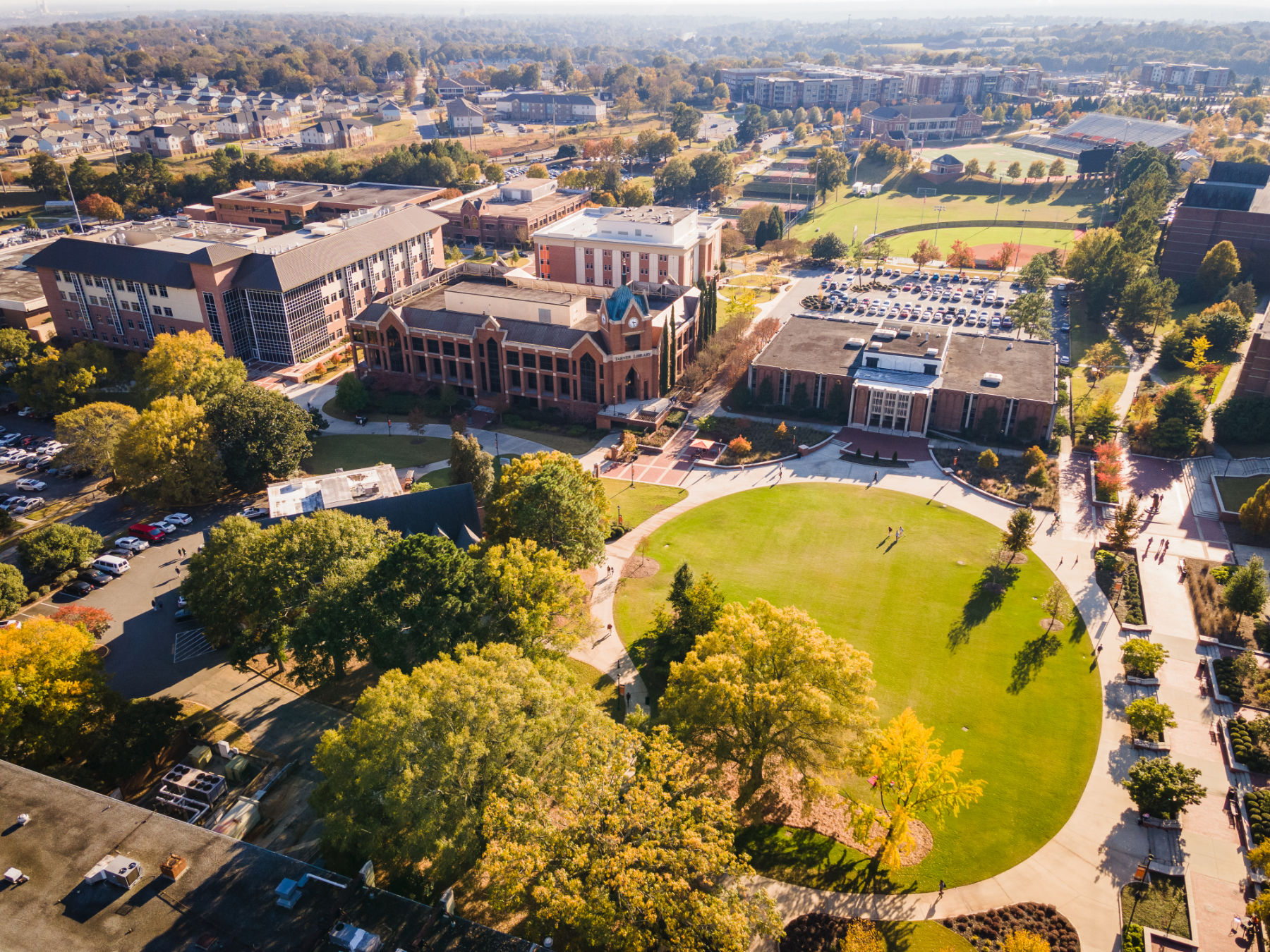
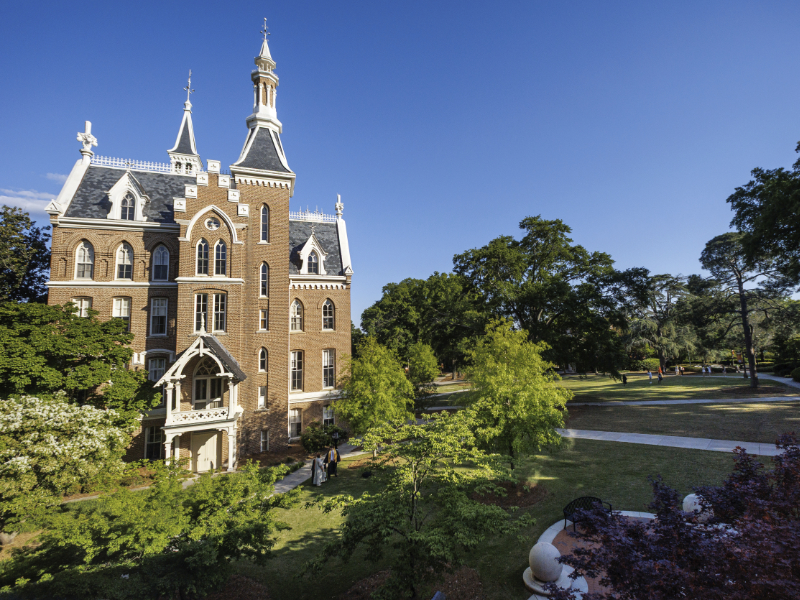
Mercer University seal · sourceMercer creates spaces that inspire learning, build community · sourceMercer University | A Best Value Among National Universities · sourceCampus Locations | Mercer University · source