Admit rate has ranged 72%–79% over the last 5 years, though the latest figure above (71%) falls outside that window. Source: IPEDS via Urban Institute.
Acceptance & SAT from Common Data Set / IPEDS; net price, earnings & graduation from the U.S. Dept. of Education College Scorecard. Figures lag ~1–2 years — verify with the school.
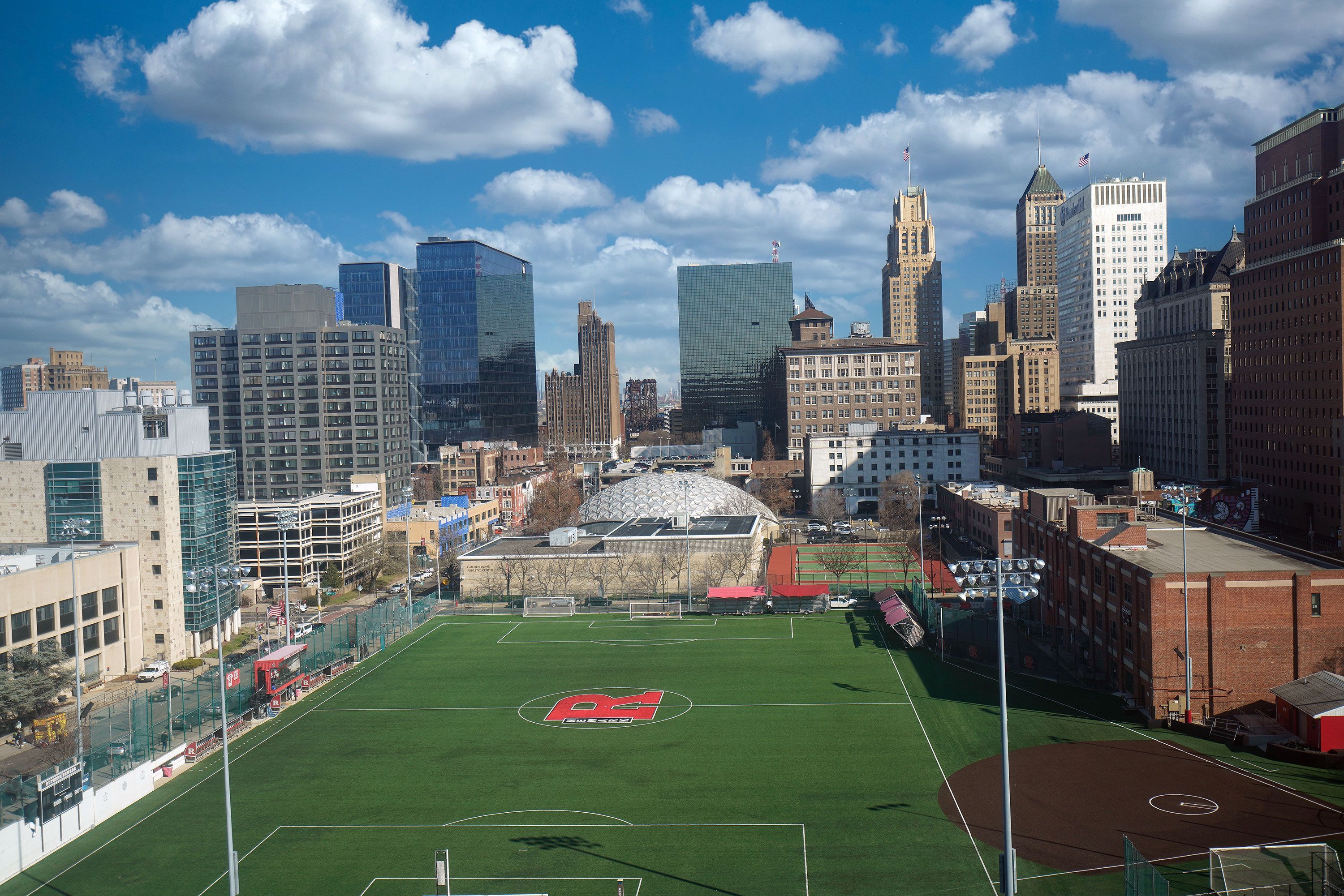
Rutgers University-Newark is not your typical state-school satellite campus; it’s a gritty, diverse, and intellectually serious urban research university that thrives on its location in the heart of New Jersey's largest city. With a student body that is overwhelmingly commuter-based and a curriculum deeply connected to its metropolitan surroundings, RU-N offers a pragmatic, career-focused education where business, biology, and psychology dominate the majors. This is a place for self-starters who want the resources of a major research institution without the rah-rah trappings, where the Paul Robeson Campus Center serves as the bustling hub for a community knit together by over 100 student organizations.
Admission requirements
Test-blind — scores not considered
Required
High school transcript
Grade point average
College-prep program
TOEFL (non-native English)
Considered (not required)
Class rank
Source: IPEDS Admissions survey (2022) via Urban Institute. Covers formal factors only — it does not reflect essays, extracurriculars, or other holistic criteria.
More details
Undergrad enrollment
7,709
In-state tuition
$17,250
Out-of-state tuition
$36,762
Top Major
Business (41% of grads)
Graduation Rate
64%
On-Campus Housing
17% of students
Demonstrated Interest
Not considered
Student Organizations
100+
Student:Faculty Ratio
13:1
Median Earnings (10yr)
$74,479
Outcomes & value
Outcomes & value
Median earnings (10 yr)
$74,479
Value (earnings ÷ net price)
3.8×
Median debt at graduation
$21,500
Graduation rate
64%
First-year retention
84%
Reducing loan balance (3 yr)
70%
Pell (lower-income) share
59%
First-gen share (among federal-aid recipients)
35%
Top-earning majors
Median earnings by field of study (highest credential), ~2 years after completion.
Computer and Information Sciences, General$71,778
Allied Health Diagnostic, Intervention, and Treatment Professions$70,596
Management Information Systems and Services$65,486
Clinical/Medical Laboratory Science/Research and Allied Professions$64,087
Finance and Financial Management Services$60,001
Accounting and Related Services
Applicants here also applied to
The schools that most often appear alongside Rutgers University-Newark on applicants’ lists, from our self-reported outcomes corpus.
Co-application frequency from self-reported results — directional peer discovery, not a recommendation.
Campus & location
Campus safety
On-campus violent crimes (2024)
15
Per 1,000 students
1.36
On-campus criminal offenses classed as violent (murder/non-negligent manslaughter, rape, robbery, aggravated assault) for the most recent reported year. Source: U.S. Dept. of Education Campus Safety and Security (Clery Act). Counts reflect what’s reported to the school, and urban campuses often report more partly due to non-student incidents nearby — read alongside campus size and setting, not as a standalone safety verdict.
Climate
Pleasant days / yr
90
Summer high
83°F
Winter low
28°F
Annual rain
54"
Annual snow
19.5"
Natural-hazard risk
Relatively High
Pleasant days counts days per year with a mean temperature of 55–75°F, a high at or below 90°F, a low at or above 45°F, and little precipitation — a transparent comfort measure, not a weighting we invented. Computed from Open-Meteo ERA5 daily history (2019–2023). Natural-hazard risk is the county’s composite rating from the FEMA National Risk Index.
Quick answers
What is the acceptance rate at Rutgers University-Newark?
Rutgers University-Newark's acceptance rate is approximately 71% (Newark, NJ), based on the most recent figures we compiled from public and primary sources.
How much does Rutgers University-Newark cost?
At Rutgers University-Newark, the average net price (after aid) is about $19,703 per year. Actual cost varies with financial aid and residency.
How many undergraduates attend Rutgers University-Newark?
Rutgers University-Newark enrolls approximately 7,709 undergraduate students.
Where is Rutgers University-Newark located?
Rutgers University-Newark is located in Newark, NJ.
Admissions
Rutgers-Newark operates with a notably accessible admissions process, positioning itself as a primary destination for New Jersey students seeking a respected public university education. The university is for most applicants, with the notable exception being its highly selective 7-year BA/MD joint-degree program, which still requires standardized test scores. While the middle 50% SAT range for admitted students has been reported as 1060–1290, the policy shift means high school academic performance carries greater weight. The admissions office does not consider demonstrated interest as a factor in its decisions, focusing instead on the applicant's academic record and preparation. The rate—the percentage of admitted students who choose to enroll—is a critical metric that reflects the university's position in the competitive New Jersey market; for Rutgers-New Brunswick, a yield of about 20.5% has been cited, providing context for the system's dynamics. Rutgers-Newark itself has historically maintained a high , reflecting its mission to provide broad access within the state.
Academics at RU-N are characterized by a lean, 13:1 student-to-faculty ratio and a faculty where 99% hold a Ph.D. or J.D., ensuring that undergraduate instruction is delivered by experts. The curriculum is anchored by over 40 undergraduate majors, with a pronounced tilt toward pre-professional and STEM fields. Business, Management, Marketing, and Related Support Services is the undisputed powerhouse, claiming 41% of all graduates. Biological and Biomedical Sciences (14%) and Psychology (10%) round out the top three, painting a clear picture of a student body focused on healthcare, business, and human services careers. The university supports this focus with tools like the Path2Success major comparison platform, helping students connect academic programs to career pathways. While the four-year graduation rate sits at 59%, the six-year rate of 64% reflects the reality of a predominantly commuter and non-traditional student population that often balances work and studies. The academic environment is practical and direct, mirroring the no-nonsense energy of its Newark setting.
Earnings = median of students working ~10 years after entry; debt = median of graduates. Value divides 10-yr earnings by one year’s net price — read it as earnings per dollar of annual cost, not a full lifetime ROI; it favors lower-cost schools. Source: U.S. Dept. of Education College Scorecard. Figures lag ~2 years and reflect all students, not your intended major.
$58,382
Mathematics$55,693
Information Science/Studies$55,087
Source: U.S. Dept. of Education College Scorecard (field-of-study earnings). Figures cover graduates who received federal aid and lag ~2 years; not all programs report data.
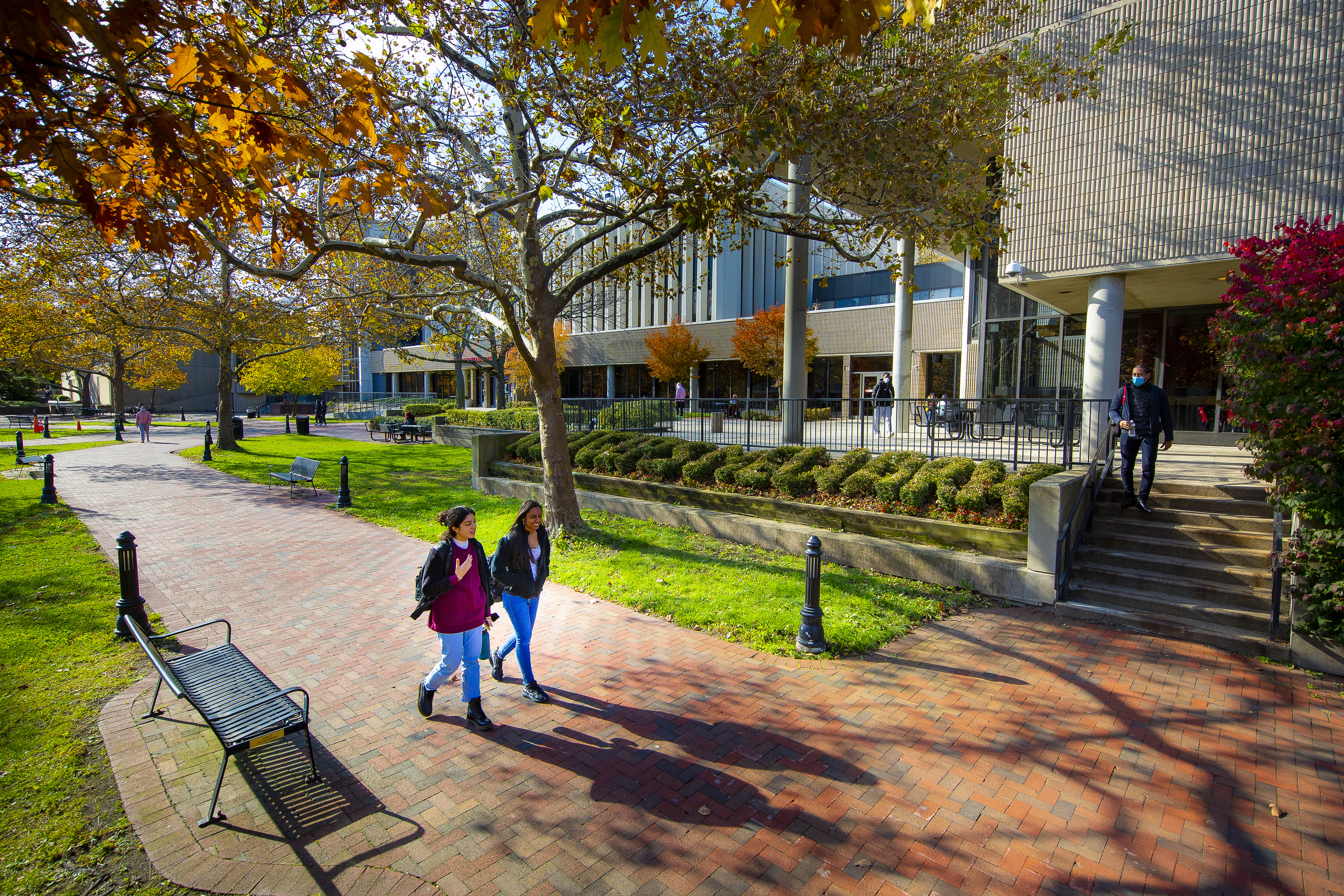
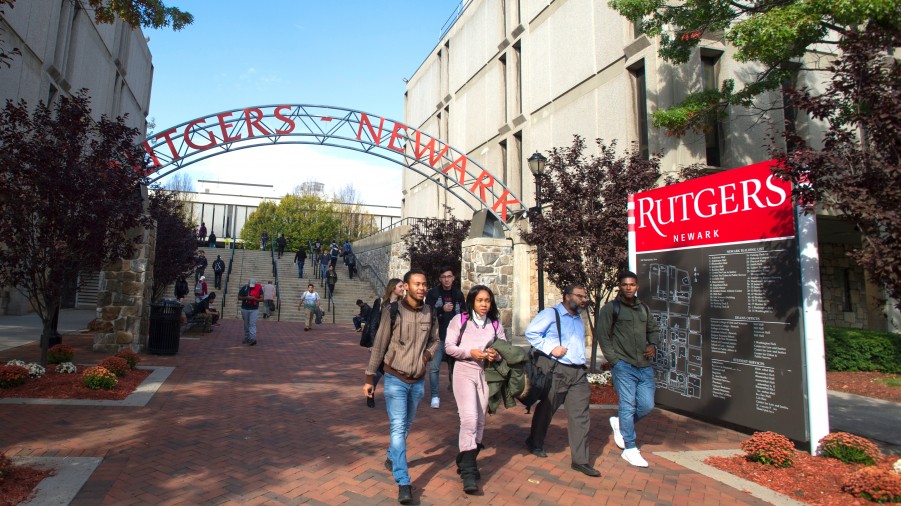
Life at Rutgers-Newark is intensely centered on the campus itself, as only 17% of students live in university-affiliated housing. The vast majority are commuters, which shapes a social scene that is active and organized but largely confined to daylight hours. The undisputed nucleus of this activity is the Paul Robeson Campus Center, a multi-purpose hub that houses student organization offices, event spaces, and dining options. Here, the university's remarkable diversity—a hallmark of the Newark location—comes to life through more than 100 student organizations spanning academic, cultural, religious, and special interest groups. The Office of Student Life & Leadership is the engine behind this ecosystem, facilitating everything from community engagement initiatives to fraternity and sorority life. This is not a campus of sprawling quads and Friday night football tailgates; it's a place where student life is what you make of it between classes, often involving leadership development, cultural performances, and academic clubs that directly complement career goals. The vibe is engaged, purposeful, and reflective of the urban environment.
Rutgers-Newark graduates enter the workforce with a solid financial foundation, carrying an average debt at graduation of $25,530—significantly below the national average for four-year institutions. Their earning potential is strong, with a median salary of $61,263 reported six years after graduation. The university's career outcome rate is robust; data from the broader Rutgers system indicates an overall career outcome rate of 89% for undergraduates and graduates, suggesting that the vast majority of alumni are employed or in graduate school shortly after completing their degrees. The RU-N Career Resources and Exploration office provides detailed outcomes data, which for the Class of 2022 showed that 50.6% of graduates were employed full-time. These figures underscore the return on investment for a degree from this public, urban institution, particularly for students who major in its high-demand fields like business and the sciences.
As a public institution, Rutgers-Newark's cost structure is designed to be accessible for New Jersey residents, though the can vary significantly based on family income. The university awards substantial financial aid, with over $120 million in aid reported for first-year students across the Rutgers system in the 2024-2025 cycle, and an average financial aid offer for first-years of $16,678. Rutgers administers a range of need-based grants and scholarships, and all students are encouraged to use the Net Price Calculator for a personalized estimate. Crucially, Rutgers-Newark offers the "RU-N to the TOP" program, a last-dollar scholarship for New Jersey residents that covers the full cost of in-state tuition and mandatory fees for students whose families have an Adjusted Gross Income (AGI) between $0 and $65,000. For students demonstrating financial need through the FAFSA, federal loan programs like the Perkins Loan (up to $20,000 cumulative) and Direct Loans are available, but the university does not advertise a universal "no-loan" policy for all needy students. The financial aid philosophy is one of meeting need through a combination of grants, scholarships, and self-help via loans and work-study.
Rutgers-Newark stands out precisely because it refuses to be a generic commuter school. Its identity is inextricably linked to the City of Newark, offering students a front-row seat to urban governance, social justice, economic development, and multiculturalism in action. This isn't a simulated experience; it's the real thing. The student body is arguably one of the most diverse in the nation, not just in demographics but in life experience, with many students balancing jobs, family responsibilities, and academics. This creates a campus culture that is mature, focused, and devoid of pretense. Academically, it leverages its location through research and community partnerships, particularly in fields like criminal justice, public administration, and healthcare. The dominance of business and biology majors speaks to a clear-eyed, outcomes-oriented student population. While it may lack the traditional residential campus vibe, it compensates with a palpable sense of purpose and an unparalleled opportunity to engage with a dynamic American city. For a student seeking a serious, affordable, and connected public university education, RU-N is a compelling and distinctive choice.
.jpg?width=1600)