Admit rate has ranged 61%–68% over the last 5 years, though the latest figure above (58%) falls outside that window. Source: IPEDS via Urban Institute.
Acceptance & SAT from Common Data Set / IPEDS; net price, earnings & graduation from the U.S. Dept. of Education College Scorecard. Figures lag ~1–2 years — verify with the school.
Rutgers University–New Brunswick is a sprawling, high-energy public research university that blends the heft of a Big Ten institution with the scrappy diversity of New Jersey. With 120+ majors, a 65% acceptance rate, and a student body of 36,000 undergrads, it's a place where top-tier STEM programs coexist with vibrant arts and humanities—all fueled by the state's most ambitious students. Expect big-school spirit (especially for football), a 2,685-acre campus that feels like five small colleges stitched together, and career outcomes that punch above their public-university weight.
Admission requirements
Test-optional — scores considered if submitted
Required
High school transcript
Grade point average
College-prep program
TOEFL (non-native English)
Considered (not required)
Class rank
Test scores (SAT/ACT)
Source: IPEDS Admissions survey (2022) via Urban Institute. Covers formal factors only — it does not reflect essays, extracurriculars, or other holistic criteria.
More details
Undergrad enrollment
37,751
In-state tuition
$17,929
Out-of-state tuition
$37,441
Campus Size
2,685 acres
Career Outcomes Rate
89%
Avg Early-Career Salary
$48,000
Six-Year Graduation Rate
85%
Outcomes & value
Outcomes & value
Median earnings (10 yr)
$74,479
Value (earnings ÷ net price)
3.1×
Median debt at graduation
$21,500
Graduation rate
84%
First-year retention
93%
Reducing loan balance (3 yr)
70%
Pell (lower-income) share
28%
First-gen share (among federal-aid recipients)
35%
Top-earning majors
Median earnings by field of study (highest credential), ~2 years after completion.
Electrical, Electronics, and Communications Engineering$74,063
Registered Nursing, Nursing Administration, Nursing Research and Clinical Nursing$72,975
Computer and Information Sciences, General$71,778
Allied Health Diagnostic, Intervention, and Treatment Professions$70,596
Management Sciences and Quantitative Methods$67,995
Applicants here also applied to
The schools that most often appear alongside Rutgers on applicants’ lists, from our self-reported outcomes corpus.
Co-application frequency from self-reported results — directional peer discovery, not a recommendation.
Campus & location
Campus safety
On-campus violent crimes (2024)
38
Per 1,000 students
0.73
On-campus criminal offenses classed as violent (murder/non-negligent manslaughter, rape, robbery, aggravated assault) for the most recent reported year. Source: U.S. Dept. of Education Campus Safety and Security (Clery Act). Counts reflect what’s reported to the school, and urban campuses often report more partly due to non-student incidents nearby — read alongside campus size and setting, not as a standalone safety verdict.
Climate
Pleasant days / yr
88
Summer high
85°F
Winter low
28°F
Annual rain
51.5"
Annual snow
17.1"
Natural-hazard risk
Relatively High
Pleasant days counts days per year with a mean temperature of 55–75°F, a high at or below 90°F, a low at or above 45°F, and little precipitation — a transparent comfort measure, not a weighting we invented. Computed from Open-Meteo ERA5 daily history (2019–2023). Natural-hazard risk is the county’s composite rating from the FEMA National Risk Index.
Quick answers
What is the acceptance rate at Rutgers University-New Brunswick?
Rutgers University-New Brunswick's acceptance rate is approximately 58% (New Brunswick, NJ), based on the most recent figures we compiled from public and primary sources.
What SAT score do you need for Rutgers University-New Brunswick?
Admitted students at Rutgers University-New Brunswick typically score 1310–1500 on the SAT (the middle-50% range). Scores outside this band are still admitted, especially with strong applications.
How much does Rutgers University-New Brunswick cost?
At Rutgers University-New Brunswick, the average net price (after aid) is about $24,406 per year. Actual cost varies with financial aid and residency.
How many undergraduates attend Rutgers University-New Brunswick?
Rutgers University-New Brunswick enrolls approximately 37,751 undergraduate students.
Where is Rutgers University-New Brunswick located?
Rutgers University-New Brunswick is located in New Brunswick, NJ.
Admissions
Rutgers–New Brunswick is selective but accessible, with fluctuating between 35-65% depending on the year and applicant pool. For the 2023-2024 cycle, 43,000 students applied and 28,000 were admitted (roughly 65%), though Early Action acceptance rates dropped to 35% for the Class of 2025. Middle 50% test scores for admitted students fall between 1270-1480 SAT or 28-33 ACT, with the School of Arts and Sciences at the higher end (1330-1510 SAT, 30-34 ACT). The university emphasizes holistic review, weighing GPA (especially in core subjects), rigor of high school curriculum, and extracurricular impact alongside test scores. Notably, Rutgers is test-optional through 2025.
Earnings = median of students working ~10 years after entry; debt = median of graduates. Value divides 10-yr earnings by one year’s net price — read it as earnings per dollar of annual cost, not a full lifetime ROI; it favors lower-cost schools. Source: U.S. Dept. of Education College Scorecard. Figures lag ~2 years and reflect all students, not your intended major.
Management Information Systems and Services
$65,486
Clinical/Medical Laboratory Science/Research and Allied Professions$64,087
Civil Engineering$63,898
Source: U.S. Dept. of Education College Scorecard (field-of-study earnings). Figures cover graduates who received federal aid and lag ~2 years; not all programs report data.
Rutgers–New Brunswick operates like a federation of smaller colleges, offering 120+ majors across 19 schools—from the top-ranked Ernest Mario School of Pharmacy to the Mason Gross School of the Arts. Standout programs include ceramic engineering, physics, biochemistry, and English, with strong pre-professional tracks in business and health sciences. The university is a research powerhouse (classified as R1), giving undergrads rare access to labs and funded projects. Classes are a mix: introductory lectures can be massive (especially in popular majors like psychology or computer science), but upper-level seminars shrink to 20 students. Professors are accessible but not coddling—expect to advocate for yourself in this decentralized system.
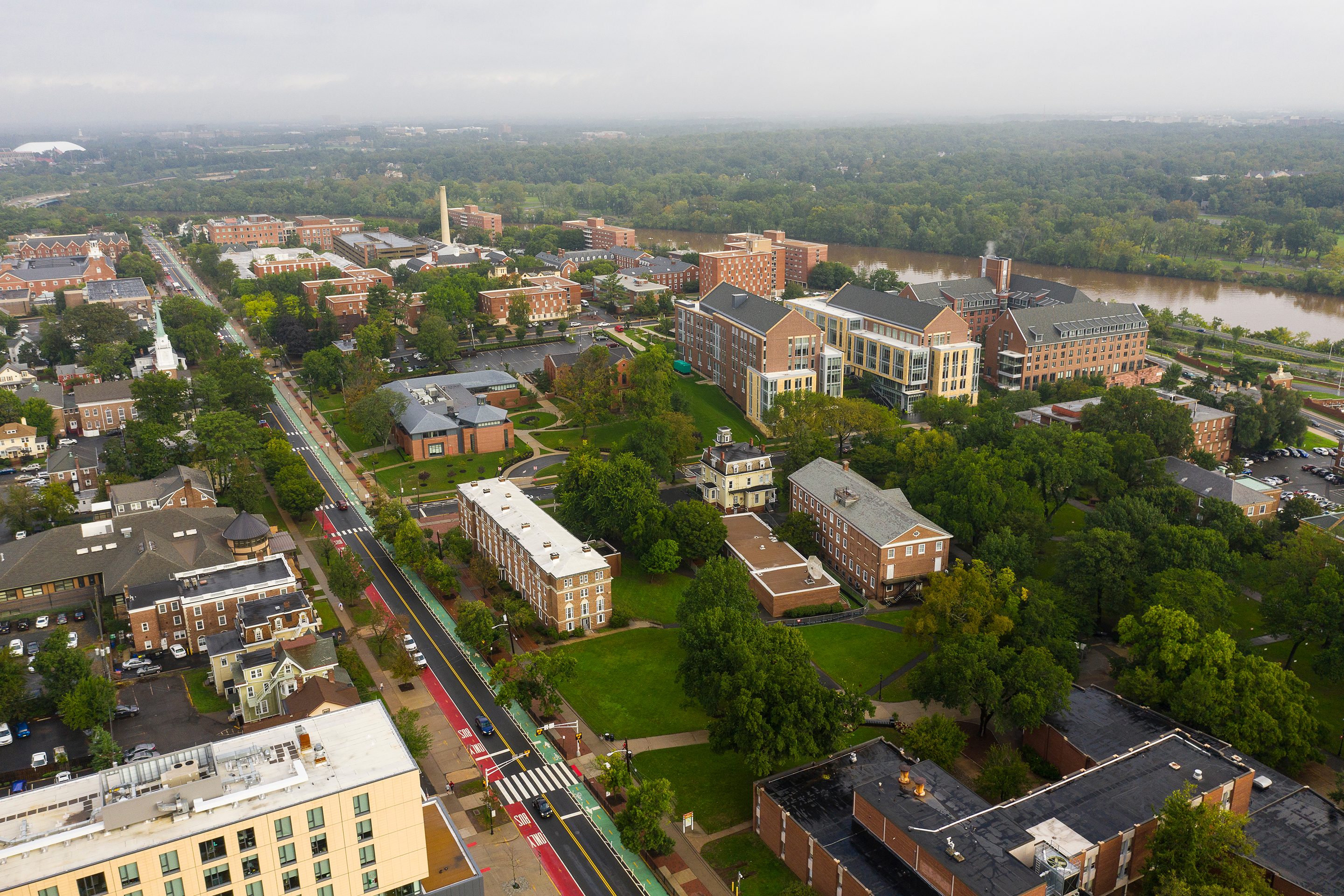
With 2,685 acres spread across five distinct campuses (College Ave, Busch, Livingston, Cook/Douglass, and Downtown New Brunswick), Rutgers feels like a small city. Only 40% of students live on campus—most juniors and seniors migrate to off-campus apartments—but dorms are lively, especially on College Ave. The social scene revolves around 600+ clubs (from Quidditch teams to Bollywood dance), Greek life (20% participation), and Big Ten sports (football games at SHI Stadium are massive events). New Brunswick itself is a gritty college town with great Ethiopian and Portuguese food, though safety can be uneven after dark. Key quirks:
RU Scream (a midnight primal scream during finals)
Grease Trucks (legendary fat sandwiches)
Cultural festivals (especially strong South Asian and Latino student orgs)
Rutgers delivers strong ROI for a public university: an 85% six-year graduation rate and 89% career outcomes rate (employed or in grad school within six months). Early-career salaries average $48,000, with STEM and business majors earning significantly more. The alumni network is vast (especially in NYC and Philly), and recruiters from J&J, Merck, and Big Four accounting firms heavily target Rutgers. About 30% of graduates pursue advanced degrees, with strong pipelines to Rutgers’ own law, medical, and dental schools. One caveat: support services can be bureaucratic—proactive students thrive, but those needing hand-holding may slip through cracks.
As a public university, Rutgers–New Brunswick is a relative bargain for in-state students but pricey for out-of-staters. The average net price after aid is $22,763, with $91 million in aid awarded to first-years annually. Key numbers:
Average financial aid package: $16,865
In-state tuition + fees: ~$17,000
Out-of-state tuition + fees: ~$36,000
Merit scholarships are limited (most aid is need-based), and the aid process is notoriously slow—apply early. Many students work campus jobs (especially at dining halls or the Rutgers telefund) or commute from nearby towns to save on housing.
Rutgers–New Brunswick is unapologetically big and proudly public—a place where a biochemistry major might take a ceramics class at Mason Gross, cheer at a Big Ten game, then intern at a Fortune 500 company 40 minutes from NYC. It’s not for students who want boutique attention, but those who seize opportunities will find:
Elite research clout (especially in pharmacy, engineering, and environmental science)
Diversity without tokenism (no racial majority, with strong cultural communities)
A work-hard-play-hard ethos (see: 3 AM grease trucks after library all-nighters)
For New Jerseyans, it’s the smartest in-state option; for others, it’s a high-value alternative to private universities with comparable academics.