Admit rate has ranged 42%–69% over the last 5 years — notably volatile. Source: IPEDS via Urban Institute.
Acceptance & SAT from Common Data Set / IPEDS; net price, earnings & graduation from the U.S. Dept. of Education College Scorecard. Figures lag ~1–2 years — verify with the school.
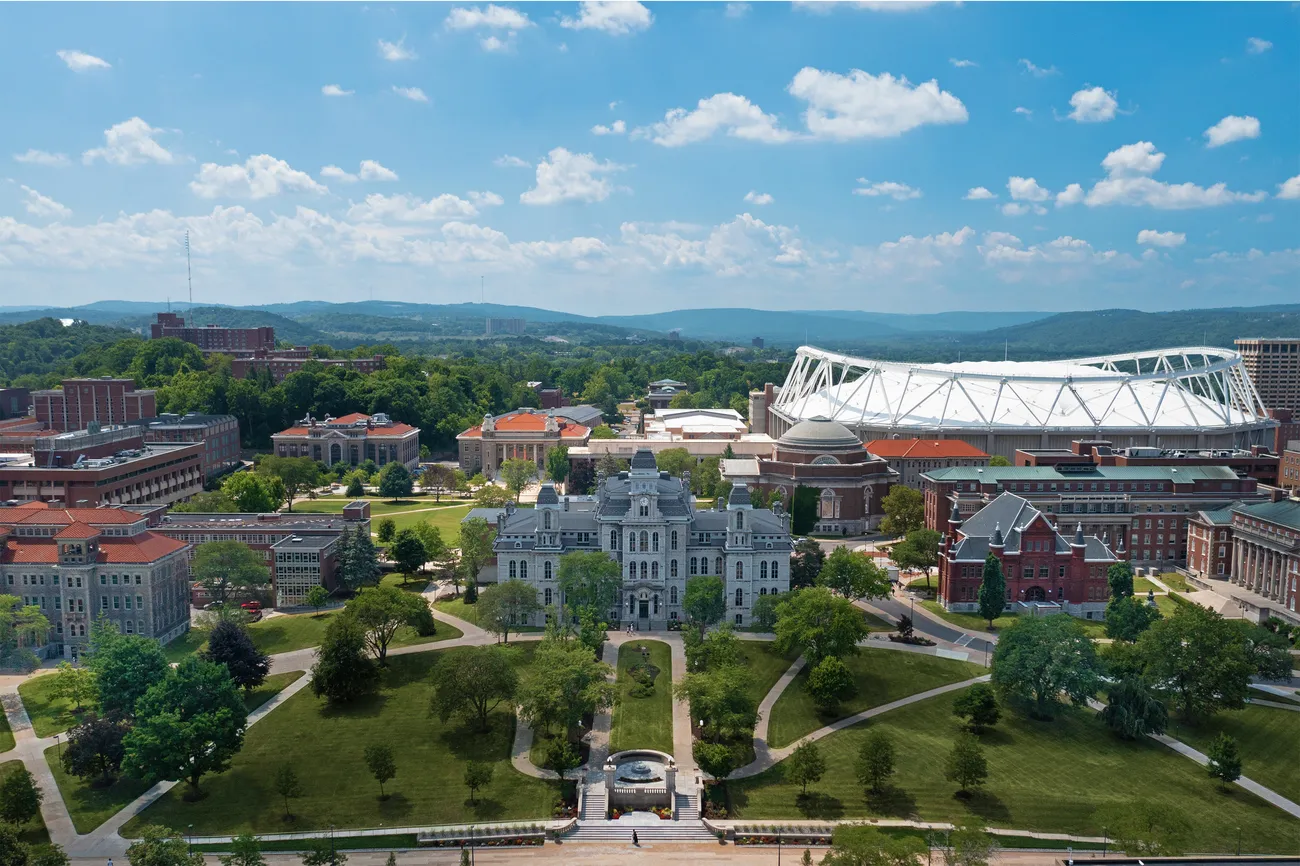
Syracuse University is a large, private research institution in upstate New York that has carved out a distinctive identity as a powerhouse for communications, media, and business, wrapped in a classic collegiate experience. Its sprawling, hilly campus buzzes with a spirited, socially active student body and a deep-seated loyalty to Orange athletics. While offering over 260 academic programs, Syracuse's reputation is cemented by its elite S.I. Newhouse School of Public Communications and a culture that prizes hands-on, experiential learning, producing graduates with strong professional networks and outcomes.
Admission requirements
Test-optional — scores considered if submitted
Required
High school transcript
Grade point average
Letters of recommendation
College-prep program
Demonstrated competencies
TOEFL (non-native English)
Considered (not required)
Class rank
Test scores (SAT/ACT)
Source: IPEDS Admissions survey (2022) via Urban Institute. Covers formal factors only — it does not reflect essays, extracurriculars, or other holistic criteria.
More details
Undergrad enrollment
15,477
In-state tuition
$65,528
Out-of-state tuition
$65,528
Graduation Rate
84%
Meets Full Need
Yes (95% of need met for aid applicants; reports of 100% no-loan policy)
On-Campus Living
Over half of students
ED Share of Class
Not explicitly stated, but a significant portion
Career Outcome Rate
94%
First-Year Retention
Not explicitly stated in provided sources
Demonstrated Interest
Considered
Median Earnings (10yr)
$79,164
Outcomes & value
Outcomes & value
Median earnings (10 yr)
$79,164
Value (earnings ÷ net price)
2.0×
Median debt at graduation
$26,000
Graduation rate
84%
First-year retention
90%
Reducing loan balance (3 yr)
79%
Pell (lower-income) share
17%
First-gen share (among federal-aid recipients)
19%
Financial health
3.0 / 3.0Meets the federal financial-responsibility standard
U.S. Dept. of Education Financial Responsibility Composite Score (FY2022-23). Scale −1.0 to 3.0; ≥1.5 meets the standard. Reported for private nonprofit & for-profit institutions only — public universities are state-backed and not scored, so this is a stability signal, not a ranking.
Top-earning majors
Median earnings by field of study (highest credential), ~2 years after completion.
Computer Engineering$81,333
Information Science/Studies$67,101
Mechanical Engineering$66,989
Civil Engineering$66,653
Finance and Financial Management Services$64,087
Chemical Engineering$61,516
Applicants here also applied to
The schools that most often appear alongside Syracuse on applicants’ lists, from our self-reported outcomes corpus.
Co-application frequency from self-reported results — directional peer discovery, not a recommendation.
Campus & location
Campus safety
On-campus violent crimes (2024)
8
Per 1,000 students
0.36
On-campus criminal offenses classed as violent (murder/non-negligent manslaughter, rape, robbery, aggravated assault) for the most recent reported year. Source: U.S. Dept. of Education Campus Safety and Security (Clery Act). Counts reflect what’s reported to the school, and urban campuses often report more partly due to non-student incidents nearby — read alongside campus size and setting, not as a standalone safety verdict.
Climate
Pleasant days / yr
89
Summer high
78°F
Winter low
21°F
Annual rain
53.3"
Annual snow
59.6"
Natural-hazard risk
Relatively Moderate
Pleasant days counts days per year with a mean temperature of 55–75°F, a high at or below 90°F, a low at or above 45°F, and little precipitation — a transparent comfort measure, not a weighting we invented. Computed from Open-Meteo ERA5 daily history (2019–2023). Natural-hazard risk is the county’s composite rating from the FEMA National Risk Index.
Deep dive — research, future-scholar output & economic mobility▾
Research output
Institutional h-index
811
Scholarly works
76,467
Institutional research volume and impact from OpenAlex. The h-index reflects large research universities and will be low for teaching-focused liberal-arts colleges — not a measure of undergraduate quality.
Economic mobility
Mobility rate
2.9%
Bottom → top quintile
52%
From bottom quintile
6%
Mobility rate = the share of students who both start in the bottom household-income quintile and reach the top quintile; bottom → top is that chance conditional on starting at the bottom. Source: Opportunity Insights Mobility Report Cards (Chetty, Friedman, Saez, Turner & Yagan). Reflects 1980–82 birth cohorts, so it’s directional, not current.
Quick answers
What is the acceptance rate at Syracuse University?
Syracuse University's acceptance rate is approximately 46% (Syracuse, NY), based on the most recent figures we compiled from public and primary sources.
What SAT score do you need for Syracuse University?
Admitted students at Syracuse University typically score 1270–1440 on the SAT (the middle-50% range). Scores outside this band are still admitted, especially with strong applications.
How much does Syracuse University cost?
At Syracuse University, the average net price (after aid) is about $38,793 per year. Actual cost varies with financial aid and residency.
How many undergraduates attend Syracuse University?
Syracuse University enrolls approximately 15,477 undergraduate students.
Where is Syracuse University located?
Syracuse University is located in Syracuse, NY.
Admissions
Syracuse operates a selective but accessible admissions process, where applying early can be a significant strategic advantage. For the most recent class, the university received over 44,000 applications and admitted 46% of them, making it competitive but not hyper-selective. The middle 50% of enrolled students scored between 1270 and 1440 on the SAT, indicating a solidly high-achieving applicant pool. However, standardized test scores are not required for applicants through Fall 2027 and Spring 2028 admission cycles. The university does consider an applicant's demonstrated interest, as indicated in the , meaning campus visits, interviews, and engagement with admissions materials can factor into decisions. The most compelling edge comes through Early Decision: historical data shows Syracuse admits over 50% of its ED applicants, with one recent cycle showing a 66% for ED compared to a much lower regular decision rate. This suggests a strong preference for committed students who name Syracuse as their first choice. The overall rate—the percentage of admitted students who enroll—has been reported around 19-21%, meaning Syracuse competes for students with a wide range of peer institutions.
Earnings = median of students working ~10 years after entry; debt = median of graduates. Value divides 10-yr earnings by one year’s net price — read it as earnings per dollar of annual cost, not a full lifetime ROI; it favors lower-cost schools. Source: U.S. Dept. of Education College Scorecard. Figures lag ~2 years and reflect all students, not your intended major.
Accounting and Related Services
$61,303
Special Education and Teaching$57,318
Source: U.S. Dept. of Education College Scorecard (field-of-study earnings). Figures cover graduates who received federal aid and lag ~2 years; not all programs report data.
Syracuse is a comprehensive research university offering a vast academic menu of 268 undergraduate programs across its 13 schools and colleges. The intellectual culture is defined by a strong emphasis on professional preparation and experiential learning, particularly in its signature fields. The most popular majors cluster in a few key areas that reflect the university's historic strengths and student demand:
Communication, Journalism, and Related Programs (headlined by the renowned S.I. Newhouse School of Public Communications)
Business, Management, Marketing, and Related Support Services
Social Sciences
Engineering
Beyond these powerhouses, programs in Information Science, Psychology, Finance, Economics, and Political Science also graduate large numbers of students each year. The university encourages students to combine strengths—for instance, in math and science with problem-solving and creative thinking—and offers ample opportunities for interdisciplinary study. The School of Education highlights a focus on 'inclusive, experiential, and digital teaching and learning,' a philosophy that permeates much of the undergraduate experience. While large, Syracuse promotes faculty-student connection, and over half of undergraduates live on campus, which the administration says helps build stronger relationships with faculty and staff.
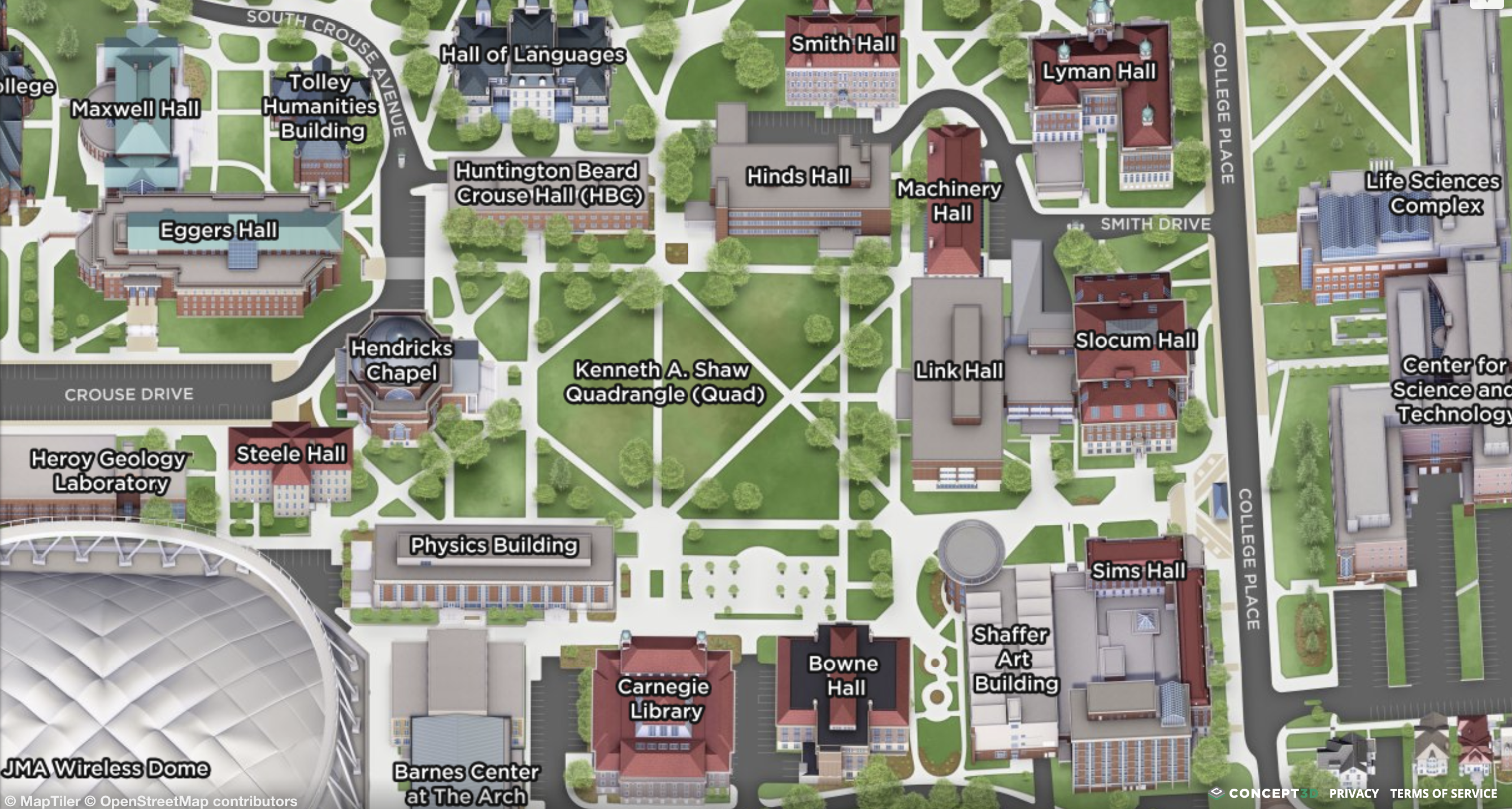

Life at Syracuse is characterized by a vibrant, all-encompassing campus culture set against the backdrop of a classic, self-contained university hill. Over half of all students live on campus, creating a dense, residential community where it's easy to build lifelong friendships. The social scene is famously active, described by students as a 'balance of academic rigor and lively party culture.' Greek life is a visible part of the social fabric, and getting involved in one of the university's many clubs and organizations is a common pathway to connection. The campus itself is frequently described as beautiful and awe-inspiring by visitors. Beyond the hill, the university is engaged with the city of Syracuse through projects like the Connective Corridor, a strip of cultural development intended to link campus to downtown, offering students off-campus experiences, internships, and entertainment. The unifying force for school spirit is unquestionably Orange athletics, especially basketball and football, which draw massive student support. The overall vibe is one of high energy, school pride, and a classic American college experience with a Northeastern flavor.
Syracuse graduates enter the workforce with strong outcomes, backed by a powerful alumni network, particularly in media, business, and entertainment. The university reports an impressive overall career outcome rate of 94% for its graduates, which includes employment, graduate school, and other pursuits. For employed graduates, 92% work in positions related to their career goals within six months of graduation. The average starting salary for recent graduates is reported at $79,204. Long-term earnings data shows Syracuse alumni achieve median earnings of $79,164 ten years after entry, a figure that significantly outpaces the national median for college graduates. The university's graduation rate is a solid 84%, indicating good support for students to complete their degrees on time. These strong results are a testament to the career-oriented curriculum, extensive internship programs, and the active engagement of the university's 384,000-strong alumni base in helping new graduates launch their careers.
As a private university, Syracuse carries a high sticker price, but it is committed to meeting the financial need of its admitted students. The university states that it meets 95% of demonstrated financial need for full-time undergraduates who apply for aid, primarily through grants and scholarships that do not need to be repaid. Furthermore, discussions among students and experts indicate that Syracuse has a 'no-loan' policy for qualifying students, meaning it meets 100% of demonstrated need without including loans in the initial financial aid package for those within certain income thresholds. This is a significant commitment that makes the university more accessible. The average —the actual cost after grants and scholarships—is $38,793. The university encourages all families to use its Net Price Calculator for an early, individualized estimate of their financial aid package, which can include federal and state grants, Syracuse grants, scholarships, and work-study.
Syracuse University stands out for its unique alchemy of top-tier professional schools within a classic, spirited residential campus. It's not just a university with a good communications program; it is the destination for aspiring media professionals, anchored by the S.I. Newhouse School, which enjoys a reputation akin to an Ivy League within its field. This excellence creates a gravitational pull that elevates the entire campus. Unlike more introverted rural campuses, Syracuse embraces its identity as a self-contained 'hill' while actively building bridges to its city, offering students real-world context through the Connective Corridor and downtown partnerships. The student experience is defined by a palpable sense of community and Orange pride, fueled by major Division I athletics—a combination less common at peer private research institutions. Finally, its admissions and financial aid policies are strategically aligned: it rewards demonstrated interest and early commitment with higher acceptance odds, and it backs its offers with a substantial commitment to meeting full financial need without loans, making its distinct experience attainable for a broader range of students.
Syracuse University seal · sourceVisitor Tips - Syracuse University · sourceCampus Map - Syracuse University · sourceHome - Syracuse University · source