Admit rate has ranged 46%–58% over the last 5 years — notably volatile, though the latest figure above (59%) falls outside that window. Source: IPEDS via Urban Institute.
Acceptance & SAT from Common Data Set / IPEDS; net price, earnings & graduation from the U.S. Dept. of Education College Scorecard. Figures lag ~1–2 years — verify with the school.
Fordham University is a Jesuit, Catholic institution in New York City that offers a distinctive blend of classic liberal arts rigor and direct access to the professional energy of the five boroughs. With campuses in the Bronx and Manhattan, it provides a traditional collegiate experience at Rose Hill and a more urban, career-focused vibe at Lincoln Center, all underpinned by a mission of 'men and women for others.' Its outcomes are strong—graduates land jobs at a remarkable clip—but the sticker price is steep, and the university openly states it does not meet full financial need.
Admission requirements
Test-optional — scores considered if submitted
Required
High school transcript
Grade point average
Letters of recommendation
College-prep program
TOEFL (non-native English)
Considered (not required)
Class rank
Test scores (SAT/ACT)
Source: IPEDS Admissions survey (2022) via Urban Institute. Covers formal factors only — it does not reflect essays, extracurriculars, or other holistic criteria.
More details
Undergrad enrollment
10,512
In-state tuition
$64,915
Out-of-state tuition
$64,915
No-Loan Policy
No
Graduation Rate
82%
Meets Full Need
No
Demonstrated Interest
Considered
Median Earnings (10yr)
$85,569
Early Decision Share of Class
Not Available in Sources
Outcomes & value
Outcomes & value
Median earnings (10 yr)
$85,569
Value (earnings ÷ net price)
1.9×
Median debt at graduation
$24,300
Graduation rate
82%
First-year retention
89%
Reducing loan balance (3 yr)
77%
Pell (lower-income) share
21%
First-gen share (among federal-aid recipients)
18%
Financial health
2.8 / 3.0Meets the federal financial-responsibility standard
U.S. Dept. of Education Financial Responsibility Composite Score (FY2022-23). Scale −1.0 to 3.0; ≥1.5 meets the standard. Reported for private nonprofit & for-profit institutions only — public universities are state-backed and not scored, so this is a stability signal, not a ranking.
Top-earning majors
Median earnings by field of study (highest credential), ~2 years after completion.
Finance and Financial Management Services$73,195
Accounting and Related Services$71,351
Mathematics and Statistics, Other$70,176
Computer and Information Sciences, General$58,673
Business Administration, Management and Operations$55,724
Economics
Applicants here also applied to
The schools that most often appear alongside Fordham on applicants’ lists, from our self-reported outcomes corpus.
Co-application frequency from self-reported results — directional peer discovery, not a recommendation.
Campus & location
Campus safety
On-campus violent crimes (2024)
12
Per 1,000 students
0.75
On-campus criminal offenses classed as violent (murder/non-negligent manslaughter, rape, robbery, aggravated assault) for the most recent reported year. Source: U.S. Dept. of Education Campus Safety and Security (Clery Act). Counts reflect what’s reported to the school, and urban campuses often report more partly due to non-student incidents nearby — read alongside campus size and setting, not as a standalone safety verdict.
Climate
Pleasant days / yr
91
Summer high
83°F
Winter low
29°F
Annual rain
54.3"
Annual snow
19.6"
Natural-hazard risk
Relatively High
Pleasant days counts days per year with a mean temperature of 55–75°F, a high at or below 90°F, a low at or above 45°F, and little precipitation — a transparent comfort measure, not a weighting we invented. Computed from Open-Meteo ERA5 daily history (2019–2023). Natural-hazard risk is the county’s composite rating from the FEMA National Risk Index.
Deep dive — research, future-scholar output & economic mobility▾
Research output
Institutional h-index
304
Scholarly works
30,691
Institutional research volume and impact from OpenAlex. The h-index reflects large research universities and will be low for teaching-focused liberal-arts colleges — not a measure of undergraduate quality.
Economic mobility
Mobility rate
4.0%
Bottom → top quintile
52%
From bottom quintile
8%
Mobility rate = the share of students who both start in the bottom household-income quintile and reach the top quintile; bottom → top is that chance conditional on starting at the bottom. Source: Opportunity Insights Mobility Report Cards (Chetty, Friedman, Saez, Turner & Yagan). Reflects 1980–82 birth cohorts, so it’s directional, not current.
Quick answers
What is the acceptance rate at Fordham University?
Fordham University's acceptance rate is approximately 59% (Bronx, NY), based on the most recent figures we compiled from public and primary sources.
What SAT score do you need for Fordham University?
Admitted students at Fordham University typically score 1320–1480 on the SAT (the middle-50% range). Scores outside this band are still admitted, especially with strong applications.
How much does Fordham University cost?
At Fordham University, the average net price (after aid) is about $44,338 per year. Actual cost varies with financial aid and residency.
How many undergraduates attend Fordham University?
Fordham University enrolls approximately 10,512 undergraduate students.
Where is Fordham University located?
Fordham University is located in Bronx, NY.
Admissions
Fordham's admissions process is selective but not hyper-competitive, positioning it as a reach school for strong students and a likely target for high achievers. The university received 43,640 applications for a recent cycle and offered admission to 25,207, resulting in an of 58% [5]. For the Class of 2030, approximately 47% of applicants were offered admission [10]. The academic profile of admitted students is solid, with an average GPA of 3.77 for the admitted class [10].
Applying early can provide a significant advantage. The early decision acceptance rate has historically been notably higher than the overall rate, reported at 67.5% in one cycle and 52% for the Class of 2028 [36, 38]. Historical data shows Early Decision acceptance rates have been above 67% in recent years [35]. Demonstrated interest is a factor in admissions, as indicated by its inclusion in the factor grid [39, 40, 41]. The rate—the percentage of admitted students who enroll—was 9.7% for a recent class [26].
While policies have been in place, the middle 50% SAT range for enrolled students has been reported as 1340–1490 and 1340–1470 [7, 9]. The admitted class is academically accomplished, with the mean GPA of applicants being 3.53 and the average for admitted students rising to 3.77 [10].
Earnings = median of students working ~10 years after entry; debt = median of graduates. Value divides 10-yr earnings by one year’s net price — read it as earnings per dollar of annual cost, not a full lifetime ROI; it favors lower-cost schools. Source: U.S. Dept. of Education College Scorecard. Figures lag ~2 years and reflect all students, not your intended major.
$54,678
Urban Studies/Affairs$52,107
General Sales, Merchandising and Related Marketing Operations$48,041
Source: U.S. Dept. of Education College Scorecard (field-of-study earnings). Figures cover graduates who received federal aid and lag ~2 years; not all programs report data.
Fordham's academic identity is rooted in the Jesuit tradition of liberal arts education, emphasizing critical thinking, ethical reasoning, and a broad-based curriculum. The university offers more than 70 undergraduate majors, minors, and pre-professional programs across its colleges [13]. Fordham College at Rose Hill provides a diverse array of majors and minors across the humanities, social sciences, and sciences [15].
The faculty are noted for focusing not only on academics but also on developing 'soft skills' and widening students' horizons [16]. While the university is better known for academics than athletics, it does compete in NCAA Division I with 22 varsity teams [17]. Its graduate programs are marked by a strong focus on research and mentorship by respected faculty [12]. Discussions among students and observers often highlight business, law, communications, and the humanities as particularly strong academic areas, though the sources do not provide official rankings for specific programs [14].
Student life at Fordham is deeply shaped by its dual-campus structure and its location in New York City. The university fosters a supportive campus community through on-campus programming, clubs, and activities with a focus on diversity, equity, and inclusion [18]. The culture is described as a mix of support, opportunity, and vibrant campus life, with students connecting through events, great bars, and house parties [20].
The social scene varies by campus. At the Rose Hill campus in the Bronx, social life is described as a pretty normal college experience centered around clubs, sports teams and games, and going out, with some house parties [19]. The Lincoln Center campus in Manhattan offers a more integrated urban experience. Overall, Fordham serves approximately 17,000 students across eight schools [21]. The university shares stories of campus and city life, including celebrations like commencement and senior balls [22].
Fordham's career outcomes are a major selling point, consistently exceeding national averages. An impressive 96% of the Class of 2025 was employed, continuing their education, or engaged in public service or other meaningful endeavors within six months of graduation [24, 25]. This 'landed rate' exceeds the most recent national average of around 88% and represents a 2-point increase from prior years [25]. For the Class of 2024, 94% of graduates found jobs and meaningful opportunities within six months [27].
The graduation rate is strong, and data shows that completion rates for non-Pell Grant recipients are 4.0 points higher than for Pell recipients [26]. According to federal data, the graduation rate is 81%, significantly above the midpoint for four-year colleges [28].
Attending Fordham is a significant financial investment, and the university is transparent about the limitations of its aid. The —what students actually pay after aid—is a central figure. University sources state that 77% of students receive financial aid, with an average aid package of $51,559 [34]. However, the university explicitly states, 'Since funding is limited, we are unable to meet full need or offer university aid to all students' [43]. For international students, the policy is even clearer: 'Fordham does not commit to meeting full demonstrated need and requires a substantial minimum family contribution of $35,000 to qualify for aid' [42]. This means Fordham does not have a 'no-loan' policy where 100% of need is met with grants [46].
The net price calculator is offered to provide a preliminary estimate of federal, state, and institutional aid eligibility [29]. The net price is defined as the cost of tuition, housing, and meals after factoring in financial aid offers [30]. Public data points show a net price of $49,094 after scholarships and grants [34], and other sources note a total cost before aid that can approach $97,286 with room and board, leaving a net cost near $49,975 after grants [45]. The average annual cost is listed as $44,338 in federal data [28].
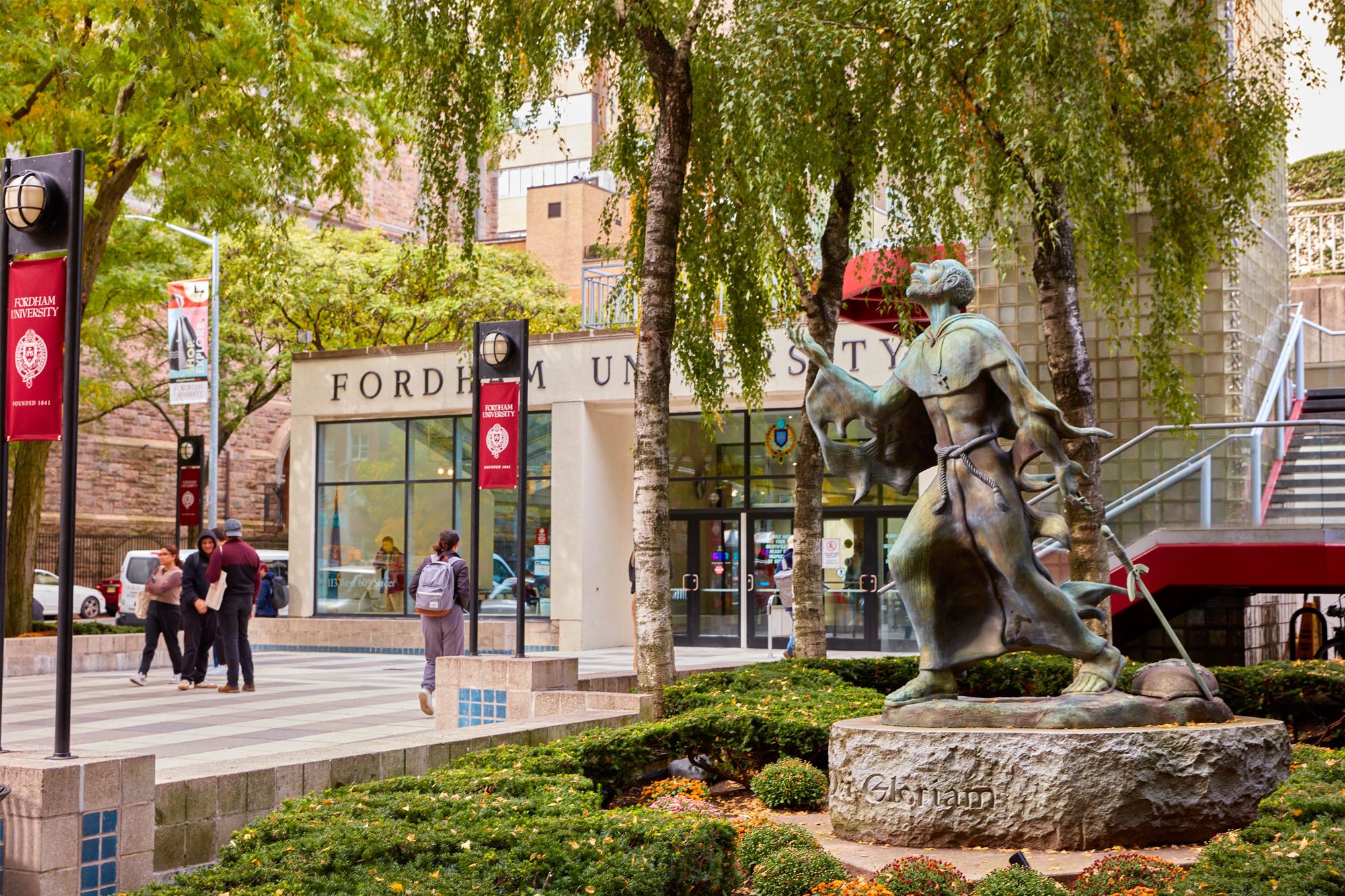
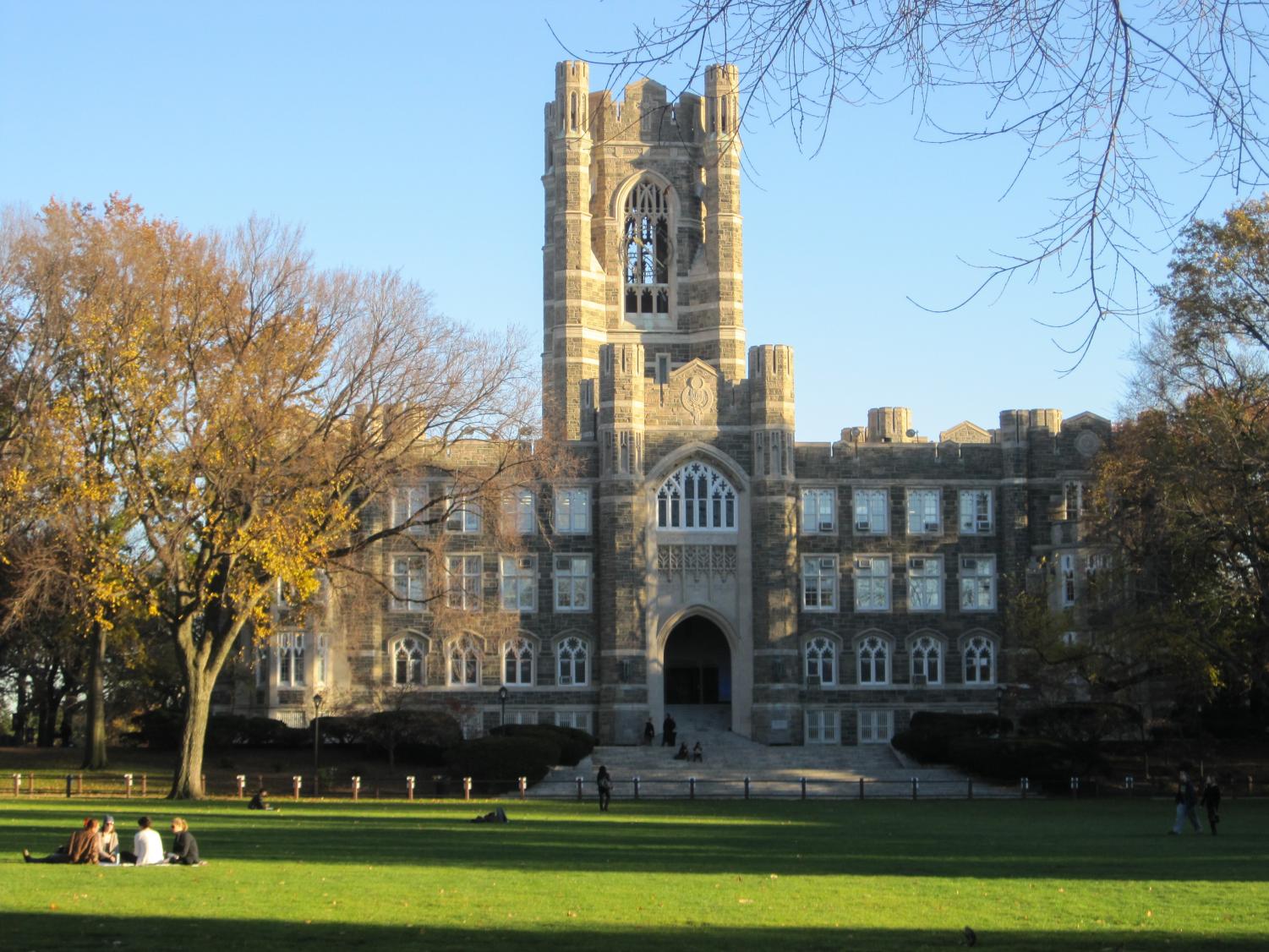
Fordham stands out for its potent and specific combination: it is a traditional Jesuit liberal arts college that happens to be planted in the heart of New York City. This isn't just a geographic fact; it defines the experience. Students get the classic undergraduate community—complete with a leafy quad, Division I sports, and campus clubs at Rose Hill—alongside unparalleled access to internships, culture, and networking in Manhattan, just a Ram Van ride away. The Jesuit mission of educating 'men and women for others' provides an ethical and intellectual framework that distinguishes it from other NYC schools focused purely on pre-professional training.
Its outcomes are arguably its strongest tangible asset. A 96% 'landed rate' for graduates in a tough job market is a powerful testament to the value of its degree and the career preparedness of its students [24, 25]. However, this value comes at a high price, and the university is candid about not meeting the full financial need of all admitted students [43]. For families who can manage the cost, Fordham offers a unique pathway: the formative, community-based college experience coupled with the direct professional launchpad of New York City.
Fordham University seal · sourceCampuses of Fordham University - Wikipedia · sourceFordham College at Lincoln Center | Fordham · sourceFordham University · source