Admit rate has ranged 11%–20% over the last 5 years — notably volatile. Source: IPEDS via Urban Institute.
Acceptance & SAT from Common Data Set / IPEDS; net price, earnings & graduation from the U.S. Dept. of Education College Scorecard. Figures lag ~1–2 years — verify with the school.
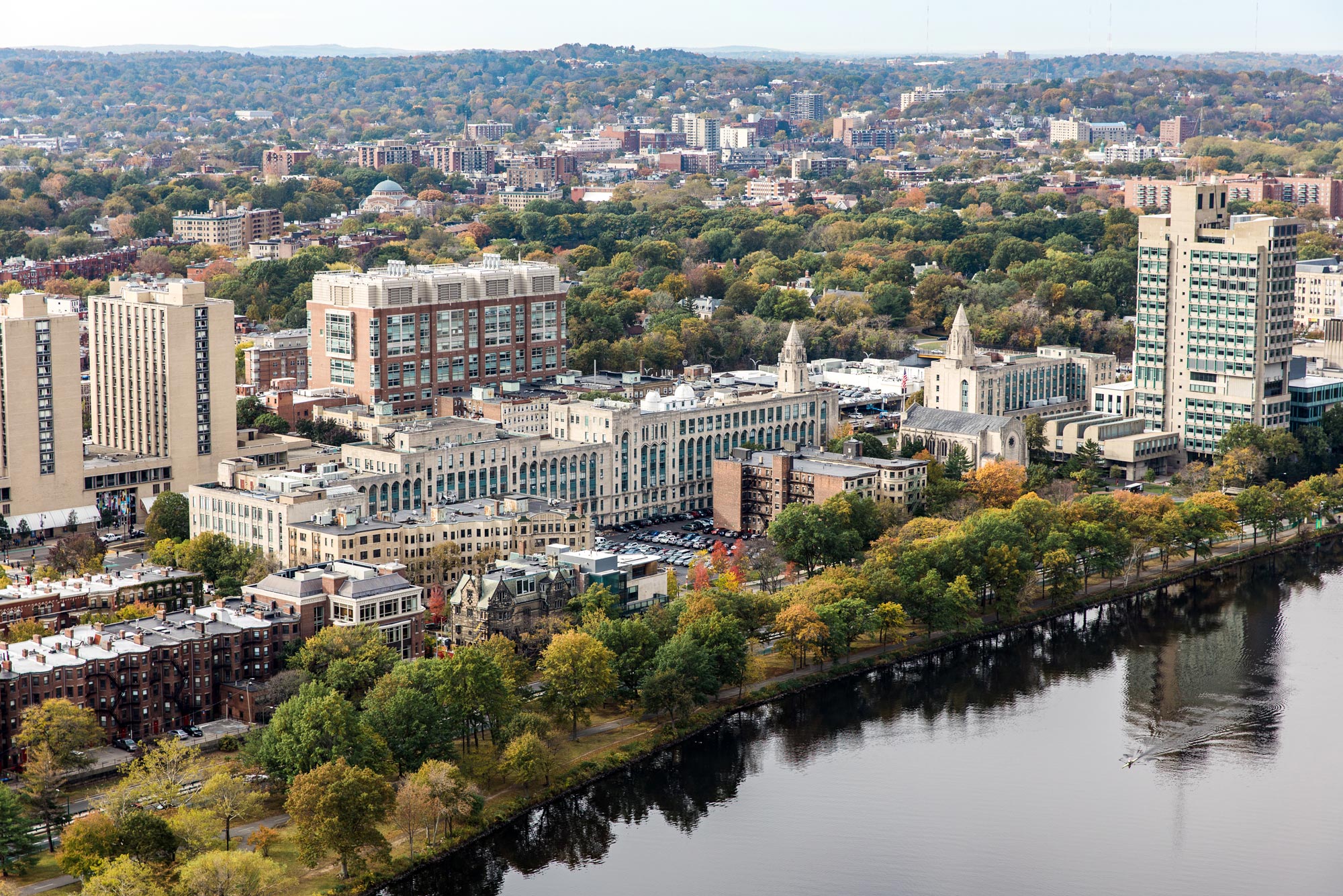
Boston University is a sprawling, ambitious private research university that treats the city of Boston as its campus. It’s a place where intellectual intensity meets urban practicality, offering a staggering 300+ programs of study to a highly driven and diverse student body. The vibe is less about a traditional, cloistered quad and more about plugging into a global network from the heart of a world-class city, backed by a serious financial aid promise that aims to make it accessible.
Admission requirements
Test-optional — scores considered if submitted
Required
High school transcript
Grade point average
Letters of recommendation
College-prep program
TOEFL (non-native English)
Considered (not required)
Class rank
Test scores (SAT/ACT)
Source: IPEDS Admissions survey (2022) via Urban Institute. Covers formal factors only — it does not reflect essays, extracurriculars, or other holistic criteria.
More details
Undergrad enrollment
18,248
In-state tuition
$68,102
Out-of-state tuition
$68,102
No-Loan Policy
Yes, for domestic first-year students
Graduation Rate
89%
Meets Full Need
Yes
ED Share of Class
59%
Demonstrated Interest
Considered
Median Earnings (10yr)
$83,238
Outcomes & value
Outcomes & value
Median earnings (10 yr)
$83,238
Value (earnings ÷ net price)
3.4×
Median debt at graduation
$23,250
Graduation rate
89%
First-year retention
95%
Reducing loan balance (3 yr)
82%
Pell (lower-income) share
19%
First-gen share (among federal-aid recipients)
17%
Financial health
3.0 / 3.0Meets the federal financial-responsibility standard
U.S. Dept. of Education Financial Responsibility Composite Score (FY2022-23). Scale −1.0 to 3.0; ≥1.5 meets the standard. Reported for private nonprofit & for-profit institutions only — public universities are state-backed and not scored, so this is a stability signal, not a ranking.
Top-earning majors
Median earnings by field of study (highest credential), ~2 years after completion.
Computer Science$84,994
Computer Engineering$82,440
Electrical, Electronics, and Communications Engineering$70,829
Mechanical Engineering$68,858
Biomedical/Medical Engineering$67,660
Business Administration, Management and Operations$60,597
Applicants here also applied to
The schools that most often appear alongside BU on applicants’ lists, from our self-reported outcomes corpus.
Co-application frequency from self-reported results — directional peer discovery, not a recommendation.
Campus & location
Campus safety
On-campus violent crimes (2024)
20
Per 1,000 students
0.54
On-campus criminal offenses classed as violent (murder/non-negligent manslaughter, rape, robbery, aggravated assault) for the most recent reported year. Source: U.S. Dept. of Education Campus Safety and Security (Clery Act). Counts reflect what’s reported to the school, and urban campuses often report more partly due to non-student incidents nearby — read alongside campus size and setting, not as a standalone safety verdict.
Climate
Pleasant days / yr
91
Summer high
81°F
Winter low
25°F
Annual rain
49"
Annual snow
31.4"
Natural-hazard risk
Relatively Moderate
Pleasant days counts days per year with a mean temperature of 55–75°F, a high at or below 90°F, a low at or above 45°F, and little precipitation — a transparent comfort measure, not a weighting we invented. Computed from Open-Meteo ERA5 daily history (2019–2023). Natural-hazard risk is the county’s composite rating from the FEMA National Risk Index.
Deep dive — research, future-scholar output & economic mobility▾
Research output
Institutional h-index
1,350
Scholarly works
198,624
Institutional research volume and impact from OpenAlex. The h-index reflects large research universities and will be low for teaching-focused liberal-arts colleges — not a measure of undergraduate quality.
Future-scholar output
Science & engineering PhDstop 34 nationally
Humanities & social-science PhDstop 37 nationally
Share of this school’s graduates who go on to earn research doctorates (2010–20), by national rank and per-capita yield (NSF institutional-yield ratio). A signal of a research-oriented student culture — not a causal promise, since it partly reflects who enrolls. Only top producers appear. Source: NSF NCSES, Baccalaureate Origins of U.S. Research Doctorate Recipients.
Economic mobility
Mobility rate
Quick answers
What is the acceptance rate at Boston University?
Boston University's acceptance rate is approximately 11% (Boston, MA), based on the most recent figures we compiled from public and primary sources.
What SAT score do you need for Boston University?
Admitted students at Boston University typically score 1420–1530 on the SAT (the middle-50% range). Scores outside this band are still admitted, especially with strong applications.
How much does Boston University cost?
At Boston University, the average net price (after aid) is about $24,402 per year. Actual cost varies with financial aid and residency.
How many undergraduates attend Boston University?
Boston University enrolls approximately 18,248 undergraduate students.
Where is Boston University located?
Boston University is located in Boston, MA.
Admissions
Getting into BU is a fiercely competitive proposition, with the university receiving over 76,000 applications for a recent class. The admissions process is holistic, but the numbers paint a clear picture of an exceptionally strong applicant pool. The average admitted student has an unweighted GPA around 3.9, and the middle 50% SAT range is squarely in the 1420–1530 band. Test scores are optional, with recent data showing roughly 44% of applicants and 45% of enrolled students submitted them. Demonstrated interest is a factor BU tracks and considers in its process. The strategic advantage lies in applying Early Decision: for the Class of 2029, a remarkable 59% of the enrolled class was filled through ED, and historical ED have been significantly higher than the overall rate—sometimes nearly triple. The message is clear: for students certain BU is their first choice, applying binding Early Decision is the most impactful way to stand out in the crowd.
Earnings = median of students working ~10 years after entry; debt = median of graduates. Value divides 10-yr earnings by one year’s net price — read it as earnings per dollar of annual cost, not a full lifetime ROI; it favors lower-cost schools. Source: U.S. Dept. of Education College Scorecard. Figures lag ~2 years and reflect all students, not your intended major.
Economics$53,454
Clinical/Medical Laboratory Science/Research and Allied Professions$52,107
Source: U.S. Dept. of Education College Scorecard (field-of-study earnings). Figures cover graduates who received federal aid and lag ~2 years; not all programs report data.
Mobility rate = the share of students who both start in the bottom household-income quintile and reach the top quintile; bottom → top is that chance conditional on starting at the bottom. Source: Opportunity Insights Mobility Report Cards (Chetty, Friedman, Saez, Turner & Yagan). Reflects 1980–82 birth cohorts, so it’s directional, not current.
BU’s academic identity is defined by breadth, flexibility, and a pragmatic, pre-professional energy. With over 300 programs of study spread across its numerous schools and colleges, students can pursue everything from acting and behavioral neuroscience to banking law and pre-medical pathways. The ten most popular majors cluster in business, social sciences, and communication fields. The student-to-faculty ratio is a favorable 10:1, with an average class size of 30, allowing for a mix of large lectures and more intimate seminars. This is not a liberal arts college with a core curriculum; instead, it’s a university where students are expected to navigate a vast menu of options, often with an eye toward specific career outcomes. The academic culture is described as rigorous and driven, attracting students who are "smart, driven, inquisitive." Dual-degree and combined BA/MA programs add to the appeal for high-achievers looking to accelerate their plans.
There is no single, unified "BU experience." The campus is an integrated, mile-long stretch along Commonwealth Avenue, making the city of Boston—with its internships, cultural institutions, and rival schools—an intrinsic part of daily life. The social scene is decentralized and self-directed. With over 500 student clubs, a "swirl of languages, cultures, and religions," and no dominant Greek life, students must be proactive to build their community. Descriptions from students themselves highlight a culture that is "intellectual, dynamic, and stimulating," but can also feel fragmented or lacking a strong central social heartbeat. The large international population is a noted strength, contributing to a global atmosphere. The vibe is independent and career-focused; students are here to work hard, access the city's opportunities, and carve their own path, which can mean the traditional "rah-rah" campus spirit is less pronounced than at some peers.
A BU degree is a strong launchpad, particularly for fields like business, health, and communications. The university reports robust post-graduation outcomes, with a high percentage of graduates employed or in graduate school within six months. Earnings potential is solid and grows significantly over time. While specific major choices impact starting salaries (with theatre arts graduates, for example, showing different early-career earnings than business majors), the long-term financial return is clear. Professional graduate programs, like the School of Law, boast particularly strong placement, with median starting salaries for law graduates reported at $225,000. The overall picture is of a university whose graduates are well-prepared to enter competitive job markets and advanced degree programs, leveraging both the BU name and the unmatched professional network of Boston.
BU’s sticker price is steep, but it is mitigated by one of the most generous financial aid policies among private universities: The BU Promise. This commitment guarantees that the university will meet 100% of the demonstrated financial need for all admitted domestic first-year students. Crucially, for these students, the financial aid award is packaged without loans—replaced entirely by grants, scholarships, and work-study. This is a no-loan policy for eligible students, which dramatically reduces debt burden. The university provides online calculators and quick estimators like "MyinTuition" to help families gauge their potential costs. The net price—the cost after grants and scholarships—varies widely by family financial circumstance, but the policy ensures that an admission offer is not contingent on an ability to pay the full cost.
Boston University stands out for its potent combination of urban integration, academic scale, and a serious commitment to accessibility. Unlike colleges with isolated campuses, BU’s identity is inextricably linked to Boston, offering students immediate access to internships, research hospitals, tech startups, and cultural capital from day one. Its academic model is one of immense choice and pre-professional focus, appealing to self-starters who know how to navigate a large system. The BU Promise is its most distinctive and transformative feature, placing it in an elite group of schools that meet full need with a no-loan package for domestic students. This allows it to compete for talent purely on academic merit, not financial means. Finally, its Early Decision strategy—filling nearly three-fifths of its class through ED—creates a unique admissions dynamic, rewarding committed students with a much higher probability of admission. It’s a university for the ambitious, the independent, and the city-ready.
Boston University seal · sourceBU Charles River Campus Marks 100th Anniversary | BU Today | Boston University · sourceLife in Boston | Questrom School of Business · sourceEast, West, or South Campus? | BU Today | Boston University · source