Admit rate has ranged 47%–59% over the last 5 years — notably volatile. Source: IPEDS via Urban Institute.
Acceptance & SAT from Common Data Set / IPEDS; net price, earnings & graduation from the U.S. Dept. of Education College Scorecard. Figures lag ~1–2 years — verify with the school.
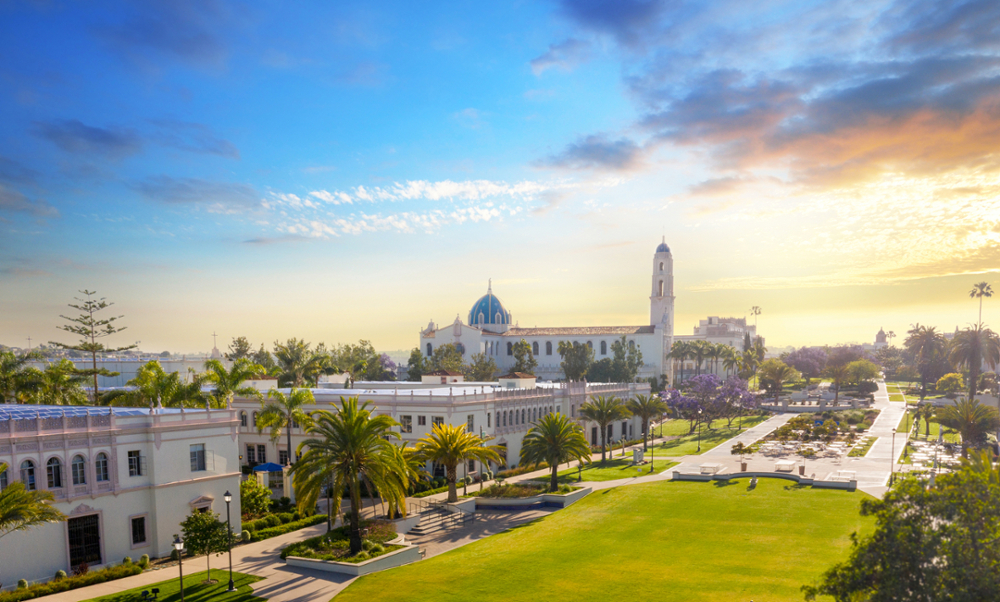
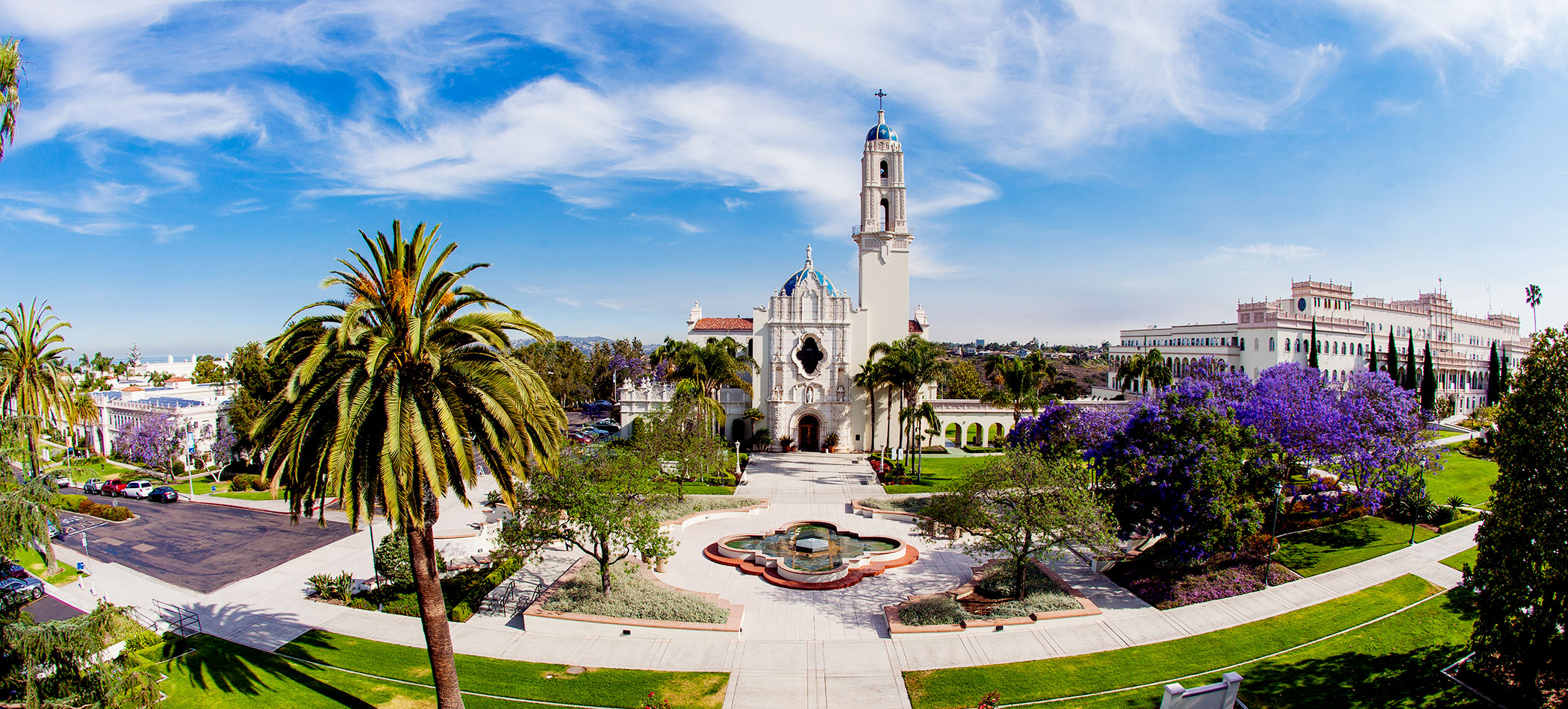
The University of San Diego is a private Catholic university that offers a classic, sun-drenched Southern California college experience wrapped in Spanish Renaissance architecture. It's a place where business and biology majors thrive in a supportive, community-oriented environment, balancing academic rigor with a vibrant social scene that's more polished than party-centric. While the sticker price is steep, the university delivers strong graduation rates and career outcomes, positioning itself as a premier regional option for students seeking a mid-sized, values-infused campus just minutes from the Pacific.
Admission requirements
Test-blind — scores not considered
Required
High school transcript
Grade point average
Letters of recommendation
College-prep program
TOEFL (non-native English)
Considered (not required)
Class rank
Demonstrated competencies
Source: IPEDS Admissions survey (2022) via Urban Institute. Covers formal factors only — it does not reflect essays, extracurriculars, or other holistic criteria.
More details
Undergrad enrollment
5,671
In-state tuition
$59,486
Out-of-state tuition
$59,486
No-Loan Policy
No
Popular Majors
Business; Biological Sciences
Graduation Rate
84%
Meets Full Need
No
Career Outcomes Rate
94%
Demonstrated Interest
Considered
Median Earnings (10yr)
$86,522
Average Student Loan Debt
$26,165
Students Receiving Financial Aid
81%
Outcomes & value
Outcomes & value
Median earnings (10 yr)
$86,522
Value (earnings ÷ net price)
2.8×
Median debt at graduation
$22,940
Graduation rate
84%
First-year retention
91%
Reducing loan balance (3 yr)
80%
Pell (lower-income) share
21%
First-gen share (among federal-aid recipients)
25%
Financial health
3.0 / 3.0Meets the federal financial-responsibility standard
U.S. Dept. of Education Financial Responsibility Composite Score (FY2022-23). Scale −1.0 to 3.0; ≥1.5 meets the standard. Reported for private nonprofit & for-profit institutions only — public universities are state-backed and not scored, so this is a stability signal, not a ranking.
Top-earning majors
Median earnings by field of study (highest credential), ~2 years after completion.
Electrical, Electronics, and Communications Engineering$75,706
Business/Managerial Economics$69,338
Mechanical Engineering$67,324
Real Estate$63,005
Accounting and Related Services$61,962
Finance and Financial Management Services$61,069
Applicants here also applied to
The schools that most often appear alongside University of San Diego on applicants’ lists, from our self-reported outcomes corpus.
Co-application frequency from self-reported results — directional peer discovery, not a recommendation.
Campus & location
Campus safety
On-campus violent crimes (2024)
9
Per 1,000 students
0.94
On-campus criminal offenses classed as violent (murder/non-negligent manslaughter, rape, robbery, aggravated assault) for the most recent reported year. Source: U.S. Dept. of Education Campus Safety and Security (Clery Act). Counts reflect what’s reported to the school, and urban campuses often report more partly due to non-student incidents nearby — read alongside campus size and setting, not as a standalone safety verdict.
Climate
Pleasant days / yr
270
Summer high
75°F
Winter low
47°F
Annual rain
14.4"
Natural-hazard risk
Very High
Pleasant days counts days per year with a mean temperature of 55–75°F, a high at or below 90°F, a low at or above 45°F, and little precipitation — a transparent comfort measure, not a weighting we invented. Computed from Open-Meteo ERA5 daily history (2019–2023). Natural-hazard risk is the county’s composite rating from the FEMA National Risk Index.
Deep dive — research, future-scholar output & economic mobility▾
Research output
Institutional h-index
351
Scholarly works
22,384
Institutional research volume and impact from OpenAlex. The h-index reflects large research universities and will be low for teaching-focused liberal-arts colleges — not a measure of undergraduate quality.
Economic mobility
Mobility rate
2.3%
Bottom → top quintile
47%
From bottom quintile
5%
Mobility rate = the share of students who both start in the bottom household-income quintile and reach the top quintile; bottom → top is that chance conditional on starting at the bottom. Source: Opportunity Insights Mobility Report Cards (Chetty, Friedman, Saez, Turner & Yagan). Reflects 1980–82 birth cohorts, so it’s directional, not current.
Quick answers
What is the acceptance rate at University of San Diego?
University of San Diego's acceptance rate is approximately 52% (San Diego, CA), based on the most recent figures we compiled from public and primary sources.
How much does University of San Diego cost?
At University of San Diego, the average net price (after aid) is about $30,365 per year. Actual cost varies with financial aid and residency.
How many undergraduates attend University of San Diego?
University of San Diego enrolls approximately 5,671 undergraduate students.
Where is University of San Diego located?
University of San Diego is located in San Diego, CA.
Admissions
Admissions at USD are selective but not hyper-competitive, with the process favoring students who show they're a serious fit. The university offers an Early Decision (ED) option, which it actively promotes as a way for applicants to "increase your chances of admission" by demonstrating that USD is their "clear first-choice university." While applying ED "does not guarantee admission," it allows the admissions office to identify highly interested candidates early. For the Fall 2026 cycle, the Early Decision was 38%, notably higher than the overall rate. The middle 50% GPA range for admitted ED students was a weighted 3.8 to 4.2.
For all applicants, the most important academic factor is the rigor of the secondary school record, followed by class rank, GPA, standardized test scores, and the application essay. Among non-academic factors, the level of an applicant's interest is considered—meaning demonstrated interest, such as campus visits or engagement with admissions, can play a role in the decision. This has led to some speculation among applicants about " protection" for high-achieving students who may not show strong interest, though this is not confirmed by official policy. The admitted student profile typically shows strong academic preparation, with the university seeking those who will contribute to its supportive learning community.
Earnings = median of students working ~10 years after entry; debt = median of graduates. Value divides 10-yr earnings by one year’s net price — read it as earnings per dollar of annual cost, not a full lifetime ROI; it favors lower-cost schools. Source: U.S. Dept. of Education College Scorecard. Figures lag ~2 years and reflect all students, not your intended major.
International Business$57,995
Architectural History, Criticism, and Conservation$52,107
Source: U.S. Dept. of Education College Scorecard (field-of-study earnings). Figures cover graduates who received federal aid and lag ~2 years; not all programs report data.
USD provides a comprehensive liberal arts foundation alongside strong pre-professional programs, all within a framework that emphasizes "holistic student growth." The academic experience is defined by "academic rigor" and a "supportive learning community" facilitated by distinguished faculty. The university offers a wide array of majors and minors for undergraduates to explore, learn, and grow intellectually.
The most popular majors cluster in two key areas: Business, Management, Marketing, and Related Support Services and Biological and Biomedical Sciences. This creates a campus where aspiring entrepreneurs and future doctors or researchers find ample resources and like-minded peers. The academic culture is often described as collaborative rather than cutthroat, aligning with the university's mission to support personal development alongside intellectual achievement. Students have many options to engage deeply with their studies, from first-year undergraduate research opportunities to dedicated pathways for graduate students.
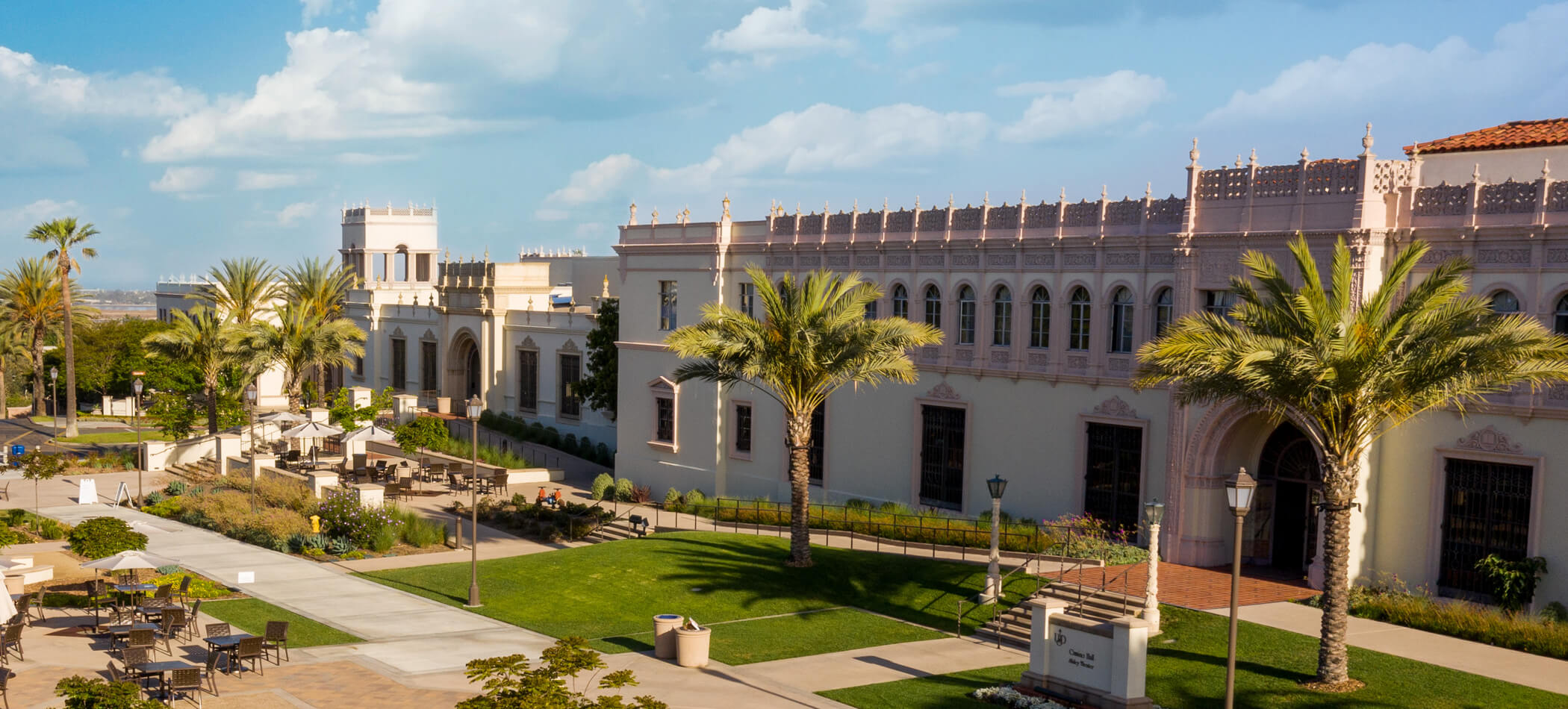
Life at USD is an active, engaged blend of social, spiritual, and recreational pursuits set against a stunning campus of Spanish Renaissance architecture. The university fosters a distinct campus culture described as the "habits and meanings that manifest in felt realities and everyday experiences of our community." While founded in the Catholic tradition, the religious feel on campus is present but not overwhelmingly dominant, allowing students of all backgrounds to find their place. The student experience is intentionally broad, with countless ways to get involved through student organizations, community service opportunities, and recreational activities.
Prospective students and parents often inquire about the social scene, specifically regarding Greek life and a "superficial mindset." The culture is not dominated by Greek life to the extent seen at large state schools, and the student body tends to be sociable, outdoorsy, and aesthetically conscious—a reflection of its beautiful San Diego setting. The vibe is more polished and community-oriented than a non-stop party school. Students easily experience all that the university and the surrounding region have to offer, from campus events to the beaches and city life just minutes away.
USD invests in student success, and the numbers show it pays off. The university boasts a strong 94% career outcomes rate for its graduates. This figure encompasses a range of post-graduate paths: 66% are employed, 22.5% are furthering their education in graduate or professional schools, 2.8% have entered the military, and 0.6% are in full-time service programs. Only 6% of graduates are actively seeking employment at the time of the survey.
This success is built on a foundation of high retention and graduation. USD closely tracks its six-year graduation rate as a key measure of student success. The result is a graduating class that enters the workforce with solid earning potential. Data shows strong salary growth over time, with median earnings increasing significantly from the first year after graduation to the fifth year and beyond.
Attending USD is a significant financial investment, but the university works to make it accessible through substantial aid packages. The average net price—the cost after grants and scholarships are applied—is a key figure for families. A large majority of students receive help: 81% of current undergraduates receive financial assistance, with the university awarding over $160 million in grants and scholarships annually. The average financial aid package can be substantial.
However, it is important to understand the university's aid policy. USD does not meet 100% of demonstrated financial need for all admitted students. Due to limited funding, the university states it "is not able to meet every student's full financial need." Consequently, USD is not a 'no-loan' institution; loans are a standard part of many aid packages. The result is that the average student loan debt upon graduation is $26,165. Students and families are encouraged to use the university's official Calculator for a personalized estimate of costs after aid.
The University of San Diego carves out a distinctive niche by fusing a classic, values-oriented liberal arts education with the irresistible appeal of Southern California living. It's not just the postcard-perfect campus of Spanish Renaissance architecture that sets it apart; it's the intentional cultivation of a supportive, community-focused culture that prioritizes holistic development. While academically rigorous, the environment is notably collaborative, a stark contrast to the intense competition found at some of its UC neighbors.
USD excels in creating clear pathways to success, particularly for students in its powerhouse business and biological sciences programs. This practical focus, combined with a 94% career outcomes rate, assures families of a return on investment. Furthermore, its admissions strategy—emphasizing Early Decision and considering demonstrated interest—allows it to build a cohesive, engaged student body that actively chooses USD as a first choice. It offers a quintessential private university experience: mid-sized, personal, and community-driven, but with the added bonus of San Diego's climate, culture, and career opportunities right at its doorstep. It's for the student who wants the traditional college community without sacrificing access to a dynamic coastal city.
University of San Diego seal · sourceVisit - Undergraduate Admission - University of San Diego · sourceVisit Campus - University of San Diego · sourceCampus Space Study - Offices and Departments - University of San Diego · source