Admit rate has ranged 30%–39% over the last 5 years — notably volatile, though the latest figure above (41%) falls outside that window. Source: IPEDS via Urban Institute.
Acceptance & SAT from Common Data Set / IPEDS; net price, earnings & graduation from the U.S. Dept. of Education College Scorecard. Figures lag ~1–2 years — verify with the school.
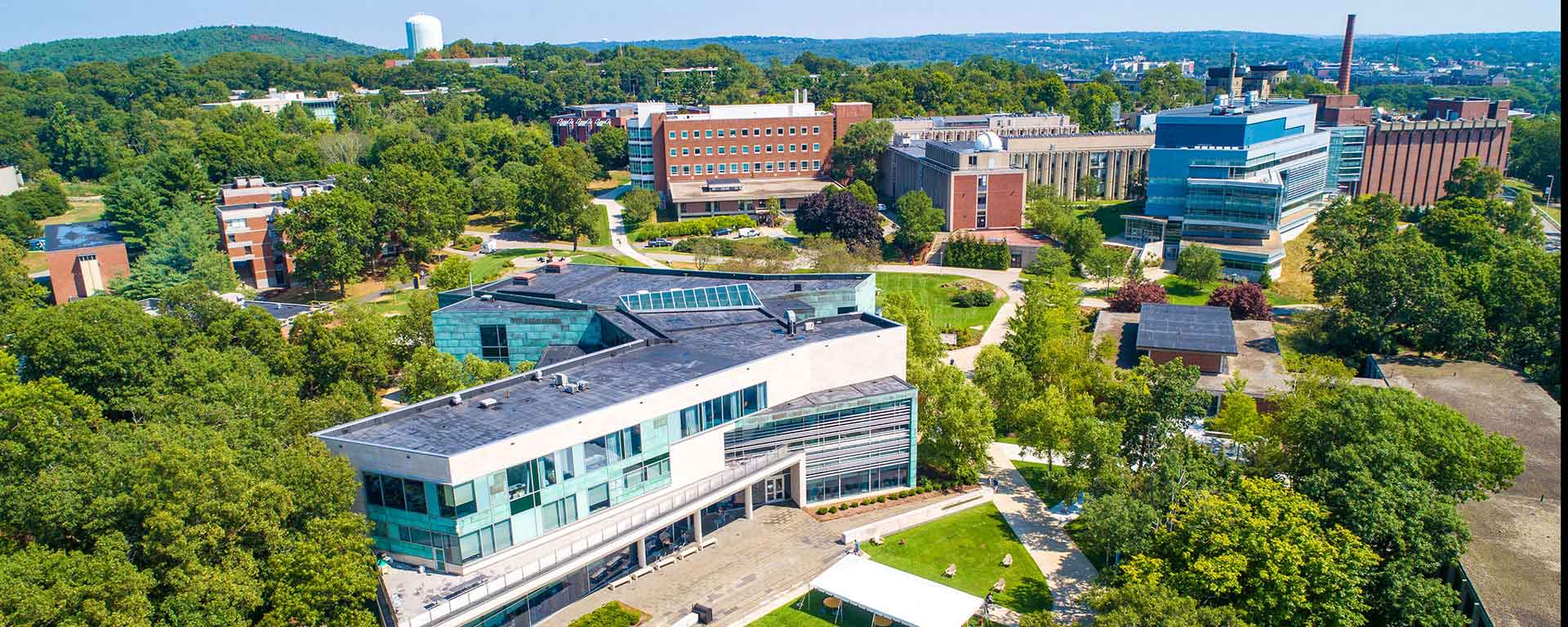
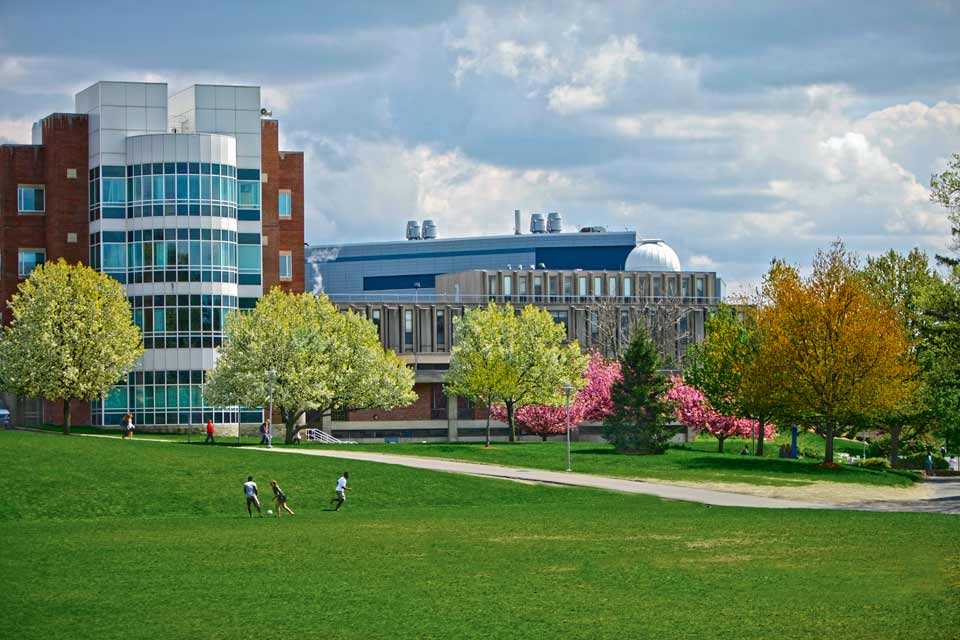
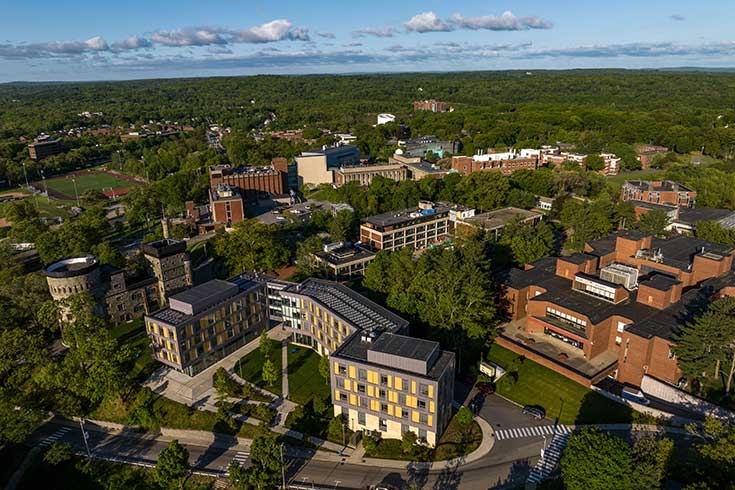
Brandeis University, a mid-sized private research institution in Waltham, Massachusetts, blends rigorous liberal arts with a progressive, activist ethos. The campus culture thrives on inclusivity and debate, anchored by its Jewish heritage, and delivers strong outcomes with an 86% graduation rate and median earnings of $77,231 a decade after entry. This comes at a steep price, however, with an average net cost of $35,736, attracting a capable student body where the middle 50% of admitted students score between 1390 and 1520 on the SAT.
Admission requirements
Test-optional — scores considered if submitted
Required
High school transcript
Letters of recommendation
College-prep program
TOEFL (non-native English)
Considered (not required)
Grade point average
Class rank
Test scores (SAT/ACT)
Source: IPEDS Admissions survey (2022) via Urban Institute. Covers formal factors only — it does not reflect essays, extracurriculars, or other holistic criteria.
More details
Undergrad enrollment
3,618
In-state tuition
$68,080
Out-of-state tuition
$68,080
Location
Waltham, MA
Notable Fact
Meets 100% of demonstrated need
Student-Faculty Ratio
10:1
4-Year Graduation Rate
86%
Median Earnings (5 Yrs)
$76,579
Outcomes & value
Outcomes & value
Median earnings (10 yr)
$77,231
Value (earnings ÷ net price)
2.2×
Median debt at graduation
$25,648
Graduation rate
86%
First-year retention
87%
Reducing loan balance (3 yr)
83%
Pell (lower-income) share
15%
First-gen share (among federal-aid recipients)
16%
Financial health
2.7 / 3.0Meets the federal financial-responsibility standard
U.S. Dept. of Education Financial Responsibility Composite Score (FY2022-23). Scale −1.0 to 3.0; ≥1.5 meets the standard. Reported for private nonprofit & for-profit institutions only — public universities are state-backed and not scored, so this is a stability signal, not a ranking.
Top-earning majors
Median earnings by field of study (highest credential), ~2 years after completion.
Computer Science$80,309
Economics$66,401
Business/Commerce, General$54,192
International/Globalization Studies$45,249
Political Science and Government$44,356
Rhetoric and Composition/Writing Studies$40,368
Applicants here also applied to
The schools that most often appear alongside Brandeis on applicants’ lists, from our self-reported outcomes corpus.
Co-application frequency from self-reported results — directional peer discovery, not a recommendation.
Campus & location
Campus safety
On-campus violent crimes (2024)
3
Per 1,000 students
0.58
On-campus criminal offenses classed as violent (murder/non-negligent manslaughter, rape, robbery, aggravated assault) for the most recent reported year. Source: U.S. Dept. of Education Campus Safety and Security (Clery Act). Counts reflect what’s reported to the school, and urban campuses often report more partly due to non-student incidents nearby — read alongside campus size and setting, not as a standalone safety verdict.
Climate
Pleasant days / yr
90
Summer high
82°F
Winter low
24°F
Annual rain
49.8"
Annual snow
33.5"
Natural-hazard risk
Relatively High
Pleasant days counts days per year with a mean temperature of 55–75°F, a high at or below 90°F, a low at or above 45°F, and little precipitation — a transparent comfort measure, not a weighting we invented. Computed from Open-Meteo ERA5 daily history (2019–2023). Natural-hazard risk is the county’s composite rating from the FEMA National Risk Index.
Deep dive — research, future-scholar output & economic mobility▾
Research output
Institutional h-index
649
Scholarly works
36,199
Institutional research volume and impact from OpenAlex. The h-index reflects large research universities and will be low for teaching-focused liberal-arts colleges — not a measure of undergraduate quality.
Future-scholar output
Science & engineering PhDsper-capita yield 6.6
Share of this school’s graduates who go on to earn research doctorates (2010–20), by national rank and per-capita yield (NSF institutional-yield ratio). A signal of a research-oriented student culture — not a causal promise, since it partly reflects who enrolls. Only top producers appear. Source: NSF NCSES, Baccalaureate Origins of U.S. Research Doctorate Recipients.
Economic mobility
Mobility rate
2.0%
Bottom → top quintile
Quick answers
What is the acceptance rate at Brandeis University?
Brandeis University's acceptance rate is approximately 41% (Waltham, MA), based on the most recent figures we compiled from public and primary sources.
What SAT score do you need for Brandeis University?
Admitted students at Brandeis University typically score 1390–1520 on the SAT (the middle-50% range). Scores outside this band are still admitted, especially with strong applications.
How much does Brandeis University cost?
At Brandeis University, the average net price (after aid) is about $35,736 per year. Actual cost varies with financial aid and residency.
How many undergraduates attend Brandeis University?
Brandeis University enrolls approximately 3,618 undergraduate students.
Where is Brandeis University located?
Brandeis University is located in Waltham, MA.
Admissions
Brandeis is selective but not cutthroat, with fluctuating between 34-45% in recent years. The Class of 2030 saw 11,282 applicants for a 35.33% admit rate, while Fall 2025 numbers show a slightly higher 45% acceptance from 9,748 applications. Middle 50% SAT scores land between 1380-1520 (or 31-34 ACT), with admitted students averaging a 3.84 GPA. Early Decision applicants enjoy a modest boost—the ED acceptance rate runs "slightly higher" than the overall rate. Notably, female applicants (44% acceptance) outperform male peers (36% acceptance) in recent cycles.
Brandeis punches above its weight in social sciences and humanities, with students praising professors who "make an effort to get to know students"—a boon for grad school aspirants. The university offers 47 majors and 50 minors across four schools, emphasizing interdisciplinary study (think: Health: Science, Society and Policy or Business and Film). While STEM programs exist, the intellectual energy skews toward politics, philosophy, and creative arts. Small classes are the norm, with a 10:1 student-faculty ratio. Standout faculty include neuroscience and computer science researchers, though some Reddit users note science facilities lag behind peer institutions.
Earnings = median of students working ~10 years after entry; debt = median of graduates. Value divides 10-yr earnings by one year’s net price — read it as earnings per dollar of annual cost, not a full lifetime ROI; it favors lower-cost schools. Source: U.S. Dept. of Education College Scorecard. Figures lag ~2 years and reflect all students, not your intended major.
Education, General
$39,009
Mathematics$38,289
Source: U.S. Dept. of Education College Scorecard (field-of-study earnings). Figures cover graduates who received federal aid and lag ~2 years; not all programs report data.
Mobility rate = the share of students who both start in the bottom household-income quintile and reach the top quintile; bottom → top is that chance conditional on starting at the bottom. Source: Opportunity Insights Mobility Report Cards (Chetty, Friedman, Saez, Turner & Yagan). Reflects 1980–82 birth cohorts, so it’s directional, not current.
The campus vibe is intellectually intense but not cutthroat, with a mix of "introverts, extroverts, nerds, and frat bros/sorority sisters" (per Reddit). Traditions skew activist—think protests, political debates, and social justice initiatives. While Brandeis was founded to serve Jewish students, today only about 30% of undergrads identify as Jewish; some non-Jewish students report feeling excluded from certain circles. Weekends see a split between Boston excursions (just 9 miles away) and low-key dorm hangs, as Greek life claims only 15% of students. The "Community Living" ethos fosters tight-knit dorms, though some lament dated facilities.
Brandeis delivers strong ROI: 86% graduate in six years (88% per federal data), with 98% of the Class of 2025 employed or in grad school within six months. Mid-career earnings hit $76,579—well above the national average—thanks to strong pipelines to law, academia, and Boston-area tech. The Hiatt Career Center reports 60% of grads pursue advanced degrees within 10 years, with many landing at elite programs. Notably, alumni networks are tightest in Northeast Jewish professional circles, though the university is expanding STEM industry connections.
Sticker shock is real at $85,000+ total annual cost, but Brandeis meets 100% of demonstrated need through programs like the "Brandeis Commitment"—which covers full tuition for families earning <$75K. The average after aid is $45,565, with 60% of undergrads receiving need-based grants. Merit scholarships are rare; the aid focus is squarely on socioeconomic diversity. One caveat: Some students report aid packages shrink after freshman year, so budget for potential increases.
Brandeis occupies a unique niche: a research powerhouse with the soul of a liberal arts college, where Talmudic debates share quad space with climate protests. Its defining tension—between Jewish roots and secular progressivism—fuels campus discourse. The university shines for students who want: 1) Ivy-caliber humanities professors who actually mentor undergrads, 2) A launchpad for law/grad school (note the 60% advanced degree rate), and 3) A community where activism isn't extracurricular—it's the curriculum. Just know the tradeoffs: You'll get more attention than at Brown but fewer resources than at Northwestern, and that Boston proximity? It's a 30-minute shuttle ride.
Brandeis University logo · sourceVisit | Undergraduate Admissions | Brandeis University · sourceVisiting Brandeis and Waltham | Admissions | Graduate Studies in the Arts and Sciences | Brandeis University · sourceOffice of Campus Planning | Brandeis University · source