Admit rate has ranged 39%–47% over the last 5 years. Source: IPEDS via Urban Institute.
Acceptance & SAT from Common Data Set / IPEDS; net price, earnings & graduation from the U.S. Dept. of Education College Scorecard. Figures lag ~1–2 years — verify with the school.
California State University, Long Beach is the unapologetic workhorse of the California State University system, a massive public university where practical, career-focused education meets a vibrant, diverse Southern California campus. Known locally as 'The Beach,' it combines the accessibility of a state school with a level of selectivity and programmatic prestige—particularly in business, engineering, and the arts—that increasingly rivals its UC neighbors, all while delivering one of the lowest net prices in the nation.
Admission requirements
Test-blind — scores not considered
Required
High school transcript
Grade point average
College-prep program
TOEFL (non-native English)
Source: IPEDS Admissions survey (2022) via Urban Institute. Covers formal factors only — it does not reflect essays, extracurriculars, or other holistic criteria.
More details
Undergrad enrollment
35,924
In-state tuition
$7,350
Out-of-state tuition
$19,950
Early Decision
Not offered
Graduation Rate
69%
Application Deadline
November 30
Demonstrated Interest
Not considered
Median Earnings (10yr)
$64,403
Social Mobility Ranking
#3 in the nation
First-Year Students Receiving Aid
82%
Outcomes & value
Outcomes & value
Median earnings (10 yr)
$64,403
Value (earnings ÷ net price)
6.2×
Median debt at graduation
$14,289
Graduation rate
69%
First-year retention
87%
Reducing loan balance (3 yr)
71%
Pell (lower-income) share
50%
First-gen share (among federal-aid recipients)
49%
Top-earning majors
Median earnings by field of study (highest credential), ~2 years after completion.
Registered Nursing, Nursing Administration, Nursing Research and Clinical Nursing$85,795
Construction Engineering Technology/Technician$81,175
Biomedical/Medical Engineering$73,949
Computer Engineering$68,499
Electrical, Electronics, and Communications Engineering$67,287
Mechanical Engineering
Applicants here also applied to
The schools that most often appear alongside California State University-Long Beach on applicants’ lists, from our self-reported outcomes corpus.
On-campus criminal offenses classed as violent (murder/non-negligent manslaughter, rape, robbery, aggravated assault) for the most recent reported year. Source: U.S. Dept. of Education Campus Safety and Security (Clery Act). Counts reflect what’s reported to the school, and urban campuses often report more partly due to non-student incidents nearby — read alongside campus size and setting, not as a standalone safety verdict.
Climate
Pleasant days / yr
277
Summer high
78°F
Winter low
47°F
Annual rain
14.7"
Natural-hazard risk
Very High
Pleasant days counts days per year with a mean temperature of 55–75°F, a high at or below 90°F, a low at or above 45°F, and little precipitation — a transparent comfort measure, not a weighting we invented. Computed from Open-Meteo ERA5 daily history (2019–2023). Natural-hazard risk is the county’s composite rating from the FEMA National Risk Index.
Deep dive — research, future-scholar output & economic mobility▾
Research output
Institutional h-index
270
Scholarly works
21,753
Institutional research volume and impact from OpenAlex. The h-index reflects large research universities and will be low for teaching-focused liberal-arts colleges — not a measure of undergraduate quality.
Economic mobility
Mobility rate
4.4%
Bottom → top quintile
38%
From bottom quintile
12%
Mobility rate = the share of students who both start in the bottom household-income quintile and reach the top quintile; bottom → top is that chance conditional on starting at the bottom. Source: Opportunity Insights Mobility Report Cards (Chetty, Friedman, Saez, Turner & Yagan). Reflects 1980–82 birth cohorts, so it’s directional, not current.
Quick answers
What is the acceptance rate at California State University-Long Beach?
California State University-Long Beach's acceptance rate is approximately 46% (Long Beach, CA), based on the most recent figures we compiled from public and primary sources.
How much does California State University-Long Beach cost?
At California State University-Long Beach, the average net price (after aid) is about $10,440 per year. Actual cost varies with financial aid and residency.
How many undergraduates attend California State University-Long Beach?
California State University-Long Beach enrolls approximately 35,924 undergraduate students.
Where is California State University-Long Beach located?
California State University-Long Beach is located in Long Beach, CA.
Admissions
CSULB operates on the California State University's eligibility model, but don't mistake that for a guarantee. With tens of thousands of applications for a freshman class of around 5,700, it's a selective institution where admission is far from automatic. The university received 83,971 applications for the class of 2028 and admitted 38,854, resulting in the canonical of 46%. The process is heavily formulaic, prioritizing California residents and evaluating applicants based on a calculated Eligibility Index that combines GPA and test scores (though SAT/ACT scores are not currently required for most applicants). The application deadline is firm: November 30. There is no early decision or early action program; all applications are considered in the regular pool. Demonstrated interest—campus visits, contact with admissions officers—is not a factor in admissions decisions, aligning with the CSU system's objective, numbers-driven approach.
Earnings = median of students working ~10 years after entry; debt = median of graduates. Value divides 10-yr earnings by one year’s net price — read it as earnings per dollar of annual cost, not a full lifetime ROI; it favors lower-cost schools. Source: U.S. Dept. of Education College Scorecard. Figures lag ~2 years and reflect all students, not your intended major.
$65,029
Computer Science$62,792
Civil Engineering$60,943
Source: U.S. Dept. of Education College Scorecard (field-of-study earnings). Figures cover graduates who received federal aid and lag ~2 years; not all programs report data.
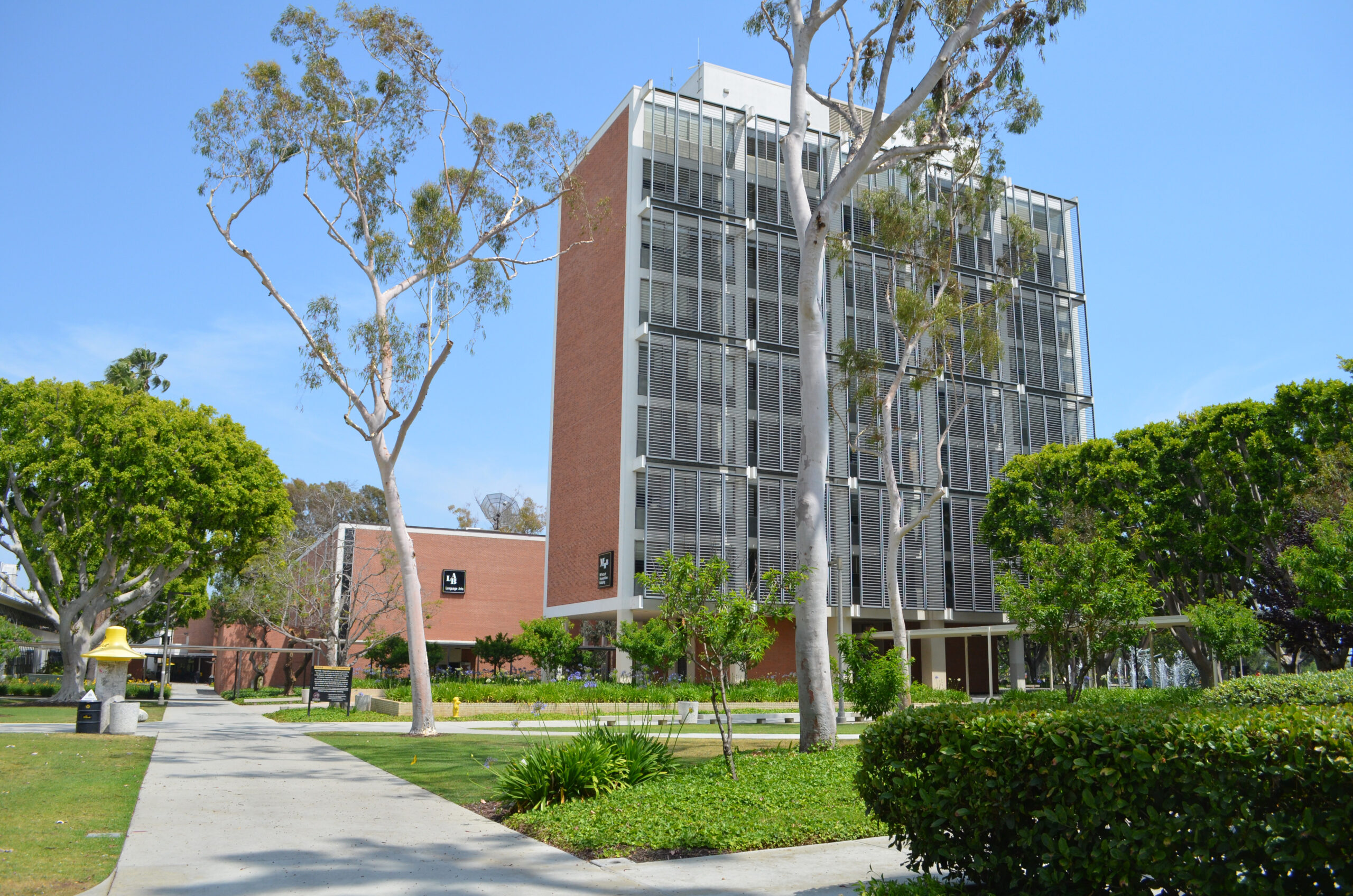
CSULB's academic identity is built on applied, hands-on learning designed to launch careers. It's organized into eight colleges: the Colleges of the Arts, Business, Education, Engineering, Health and Human Services, Liberal Arts, Natural Sciences and Mathematics, and Professional and International Education. The scale is immense, offering a Bachelor of Arts in Liberal Studies, a Master of Arts in various fields, and numerous teaching credentials. The vibe is pragmatic; as one student review notes, professors 'genuinely care to making classes relevant' to prepare students for the workforce. This practical focus has bred standout, highly respected programs. Online discussions highlight its 'highly respected and ranked Operations and Supply Chain major concentrations,' and strong reputations in engineering, business, and law. It's not a liberal arts college in the traditional sense—the emphasis is on depth within a major and direct professional application, a fact reflected in its high ranking for social mobility, where it places number three in the nation.
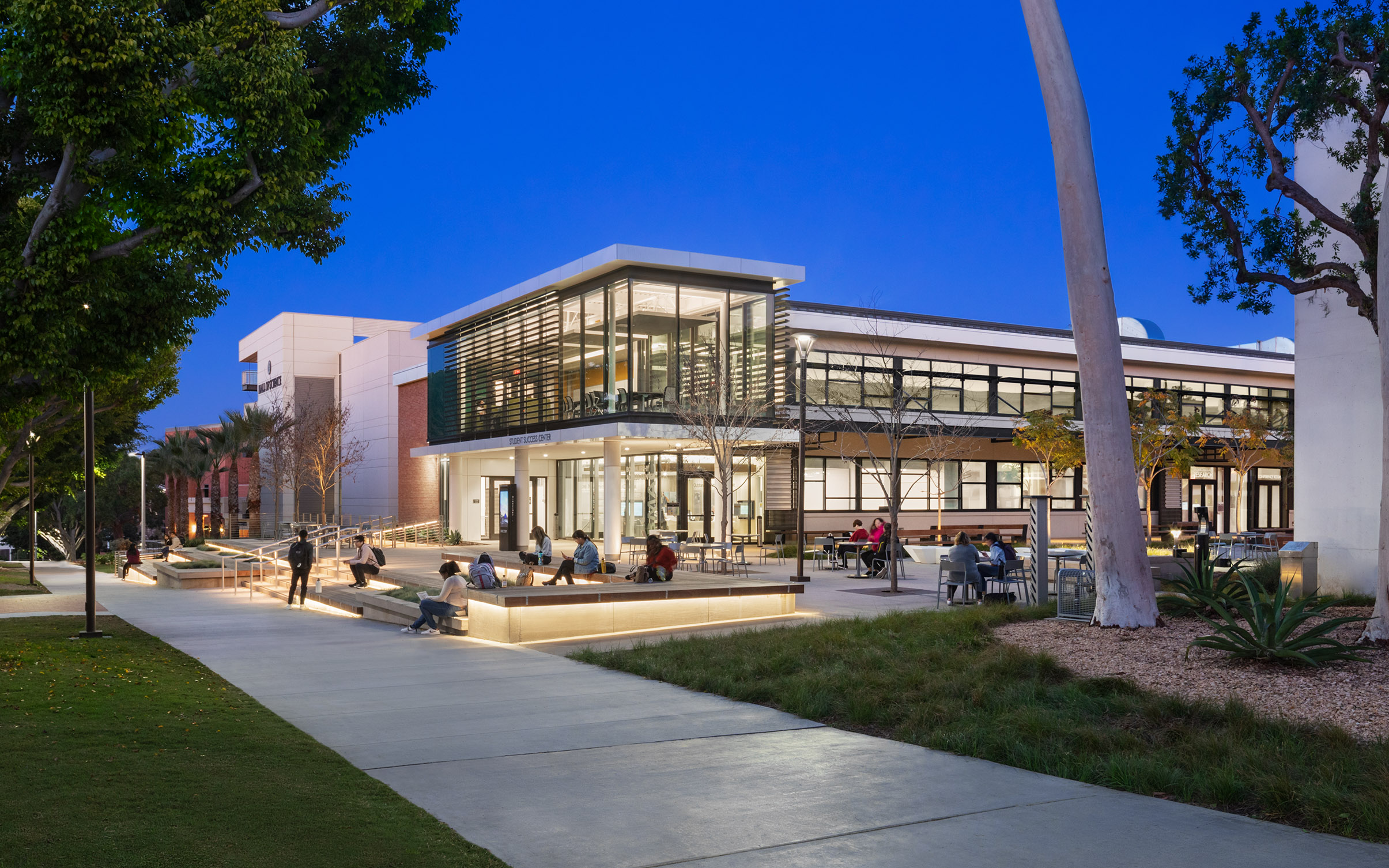
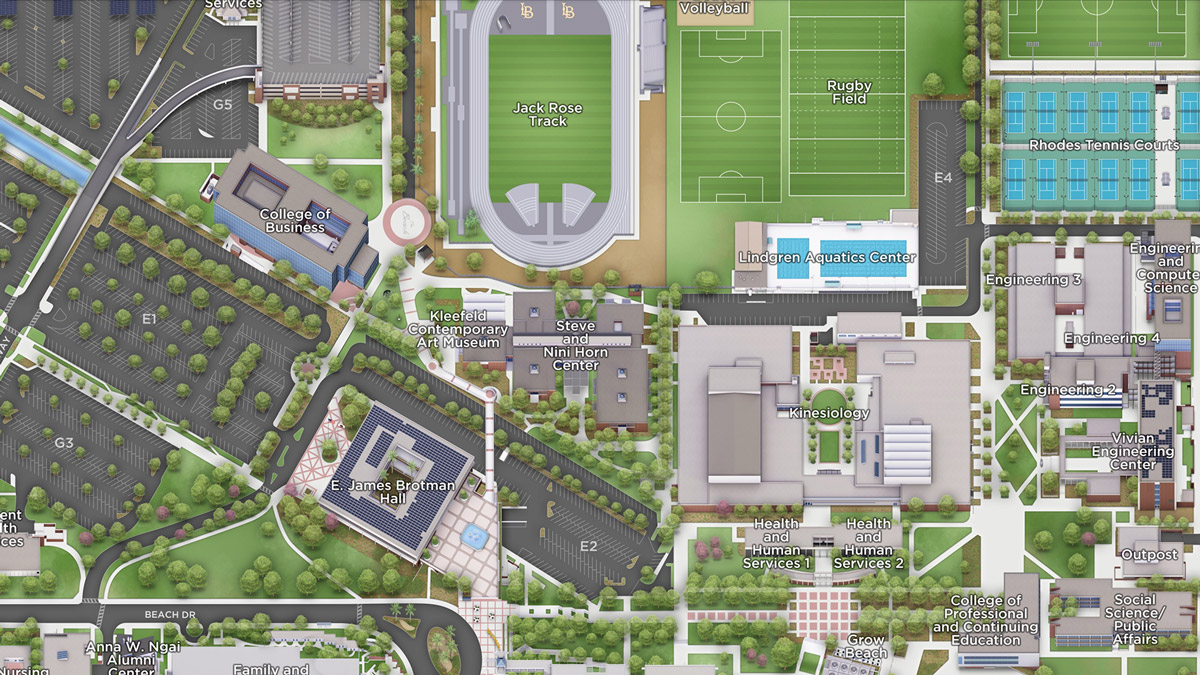
Life at 'The Beach' is defined by its location and its size. The 322-acre campus near the ocean provides a classic Southern California backdrop, but the social scene is largely what you make it. With over 300 student organizations, a Greek life system, and 'hundreds of small and large events,' there is no shortage of ways to get involved. The Office of Student Life and Development explicitly aims to create 'inclusive communities that foster student health and wellness, personal and social development, academic excellence and good citizenship.' However, the commuter-school reality is palpable. Pre-COVID discussions on student forums questioned the social life, indicating that for many, campus can feel quiet after class hours. The experience is highly dependent on proactive effort to join clubs, attend events, or live near campus. The student body is notably diverse, and the campus life reflects that, offering a wide array of cultural and interest-based groups. It's a 'vibrant campus life' for those who seek it out, but not one that automatically envelops every student.
This is where the CSULB value proposition shines. The university's mission is to propel students, particularly those from lower-income backgrounds, into the middle class, and the data shows it works. The canonical graduation rate is 69%, though other sources cite rates as high as 81% for recent cohorts. The payoff is strong: the canonical median earnings 10 years after entry is $64,403, significantly outpacing the national average for four-year colleges. More immediate post-graduate data shows earnings of $38,082 one year out and $62,005 after five years. Program-specific outcomes can be exceptional; for example, the Physical Therapy program has reported graduation rates of 97-100% and 100% employment rates for recent classes. The combination of a practical curriculum, strong industry connections in Southern California, and a low creates a powerful return on investment, cementing its reputation as an engine of economic mobility.
Affordability is CSULB's superpower. The canonical average after aid is a remarkably low $10,440. For context, the College Scorecard notes the midpoint average annual cost for four-year colleges is over $20,000. The university is a need-aware institution and does not advertise a policy of meeting 100% of demonstrated financial need without loans. However, it provides substantial aid through grants and scholarships. In the most recent year, 82% of full-time, first-year undergraduates received grant or scholarship aid. The average need-based scholarship or grant award for first-year students is reported as $11,389, with other sources citing average grant awards around $9,931 to $10,062. The financial aid office actively guides students through the FAFSA and Dream Act processes and promotes scholarship opportunities. The bottom line: for in-state students, CSULB represents one of the highest-value public education deals in the country, keeping debt low while delivering strong career outcomes.
CSULB stands out for mastering a difficult balance: it is both massively accessible and genuinely selective; it is affordable yet produces premium outcomes; it feels like a classic commuter school but houses programs with national prestige. Its rise in perception—captured in student forums wondering 'how the hell is csulb so prestigious all of a sudden'—isn't an accident. It's the result of decades of building rigorous, industry-aligned programs in business, engineering, health sciences, and the arts that directly feed the Southern California economy. It's a social mobility powerhouse, ranked #3 in the nation, intentionally designed to be the on-ramp to professional success for and working-class students. You won't find Gothic quads or centuries-old traditions here. Instead, you find a sun-drenched, no-nonsense campus where the value proposition is crystal clear: a low-cost, high-quality education that gets you a job. In an era of soaring student debt, CSULB's model isn't just appealing—it's increasingly seen as brilliant.
California State University-Long Beach seal · sourceCal State Long Beach | Student Success Center · sourceCalifornia State University, Long Beach - LA Conservancy · sourceOur Campus | California State University Long Beach · source