Admit rate has ranged 78%–85% over the last 5 years. Source: IPEDS via Urban Institute.
Acceptance & SAT from Common Data Set / IPEDS; net price, earnings & graduation from the U.S. Dept. of Education College Scorecard. Figures lag ~1–2 years — verify with the school.
Indiana University-Bloomington is a Big Ten powerhouse with a surprisingly accessible 78% acceptance rate, where students flock for its top-ranked Kelley School of Business and Jacobs School of Music. The campus buzzes with Big Ten sports energy and a quintessential college-town vibe in Bloomington, yet maintains strong graduation rates (81%) and mid-career earnings ($66,705) that defy its Midwestern modesty.
Admission requirements
Test-optional — scores considered if submitted
Required
High school transcript
Grade point average
Class rank
College-prep program
TOEFL (non-native English)
Considered (not required)
Letters of recommendation
Test scores (SAT/ACT)
Source: IPEDS Admissions survey (2022) via Urban Institute. Covers formal factors only — it does not reflect essays, extracurriculars, or other holistic criteria.
More details
Undergrad enrollment
37,806
In-state tuition
$12,144
Out-of-state tuition
$41,891
Location Vibe
Big Ten college town, progressive enclave
Notable Programs
Kelley Business, Jacobs Music, Luddy Informatics
4-Year Graduation Rate
81%
Median Early-Career Earnings
$48,621
Outcomes & value
Outcomes & value
Median earnings (10 yr)
$63,742
Value (earnings ÷ net price)
3.9×
Median debt at graduation
$19,509
Graduation rate
80%
First-year retention
91%
Reducing loan balance (3 yr)
72%
Pell (lower-income) share
17%
First-gen share (among federal-aid recipients)
22%
Top-earning majors
Median earnings by field of study (highest credential), ~2 years after completion.
Computer Science$70,596
Business/Commerce, General$65,832
Computer and Information Sciences, General$61,516
Mathematics$57,318
Registered Nursing, Nursing Administration, Nursing Research and Clinical Nursing$57,318
Economics$52,941
Applicants here also applied to
The schools that most often appear alongside Indiana on applicants’ lists, from our self-reported outcomes corpus.
Co-application frequency from self-reported results — directional peer discovery, not a recommendation.
Campus & location
Campus safety
On-campus violent crimes (2024)
49
Per 1,000 students
1.02
On-campus criminal offenses classed as violent (murder/non-negligent manslaughter, rape, robbery, aggravated assault) for the most recent reported year. Source: U.S. Dept. of Education Campus Safety and Security (Clery Act). Counts reflect what’s reported to the school, and urban campuses often report more partly due to non-student incidents nearby — read alongside campus size and setting, not as a standalone safety verdict.
Climate
Pleasant days / yr
88
Summer high
84°F
Winter low
27°F
Annual rain
45.7"
Annual snow
14.3"
Natural-hazard risk
Relatively Low
Pleasant days counts days per year with a mean temperature of 55–75°F, a high at or below 90°F, a low at or above 45°F, and little precipitation — a transparent comfort measure, not a weighting we invented. Computed from Open-Meteo ERA5 daily history (2019–2023). Natural-hazard risk is the county’s composite rating from the FEMA National Risk Index.
Deep dive — research, future-scholar output & economic mobility▾
Research output
Institutional h-index
880
Scholarly works
109,243
Institutional research volume and impact from OpenAlex. The h-index reflects large research universities and will be low for teaching-focused liberal-arts colleges — not a measure of undergraduate quality.
Future-scholar output
Humanities & social-science PhDstop 20 nationally
Share of this school’s graduates who go on to earn research doctorates (2010–20), by national rank and per-capita yield (NSF institutional-yield ratio). A signal of a research-oriented student culture — not a causal promise, since it partly reflects who enrolls. Only top producers appear. Source: NSF NCSES, Baccalaureate Origins of U.S. Research Doctorate Recipients.
Quick answers
What is the acceptance rate at Indiana University-Bloomington?
Indiana University-Bloomington's acceptance rate is approximately 78% (Bloomington, IN), based on the most recent figures we compiled from public and primary sources.
What SAT score do you need for Indiana University-Bloomington?
Admitted students at Indiana University-Bloomington typically score 1170–1400 on the SAT (the middle-50% range). Scores outside this band are still admitted, especially with strong applications.
How much does Indiana University-Bloomington cost?
At Indiana University-Bloomington, the average net price (after aid) is about $16,264 per year. Actual cost varies with financial aid and residency.
How many undergraduates attend Indiana University-Bloomington?
Indiana University-Bloomington enrolls approximately 37,806 undergraduate students.
Where is Indiana University-Bloomington located?
Indiana University-Bloomington is located in Bloomington, IN.
Admissions
IU Bloomington is decidedly not a selective school by elite standards, admitting 78% of applicants—though its most competitive programs (like Kelley Business) have far higher bars. The middle 50% of admitted students for fall 2025 had SAT scores between 1170-1400 or ACT scores of 27-33, with 45% applying test-optional. GPA matters: 64.5% of admits had 3.75+ GPAs, while sub-3.0 GPAs are vanishingly rare. Early Action deadlines (November 1) come with scholarship consideration perks.
Earnings = median of students working ~10 years after entry; debt = median of graduates. Value divides 10-yr earnings by one year’s net price — read it as earnings per dollar of annual cost, not a full lifetime ROI; it favors lower-cost schools. Source: U.S. Dept. of Education College Scorecard. Figures lag ~2 years and reflect all students, not your intended major.
Apparel and Textiles$45,249
Public Administration$45,034
Source: U.S. Dept. of Education College Scorecard (field-of-study earnings). Figures cover graduates who received federal aid and lag ~2 years; not all programs report data.
IU’s academic identity orbits around three crown jewels: the Kelley School of Business (a top-10 undergraduate business program), the Jacobs School of Music (a Juilliard-level conservatory), and the Luddy School of Informatics (a tech powerhouse). Over 550+ degree programs span from environmental science to avant-garde ballet, with particularly strong clusters in:
Business (25% of undergrads)
Biological sciences
Public administration
Journalism/media
Reddit threads praise the "big school resources with small-college attention" in honors tracks, while noting gen-ed lectures can feel impersonal.
Bloomington is the platonic ideal of a Big Ten college town—think brick-lined streets packed with indie coffee shops, a thriving music scene (thanks to Jacobs School spillover), and 30,000+ undergrads painting the town crimson. Key vibes:
Sports mania: Basketball games at Assembly Hall are near-religious experiences
Greek life: 20% of students join frats/sororities
Outdoorsy escapes: Hoosier National Forest and Lake Monroe are 15 minutes away
Redditors call it "a bubble of blue in a red state" with progressive politics, while Instagram shows 800+ student orgs—from Quidditch teams to a student-run record label.
IU delivers shockingly strong ROI for a public university:
81% graduation rate (vs. 59% national avg)
$48,621 median early-career earnings ($66,705 by mid-career)
91% of grads employed or in grad school within 6 months
Kelley School grads dominate Chicago/Midwest finance jobs, while Jacobs alumni permeate global orchestras. The gender gap is notable—women graduate at 84% vs. men’s 78%—and health majors see the fastest salary growth.
IU Bloomington is the ultimate "hidden gem" state school—a place where you can:
1. Party like a Big Ten school (see: Little 500 bike race) 2. Study like an Ivy (in Kelley/Jacobs) 3. Pay like a public university
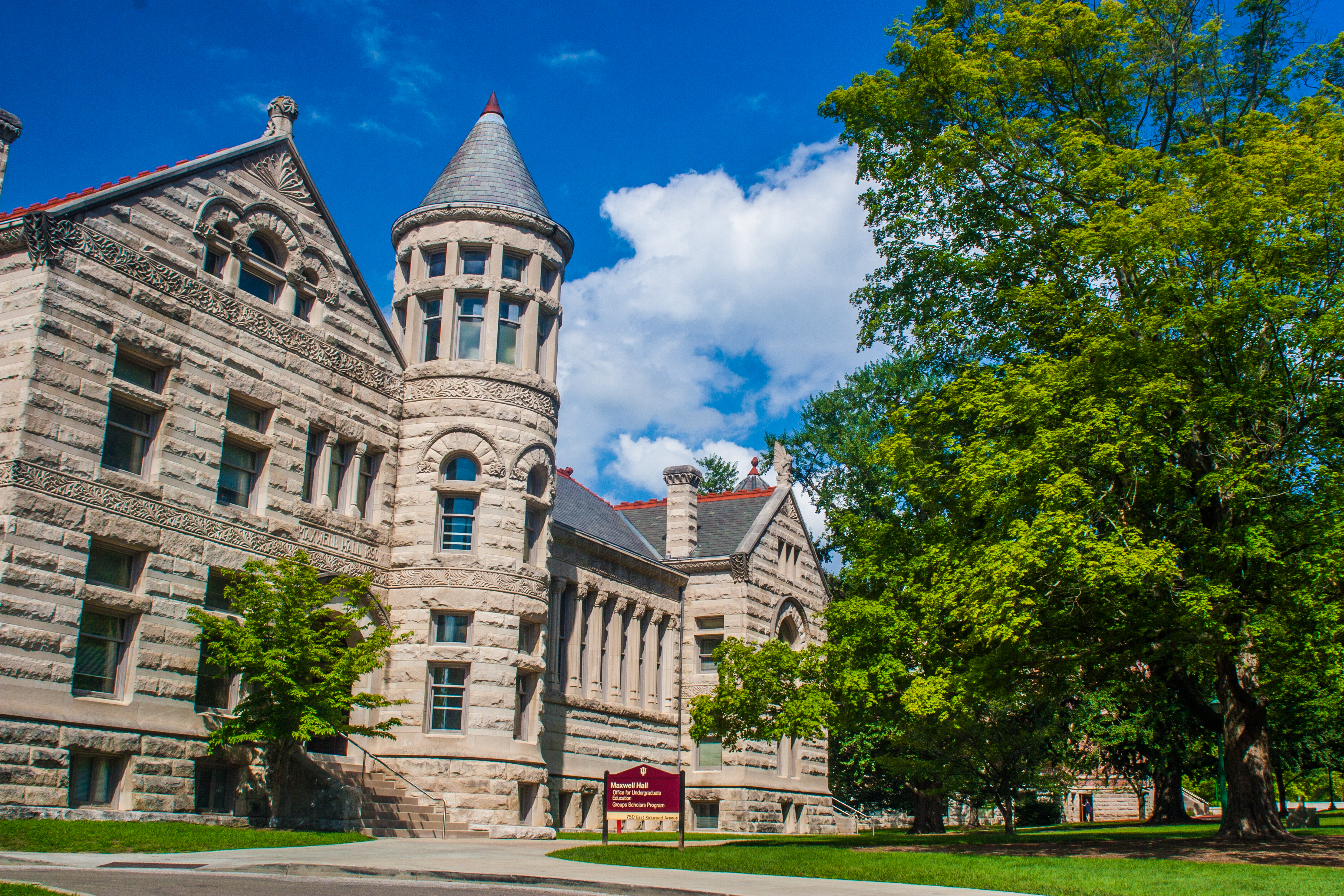
Its music-business-education trinity has no peer among publics, and the limestone-campus beauty ("Harvard of the Midwest" looks) belies its down-to-earth vibe. As one Redditor put it: "You get out what you put in—the opportunities are all here, but no one will hand them to you."
Indiana University-Bloomington logo · sourceVisit Indiana University in Bloomington | Maps, Parking & Events · sourceIU Bloomington Campus Tour · sourceIndiana University Bloomington Campus Master Plan | SmithGroup · source