Admit rate has ranged 76%–83% over the last 5 years. Source: IPEDS via Urban Institute.
Acceptance & SAT from Common Data Set / IPEDS; net price, earnings & graduation from the U.S. Dept. of Education College Scorecard. Figures lag ~1–2 years — verify with the school.
The University of Alabama is a sprawling, spirited public flagship where crimson-clad school pride is woven into the fabric of daily life. It’s an institution of scale and tradition, offering over 100 majors—with powerhouse business, engineering, and pre-professional tracks—within a classic Southern college town atmosphere. While its admissions are accessible, its draw lies in a potent combination of robust academics, a fiercely loyal social and athletic scene, and a significant financial aid apparatus that makes it a compelling value proposition for many families.
Admission requirements
Test-optional — scores considered if submitted
Required
High school transcript
Grade point average
College-prep program
TOEFL (non-native English)
Considered (not required)
Class rank
Test scores (SAT/ACT)
Source: IPEDS Admissions survey (2022) via Urban Institute. Covers formal factors only — it does not reflect essays, extracurriculars, or other holistic criteria.
More details
Undergrad enrollment
33,227
In-state tuition
$12,180
Out-of-state tuition
$34,172
No-Loan Policy
Not stated in sources
Graduation Rate
73%
Meets Full Need
Not stated in sources
ED Share of Class
Not stated in sources
First-Year Retention
Not stated in sources
Demonstrated Interest
Not stated in sources
Median Earnings (10yr)
$59,221
Outcomes & value
Outcomes & value
Median earnings (10 yr)
$59,221
Value (earnings ÷ net price)
2.6×
Median debt at graduation
$22,750
Graduation rate
73%
First-year retention
89%
Reducing loan balance (3 yr)
60%
Pell (lower-income) share
18%
First-gen share (among federal-aid recipients)
23%
Top-earning majors
Median earnings by field of study (highest credential), ~2 years after completion.
Construction Engineering$76,460
Electrical, Electronics, and Communications Engineering$75,832
Management Information Systems and Services$71,015
Chemical Engineering$67,995
Mechanical Engineering$65,281
Computer and Information Sciences, General
Applicants here also applied to
The schools that most often appear alongside Alabama on applicants’ lists, from our self-reported outcomes corpus.
Co-application frequency from self-reported results — directional peer discovery, not a recommendation.
Campus & location
Campus safety
On-campus violent crimes (2024)
33
Per 1,000 students
0.83
On-campus criminal offenses classed as violent (murder/non-negligent manslaughter, rape, robbery, aggravated assault) for the most recent reported year. Source: U.S. Dept. of Education Campus Safety and Security (Clery Act). Counts reflect what’s reported to the school, and urban campuses often report more partly due to non-student incidents nearby — read alongside campus size and setting, not as a standalone safety verdict.
Climate
Pleasant days / yr
94
Summer high
90°F
Winter low
41°F
Annual rain
56.2"
Annual snow
0.5"
Natural-hazard risk
Relatively Moderate
Pleasant days counts days per year with a mean temperature of 55–75°F, a high at or below 90°F, a low at or above 45°F, and little precipitation — a transparent comfort measure, not a weighting we invented. Computed from Open-Meteo ERA5 daily history (2019–2023). Natural-hazard risk is the county’s composite rating from the FEMA National Risk Index.
Deep dive — research, future-scholar output & economic mobility▾
Research output
Institutional h-index
579
Scholarly works
73,747
Institutional research volume and impact from OpenAlex. The h-index reflects large research universities and will be low for teaching-focused liberal-arts colleges — not a measure of undergraduate quality.
Quick answers
What is the acceptance rate at The University of Alabama?
The University of Alabama's acceptance rate is approximately 77% (Tuscaloosa, AL), based on the most recent figures we compiled from public and primary sources.
What SAT score do you need for The University of Alabama?
Admitted students at The University of Alabama typically score 1170–1400 on the SAT (the middle-50% range). Scores outside this band are still admitted, especially with strong applications.
How much does The University of Alabama cost?
At The University of Alabama, the average net price (after aid) is about $22,420 per year. Actual cost varies with financial aid and residency.
How many undergraduates attend The University of Alabama?
The University of Alabama enrolls approximately 33,227 undergraduate students.
Where is The University of Alabama located?
The University of Alabama is located in Tuscaloosa, AL.
Admissions
The University of Alabama operates with a high-access admissions philosophy, positioning itself as a realistic target or safety school for a broad range of students. The process is straightforward and transparent, with a focus on core academic metrics. For students applying for the 2027 entry term, standardized test scores (ACT or SAT) are required if the applicant's cumulative high school GPA is below 3.0; for those above that threshold, test submission appears to be optional or recommended. The middle 50% SAT range for admitted students is 1170–1400, and the average unweighted high school GPA is 3.86. The university received 56,795 applications for the Class of 2028. While the outlines the factors considered in admissions, the available sources do not specify whether demonstrated interest is a formal component of their evaluation. There is no Early Decision binding program mentioned in the provided sources for the University of Alabama; the referenced Early Decision statistics pertain to other institutions.
Earnings = median of students working ~10 years after entry; debt = median of graduates. Value divides 10-yr earnings by one year’s net price — read it as earnings per dollar of annual cost, not a full lifetime ROI; it favors lower-cost schools. Source: U.S. Dept. of Education College Scorecard. Figures lag ~2 years and reflect all students, not your intended major.
$64,281
Civil Engineering$58,402
Registered Nursing, Nursing Administration, Nursing Research and Clinical Nursing$56,459
Source: U.S. Dept. of Education College Scorecard (field-of-study earnings). Figures cover graduates who received federal aid and lag ~2 years; not all programs report data.
UA frames its academic mission around empowering students through nationally-recognized programs, transformative research, and an ambitious community. The curriculum is vast, with over 100 top-ranked majors and programs spanning from accelerated advanced degree options to creative paths like a 5-year MBA. The most popular majors for recent graduates heavily skew toward professional fields:
Business, Management, Marketing, and Related Support Services: 29%
Social Sciences: 11%
Engineering: 9%
Communication, Journalism, and Related Programs
Specific programs frequently highlighted for strength include pre-med, music, musical theater, and business through the Culverhouse College of Business. The university has made a concerted effort to improve the undergraduate experience by reducing class sizes; over 44% of undergraduate classes now have fewer than 20 students. This shift addresses a common critique and suggests a focus on improving student-faculty interaction within a large-university setting.
Life at Alabama is defined by an intense, all-encompassing campus culture where the Division of Student Life actively cultivates connection, care, and community. The university promotes a "vibrant campus life" that merges with Tuscaloosa's own rich history of music, art, and food, creating a distinctive local culture. The Division provides educational experiences outside the classroom designed to develop students personally, socially, and spiritually, supporting a wide array of programs, services, and initiatives. This infrastructure fuels a classic big-state-university experience, heavily centered around school spirit, Division I athletics (especially football), Greek life, and a dense network of student organizations. The atmosphere is one of deep tradition and pervasive pride, where being a part of the 'Bama family' is a central component of identity for many students.
The University of Alabama produces graduates who enter the workforce with solid earning potential, particularly when compared to national benchmarks. The six-year graduation rate has risen to 72.2%, reflecting improved student support and retention efforts. According to federal data, the median earnings of students working six years after entry are notably strong. Alumni with a bachelor's degree earn nearly $59,000 on average, which is about 21% more than those without a degree. The Culverhouse College of Business Career Center utilizes a First Destination Survey, a nationally recognized tool, to track career outcomes of its graduates within six months of earning their degree, indicating a professional focus on post-graduate placement. These outcomes position UA as an engine of social mobility within the region, providing a return on investment that resonates with its student body.
Alabama is a public university with a published , but it actively promotes its affordability through financial aid and scholarship tools. The university provides a Calculator to help families estimate their personal cost and eligibility for aid based on their financial information. On average, 40.9% of students receive financial aid, with the average aid package reported at $21,106. The net price—the average cost after aid and scholarships—is a key figure for families. Federal Direct Unsubsidized Loans are available to undergraduate students regardless of demonstrated financial need. The provided sources do not indicate that the University of Alabama has a policy of meeting 100% of demonstrated financial need for all admitted students, nor do they describe a universal "no-loan" policy where loans are eliminated from financial aid packages for low-income students. Some families have reported receiving financial aid packages with no grant aid, indicating that aid is not guaranteed for all who demonstrate need.
The University of Alabama’s distinctiveness lies in its mastery of scale and tradition. It is not a small, intimate liberal arts college, but rather a comprehensive public university that has leaned into its strengths: delivering a high-energy, community-oriented undergraduate experience wrapped in deep-seated tradition. It stands out for its ability to merge robust academic programs in business, engineering, and health professions with a social and athletic culture that is second to none in its region. The recent, deliberate reduction in class sizes shows a responsiveness to student experience critiques, aiming to offer more personalized attention within the large-lecture hall model. For students who thrive in a spirited, football-centric environment with strong school identity, Alabama offers a clear path to a degree with strong post-graduate earnings potential, all at a that is competitive for out-of-state students, especially with merit scholarships. It is the quintessential "big state school" experience, executed with particular intensity and pride in the American South.
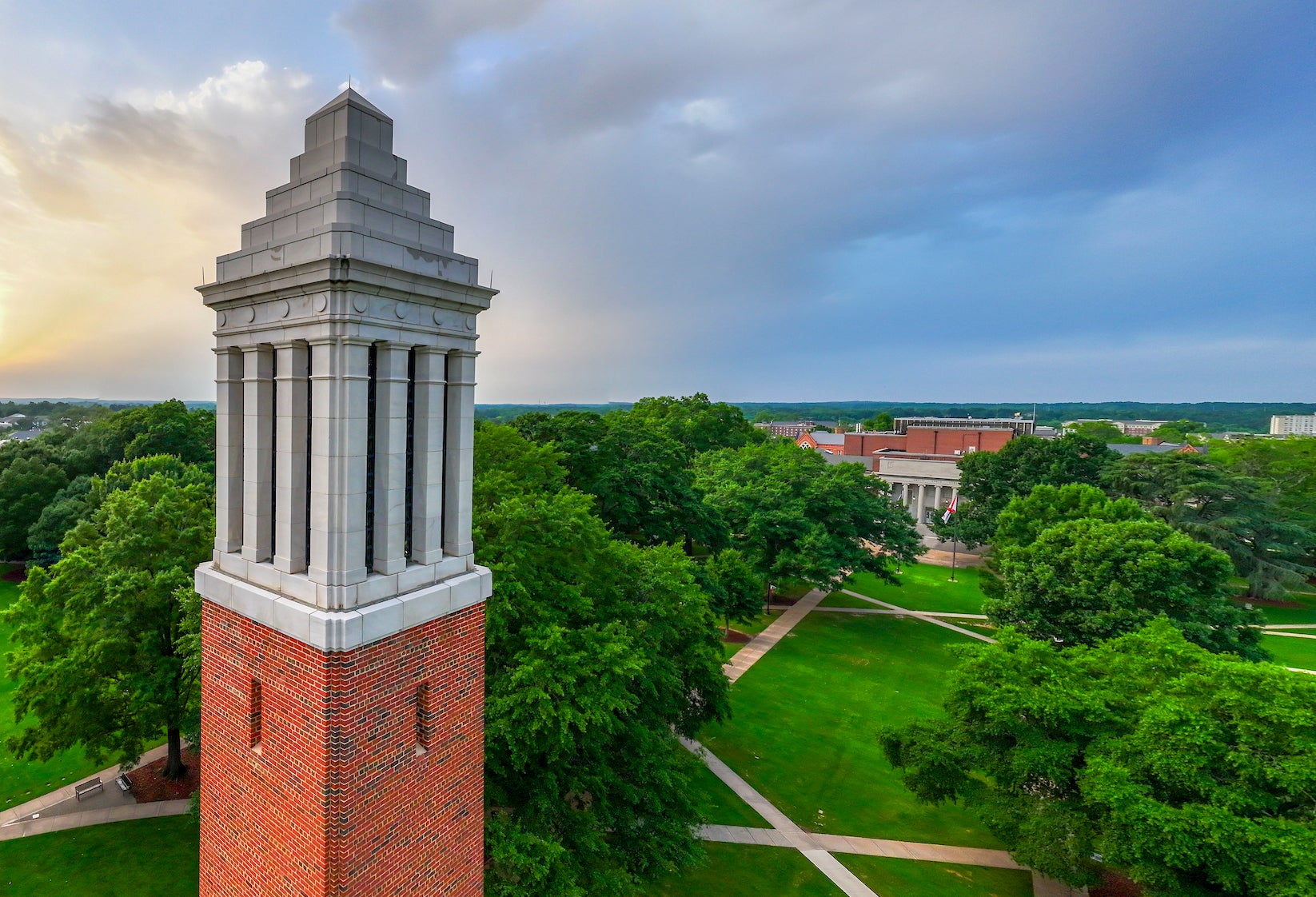
The University of Alabama seal · sourceThe University of Alabama · sourceThe University of Alabama Campus - Alabama Athletics · source13 most beautiful spots on the University of Alabama campus - al.com · source