Admit rate has ranged 30%–41% over the last 5 years — notably volatile. Source: IPEDS via Urban Institute.
Acceptance & SAT from Common Data Set / IPEDS; net price, earnings & graduation from the U.S. Dept. of Education College Scorecard. Figures lag ~1–2 years — verify with the school.
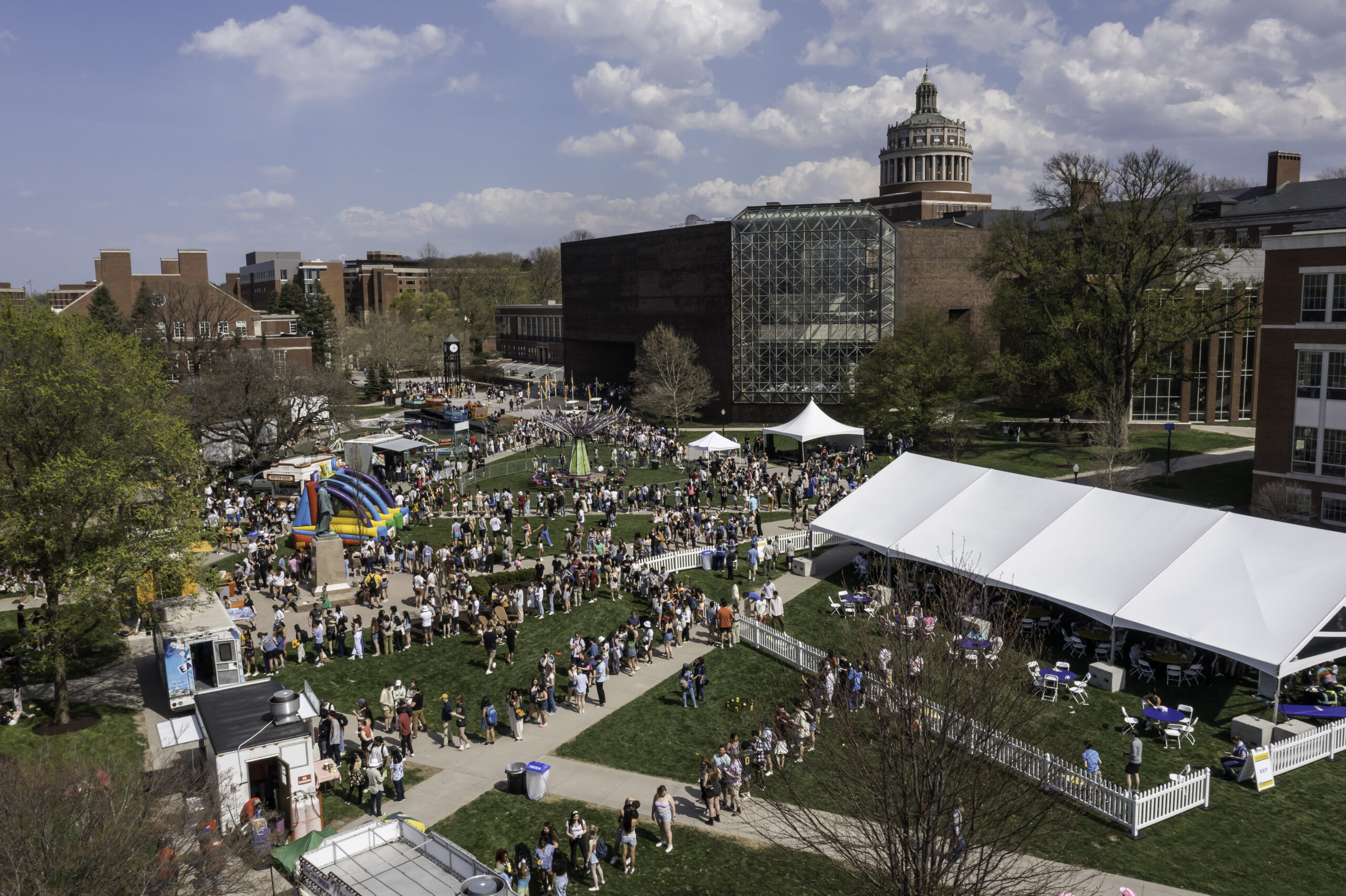
The University of Rochester operates like a high-powered, compact research engine wrapped in a surprisingly flexible liberal arts package. Its identity is split between a fiercely intellectual, STEM-heavy core—especially in optics, engineering, and biomedical sciences—and a unique, student-designed curriculum that rejects distribution requirements. The vibe is one of serious, self-directed scholars who find community more in labs, a cappella groups, and interest-based housing than in a rah-rah campus scene, all set against the backdrop of a gritty, culturally rich upstate New York city.
Admission requirements
Test-optional — scores considered if submitted
Required
High school transcript
Letters of recommendation
College-prep program
TOEFL (non-native English)
Considered (not required)
Grade point average
Class rank
Test scores (SAT/ACT)
Source: IPEDS Admissions survey (2022) via Urban Institute. Covers formal factors only — it does not reflect essays, extracurriculars, or other holistic criteria.
More details
Undergrad enrollment
6,331
In-state tuition
$67,080
Out-of-state tuition
$67,080
Popular Majors
Biological Sciences, Engineering, Social Sciences
Graduation Rate
85%
Meets Full Need
Yes
ED Share of Class
Just under 72%
Demonstrated Interest
Considered
Median Earnings (10yr)
$79,042
Outcomes & value
Outcomes & value
Median earnings (10 yr)
$79,042
Value (earnings ÷ net price)
2.7×
Median debt at graduation
$21,000
Graduation rate
85%
First-year retention
91%
Reducing loan balance (3 yr)
80%
Pell (lower-income) share
17%
First-gen share (among federal-aid recipients)
19%
Financial health
2.8 / 3.0Meets the federal financial-responsibility standard
U.S. Dept. of Education Financial Responsibility Composite Score (FY2022-23). Scale −1.0 to 3.0; ≥1.5 meets the standard. Reported for private nonprofit & for-profit institutions only — public universities are state-backed and not scored, so this is a stability signal, not a ranking.
Top-earning majors
Median earnings by field of study (highest credential), ~2 years after completion.
Computer Science$83,177
Electrical, Electronics, and Communications Engineering$73,321
Registered Nursing, Nursing Administration, Nursing Research and Clinical Nursing$68,194
Chemical Engineering$64,493
Biomedical/Medical Engineering$63,005
Mechanical Engineering
Applicants here also applied to
The schools that most often appear alongside Rochester on applicants’ lists, from our self-reported outcomes corpus.
Co-application frequency from self-reported results — directional peer discovery, not a recommendation.
Campus & location
Campus safety
On-campus violent crimes (2024)
14
Per 1,000 students
1.20
On-campus criminal offenses classed as violent (murder/non-negligent manslaughter, rape, robbery, aggravated assault) for the most recent reported year. Source: U.S. Dept. of Education Campus Safety and Security (Clery Act). Counts reflect what’s reported to the school, and urban campuses often report more partly due to non-student incidents nearby — read alongside campus size and setting, not as a standalone safety verdict.
Climate
Pleasant days / yr
91
Summer high
80°F
Winter low
22°F
Annual rain
43"
Annual snow
44"
Natural-hazard risk
Relatively Moderate
Pleasant days counts days per year with a mean temperature of 55–75°F, a high at or below 90°F, a low at or above 45°F, and little precipitation — a transparent comfort measure, not a weighting we invented. Computed from Open-Meteo ERA5 daily history (2019–2023). Natural-hazard risk is the county’s composite rating from the FEMA National Risk Index.
Deep dive — research, future-scholar output & economic mobility▾
Research output
Institutional h-index
1,028
Scholarly works
146,600
Institutional research volume and impact from OpenAlex. The h-index reflects large research universities and will be low for teaching-focused liberal-arts colleges — not a measure of undergraduate quality.
Share of this school’s graduates who go on to earn research doctorates (2010–20), by national rank and per-capita yield (NSF institutional-yield ratio). A signal of a research-oriented student culture — not a causal promise, since it partly reflects who enrolls. Only top producers appear. Source: NSF NCSES, Baccalaureate Origins of U.S. Research Doctorate Recipients.
Economic mobility
Mobility rate
3.0%
Quick answers
What is the acceptance rate at University of Rochester?
University of Rochester's acceptance rate is approximately 40% (Rochester, NY), based on the most recent figures we compiled from public and primary sources.
What SAT score do you need for University of Rochester?
Admitted students at University of Rochester typically score 1410–1540 on the SAT (the middle-50% range). Scores outside this band are still admitted, especially with strong applications.
How much does University of Rochester cost?
At University of Rochester, the average net price (after aid) is about $29,278 per year. Actual cost varies with financial aid and residency.
How many undergraduates attend University of Rochester?
University of Rochester enrolls approximately 6,331 undergraduate students.
Where is University of Rochester located?
University of Rochester is located in Rochester, NY.
Admissions
Rochester occupies a distinctive middle ground in selectivity: more accessible than the Ivy-Plus tier but firmly competitive, with an of 40%. The process is , but submitted scores are high, with the middle 50% SAT range for admitted students spanning 1410–1540 and the ACT composite between 31–35. The average unweighted high school GPA of admits is a 3.72. The university heavily leverages Early Decision to shape its class; one analysis suggests it fills just under 72% of its class through ED, with ED acceptance rates historically higher than the Regular Decision rate. For the Class of 2028, the ED acceptance rate was 38%. Demonstrated interest is a factor admissions officers consider, as indicated by its presence in the 's C7 section. The overall rate—the percentage of admitted students who enroll—is reported at 37.31%.
Earnings = median of students working ~10 years after entry; debt = median of graduates. Value divides 10-yr earnings by one year’s net price — read it as earnings per dollar of annual cost, not a full lifetime ROI; it favors lower-cost schools. Source: U.S. Dept. of Education College Scorecard. Figures lag ~2 years and reflect all students, not your intended major.
$61,516
Economics$57,705
Business/Commerce, General$52,941
Source: U.S. Dept. of Education College Scorecard (field-of-study earnings). Figures cover graduates who received federal aid and lag ~2 years; not all programs report data.
Mobility rate = the share of students who both start in the bottom household-income quintile and reach the top quintile; bottom → top is that chance conditional on starting at the bottom. Source: Opportunity Insights Mobility Report Cards (Chetty, Friedman, Saez, Turner & Yagan). Reflects 1980–82 birth cohorts, so it’s directional, not current.
Rochester's academic signature is its 'open curriculum'—there are no traditional distribution or core requirements. Students design their own path, guided by a 'cluster' system where they take three related courses in a field outside their major. This fosters intense focus and attracts self-starters. The university offers over 200 programs of study across its schools, which include not just Arts & Sciences but also Music (the renowned Eastman School), Engineering, Business, Education, and Medicine. The intellectual culture is heavily skewed toward STEM and pre-professional fields. The ten most popular majors for 2024 graduates were:
Biological and Biomedical Sciences (12%)
Engineering (11%)
Social Sciences (10%)
Business, Management, Marketing, and Related Support Services
This STEM-heavy focus is frequently cited as the school's primary academic strength and reputation driver, creating an environment of 'academic rigor' where many students are on pre-med or engineering tracks.
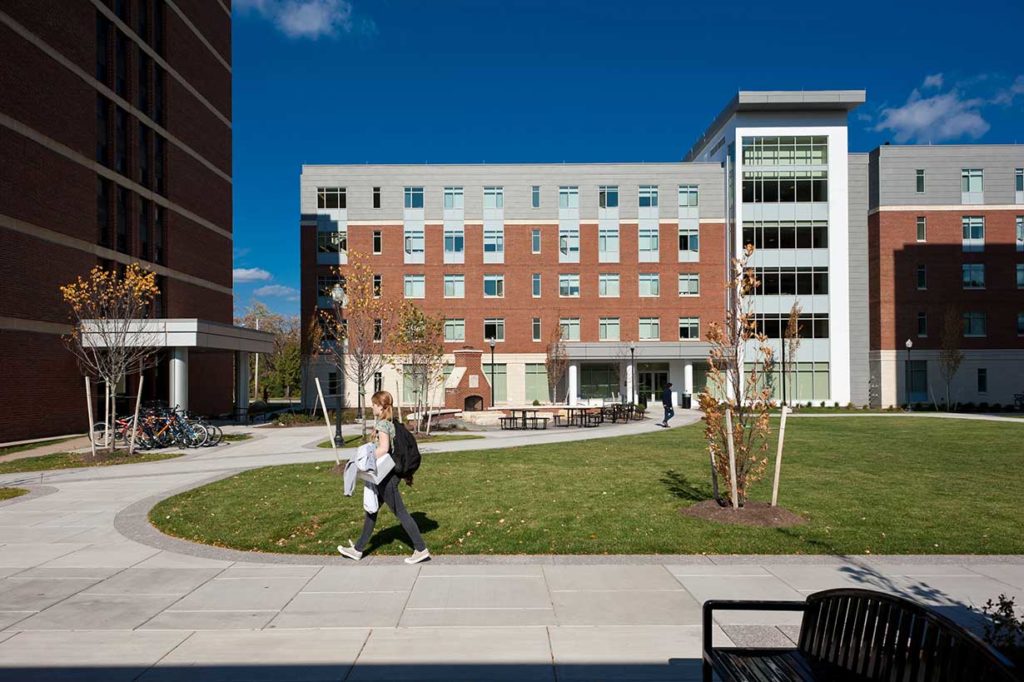
Life at Rochester is characterized as balanced and interest-driven, not a 'party-first' culture. Greek life exists but isn't dominant; social life revolves more around house gatherings, club events, and the over 300 student organizations. The university actively works to 'create a welcoming environment where every student feels a genuine sense of belonging,' promoting involvement in clubs, organizations, and cultural events. A key feature is interest-based housing, which allows students to live with others who share their academic or extracurricular passions. The campus prides itself on being a 'global village,' with a diverse student population and numerous cultural events. Students describe the community as generally friendly, with people finding their niches through these interest-based groups. The setting in Rochester, NY, provides access to the city's museums, music scene, and Lake Ontario, though the campus itself is the primary hub for daily life.
Rochester graduates are successful in launching careers and further education. The median earnings for recent graduates is reported as $64,722. For students pursuing medical school, outcomes are particularly strong: University of Rochester students were admitted to 45 different medical schools, with 71% accepted to MD programs and 29% to DO schools. The average time to degree is an efficient 4.2 years. Graduates carry a median student debt of $21,000, which is relatively moderate compared to many private peers. The overall graduation rate is 84%.
The University of Rochester is committed to meeting 100% of the demonstrated financial need of all incoming students through a combination of scholarships, grants, and subsidized loans. This policy is a cornerstone of their financial aid administration. For beginning undergraduates, 72% receive grant or scholarship aid. The university provides several online cost calculators and estimators for families to anticipate costs and aid eligibility. The net price—the average out-of-pocket cost after scholarships and grants—is reported by various sources, though the canonical figure is $29,278. The process is need-based, with aid packages calculated using FAFSA/CSS Profile data to determine a family contribution; appeals are possible but not always successful, as some students find the calculated contribution non-negotiable.
Rochester's singular appeal lies in the potent, sometimes jarring, combination of a no-requirements, 'you-build-it' curriculum with the intense, resource-rich environment of a STEM-focused research university. It's for the student who wants the freedom of a liberal arts college but the serious, lab-heavy horsepower of a place known for optics, biomedical engineering, and pre-med excellence. This creates a culture of hyper-focused, intrinsically motivated scholars. The student life follows suit: it's not about big sports or pervasive Greek life, but about finding your people through interest-based housing and niche clubs. You come for the freedom to design your education and the strength of its scientific core, and you stay for the tight-knit, activity-driven community that forms in the shadow of its rigorous academics.