Admit rate has ranged 43%–56% over the last 5 years — notably volatile, though the latest figure above (39%) falls outside that window. Source: IPEDS via Urban Institute.
Acceptance & SAT from Common Data Set / IPEDS; net price, earnings & graduation from the U.S. Dept. of Education College Scorecard. Figures lag ~1–2 years — verify with the school.
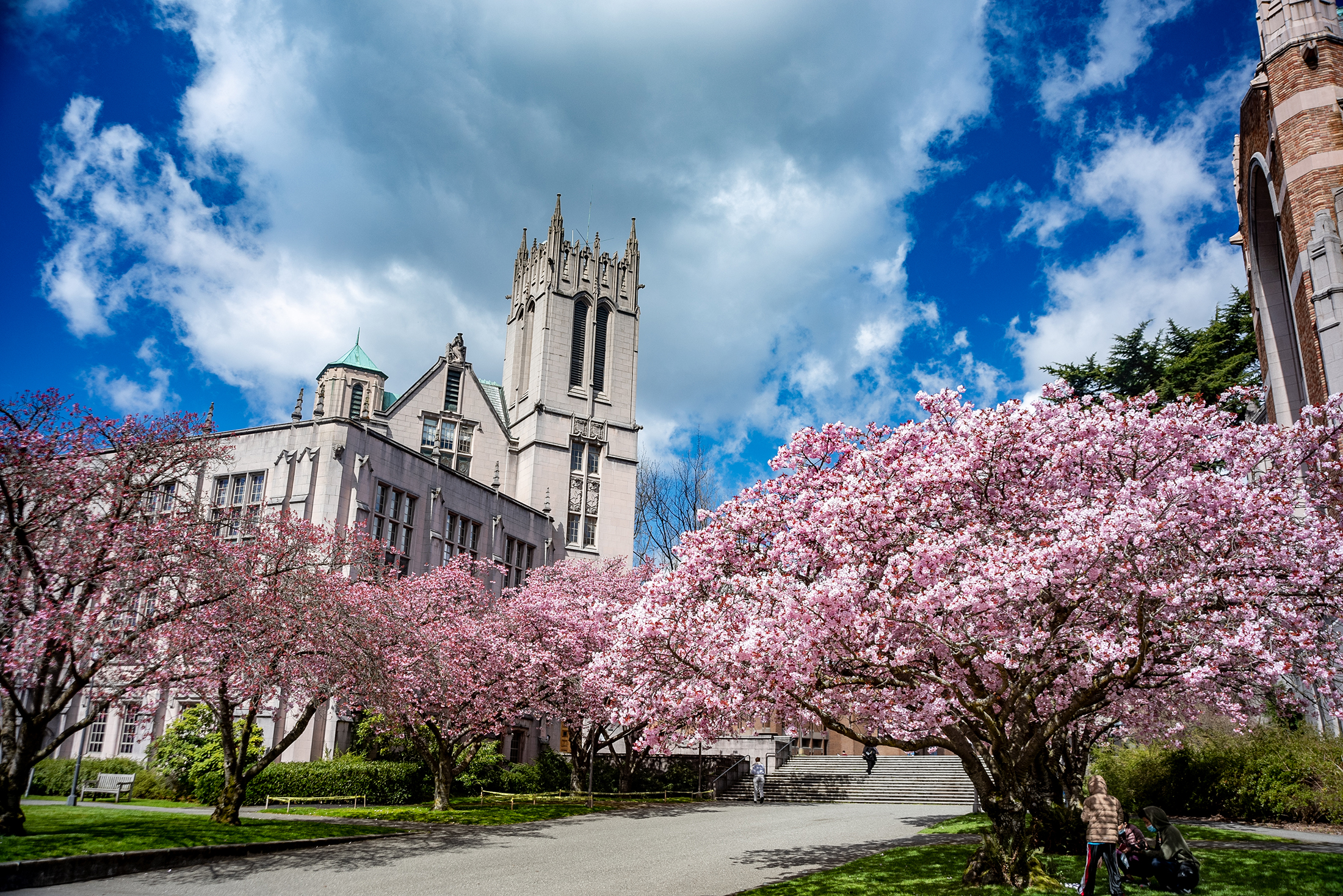
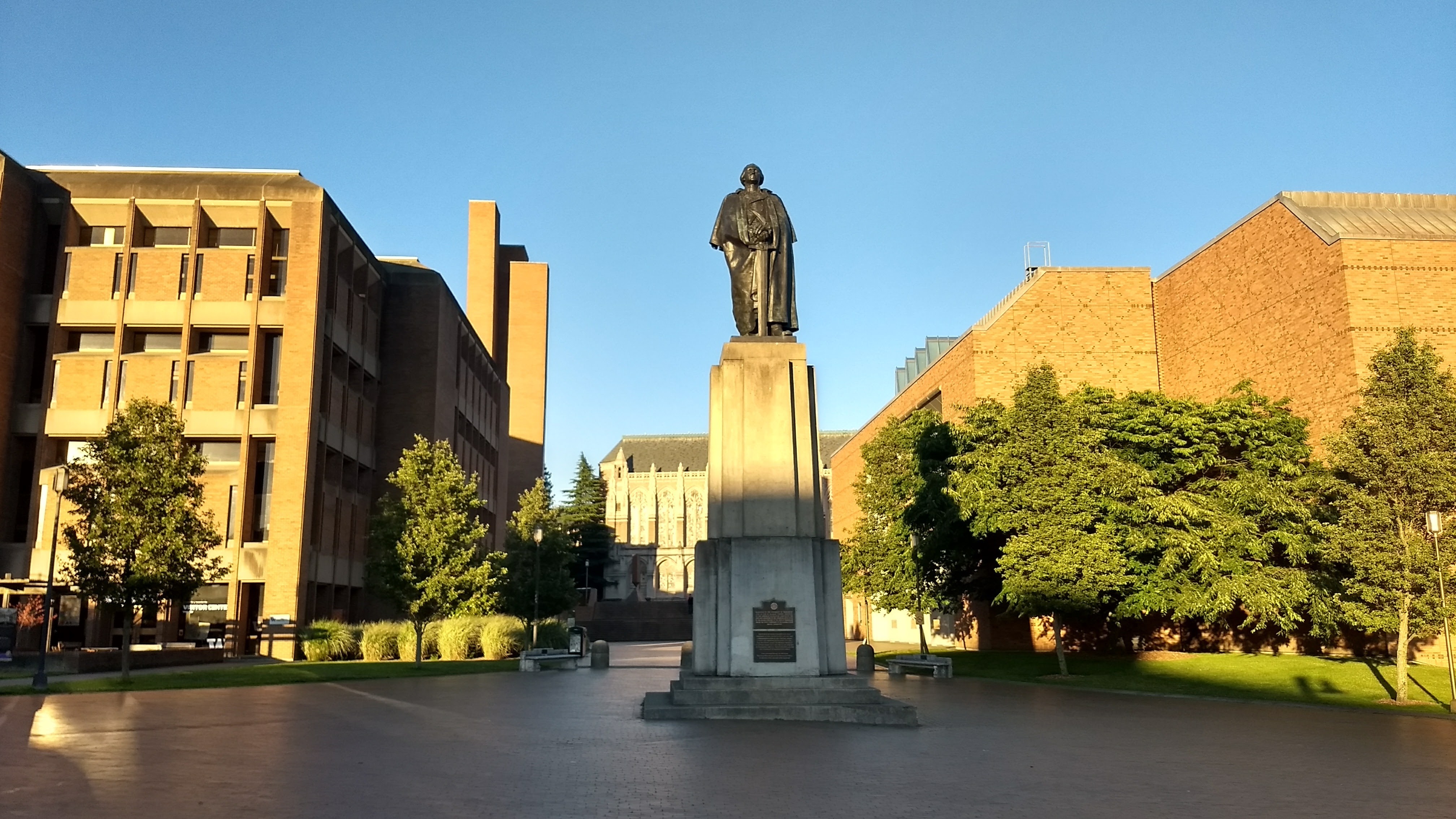
The University of Washington-Seattle is a powerhouse public research university where the Pacific Northwest's innovative spirit meets world-class academics. It's a place of staggering scale and selectivity, where Washington residents enjoy a significant admissions advantage and students navigate a vast academic landscape—from globally-ranked computer science to the intimate challenges of 'weed-out' introductory courses. The vibe is smart, driven, and often fragmented across a sprawling campus, but graduates emerge with a degree that carries serious weight in the job market, particularly in tech.
Admission requirements
Test-blind — scores not considered
Required
High school transcript
Grade point average
College-prep program
TOEFL (non-native English)
Source: IPEDS Admissions survey (2022) via Urban Institute. Covers formal factors only — it does not reflect essays, extracurriculars, or other holistic criteria.
More details
Undergrad enrollment
31,942
In-state tuition
$12,973
Out-of-state tuition
$43,209
Graduation Rate
85%
Early Decision/Action
Not offered
Median Earnings (10yr)
$78,466
Outcomes & value
Outcomes & value
Median earnings (10 yr)
$78,466
Value (earnings ÷ net price)
5.6×
Median debt at graduation
$14,615
Graduation rate
85%
First-year retention
95%
Reducing loan balance (3 yr)
79%
Pell (lower-income) share
15%
First-gen share (among federal-aid recipients)
33%
Top-earning majors
Median earnings by field of study (highest credential), ~2 years after completion.
Allied Health Diagnostic, Intervention, and Treatment Professions$121,294
Computer Engineering$120,252
Computer Science$101,221
Human Computer Interaction$92,632
Entrepreneurial and Small Business Operations$73,321
Mechatronics, Robotics, and Automation Engineering
Applicants here also applied to
The schools that most often appear alongside UW (Seattle) on applicants’ lists, from our self-reported outcomes corpus.
On-campus criminal offenses classed as violent (murder/non-negligent manslaughter, rape, robbery, aggravated assault) for the most recent reported year. Source: U.S. Dept. of Education Campus Safety and Security (Clery Act). Counts reflect what’s reported to the school, and urban campuses often report more partly due to non-student incidents nearby — read alongside campus size and setting, not as a standalone safety verdict.
Climate
Pleasant days / yr
125
Summer high
74°F
Winter low
37°F
Annual rain
44.5"
Annual snow
14.4"
Natural-hazard risk
Very High
Pleasant days counts days per year with a mean temperature of 55–75°F, a high at or below 90°F, a low at or above 45°F, and little precipitation — a transparent comfort measure, not a weighting we invented. Computed from Open-Meteo ERA5 daily history (2019–2023). Natural-hazard risk is the county’s composite rating from the FEMA National Risk Index.
Quick answers
What is the acceptance rate at University of Washington-Seattle Campus?
University of Washington-Seattle Campus's acceptance rate is approximately 39% (Seattle, WA), based on the most recent figures we compiled from public and primary sources.
How much does University of Washington-Seattle Campus cost?
At University of Washington-Seattle Campus, the average net price (after aid) is about $14,091 per year. Actual cost varies with financial aid and residency.
How many undergraduates attend University of Washington-Seattle Campus?
University of Washington-Seattle Campus enrolls approximately 31,942 undergraduate students.
Where is University of Washington-Seattle Campus located?
University of Washington-Seattle Campus is located in Seattle, WA.
Admissions
Getting into UW-Seattle is a tale of two applicant pools, with a stark divide between in-state and out-of-state hopefuls. The university is selective overall, but the odds are dramatically better for Washington residents. For the autumn 2025 entering class, the three-year average admit rate was 47% for residents versus 39% for non-residents, and more recent data suggests the gap has widened further, with a 2025 admit rate of about 37% for residents and just 5% for non-residents. International student admission is the most competitive of all, with a reported admit rate as low as 2%. The university does not participate in early decision or early action; all first-year applications are reviewed after the deadline before decisions are released. The SAT/ACT requirement has been permanently removed. Academic preparation is paramount: the middle 50% of admitted students for autumn 2025 had an unweighted high school GPA between 3.75 and 4.0. For those offered a place, the rate—the percentage who enroll—was 26.6% for the fall 2024 cohort.
Earnings = median of students working ~10 years after entry; debt = median of graduates. Value divides 10-yr earnings by one year’s net price — read it as earnings per dollar of annual cost, not a full lifetime ROI; it favors lower-cost schools. Source: U.S. Dept. of Education College Scorecard. Figures lag ~2 years and reflect all students, not your intended major.
$72,650
Registered Nursing, Nursing Administration, Nursing Research and Clinical Nursing$72,152
Architectural Sciences and Technology$72,134
Source: U.S. Dept. of Education College Scorecard (field-of-study earnings). Figures cover graduates who received federal aid and lag ~2 years; not all programs report data.
Co-application frequency from self-reported results — directional peer discovery, not a recommendation.
Academics
UW's academic identity is defined by its sheer breadth and the towering reputation of its graduate and research programs, which can cast a long shadow—and create unique challenges—for undergraduates. The university is renowned globally, ranked #7 among best global universities by U.S. News & World Report (2025). Students can choose from an extensive list of undergraduate majors and minors. The most popular majors reflect the university's strengths and location: Computer and Information Sciences and Support Services; Social Sciences; and Biological and Biomedical Sciences. However, the undergraduate experience is often described as a mix of opportunity and obstacle. The high academic rating "comes from the amazing graduate schools," as one student notes, and introductory courses, particularly in high-demand STEM fields, can be large and intensely competitive, serving as 'weed-out' classes. Success requires proactive navigation of this vast system to find smaller, engaging courses and research opportunities, which are plentiful for those who seek them.
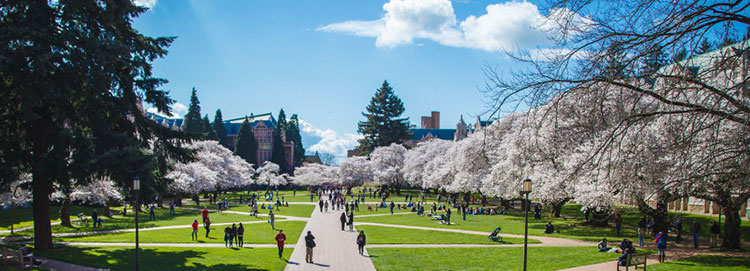
Life on the UW's sprawling Seattle campus is what you make of it—vibrant yet fragmented, offering countless ways to get involved but requiring initiative to build a community. The Division of Student Life officially supports students with a multitude of services aimed at academic, personal, and professional success, including tutoring, counseling, and career advice. There are tons of rewarding ways to get engaged, from registered student organizations to volunteer opportunities. Yet, the scale of the university and the competitive undercurrent in some academic areas shape the social experience. Student opinions describe campus life as "vibrant yet can feel competitive and somewhat fragmented due to the large campus size." Making friends and finding your niche often depends on diving into clubs, intramurals, or campus jobs, as the sheer size can feel impersonal. The university provides resources like a 24/7 support helpline and the Husky Assist program, but forging a tight-knit social circle is generally a self-directed endeavor.
A UW degree is a strong launchpad, particularly in the robust Pacific Northwest job market. The university reports a strong Positive Outcome Rate for graduates, which includes employment, continuing education, or other pursuits. According to federal data, the median earnings of students working 10 years after entry are robust. The graduation rate is a key indicator of student success and institutional support. It's important to note that career outcome data has a knowledge rate of 57% for the class of 2024, meaning outcomes are known for just over half of graduates. For those whose data is captured, the results are positive, with early career earnings for graduates noted as better than expected.
As a public institution, UW offers a significantly lower for in-state students, though out-of-state and international students pay more. The university provides a net price calculator for families to estimate their actual cost. A substantial amount of financial aid is distributed to undergraduates. The Husky Promise is a key financial aid program for Washington residents, guaranteeing that full tuition and standard fees will be covered by grant or scholarship support for eligible students who demonstrate financial need and complete the FAFSA by the priority date. It's crucial to note that the UW does not provide financial aid or scholarships to undergraduate international students, who must be prepared to cover the full . There is no universal 'no-loan' policy; aid packages for domestic students typically include a mix of grants, scholarships, and loans based on demonstrated need.
The University of Washington-Seattle stands out for its potent combination of elite global research stature, a breathtaking location in a major tech hub, and a public mission that prioritizes access for state residents. It's not a cozy, hand-holding liberal arts college; it's a massive, decentralized ecosystem where ambition meets opportunity. The university's world #7 global ranking is built on the back of phenomenal graduate programs and research output, which filters down to undergraduates as both a prestige benefit and a practical challenge—access to star faculty is possible, but often requires hustle. The campus itself, with its iconic views of Mount Rainier, is a microcosm of the innovative and sometimes introverted Seattle culture. What truly defines UW is its dual character: a relatively accessible pathway to a top-tier degree for high-achieving Washingtonians, and a fiercely competitive prize for everyone else. Graduates leave not just with a diploma, but with the resilience forged in navigating one of the country's most complex and impactful public universities.
University of Washington-Seattle Campus seal · sourceCampus of the University of Washington - Wikipedia · sourceThis Week Then: How Seattle's UW Campus Took Shape - Seattle magazine · sourceUW & Seattle | UW Summer Sessions · source