Admit rate has ranged 17%–25% over the last 5 years, though the latest figure above (14%) falls outside that window. Source: IPEDS via Urban Institute.
Acceptance & SAT from Common Data Set / IPEDS; net price, earnings & graduation from the U.S. Dept. of Education College Scorecard. Figures lag ~1–2 years — verify with the school.
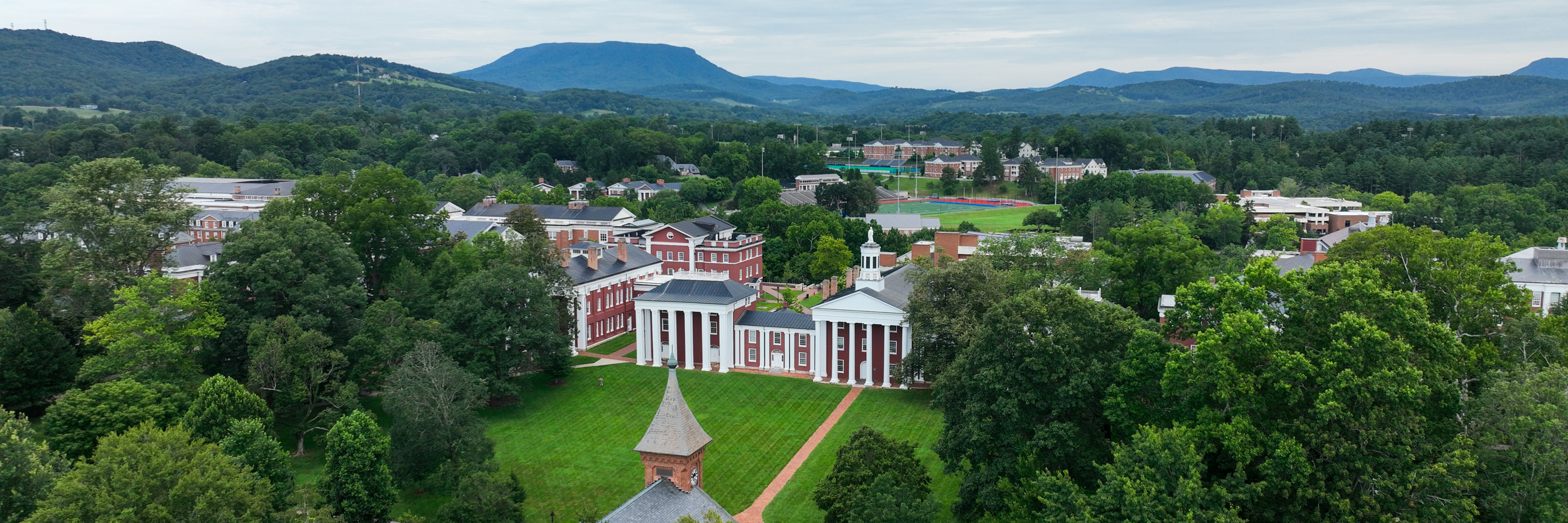
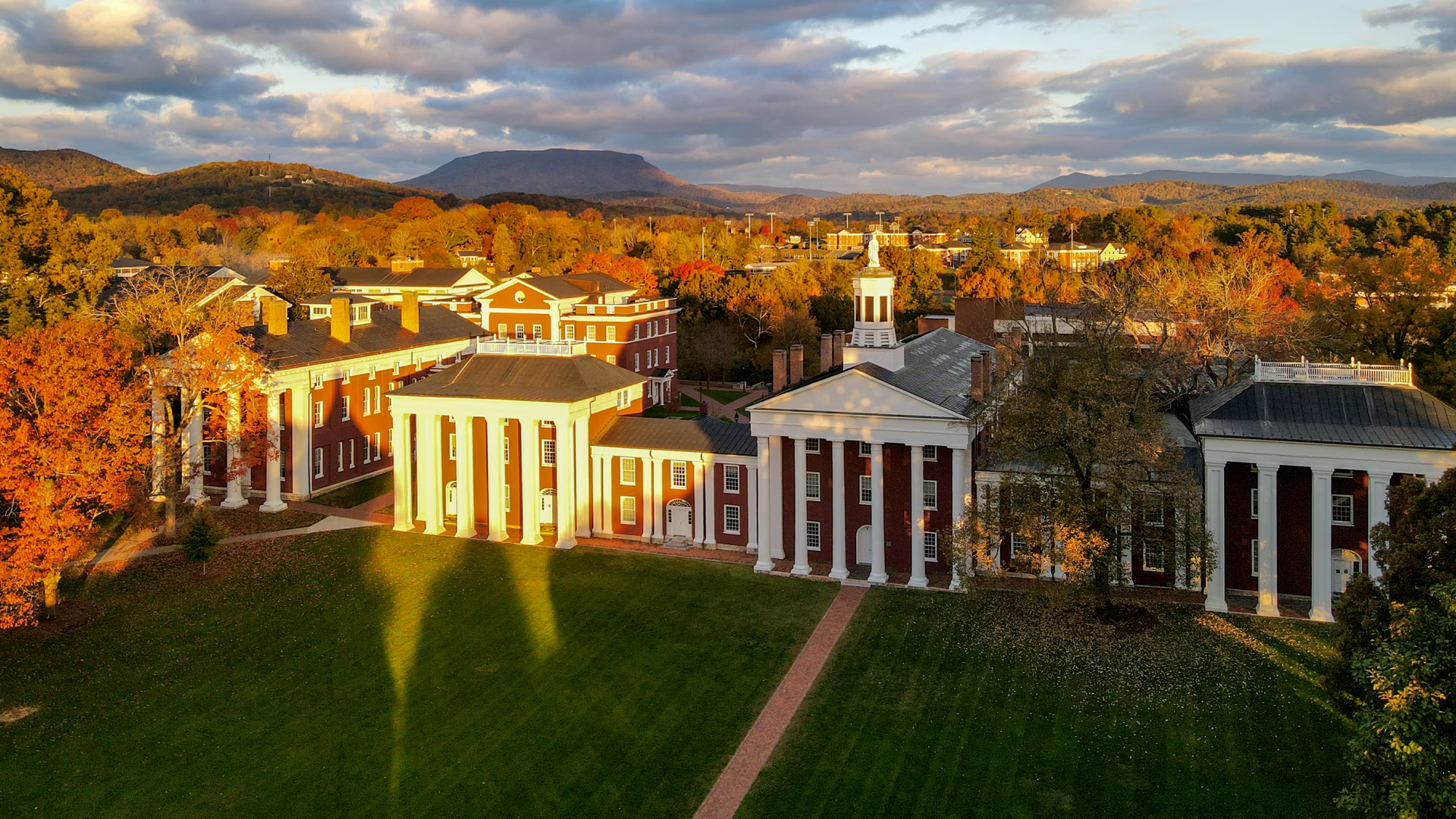
Washington and Lee University is a small, fiercely traditional liberal arts college in the Shenandoah Valley that operates like a finishing school for the Southern establishment, with a dash of Wall Street ambition. Its identity is built on a single-sanction honor system so powerful it allows for self-scheduled, unproctored exams, a pervasive 'Speaking Tradition' where students greet each other on the colonnade, and a curriculum that improbably packs top-tier journalism, business, and engineering into a classic arts and sciences core. The result is a cloistered, intensely social community where Greek life dominates, character is curriculum, and graduates exit with a potent blend of polish, principle, and earning power.
Admission requirements
Test-optional — scores considered if submitted
Required
High school transcript
Letters of recommendation
College-prep program
Considered (not required)
Grade point average
Class rank
Test scores (SAT/ACT)
Demonstrated competencies
TOEFL (non-native English)
Source: IPEDS Admissions survey (2022) via Urban Institute. Covers formal factors only — it does not reflect essays, extracurriculars, or other holistic criteria.
More details
Undergrad enrollment
1,881
In-state tuition
$68,045
Out-of-state tuition
$68,045
No-Loan Policy
Yes, for all need-based aid recipients
Graduation Rate
94%
Meets Full Need
Yes
International Students
9%
Median Earnings (10yr)
$94,810
Johnson Scholars in Class
10%
First-Year Class Size (2029)
~500
Outcomes & value
Outcomes & value
Median earnings (10 yr)
$94,810
Value (earnings ÷ net price)
4.0×
Median debt at graduation
$19,500
Graduation rate
94%
First-year retention
97%
Reducing loan balance (3 yr)
88%
Pell (lower-income) share
11%
Endowment / student
$913,786
Earnings = median of students working ~10 years after entry; debt = median of graduates. Value divides 10-yr earnings by net price — read it as earnings per dollar of annual cost, not a full lifetime ROI; it favors lower-cost schools. Source: U.S. Dept. of Education College Scorecard. Figures lag ~2 years and reflect all students, not your intended major.
Financial health
2.3 / 3.0Meets the federal financial-responsibility standard
U.S. Dept. of Education Financial Responsibility Composite Score (FY2022-23). Scale −1.0 to 3.0; ≥1.5 meets the standard. Reported for private nonprofit & for-profit institutions only — public universities are state-backed and not scored, so this is a stability signal, not a ranking.
Top-earning majors
Median earnings by field of study (highest credential), ~2 years after completion.
Computer Science$91,744
Mathematics$76,460
Accounting and Related Services$66,449
Business Administration, Management and Operations$56,641
Economics$55,964
Journalism$42,682
Political Science and Government
Applicants here also applied to
The schools that most often appear alongside Washington & Lee on applicants’ lists, from our self-reported outcomes corpus.
On-campus criminal offenses classed as violent (murder/non-negligent manslaughter, rape, robbery, aggravated assault) for the most recent reported year. Source: U.S. Dept. of Education Campus Safety and Security (Clery Act). Counts reflect what’s reported to the school, and urban campuses often report more partly due to non-student incidents nearby — read alongside campus size and setting, not as a standalone safety verdict.
Climate
Pleasant days / yr
95
Summer high
85°F
Winter low
29°F
Annual rain
38.4"
Annual snow
12.5"
Natural-hazard risk
Very Low
Pleasant days counts days per year with a mean temperature of 55–75°F, a high at or below 90°F, a low at or above 45°F, and little precipitation — a transparent comfort measure, not a weighting we invented. Computed from Open-Meteo ERA5 daily history (2019–2023). Natural-hazard risk is the county’s composite rating from the FEMA National Risk Index.
Deep dive — research, future-scholar output & economic mobility▾
Research output
Institutional h-index
124
Scholarly works
6,431
Institutional research volume and impact from OpenAlex. The h-index reflects large research universities and will be low for teaching-focused liberal-arts colleges — not a measure of undergraduate quality.
Economic mobility
Mobility rate
0.6%
Bottom → top quintile
51%
From bottom quintile
1%
Mobility rate = the share of students who both start in the bottom household-income quintile and reach the top quintile; bottom → top is that chance conditional on starting at the bottom. Source: Opportunity Insights Mobility Report Cards (Chetty, Friedman, Saez, Turner & Yagan). Reflects 1980–82 birth cohorts, so it’s directional, not current.
Quick answers
What is the acceptance rate at Washington and Lee University?
Washington and Lee University's acceptance rate is approximately 14% (Lexington, VA), based on the most recent figures we compiled from public and primary sources.
What SAT score do you need for Washington and Lee University?
Admitted students at Washington and Lee University typically score 1430–1540 on the SAT (the middle-50% range). Scores outside this band are still admitted, especially with strong applications.
How much does Washington and Lee University cost?
At Washington and Lee University, the average net price (after aid) is about $23,781 per year. Actual cost varies with financial aid and residency.
How many undergraduates attend Washington and Lee University?
Washington and Lee University enrolls approximately 1,881 undergraduate students.
Where is Washington and Lee University located?
Washington and Lee University is located in Lexington, VA.
Admissions
Gaining entry to W&L is a highly selective proposition, with the university admitting only a small fraction of its applicants. For the Class of 2029, 8,969 students applied, 1,216 were admitted, and 46% of the enrolled class were men, 54% women, with less than 1% identifying as non-binary. The admissions process is , meaning SAT or ACT scores are not required to be considered for admission. However, for those who do submit, the middle 50% SAT range is 1430–1540, and the ACT range is 33–34. The university offers an Early Decision program designed for students who believe W&L is their top choice. Historically, the Early Decision has been significantly higher than the overall rate; one source notes an ED acceptance rate of 34%, compared to a 14% regular decision rate. The enrolled Class of 2029 included 10% Johnson Scholars and 9% international students.
Source: U.S. Dept. of Education College Scorecard (field-of-study earnings). Figures cover graduates who received federal aid and lag ~2 years; not all programs report data.
W&L's academic model is a distinctive hybrid: the intimate scale and intense faculty mentorship of a classic liberal arts college, combined with the professional and pre-professional offerings typically found at a much larger university. The curriculum includes 47 majors and 44 minors. The most popular fields are heavily tilted towards leadership and high-earning pathways: for 2024 graduates, 26% majored in Business, Management, Marketing, and Related Support Services, and 20% majored in the Social Sciences. The university explicitly highlights that it augments the core arts, humanities, and sciences with programs like business, journalism, and engineering that are uncommon in a small college setting. This rigorous academic environment is undergirded by the university's renowned single-sanction honor system, which creates a culture of exceptional trust and is cited as a cornerstone of the educational experience.
Life at W&L is defined by a deep sense of community, tradition, and a distinctively Southern social polish, all contained within the small, lively two-college town of Lexington. The campus is described as a "remarkable place" that nurtures community and learning. A defining quirk is the longstanding "Speaking Tradition," where students greet one another when passing on campus. Social life is heavily influenced by Greek life, which is acknowledged to be "a big deal." However, accounts suggest it is more inclusive than at many large state schools, with the sentiment that "no one gets left out." Students report feeling extremely safe and secure, with 97% in one survey saying they feel extremely safe on campus. The setting provides abundant opportunities for involvement in the local community and for travel.
A W&L degree is a substantial financial investment that, for most graduates, pays a significant and rapid return. The university's graduation rate is exceptionally high. The four-year graduation rate is 89%, and the six-year rate is consistently strong, with institutional targets set at 93%. Post-graduation earnings are a major selling point. Six years after graduation, the median salary for graduates is $76,516. Other sources note that median earnings for recent graduates are just over $100,000 during their early careers, and one federal scorecard lists earnings of $100,514. This powerful combination of high completion rates and strong early-career earnings defines the W&L outcome profile.
W&L has made a serious commitment to affordability through one of the most generous financial aid policies in the country. The university meets 100% of every admitted student's demonstrated financial need entirely through grants and guaranteed campus work, without including loans in aid packages. This is a formal "no-loan policy" for all students receiving . For students from families with lower incomes, the "W&L Promise" guarantees a minimum grant of tuition. The average after aid—the out-of-pocket cost for students receiving aid—is a key metric of affordability. Sources cite figures around $23,055 to $24,510. Furthermore, the university's prestigious Johnson Scholarship Program awards full tuition, room, and board scholarships each year to up to 44 exceptionally qualified students, regardless of their financial need.
Washington and Lee stands out for its unique, almost anachronistic synthesis of elements that, elsewhere, would seem contradictory. It is a small liberal arts college in a remote Virginia town that produces a disproportionate number of Fortune 500 CEOs, lawyers, and financiers. Its social life is dominated by traditional Greek culture, yet it operates on an honor system so rigorous that it fundamentally shapes academic and personal integrity. The curriculum feels both timeless (deep in classics, history, and literature) and sharply contemporary (with sought-after programs in journalism, business, and data science). The "Speaking Tradition" and self-scheduled exams aren't just quirks; they are manifestations of a communal contract that expects—and cultivates—a certain type of honorable, self-possessed graduate. It's a place where Southern gentility meets global ambition, all wrapped in a blanket of financial aid that seeks to make this rarefied experience accessible. For students who thrive on tradition, trust, and high expectations, W&L offers a singular and powerful launchpad.