Admit rate has ranged 63%–82% over the last 5 years — notably volatile. Source: IPEDS via Urban Institute.
Acceptance & SAT from Common Data Set / IPEDS; net price, earnings & graduation from the U.S. Dept. of Education College Scorecard. Figures lag ~1–2 years — verify with the school.
Wayne State University is Detroit’s public research university—a sprawling, urban, and unapologetically pragmatic institution that serves as an engine of social mobility for its largely commuter student body. With a staggering 375 academic programs, it’s a place where pre-med ambitions, engineering grit, and the humanities thrive amid the city’s cultural institutions and corporate headquarters. Its identity is inextricably linked to its location: a campus woven into Midtown Detroit, offering students real-world experience from day one but demanding a self-directed approach to campus life.
Admission requirements
Test-optional — scores considered if submitted
Required
High school transcript
Grade point average
TOEFL (non-native English)
Considered (not required)
Letters of recommendation
Test scores (SAT/ACT)
College-prep program
Source: IPEDS Admissions survey (2022) via Urban Institute. Covers formal factors only — it does not reflect essays, extracurriculars, or other holistic criteria.
More details
Undergrad enrollment
15,587
In-state tuition
$15,190
Out-of-state tuition
$32,037
Urban Campus
Midtown Detroit
Graduation Rate
58%
Programs Offered
375
Application Deadline
August 1
First-Year Retention
N/A
Demonstrated Interest
Not considered
Income-Based Guarantee
Yes (<$80k)
Median Earnings (10yr)
$53,493
Outcomes & value
Outcomes & value
Median earnings (10 yr)
$53,493
Value (earnings ÷ net price)
4.2×
Median debt at graduation
$21,250
Graduation rate
58%
First-year retention
83%
Reducing loan balance (3 yr)
38%
Pell (lower-income) share
46%
First-gen share (among federal-aid recipients)
38%
Top-earning majors
Median earnings by field of study (highest credential), ~2 years after completion.
Electrical, Electronics, and Communications Engineering$79,473
Co-application frequency from self-reported results — directional peer discovery, not a recommendation.
Campus & location
Campus safety
On-campus violent crimes (2024)
11
Per 1,000 students
0.47
On-campus criminal offenses classed as violent (murder/non-negligent manslaughter, rape, robbery, aggravated assault) for the most recent reported year. Source: U.S. Dept. of Education Campus Safety and Security (Clery Act). Counts reflect what’s reported to the school, and urban campuses often report more partly due to non-student incidents nearby — read alongside campus size and setting, not as a standalone safety verdict.
Climate
Pleasant days / yr
91
Summer high
81°F
Winter low
24°F
Annual rain
37.3"
Annual snow
27.9"
Natural-hazard risk
Relatively High
Pleasant days counts days per year with a mean temperature of 55–75°F, a high at or below 90°F, a low at or above 45°F, and little precipitation — a transparent comfort measure, not a weighting we invented. Computed from Open-Meteo ERA5 daily history (2019–2023). Natural-hazard risk is the county’s composite rating from the FEMA National Risk Index.
Deep dive — research, future-scholar output & economic mobility▾
Research output
Institutional h-index
747
Scholarly works
130,020
Institutional research volume and impact from OpenAlex. The h-index reflects large research universities and will be low for teaching-focused liberal-arts colleges — not a measure of undergraduate quality.
Economic mobility
Mobility rate
2.4%
Bottom → top quintile
19%
From bottom quintile
13%
Mobility rate = the share of students who both start in the bottom household-income quintile and reach the top quintile; bottom → top is that chance conditional on starting at the bottom. Source: Opportunity Insights Mobility Report Cards (Chetty, Friedman, Saez, Turner & Yagan). Reflects 1980–82 birth cohorts, so it’s directional, not current.
Quick answers
What is the acceptance rate at Wayne State University?
Wayne State University's acceptance rate is approximately 81% (Detroit, MI), based on the most recent figures we compiled from public and primary sources.
What SAT score do you need for Wayne State University?
Admitted students at Wayne State University typically score 1060–1270 on the SAT (the middle-50% range). Scores outside this band are still admitted, especially with strong applications.
How much does Wayne State University cost?
At Wayne State University, the average net price (after aid) is about $12,766 per year. Actual cost varies with financial aid and residency.
How many undergraduates attend Wayne State University?
Wayne State University enrolls approximately 15,587 undergraduate students.
Where is Wayne State University located?
Wayne State University is located in Detroit, MI.
Admissions
Wayne State’s admissions process is straightforward and accessible, reflecting its mission as a public, urban research university. The university is less selective, with an of 81%. The middle 50% SAT range for admitted students is 1060–1270, and the middle 50% ACT range is 23–29. According to the , the most important academic factors in first-year admissions decisions are the rigor of a student’s secondary school record, class rank, GPA, and standardized test scores (SAT/ACT). Non-academic factors like extracurricular activities, talent/ability, and character/personal qualities are also considered, while demonstrated interest is not considered. The application deadline is August 1, and admission decisions are typically released after October 1, with a turnaround of two to three weeks for applications submitted after that date. Notably, Wayne State does not appear to offer a binding Early Decision program for undergraduate admissions, though the School of Medicine has a separate Early Decision Program for medical school applicants.
Earnings = median of students working ~10 years after entry; debt = median of graduates. Value divides 10-yr earnings by one year’s net price — read it as earnings per dollar of annual cost, not a full lifetime ROI; it favors lower-cost schools. Source: U.S. Dept. of Education College Scorecard. Figures lag ~2 years and reflect all students, not your intended major.
$75,921
Civil Engineering$62,579
Registered Nursing, Nursing Administration, Nursing Research and Clinical Nursing$62,426
Source: U.S. Dept. of Education College Scorecard (field-of-study earnings). Figures cover graduates who received federal aid and lag ~2 years; not all programs report data.
Academic breadth is Wayne State’s defining feature. The university offers a massive 375 academic programs, including 126 bachelor’s programs, 139 master’s programs, 60 doctoral programs, and 30 certificate, specialist, and professional programs. This vast catalog allows students to pursue everything from Jazz Studies and Journalism to Kinesiology and Law. The scale supports a research-intensive environment, particularly in health sciences—the Wayne Med-Direct program, for example, offers a direct medical school pathway for high-achieving freshmen who meet stringent criteria, including a minimum 3.5 GPA and a 1310 SAT or 28 ACT score. The academic structure is comprehensive, with majors and concentrations listed in the official academic catalog. This immense variety caters to a diverse student body with wide-ranging professional and intellectual goals, positioning the university as a one-stop shop for career-focused and graduate-level education in the region.
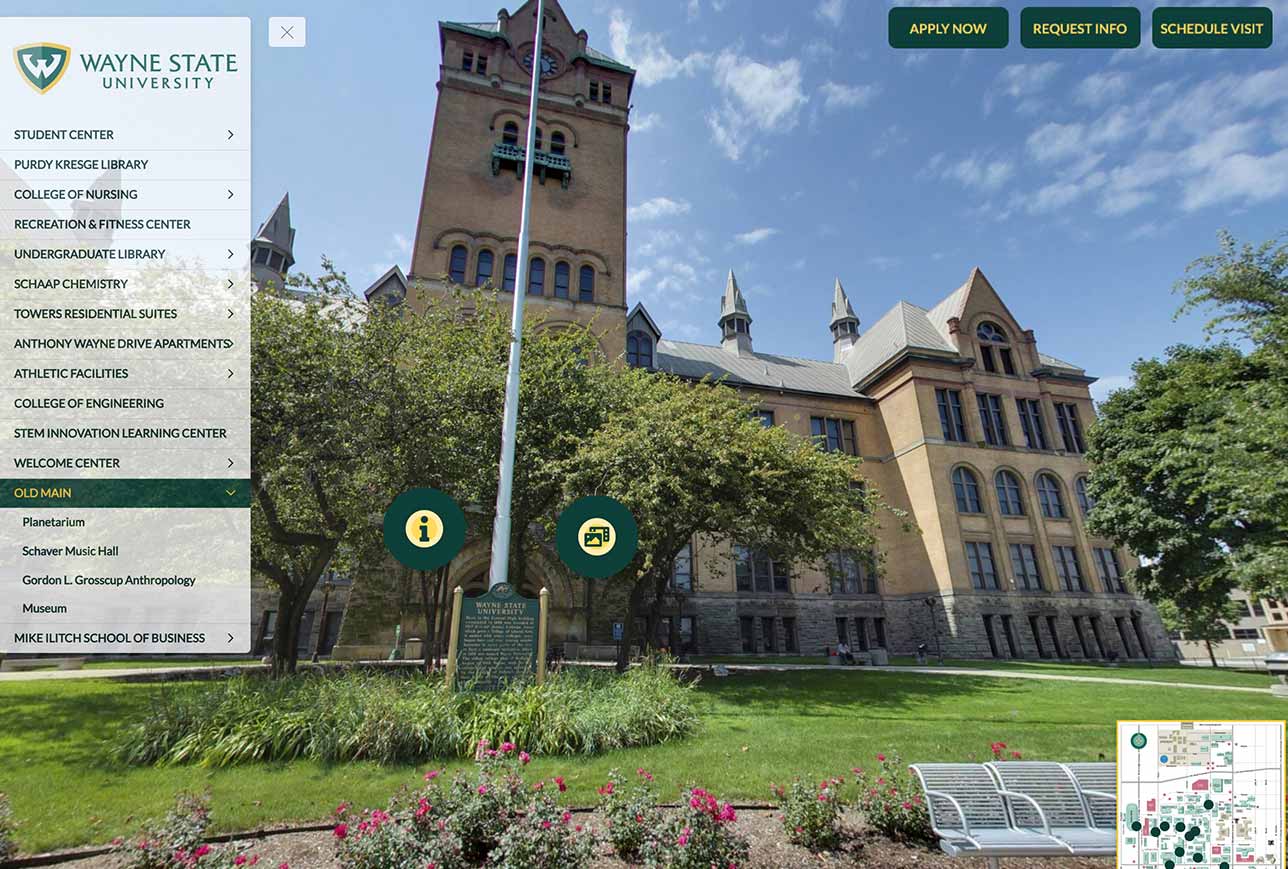
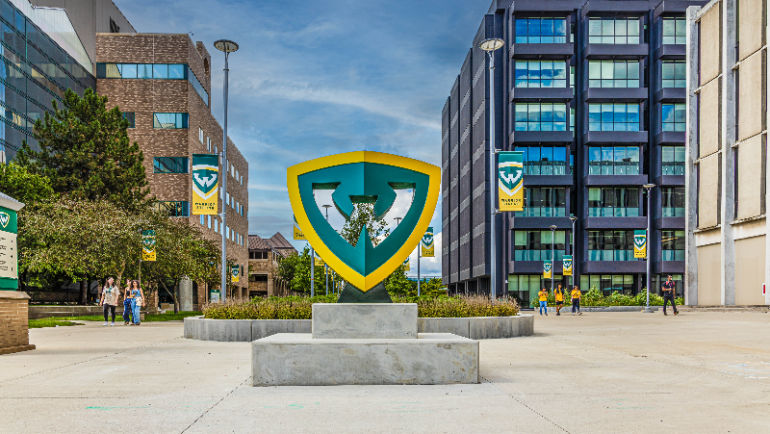
Life at Wayne State is defined by its urban, commuter-school character. The Midtown campus places students within walking distance of Detroit’s cultural centers, internships, and career opportunities. Housing and Residential Life aims to foster "an intentional living-learning community," but the social scene is not traditionally prominent, with many students living off-campus. Student opinions note that the campus lacks a "typical" collegiate feel, with one Reddit user observing that "the student body was too diverse and lacked in true character," a comment that likely speaks to the challenge of building community among a population that often disperses after class. The energy comes from the city itself—the campus is integrated into Detroit’s grid, offering a gritty, real-world backdrop for education. Niche describes it as "a unique blend of strong academics, real-world opportunities, and the energy of an urban campus." This environment appeals to independent, career-minded students who want to engage directly with a major American city rather than exist in a cloistered college town.
Wayne State’s graduation story is one of remarkable transformation. Once a national laggard, the university has executed a dramatic turnaround. The six-year graduation rate jumped from 26% for the cohort entering in the mid-2000s to 55.8% for a more recent cohort—a 115% increase that has been hailed as the best improvement in the nation. The current graduation rate stands at 58%. Post-graduation outcomes are strong, with median earnings ten years after entry at $53,493. These figures underscore Wayne State’s evolution from a commuter school with high dropout rates to an institution increasingly effective at shepherding its diverse, often student population to degree completion and economic mobility. The narrative is no longer about potential but about proven, steep upward trajectories in student success.
Affordability is a cornerstone of Wayne State’s value proposition. The average after aid is $12,766, significantly below the national average for four-year colleges. A high percentage of full-time beginning undergraduates receive grant or scholarship aid—sources cite figures of 98% and 95%. The university has also introduced the Wayne State Guarantee, a program for Michigan residents with a family annual income of $80,000 or less and assets totaling $50,000 or less. While not a universal "no-loan" policy that meets full need for all students, the Guarantee represents a significant commitment to reducing debt for lower- and middle-income families. Financial aid packages typically include a mix of scholarships, grants, loans, and work-study, with most scholarships and grants being automatically accepted as "free money." The net price calculator is a key tool for prospective students to estimate their personalized aid package.
Wayne State stands out for its raw, unfiltered connection to a major American city and its dramatic metamorphosis into a model of urban public university success. It is not a curated, pastoral college experience; it’s a working-class institution embedded in the heart of Detroit, where the campus and the city’s revival are intertwined. Its sheer academic scale—375 programs—provides unparalleled optionality for students, especially those interested in health professions, engineering, and the arts. The most compelling narrative, however, is its data: a graduation rate that has nearly doubled in a decade, transforming it from a national embarrassment into a case study for improvement. Coupled with the affordable and the income-based Wayne State Guarantee, the university represents a powerful engine of socioeconomic mobility. It’s for the self-starter who wants a no-frills, high-value education and isn’t afraid to engage with the complexities and opportunities of urban life.
Wayne State University seal · sourceOur Campus - Wayne State College Nebraska · sourceCampus experience - Wayne State University · sourceEight ways Wayne State University helps students cut the costs of college - Today@Wayne - Wayne State University · source
.jpg?width=1600)