Admit rate has ranged 49%–60% over the last 5 years — notably volatile. Source: IPEDS via Urban Institute.
Acceptance & SAT from Common Data Set / IPEDS; net price, earnings & graduation from the U.S. Dept. of Education College Scorecard. Figures lag ~1–2 years — verify with the school.
Worcester Polytechnic Institute (WPI) is a STEM powerhouse with a fiercely practical, project-driven approach to education. Known for its high job placement rates and strong industry ties, WPI combines rigorous academics in engineering and computer science with a collaborative, hands-on culture. Its 60% acceptance rate belies the intensity of its programs—graduates leave with an average starting salary over $72K and a reputation for solving real-world problems.
Admission requirements
Test-blind — scores not considered
Required
High school transcript
Letters of recommendation
College-prep program
TOEFL (non-native English)
Considered (not required)
Grade point average
Class rank
Source: IPEDS Admissions survey (2022) via Urban Institute. Covers formal factors only — it does not reflect essays, extracurriculars, or other holistic criteria.
2.7 / 3.0Meets the federal financial-responsibility standard
U.S. Dept. of Education Financial Responsibility Composite Score (FY2022-23). Scale −1.0 to 3.0; ≥1.5 meets the standard. Reported for private nonprofit & for-profit institutions only — public universities are state-backed and not scored, so this is a stability signal, not a ranking.
Top-earning majors
Median earnings by field of study (highest credential), ~2 years after completion.
Computer Science$95,207
Management Information Systems and Services$79,284
Industrial Engineering$76,460
Mathematics and Statistics, Other$74,576
Chemical Engineering$72,881
Electrical, Electronics, and Communications Engineering$72,507
Applicants here also applied to
The schools that most often appear alongside WPI on applicants’ lists, from our self-reported outcomes corpus.
On-campus criminal offenses classed as violent (murder/non-negligent manslaughter, rape, robbery, aggravated assault) for the most recent reported year. Source: U.S. Dept. of Education Campus Safety and Security (Clery Act). Counts reflect what’s reported to the school, and urban campuses often report more partly due to non-student incidents nearby — read alongside campus size and setting, not as a standalone safety verdict.
Climate
Pleasant days / yr
90
Summer high
80°F
Winter low
23°F
Annual rain
51.3"
Annual snow
44.4"
Natural-hazard risk
Relatively Moderate
Pleasant days counts days per year with a mean temperature of 55–75°F, a high at or below 90°F, a low at or above 45°F, and little precipitation — a transparent comfort measure, not a weighting we invented. Computed from Open-Meteo ERA5 daily history (2019–2023). Natural-hazard risk is the county’s composite rating from the FEMA National Risk Index.
Deep dive — research, future-scholar output & economic mobility▾
Research output
Institutional h-index
349
Scholarly works
23,783
Institutional research volume and impact from OpenAlex. The h-index reflects large research universities and will be low for teaching-focused liberal-arts colleges — not a measure of undergraduate quality.
Future-scholar output
Science & engineering PhDsper-capita yield 6.4
Share of this school’s graduates who go on to earn research doctorates (2010–20), by national rank and per-capita yield (NSF institutional-yield ratio). A signal of a research-oriented student culture — not a causal promise, since it partly reflects who enrolls. Only top producers appear. Source: NSF NCSES, Baccalaureate Origins of U.S. Research Doctorate Recipients.
Economic mobility
Mobility rate
2.2%
Bottom → top quintile
Quick answers
What is the acceptance rate at Worcester Polytechnic Institute?
Worcester Polytechnic Institute's acceptance rate is approximately 60% (Worcester, MA), based on the most recent figures we compiled from public and primary sources.
How much does Worcester Polytechnic Institute cost?
At Worcester Polytechnic Institute, the average net price (after aid) is about $43,071 per year. Actual cost varies with financial aid and residency.
How many undergraduates attend Worcester Polytechnic Institute?
Worcester Polytechnic Institute enrolls approximately 5,447 undergraduate students.
Where is Worcester Polytechnic Institute located?
Worcester Polytechnic Institute is located in Worcester, MA.
Admissions
WPI's admissions process is selective but not cutthroat, with a 60% that has risen slightly in recent years (up from 49%). The middle 50% of enrolling students who submit test scores land between 1340-1480 on the SAT, though WPI remains . Admitted students typically boast a 3.92 GPA and rank in the top 9% of their high school class, with particularly strong math and science coursework. Early applicants enjoy a higher acceptance rate (68.9%). Notably, 80% of admitted students have GPAs of 3.75 or above.
WPI operates like an engineering boot camp with intellectual depth. Over 60% of students major in engineering (especially mechanical and aerospace), while 21% pursue computer science—the two most popular degrees. The curriculum emphasizes project-based learning through signature programs like the Interactive Qualifying Project (IQP), where students tackle real-world problems for clients. Alumni and industry observers consider WPI degrees highly valuable, if not quite at MIT/Stanford prestige levels. The school offers unusual BS/MS combined degree options and a lean 13:1 student-faculty ratio that enables hands-on research.
Earnings = median of students working ~10 years after entry; debt = median of graduates. Value divides 10-yr earnings by one year’s net price — read it as earnings per dollar of annual cost, not a full lifetime ROI; it favors lower-cost schools. Source: U.S. Dept. of Education College Scorecard. Figures lag ~2 years and reflect all students, not your intended major.
Aerospace, Aeronautical, and Astronautical/Space Engineering$71,947
Business, Management, Marketing, and Related Support Services, Other$69,338
Source: U.S. Dept. of Education College Scorecard (field-of-study earnings). Figures cover graduates who received federal aid and lag ~2 years; not all programs report data.
Co-application frequency from self-reported results — directional peer discovery, not a recommendation.
68%
From bottom quintile
3%
Mobility rate = the share of students who both start in the bottom household-income quintile and reach the top quintile; bottom → top is that chance conditional on starting at the bottom. Source: Opportunity Insights Mobility Report Cards (Chetty, Friedman, Saez, Turner & Yagan). Reflects 1980–82 birth cohorts, so it’s directional, not current.
Campus culture balances intense academics with a surprisingly collaborative vibe. Only 45% of students live on campus, creating a commuter-school dynamic, but active clubs and organizations (from robotics teams to theater groups) foster community. The school emphasizes diversity initiatives, though some students describe social life as 'what you make of it.' Weekends see a mix of hackathons, gaming tournaments, and low-key parties—this isn't a big Greek or sports school. The Worcester location provides access to internships and a gritty New England city vibe, though some students crave more campus energy.
WPI delivers exceptional ROI, especially for STEM grads. The Class of 2020 reported an average starting salary of $72,951 for bachelor's recipients—well above national averages (computer science grads earned $60,333 vs. $56,300 nationally). Five-year median earnings hit $105,724 according to federal data, placing WPI in the top 10% of colleges. An 88% graduation rate (top 5% nationally) reflects strong student support. While recent outcome reports have been inconsistently published, alumni networks in tech hubs like Boston and Silicon Valley provide robust career pipelines.
With a sticker price nearing $60K, WPI isn't cheap—but 99% of first-year students receive grant or scholarship aid, bringing the average down to $47,799. Need-based grants and merit scholarships (averaging $36,427 per recipient) significantly offset costs. The school provides a detailed net price calculator to estimate individualized aid packages. While still expensive, WPI's strong earnings outcomes help justify the investment for many STEM-focused families.
WPI distinguishes itself through its project-based curriculum that forces students to apply theory to messy real-world challenges—a major selling point for employers. Unlike larger tech schools, it maintains a tight-knit feel where undergrads easily access research opportunities. The school punches above its weight in specific niches: its robotics program rivals MIT's, and its corporate partnerships (especially in defense and biotech) create pipelines to top firms. For students who thrive on hands-on problem-solving rather than theoretical prestige, WPI offers a pragmatic path to high-earning STEM careers.
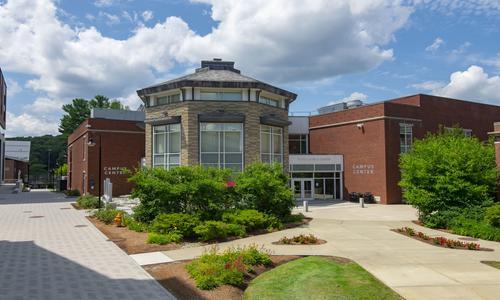
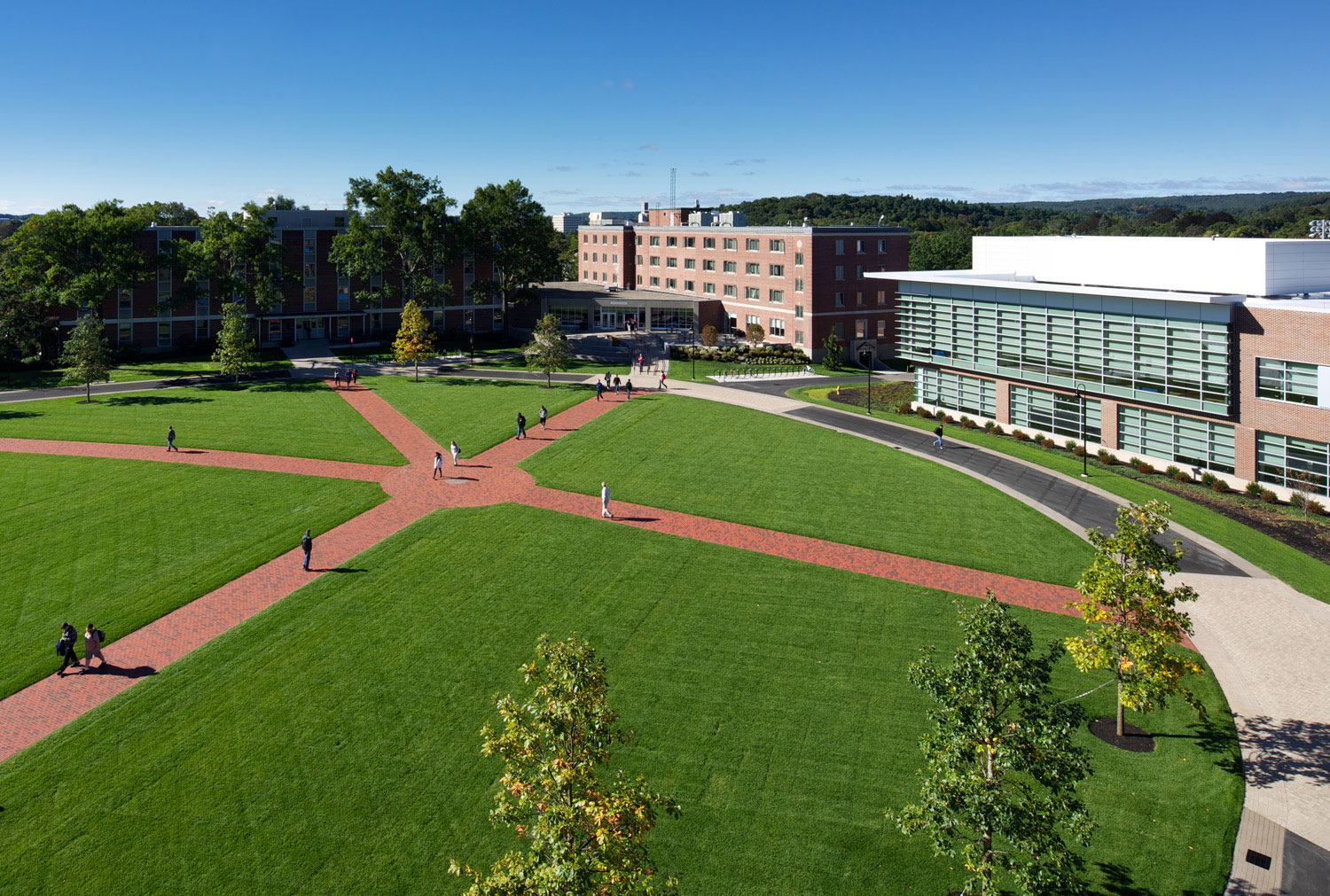
Worcester Polytechnic Institute logo · sourceRubin Campus Center | Worcester Polytechnic Institute · sourceWorcester Polytechnic Institute (WPI) - Profile, Rankings and Data | US News Best Colleges · sourceWorcester Polytechnic Institute — Halvorson | Tighe & Bond · source