Admit rate has ranged 47%–65% over the last 5 years — notably volatile. Source: IPEDS via Urban Institute.
Acceptance & SAT from Common Data Set / IPEDS; net price, earnings & graduation from the U.S. Dept. of Education College Scorecard. Figures lag ~1–2 years — verify with the school.
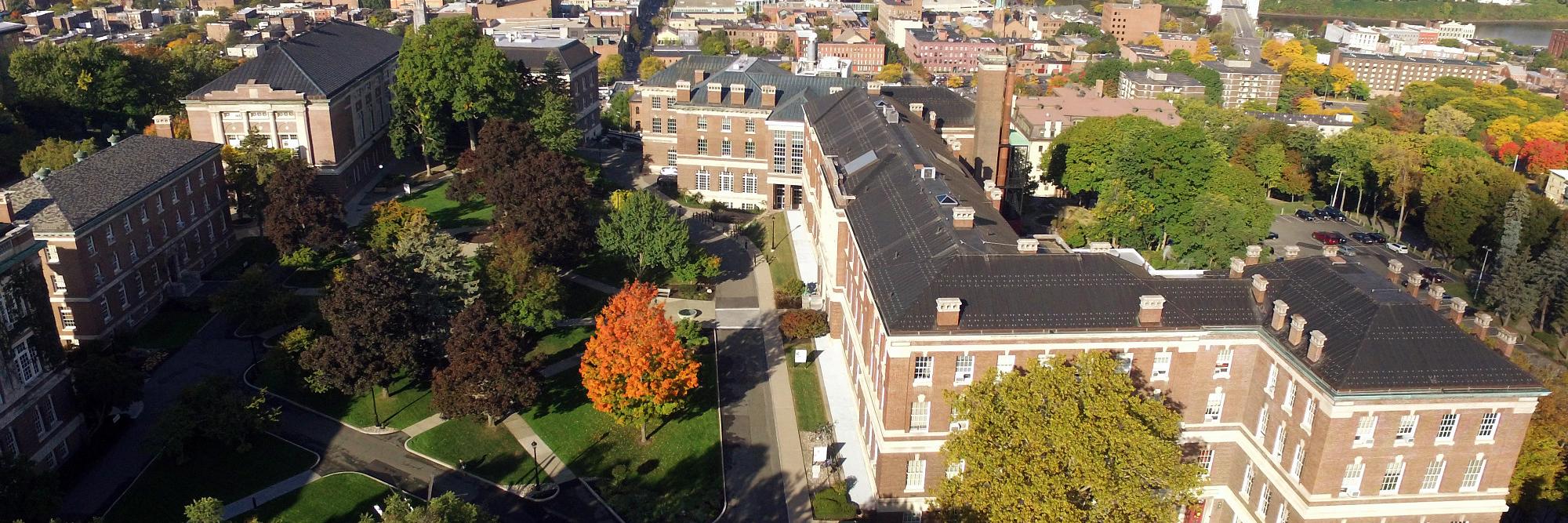
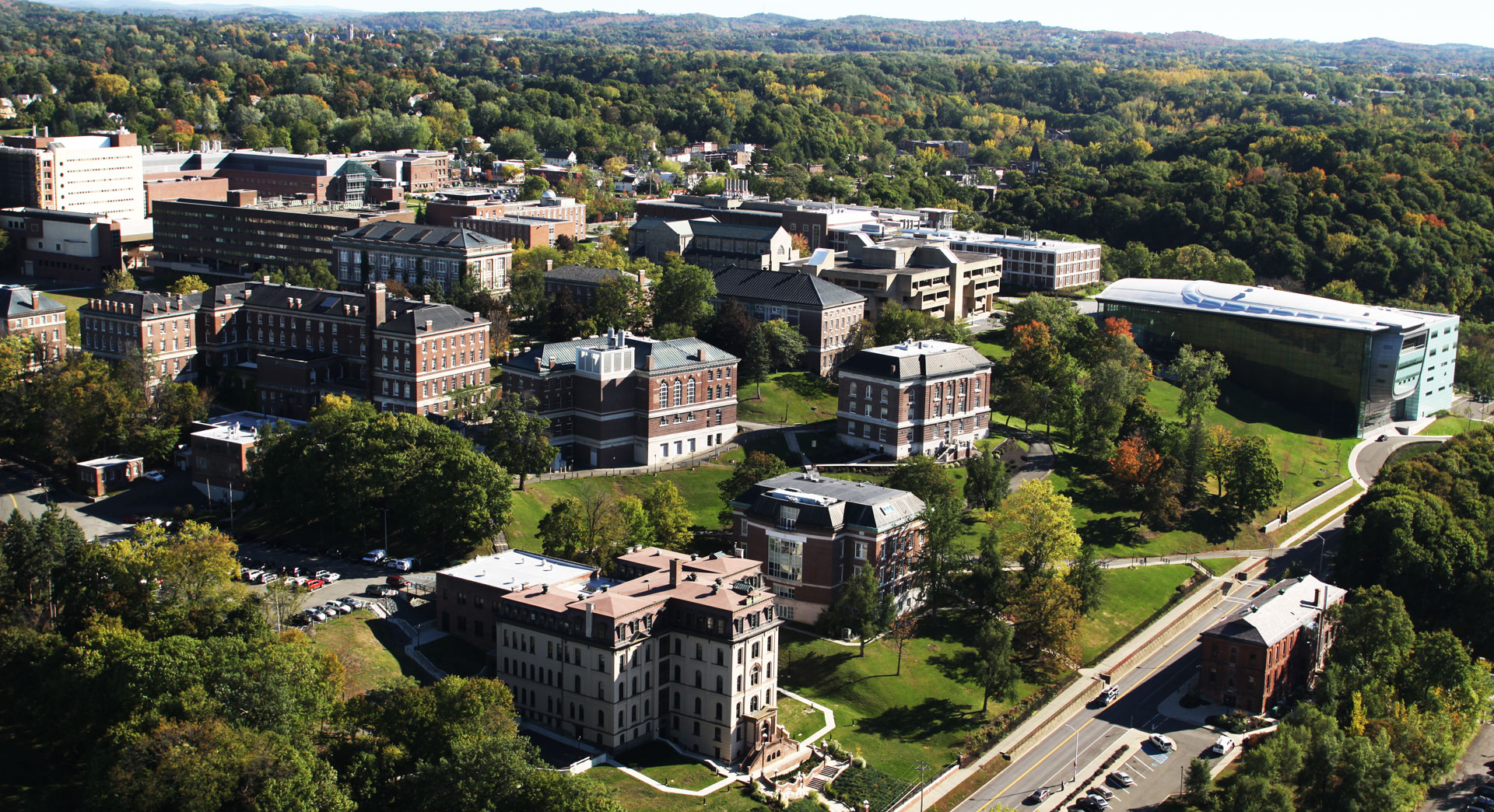
Rensselaer Polytechnic Institute (RPI) is a historic, STEM-centric university in Troy, New York, that operates with the intensity of a technical proving ground. Its culture is defined by a famously rigorous curriculum, a deep focus on research and engineering, and a student body that thrives on—or is consumed by—academic challenge. The payoff is stark: graduates command some of the highest median salaries in the nation, a testament to the degree's formidable market value.
Admission requirements
Test-optional — scores considered if submitted
Required
High school transcript
Grade point average
Class rank
Letters of recommendation
College-prep program
Demonstrated competencies
TOEFL (non-native English)
Considered (not required)
Test scores (SAT/ACT)
Source: IPEDS Admissions survey (2022) via Urban Institute. Covers formal factors only — it does not reflect essays, extracurriculars, or other holistic criteria.
More details
Undergrad enrollment
5,714
In-state tuition
$64,081
Out-of-state tuition
$64,081
Housing
57% on-campus, 43% off-campus
Early Decision
Binding option available
Graduation Rate
84%
Top 10% of HS Class
53% of incoming class
Demonstrated Interest
Considered
Median Earnings (10yr)
$102,051
Regular Decision Deadline
January 15
Outcomes & value
Outcomes & value
Median earnings (10 yr)
$102,051
Value (earnings ÷ net price)
2.8×
Median debt at graduation
$23,750
Graduation rate
84%
First-year retention
91%
Reducing loan balance (3 yr)
92%
Pell (lower-income) share
20%
First-gen share (among federal-aid recipients)
14%
Financial health
3.0 / 3.0Meets the federal financial-responsibility standard
U.S. Dept. of Education Financial Responsibility Composite Score (FY2022-23). Scale −1.0 to 3.0; ≥1.5 meets the standard. Reported for private nonprofit & for-profit institutions only — public universities are state-backed and not scored, so this is a stability signal, not a ranking.
Top-earning majors
Median earnings by field of study (highest credential), ~2 years after completion.
Co-application frequency from self-reported results — directional peer discovery, not a recommendation.
Campus & location
Campus safety
On-campus violent crimes (2024)
2
Per 1,000 students
0.29
On-campus criminal offenses classed as violent (murder/non-negligent manslaughter, rape, robbery, aggravated assault) for the most recent reported year. Source: U.S. Dept. of Education Campus Safety and Security (Clery Act). Counts reflect what’s reported to the school, and urban campuses often report more partly due to non-student incidents nearby — read alongside campus size and setting, not as a standalone safety verdict.
Climate
Pleasant days / yr
90
Summer high
80°F
Winter low
22°F
Annual rain
47.9"
Annual snow
41.9"
Natural-hazard risk
Relatively Moderate
Pleasant days counts days per year with a mean temperature of 55–75°F, a high at or below 90°F, a low at or above 45°F, and little precipitation — a transparent comfort measure, not a weighting we invented. Computed from Open-Meteo ERA5 daily history (2019–2023). Natural-hazard risk is the county’s composite rating from the FEMA National Risk Index.
Deep dive — research, future-scholar output & economic mobility▾
Research output
Institutional h-index
576
Scholarly works
63,283
Institutional research volume and impact from OpenAlex. The h-index reflects large research universities and will be low for teaching-focused liberal-arts colleges — not a measure of undergraduate quality.
Economic mobility
Mobility rate
3.0%
Bottom → top quintile
65%
From bottom quintile
5%
Mobility rate = the share of students who both start in the bottom household-income quintile and reach the top quintile; bottom → top is that chance conditional on starting at the bottom. Source: Opportunity Insights Mobility Report Cards (Chetty, Friedman, Saez, Turner & Yagan). Reflects 1980–82 birth cohorts, so it’s directional, not current.
Quick answers
What is the acceptance rate at Rensselaer Polytechnic Institute?
Rensselaer Polytechnic Institute's acceptance rate is approximately 63% (Troy, NY), based on the most recent figures we compiled from public and primary sources.
What SAT score do you need for Rensselaer Polytechnic Institute?
Admitted students at Rensselaer Polytechnic Institute typically score 1375–1510 on the SAT (the middle-50% range). Scores outside this band are still admitted, especially with strong applications.
How much does Rensselaer Polytechnic Institute cost?
At Rensselaer Polytechnic Institute, the average net price (after aid) is about $36,228 per year. Actual cost varies with financial aid and residency.
How many undergraduates attend Rensselaer Polytechnic Institute?
Rensselaer Polytechnic Institute enrolls approximately 5,714 undergraduate students.
Where is Rensselaer Polytechnic Institute located?
Rensselaer Polytechnic Institute is located in Troy, NY.
Admissions
RPI's admissions process is selective but accessible compared to its elite tech peers, with a focus on strong quantitative credentials. The university superscores the SAT but considers only the highest composite ACT score, with or without the writing section. Demonstrated interest is a factor in admissions, and the admissions office encourages prospective students to engage via virtual tours and information sessions. While the overall is 63%, applying Early Decision—a binding commitment to attend if admitted—can provide a strategic advantage, with reported early acceptance rates historically higher than the regular decision pool. The admitted student profile is academically strong, with 53% of the incoming class having graduated in the top 10% of their high school class. The middle 50% SAT range for admitted students is 1375–1510, with math scores (typically 720–790) significantly outpacing evidence-based reading and writing (670–740).
Application Volume: The university has experienced fluctuations in application numbers; for the class of 2023, it received 18,500 applications, a decrease from the previous year.
Key Deadlines: The regular decision application deadline is January 15.
Earnings = median of students working ~10 years after entry; debt = median of graduates. Value divides 10-yr earnings by one year’s net price — read it as earnings per dollar of annual cost, not a full lifetime ROI; it favors lower-cost schools. Source: U.S. Dept. of Education College Scorecard. Figures lag ~2 years and reflect all students, not your intended major.
Multi/Interdisciplinary Studies, Other$69,338
Physics$69,338
Source: U.S. Dept. of Education College Scorecard (field-of-study earnings). Figures cover graduates who received federal aid and lag ~2 years; not all programs report data.
Academics at RPI are unapologetically rigorous and intensely focused on STEM, business, and architecture. The curriculum is designed to be challenging, with students frequently noting that the workload is heavy and the school-work balance is difficult to maintain. The heart of the institute is its School of Engineering, which spans seven departments offering 11 undergraduate degrees, grounded in the fundamentals of math, science, and engineering. The most popular majors reflect this technical emphasis: Computer Science, Mechanical Engineering, Aerospace Engineering, and Bioengineering and Biomedical Engineering. Beyond traditional majors, RPI offers degrees in areas like Architectural Sciences, Business Analytics, and Finance, Markets, and Emerging Technologies. The academic experience is widely described as a grind, but one with a clear return on investment, preparing students thoroughly for demanding technical careers.
Life at RPI is dominated by academics, creating a culture where socializing often happens within the context of collaborative problem-solving and club activities. The university promotes a clustered-living residential model, where most first-year students live in freshman-only halls to build community. Overall, 57% of students live in college-owned, -operated, or -affiliated housing, while 43% live off-campus. Student-organized clubs are a major outlet and social lifeline, ranging from professional and technical groups to recreational and cultural organizations. The campus is committed to fostering an inclusive community, officially prohibiting discrimination. The location in Troy, New York, offers a collegiate setting, though the social scene is largely campus-centric, driven by the shared experience of navigating a demanding workload.
Career outcomes are the undisputed flagship metric for RPI, justifying its rigorous reputation with exceptional earning potential. The median earnings for graduates ten years after entry are $102,051. More immediate post-graduation data is equally impressive: the average starting salary for School of Engineering graduates from the Class of 2024 was $80,323. The institute's graduation rate is a strong 84%, indicating that most students who enroll are equipped to navigate the challenging curriculum to completion. The Career and Professional Development office (CCPD) actively tracks outcomes, publishing an annual report on post-graduation plans collected up to six months after commencement.
Attending RPI is a significant financial investment, with an average after aid of $36,228. The university offers a mix of merit-based and . Merit scholarships are a prominent component, with international students eligible for awards of up to $20,000 per year. Need-based aid packages, which average $46,936, can include Rensselaer-funded grants, federal and state aid, work-study, and loans. The financial aid office emphasizes that for students participating in The Arch program (a semester-away experiential learning requirement), Rensselaer-funded gift aid typically remains consistent for two consecutive semesters unless financial need changes. However, RPI is not listed among institutions with a universal "no-loan" policy for all qualifying students; loans are a standard part of financial aid packages for those who need them. Prospective students are directed to use the official net price calculator for the best cost estimate.
RPI stands out for its singular, uncompromising identity as a producer of high-earning, industry-ready engineers and technologists. It is not a liberal arts college with strong engineering; it is an institute where the technical curriculum is the core culture. This creates an environment that is both immensely challenging and uniquely rewarding. The student experience is famously intense, a common bond that forges resilient problem-solvers. While the social life may be less traditional and more integrated with academic pursuits, the outcome—a degree that commands a median salary over $102,000 a decade after graduation—speaks for itself. For students who are certain of a STEM or technical business path and are prepared to fully immerse themselves in the work, RPI delivers a focused, high-return education that is respected by employers worldwide.
Rensselaer Polytechnic Institute seal · sourceVisit | Rensselaer Polytechnic Institute · sourceRensselaer Polytechnic Institute (RPI) - Profile, Rankings and Data | US News Best Colleges · sourcecampus-aerial-alt – Rensselaer Reunion and Homecoming · source