Admit rate has ranged 55%–74% over the last 5 years — notably volatile, though the latest figure above (75%) falls outside that window. Source: IPEDS via Urban Institute.
Acceptance & SAT from Common Data Set / IPEDS; net price, earnings & graduation from the U.S. Dept. of Education College Scorecard. Figures lag ~1–2 years — verify with the school.
California State Polytechnic University-Pomona (Cal Poly Pomona) is a hands-on, career-focused public university where 74% of applicants get in—but only the industrious thrive. Known for its strong engineering, business, and agriculture programs, CPP delivers solid ROI with early-career alumni earning $71,900 on average. The commuter-heavy campus lacks rah-rah spirit but offers proximity to both LA’s job market and mountain hikes.
Admission requirements
Test-blind — scores not considered
Required
High school transcript
Grade point average
College-prep program
TOEFL (non-native English)
Source: IPEDS Admissions survey (2022) via Urban Institute. Covers formal factors only — it does not reflect essays, extracurriculars, or other holistic criteria.
More details
Undergrad enrollment
25,042
In-state tuition
$7,780
Out-of-state tuition
$20,380
Campus Size
1,400 acres
Median Debt
$16,000
Most Popular Major
Business Administration
Student-Faculty Ratio
8:1 (in labs)
4-Year Graduation Rate
30%
Avg Early-Career Earnings
$71,900
Outcomes & value
Outcomes & value
Median earnings (10 yr)
$71,902
Value (earnings ÷ net price)
6.2×
Median debt at graduation
$16,000
Graduation rate
68%
First-year retention
87%
Reducing loan balance (3 yr)
73%
Pell (lower-income) share
46%
First-gen share (among federal-aid recipients)
49%
Top-earning majors
Median earnings by field of study (highest credential), ~2 years after completion.
Construction Engineering Technology/Technician$77,329
Electrical, Electronics, and Communications Engineering$69,930
Manufacturing Engineering$69,338
Chemical Engineering$68,305
Mechanical Engineering$67,918
Industrial Engineering$67,287
Applicants here also applied to
The schools that most often appear alongside California State Polytechnic University-Pomona on applicants’ lists, from our self-reported outcomes corpus.
On-campus criminal offenses classed as violent (murder/non-negligent manslaughter, rape, robbery, aggravated assault) for the most recent reported year. Source: U.S. Dept. of Education Campus Safety and Security (Clery Act). Counts reflect what’s reported to the school, and urban campuses often report more partly due to non-student incidents nearby — read alongside campus size and setting, not as a standalone safety verdict.
Climate
Pleasant days / yr
190
Summer high
90°F
Winter low
46°F
Annual rain
20.4"
Annual snow
0.6"
Natural-hazard risk
Very High
Pleasant days counts days per year with a mean temperature of 55–75°F, a high at or below 90°F, a low at or above 45°F, and little precipitation — a transparent comfort measure, not a weighting we invented. Computed from Open-Meteo ERA5 daily history (2019–2023). Natural-hazard risk is the county’s composite rating from the FEMA National Risk Index.
Deep dive — research, future-scholar output & economic mobility▾
Economic mobility
Mobility rate
6.8%
Bottom → top quintile
46%
From bottom quintile
15%
Mobility rate = the share of students who both start in the bottom household-income quintile and reach the top quintile; bottom → top is that chance conditional on starting at the bottom. Source: Opportunity Insights Mobility Report Cards (Chetty, Friedman, Saez, Turner & Yagan). Reflects 1980–82 birth cohorts, so it’s directional, not current.
Quick answers
What is the acceptance rate at California State Polytechnic University-Pomona?
California State Polytechnic University-Pomona's acceptance rate is approximately 75% (Pomona, CA), based on the most recent figures we compiled from public and primary sources.
How much does California State Polytechnic University-Pomona cost?
At California State Polytechnic University-Pomona, the average net price (after aid) is about $11,531 per year. Actual cost varies with financial aid and residency.
How many undergraduates attend California State Polytechnic University-Pomona?
California State Polytechnic University-Pomona enrolls approximately 25,042 undergraduate students.
Where is California State Polytechnic University-Pomona located?
California State Polytechnic University-Pomona is located in Pomona, CA.
Admissions
Cal Poly Pomona admits 74% of applicants, making it one of the more accessible polytechnic schools—but don’t mistake accessibility for lax standards. California residents need at least a 2.50 'A-G' GPA to be admissible, though 50% of enrolled students boast GPAs of 3.75+. The school doesn’t heavily emphasize test scores (SAT/ACT ranges are unpublished), instead prioritizing coursework rigor and eligibility indices. Applications are due November 30, with no early decision or early action options.
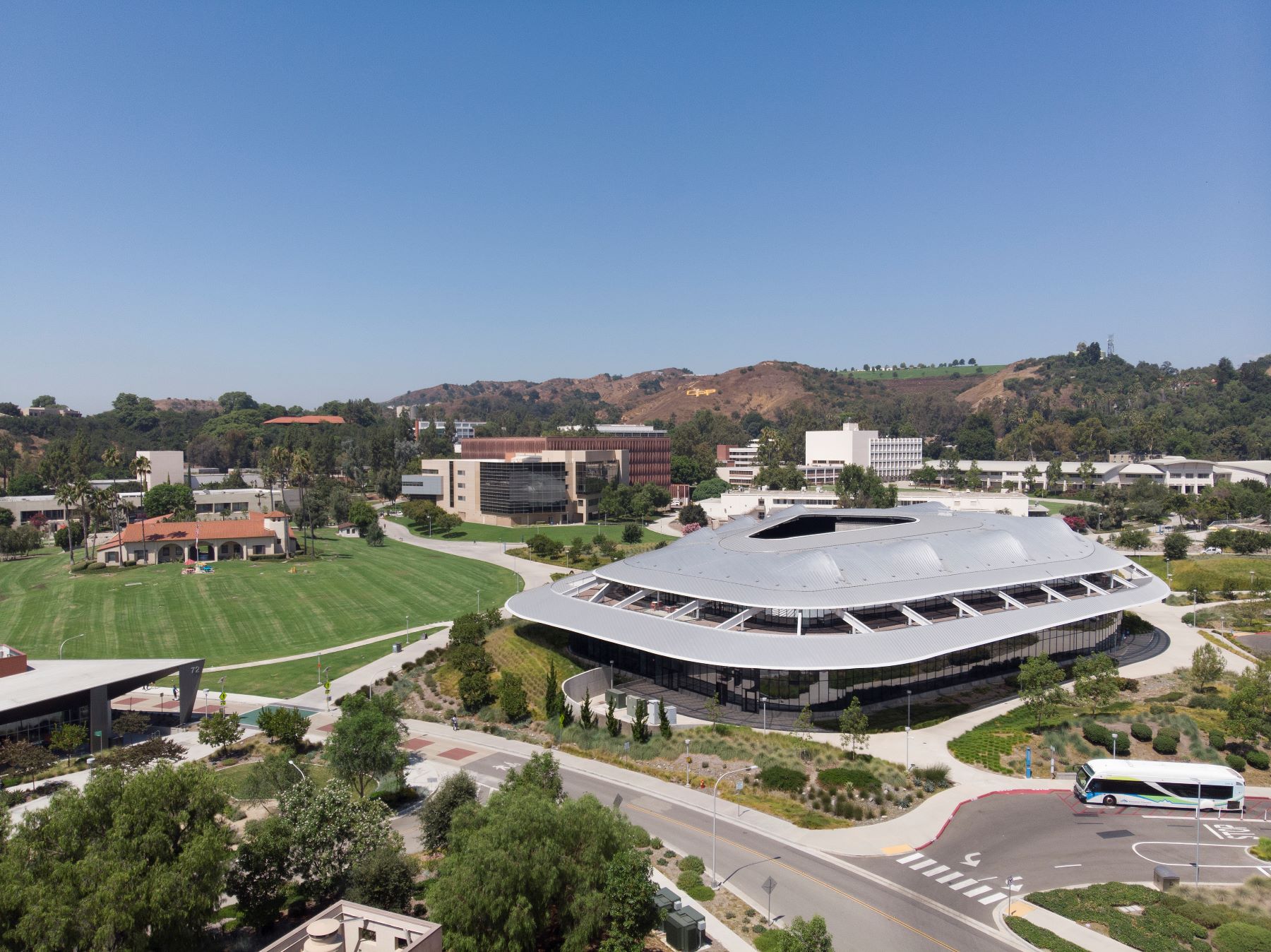
CPP’s 'learn by doing' ethos shines in its top-ranked engineering and agriculture programs (U.S. News ranks it #3 in Regional Universities West and #2 for veterans). The most popular major is Business Administration, followed by Psychology and Computer Science. With 100+ programs across eight colleges—including a standout College of Engineering with seven majors—the curriculum leans applied. The is a sleeper hit, offering rare programs like Agricultural Science amid the university’s sprawling 1,400-acre campus, which includes a working farm.
Compare California State Polytechnic University-Pomona
Earnings = median of students working ~10 years after entry; debt = median of graduates. Value divides 10-yr earnings by one year’s net price — read it as earnings per dollar of annual cost, not a full lifetime ROI; it favors lower-cost schools. Source: U.S. Dept. of Education College Scorecard. Figures lag ~2 years and reflect all students, not your intended major.
Computer Science$64,394
Civil Engineering$64,231
Source: U.S. Dept. of Education College Scorecard (field-of-study earnings). Figures cover graduates who received federal aid and lag ~2 years; not all programs report data.
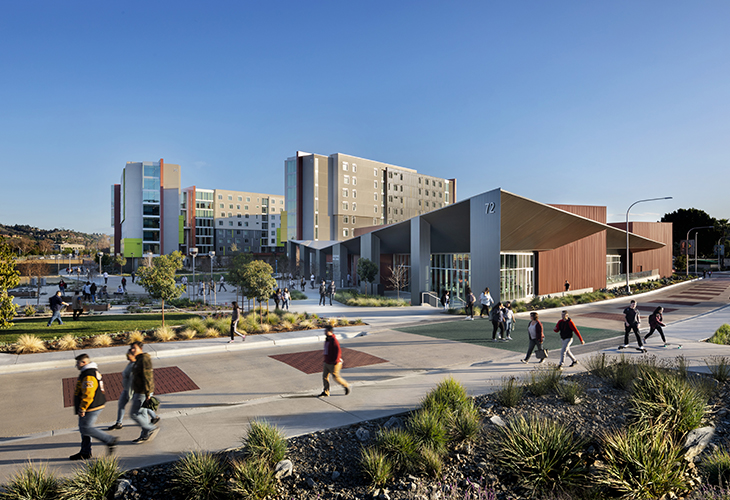
Social life here is what you make it—85% of students commute, and Reddit threads call the vibe 'dead.' But the 300+ clubs (from Filipino Cultural Nights to Concrete Canoe racing) and Division II athletics (go Broncos!) provide outlets. The campus itself is a draw: 30 minutes from downtown LA and nestled against the San Gabriel Mountains, it’s a basecamp for both urban adventures and hiking. Housing is limited, so most students rent off-campus in Pomona’s affordable neighborhoods.
CPP graduates earn $71,900 on average early in their careers—outpacing many pricier schools. But getting there takes time: only 30% graduate in four years (67% in six), partly due to impacted courses in high-demand majors. The 87% freshman retention rate suggests students are committed despite bureaucratic hurdles. Debt is manageable (median $16,000), and 75% of alumni out-earn typical high school grads within a decade.
The net price is $21,610 after aid, with 83% of undergrads receiving grants or scholarships. In-state tuition is a relative bargain for California, but housing costs add up—only 15% of students live on campus. The financial aid office pushes Cal Grant eligibility for Californians, and the calculator helps families budget for fees like the $1,074 annual 'student success' charge.
CPP is California’s best value for hands-on STEM and business education, blending CSU affordability with polytechnic rigor. Its 8:1 student-faculty ratio in labs and employer partnerships (e.g., SpaceX recruits engineers here) explain the strong earnings data. The catch? You’ll need hustle to navigate registration bottlenecks and carve out a social life—but for career-focused students, the ROI is undeniable.