Admit rate has ranged 28%–38% over the last 5 years — notably volatile. Source: IPEDS via Urban Institute.
Acceptance & SAT from Common Data Set / IPEDS; net price, earnings & graduation from the U.S. Dept. of Education College Scorecard. Figures lag ~1–2 years — verify with the school.
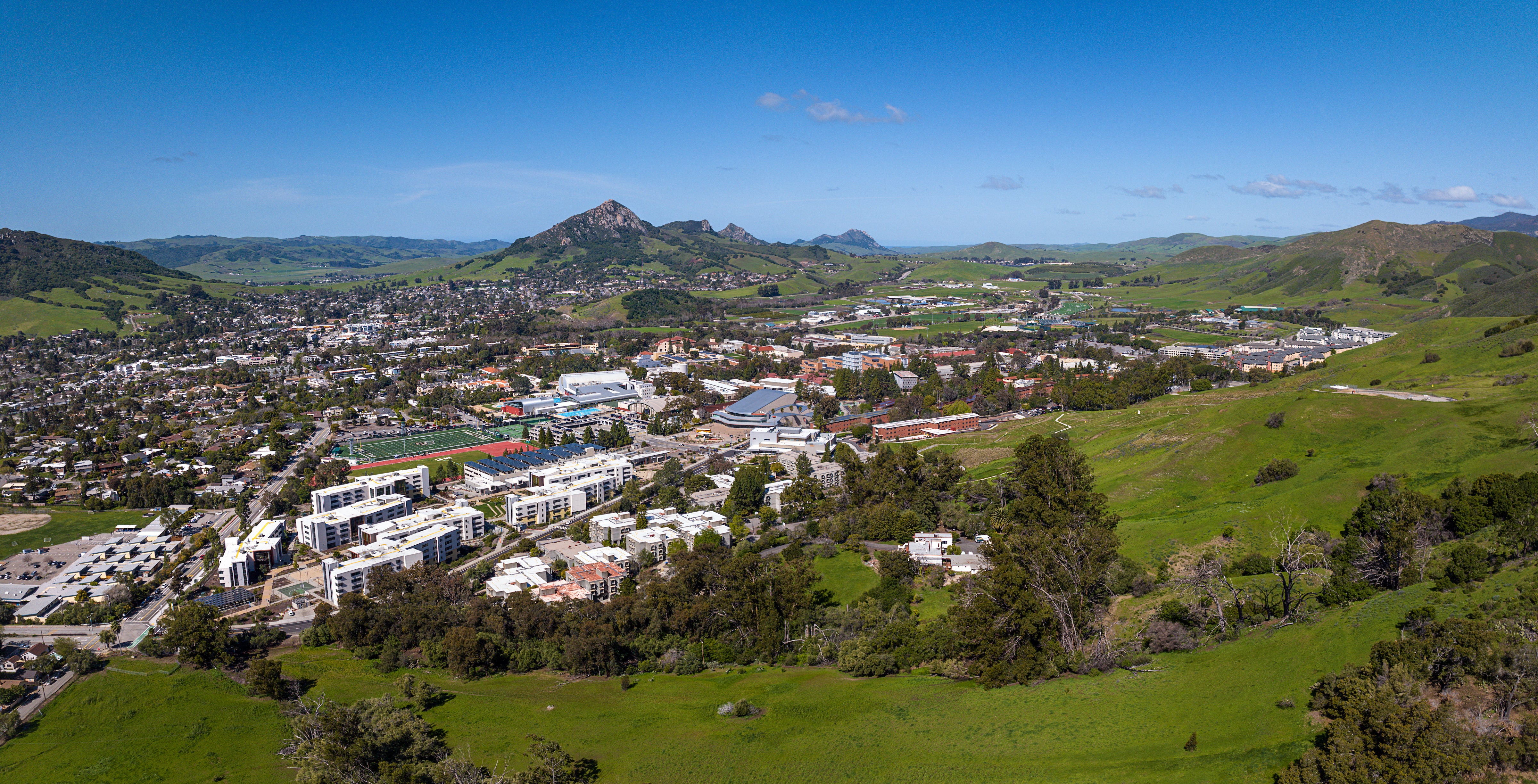
California Polytechnic State University, San Luis Obispo is not your typical state school. It’s the most selective campus in the California State University system, a public polytechnic powerhouse where 'Learn by Doing' is a serious, hands-on creed, not a marketing slogan. The culture is defined by academic intensity, a sprawling campus nestled in the coastal hills, and a student body that’s as likely to be found in a lab or a machine shop as at a beach bonfire. The payoff is stark: graduates command some of the highest median earnings of any public university in the nation.
Admission requirements
Test-blind — scores not considered
Required
High school transcript
Grade point average
College-prep program
TOEFL (non-native English)
Source: IPEDS Admissions survey (2022) via Urban Institute. Covers formal factors only — it does not reflect essays, extracurriculars, or other holistic criteria.
More details
Undergrad enrollment
21,996
In-state tuition
$13,596
Out-of-state tuition
$34,665
No-Loan Policy
Not stated in sources
Graduation Rate
86%
Meets Full Need
No
ED Share of Class
Not stated in sources
First-Year Retention
Not stated in sources
Demonstrated Interest
Not considered
Median Earnings (10yr)
$90,768
Outcomes & value
Outcomes & value
Median earnings (10 yr)
$90,768
Value (earnings ÷ net price)
5.4×
Median debt at graduation
$18,500
Graduation rate
86%
First-year retention
96%
Reducing loan balance (3 yr)
87%
Pell (lower-income) share
19%
First-gen share (among federal-aid recipients)
25%
Top-earning majors
Median earnings by field of study (highest credential), ~2 years after completion.
Computer and Information Sciences, General$120,462
Computer Engineering$93,964
Electrical, Electronics, and Communications Engineering$79,647
Aerospace, Aeronautical, and Astronautical/Space Engineering$76,460
Mechanical Engineering$74,038
Biomedical/Medical Engineering
Applicants here also applied to
The schools that most often appear alongside California Polytechnic State University-San Luis Obispo on applicants’ lists, from our self-reported outcomes corpus.
On-campus criminal offenses classed as violent (murder/non-negligent manslaughter, rape, robbery, aggravated assault) for the most recent reported year. Source: U.S. Dept. of Education Campus Safety and Security (Clery Act). Counts reflect what’s reported to the school, and urban campuses often report more partly due to non-student incidents nearby — read alongside campus size and setting, not as a standalone safety verdict.
Climate
Pleasant days / yr
207
Summer high
76°F
Winter low
43°F
Annual rain
23.6"
Natural-hazard risk
Relatively High
Pleasant days counts days per year with a mean temperature of 55–75°F, a high at or below 90°F, a low at or above 45°F, and little precipitation — a transparent comfort measure, not a weighting we invented. Computed from Open-Meteo ERA5 daily history (2019–2023). Natural-hazard risk is the county’s composite rating from the FEMA National Risk Index.
Quick answers
What is the acceptance rate at California Polytechnic State University-San Luis Obispo?
California Polytechnic State University-San Luis Obispo's acceptance rate is approximately 31% (San Luis Obispo, CA), based on the most recent figures we compiled from public and primary sources.
How much does California Polytechnic State University-San Luis Obispo cost?
At California Polytechnic State University-San Luis Obispo, the average net price (after aid) is about $16,665 per year. Actual cost varies with financial aid and residency.
How many undergraduates attend California Polytechnic State University-San Luis Obispo?
California Polytechnic State University-San Luis Obispo enrolls approximately 21,996 undergraduate students.
Where is California Polytechnic State University-San Luis Obispo located?
California Polytechnic State University-San Luis Obispo is located in San Luis Obispo, CA.
Admissions
Getting into Cal Poly SLO is a high-stakes numbers game, with selectivity that rivals many elite private universities. The university is the most selective campus in the entire 23-campus California State University system. For the most recent cycle, it received a staggering 81,899 applications and admitted 22,531 students, resulting in an of roughly 27.5%. The canonical acceptance rate is 31%, but this figure masks the intense competition within specific colleges. For first-year applicants, the selection is heavily driven by a multi-factor academic index that primarily weighs GPA and intended major. The university does not consider SAT or ACT scores for admissions. The rate—the percentage of admitted students who enroll—was 28% last year, which is notably higher than many other public universities. Demonstrated interest is not considered in the admissions process. The academic profile of admitted students is exceptionally strong; for the College of Engineering, the middle 50% GPA range for admits was 4.14–4.25, and for the College of Business, it was 4.05–4.25. This creates an environment where even students with near-perfect GPAs face significant uncertainty, especially for coveted STEM majors where acceptance rates can dip below 20%.
Earnings = median of students working ~10 years after entry; debt = median of graduates. Value divides 10-yr earnings by one year’s net price — read it as earnings per dollar of annual cost, not a full lifetime ROI; it favors lower-cost schools. Source: U.S. Dept. of Education College Scorecard. Figures lag ~2 years and reflect all students, not your intended major.
$73,635
Industrial Engineering$73,562
Civil Engineering$72,645
Source: U.S. Dept. of Education College Scorecard (field-of-study earnings). Figures cover graduates who received federal aid and lag ~2 years; not all programs report data.
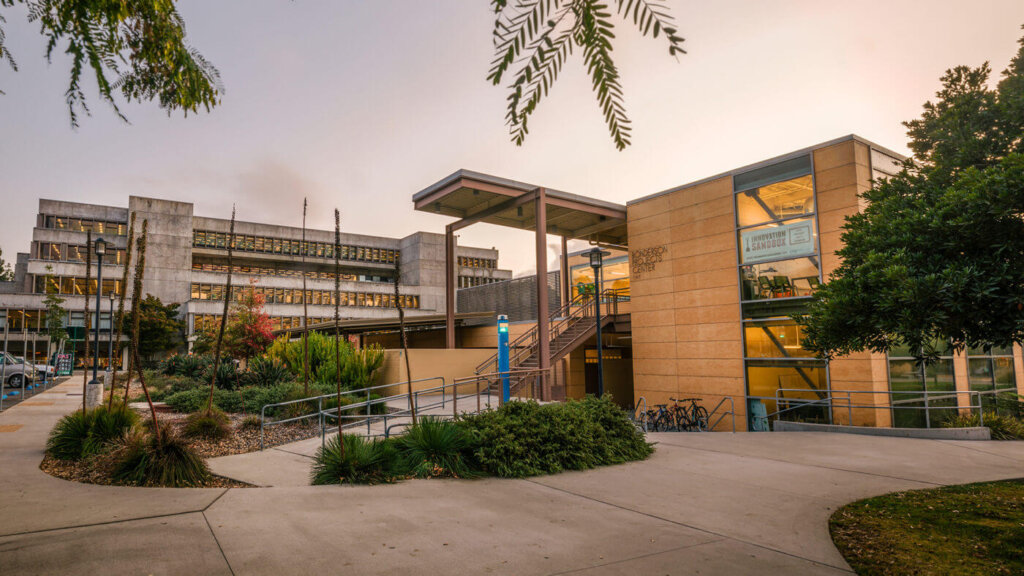
Cal Poly’s academic identity is crystallized in its motto: 'Learn by Doing.' This is not an abstraction. The university’s unique advantage is its relentless focus on hands-on projects, labs, fieldwork, and collaboration from day one. It operates through six academic colleges offering more than 150 undergraduate majors and minors and over 50 graduate programs. The curriculum is intensely practical and project-based. Majors span from expected polytechnic strengths like Civil Engineering, Computer Science, and Architecture to programs in Business, Liberal Arts, and Agriculture. The catalog lists everything from Chemistry and Child Development to City and Regional Planning and Comparative Ethnic Studies. The academic culture is known to be challenging and rigorous; students are serious about their programs. This is an institution where the workshop and the studio are as central as the lecture hall, creating graduates prized by industry for being immediately useful.
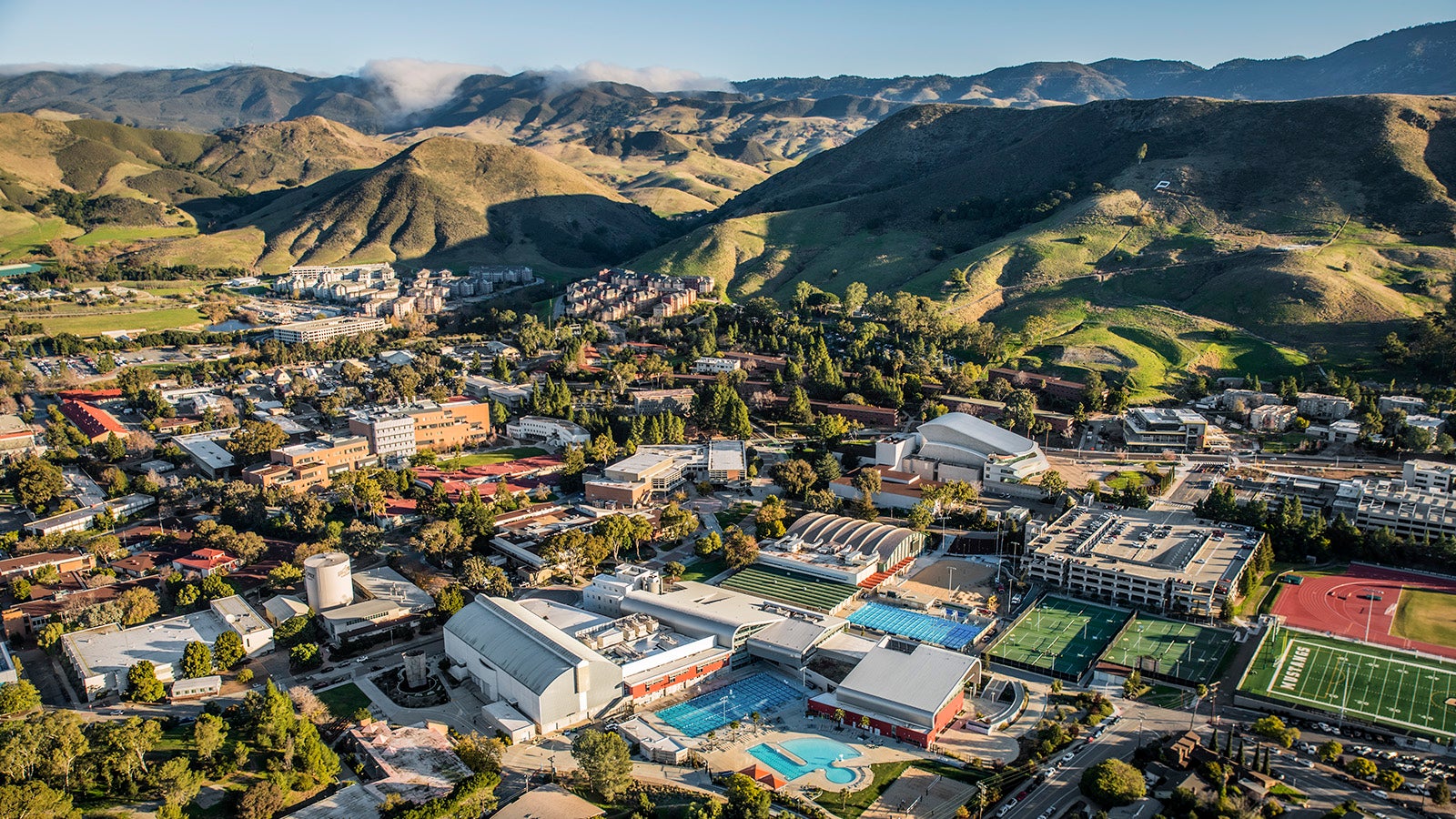
Life at Cal Poly is a distinct blend of focused academics and vibrant, outdoorsy California living. The campus itself is a character—a sprawling, 1,300-acre landscape where, as one student noted, 'The vast majority of the campus is forest sparsely dotted by lecture halls,' leading to a lot of walking. The culture is driven by academic intensity balanced with easy access to outdoor recreation. The social scene is active; most students report being happy with their social lives, with mainstream interests like partying, sports, and outdoor activities being common. The supportive community and opportunities for exploration are emphasized by the university. The vibe is not one of easy-going liberal arts leisure; students are here to work hard, but they play hard too, with the beaches, hills, and downtown San Luis Obispo providing the backdrop. Campus life, especially in the first two years, is heavily shaped by this dynamic.
The Cal Poly ROI story is one of the most compelling in public higher education. The graduation rate is a robust 86% (canonical figure), far exceeding the national midpoint for four-year colleges. This leads to exceptional career launch points. The median earnings for students working ten years after entry are $90,768 (canonical figure), which research indicates is 84% more than the typical graduate's salary. Other sources confirm a median salary around $90,662. This high-earning trajectory starts early; one study of AI professionals found the median income for Cal Poly grads four years post-graduation was $181,838. The combination of high graduation rates and top-tier earnings underscores the potent market value of its 'Learn by Doing' model, particularly in engineering, technology, and business fields.
As a public institution, Cal Poly’s is significantly lower than that of comparable private polytechnics, but it remains a substantial investment. The average net price after aid is $16,665 (canonical figure), with other estimates placing it around $16,214. The university provides an online Net Price Calculator for families to estimate costs. Average institutional aid is reported to be about $15,600. However, it is important to note that, as a public university, Cal Poly does not meet 100% of demonstrated financial need for all students, and institutional aid is primarily directed at in-state applicants. Students must maintain a minimum cumulative GPA of 2.0 for undergraduates to retain financial aid eligibility. The university also offers limited emergency financial assistance through programs like the Cal Poly Cares grant for enrolled students facing immediate essential expenses.
Cal Poly SLO occupies a unique and powerful niche in American higher education. It is a public polytechnic that delivers a private-school level of selectivity and career outcomes at a public-school price. Its singular identity is built on three pillars: 1) The 'Learn by Doing' Ethos: This is a fully immersive, hands-on pedagogical reality, not a tagline. It produces graduates who are pragmatists and problem-solvers, immediately valuable to employers. 2) The Selectivity-Success Paradox: It is the most selective CSU campus, with admissions criteria for top majors as stringent as elite privates, yet it remains accessible in mission and cost as a public institution. This creates a student body of driven, high-achieving peers. 3) The California Lifestyle as a Crucible: The stunning San Luis Obispo location fosters a culture where intense academic focus coexists with an active, outdoor-oriented social life. The result is a graduate who is both highly skilled and adaptable. In a world that prizes practical skills and innovation, Cal Poly’s model is not just effective—it’s a benchmark, explaining why its graduates are among the top earners in the nation.
California Polytechnic State University-San Luis Obispo seal · sourceAbout Cal Poly · sourceCal Poly in SLO | Where is Cal Poly? | Visit SLO · sourceCal Poly San Luis Obispo · source